The HyperTexts
The Most Beautiful Poems in the English Language
Which poets wrote the most beautiful poems
in the English
language? In one person's opinion, these are the most beautiful poems of all
time ... the utterly transcendent
masterpieces ...
A thing of beauty is a joy forever.
Its loveliness increases; it will never
pass into nothingness ...
―John Keats
Which is the most beautiful poem of all? Only
you, the reader, can ultimately decide, but I intend to present worthy candidates for
your consideration.
I have selected the poems on this page primarily for their beauty; other poems may be more philosophical, more
innovative, etc., but in my opinion there is something utterly captivating ― something
transcendent ― about beauty. It can be refreshing to put aside all
other criteria and simply contemplate those poems most likely to be "a joy
forever." But first, like the poets of yore, I will invoke my Muse...
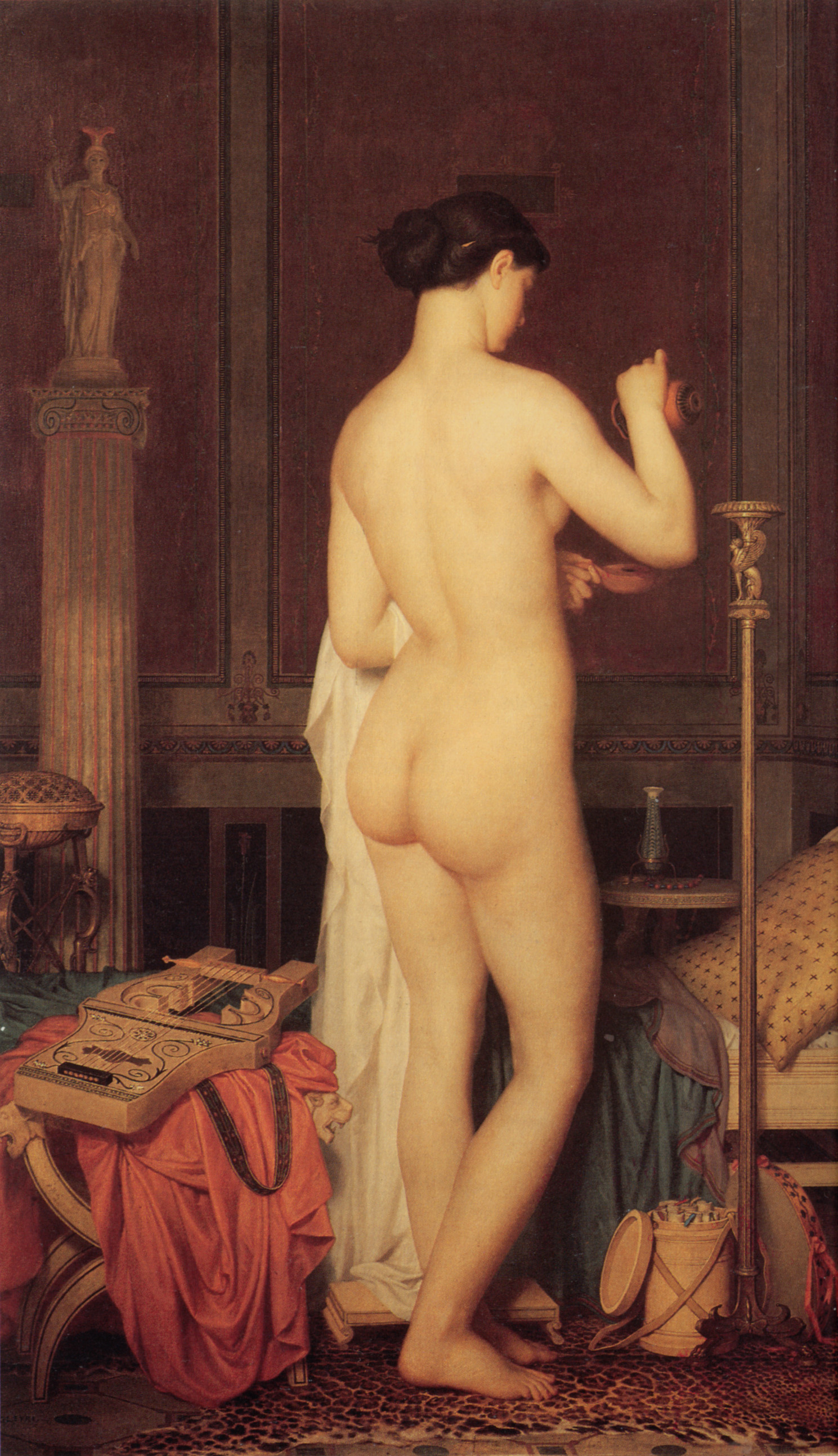
Gleyre Le Coucher de Sappho
by Marc-Charles-Gabriel Gleyre
Sappho of Lesbos is the first great female poet still known to us today,
and she remains one of the very best poets of all time, regardless of gender.
Sappho is so revered for her erotic love poetry that we get our terms "sapphic" and
"lesbian" from her name and island of residence. Sappho was called the
Tenth Muse by her peers, and the other nine Muses were goddesses, so she was
very highly esteemed. I will invoke Sappho as this page's Muse ...
Sing, my sacred tortoiseshell lyre;
come, let my words
accompany your voice.
—Sappho, translation by Michael R. Burch
Our term "lyric" derives from the lyre, a harp-like instrument played by ancient
poets like Sappho as they either sang or chanted their poems. Thus Sappho as the
Tenth Muse may be considered the mother of all the lyric poets and
singer-songwriters who followed her.
The most beautiful poems in the English language,
for me,
include: "Sweet Rose of Virtue" by the early Scottish master William Dunbar, "A
Red, Red Rose" by his heir Robert Burns, "Go, Lovely Rose" by
Edmund Waller, "The Wild Swans at Coole" by the Irish maestro W. B. Yeats, "The Darkling Thrush" by Thomas Hardy, "Dover Beach" by Matthew
Arnold, "Island" by Langston Hughes, "Song for the Last Act" by Louise Bogan, "To Earthward" by Robert Frost,
"Voyages" by Hart Crane, "Piano" by D. H. Lawrence, "Cradle Song" by William
Blake, "Sunday
Morning" by Wallace Stevens, "Those Winter Sundays" by Robert Hayden,
and
"Requiescat" by Oscar Wilde. If you haven't read these poems, in my opinion you haven't fully
lived, but you can find them here, or on the links at the bottom of this page.
Here you will also find magnificent, compelling poems by William Shakespeare,
Lord Byron, e. e. cummings, Emily Dickinson, John
Donne, T. S. Eliot, Sylvia Plath, Ezra Pound, Percy
Bysshe Shelley, Edmund Spenser, Alfred Tennyson, Dylan Thomas, Walt Whitman, William Wordsworth,
and Sir Thomas Wyatt, among others. There are also
English translations of poems by the Bible's King Solomon,
Hafiz, Pablo Neruda and Pierre Ronsard. And because nearly all hit songs
are rhyming poems set to music, I have also included
songwriters like Joan Baez, Sam Cooke, Bob Dylan, Eminem, John Lennon, Carole King, Prince,
and Paul Simon.
If you'd like to entice or impress that "special someone" we have a collection
of free love poems that you can choose from, at
Love Poems for the Ages. There are no fees, no ads and no gimmicks of any
kind. We remain fans of the days when things were actually free on the Internet,
and what is a better and more personal gift than beautiful poetry?
If you're interested in the subject of immortal art, we have a related page:
The Roses of Pieria.
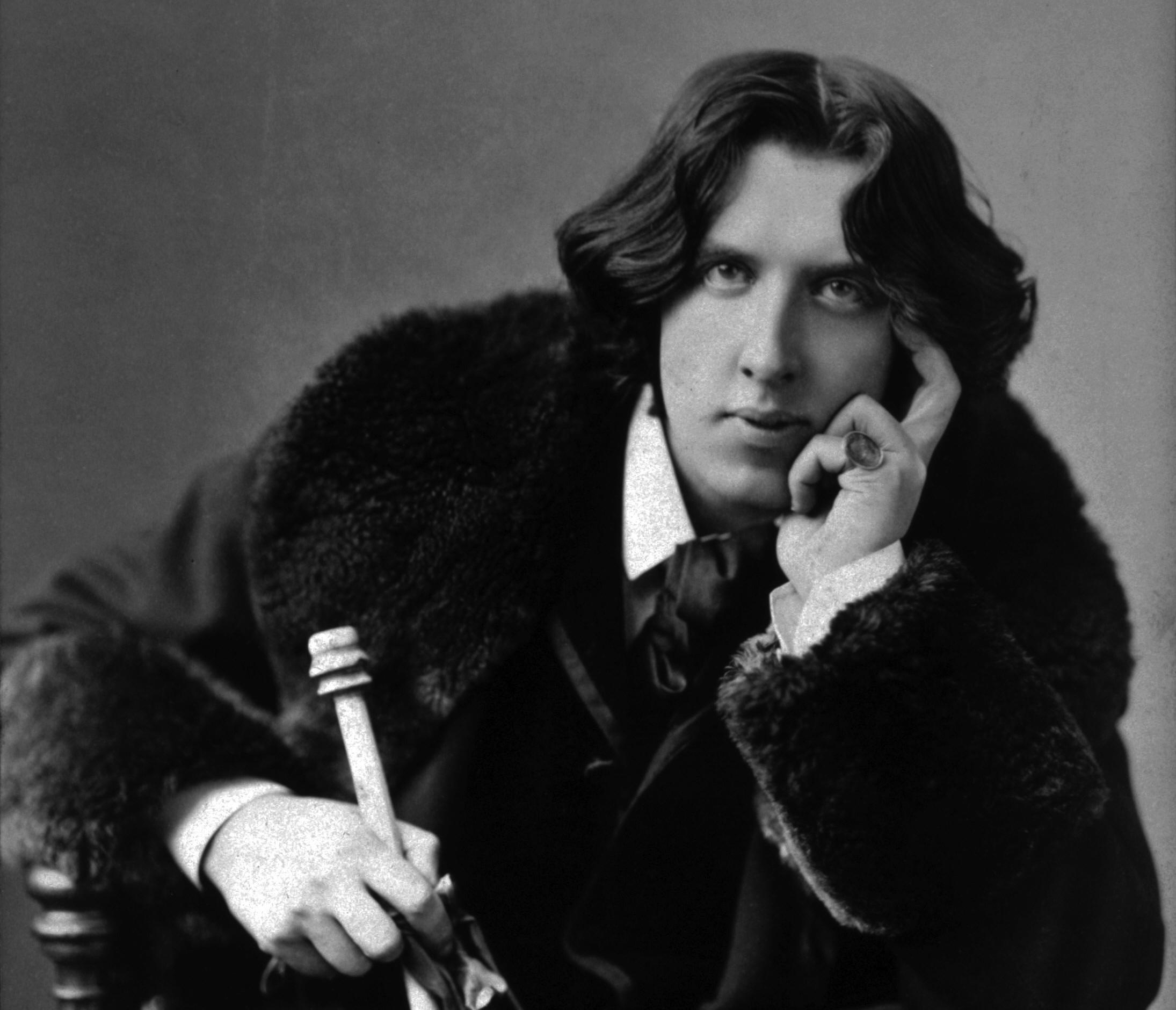
Oscar Wilde may be the most notorious "bad boy" in the annals of poetry and
literature. He was flamboyantly gay at a time when polite society was prim,
proper and violently homophobic. As a result, he was sentenced to hard labor at
Reading Gaol and died soon after his release. Wilde is justly famous for his
disdain for dull and dulling conformity, as his witty epigrams attest. But this
lovely, wonderfully moving elegy he wrote for his sister
Isola, who died at age ten, proves that he was a true poet
capable of
creating timeless art.
Requiescat
by Oscar Wilde
Tread lightly, she is near
Under the snow,
Speak gently, she can hear
The daisies grow.
All her bright golden hair
Tarnished with rust,
She that was young and fair
Fallen to dust.
Lily-like, white as snow,
She hardly knew
She was a woman, so
Sweetly she grew.
Coffin-board, heavy stone,
Lie on her breast,
I vex my heart alone,
She is at rest.
Peace, Peace, she cannot hear
Lyre or sonnet,
All my life's buried here,
Heap earth upon it.
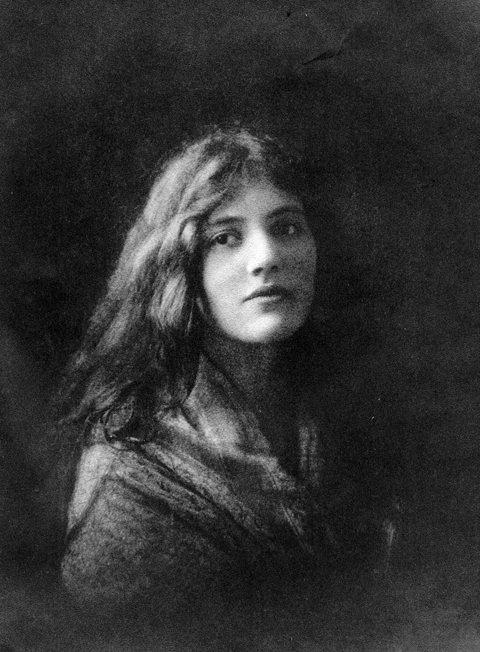
William Butler Yeats is the most famous Irish poet and his
poems of unrequited love for the beautiful revolutionary Maud Gonne
have helped preserve her memory. The first poem below is
a
loose translation of a Ronsard poem, in which Yeats imagines the love of his
life in her later years, tending a fire. The second poem, "The Wild Swans
at Coole," is surely one of the most beautiful poems ever written, in any
language.
When You Are Old
by William Butler Yeats
When you are old and grey and full of sleep,
And nodding by the fire, take down this book,
And slowly read, and dream of the soft look
Your eyes had once, and of their shadows deep;
How many loved your moments of glad grace,
And loved your beauty with love false or true,
But one man loved the pilgrim soul in you,
And loved the sorrows of your changing face;
And bending down beside the glowing bars,
Murmur, a little sadly, how Love fled
And paced upon the mountains overhead
And hid his face amid a crowd of stars.
The Wild Swans at Coole
by William Butler Yeats
The trees are in their autumn beauty,
The woodland paths are dry,
Under the October twilight the water
Mirrors a still sky;
Upon the brimming water among the stones
Are nine and fifty swans.
The nineteenth Autumn has come upon me
Since I first made my count;
I saw, before I had well finished,
All suddenly mount
And scatter wheeling in great broken rings
Upon their clamorous wings.
I have looked upon those brilliant creatures,
And now my heart is sore.
All’s changed since I, hearing at twilight,
The first time on this shore,
The bell-beat of their wings above my head,
Trod with a lighter tread.
Unwearied still, lover by lover,
They paddle in the cold,
Companionable streams or climb the air;
Their hearts have not grown old;
Passion or conquest, wander where they will,
Attend upon them still.
But now they drift on the still water
Mysterious, beautiful;
Among what rushes will they build,
By what lake’s edge or pool
Delight men’s eyes, when I awake some day
To find they have flown away?
William Dunbar (1460-1525) was one of the first great Scottish poets, and is probably best known
today for
his poem "Lament for the Makiris" (i.e., Lament for the Makers, or Poets).
But this is my favorite poem of his ― one I loved so much that I chose to translate it
myself ...
Sweet Rose of Virtue
by William Dunbar
loose
translation/interpretation by Michael R. Burch
Sweet rose of virtue and of gentleness,
delightful lily of youthful wantonness,
richest in bounty and in beauty clear
and in every virtue men hold most dear―
except only that you are merciless.
Into your garden, today, I followed you;
there I found flowers of freshest hue,
both white and red, delightful to see,
and wholesome herbs, waving resplendently―
yet nowhere one leaf nor petal of rue.
I fear that March with his last arctic blast
has slain my fair flower and left her downcast;
whose piteous death does my heart such pain
that I long to replant love's root again―
so comforting her bowering leaves have been.
If the tenth line seems confusing, it helps to know that
rue symbolizes pity and also has medicinal uses; thus I believe the unrequiting
lover is being accused of a lack of compassion and perhaps of withholding her
"healing" attentions. The penultimate line can be taken as a rather naughty double
entendre, but I will leave that interpretation up to the reader!
Felicia Hemans was a child prodigy who had her first book
of poems published at age fourteen. She corresponded with Percy Bysshe Shelley
and was praised in poetic tributes by William Wordsworth and Walter Savage
Landor.
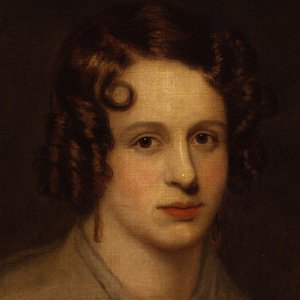
There is in all this cold and hollow world,
no fount of deep, strong, deathless love:
save that within a mother's heart.
―Felicia Dorothea Hemans Browne
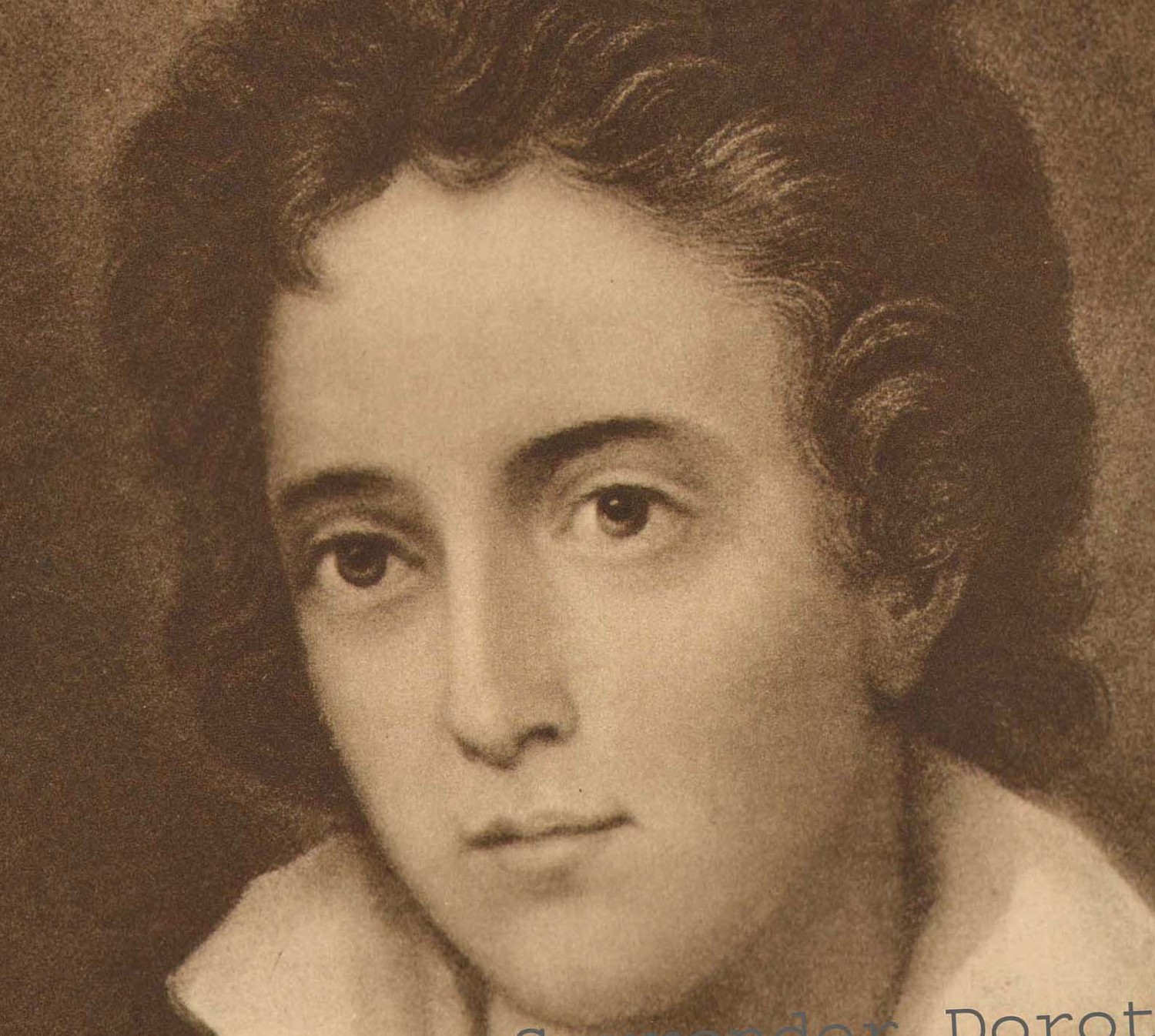
Percy Bysshe Shelley (below) and Felicia Hemans (above) were born a year
apart ― he in August 1792, she in September 1793. They look enough alike
to be brother and sister. They were both poets, both child prodigies, and they
corresponded after Hemans had her first book of poems published.
Here is an especially lovely example of Shelley's wonderful touch with rhythm
and rhyme:
Music When Soft Voices Die (To
—)
by Percy Bysshe Shelley
Music, when soft voices die,
Vibrates in the memory—
Odours, when sweet violets sicken,
Live within the sense they quicken.
Rose leaves, when the rose is dead,
Are heaped for the belovèd's bed;
And so thy thoughts, when thou art gone,
Love itself shall slumber on.
The next poem is interesting not only because it's lovely and touching, but
because the poet, Kevin Nicholas Roberts, claimed to be the reincarnation of
Algernon Charles Swinburne. And it was Swinburne who introduced the rondel to
English poetry, adapting it from the French rondeau. You can learn more
about Kevin Roberts and read more of his poems by clicking his hyperlinked name.
Rondel
by Kevin N.
Roberts
Our time has passed on swift and careless feet,
With sighs and smiles and songs both sad and sweet.
Our perfect hours have grown and gone so fast,
And these are things we never can repeat.
Though we might plead and pray that it would last,
Our time has passed.
Like shreds of mist entangled in a tree,
Like surf and sea foam on a foaming sea,
Like all good things we know can never last,
Too soon we'll see the end of you and me.
Despite the days and realms that we amassed,
Our time has passed.
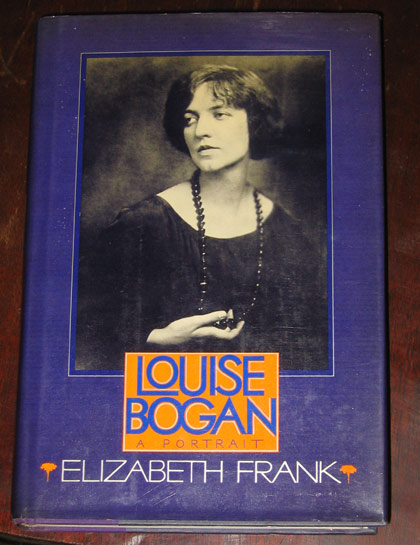
Song for the Last Act
by Louise Bogan
Now that I have your face by heart, I look
Less at its features than its darkening frame
Where quince and melon, yellow as young flame,
Lie with quilled dahlias and the shepherd's crook.
Beyond, a garden. There, in insolent ease
The lead and marble figures watch the show
Of yet another summer loath to go
Although the scythes hang in the apple trees.
Now that I have your face by heart, I look.
Now that I have your voice by heart, I read
In the black chords upon a dulling page
Music that is not meant for music's cage,
Whose emblems mix with words that shake and bleed.
The staves are shuttled over with a stark
Unprinted silence. In a double dream
I must spell out the storm, the running stream.
The beat's too swift. The notes shift in the dark.
Now that I have your voice by heart, I read.
Now that I have your heart by heart, I see
The wharves with their great ships and architraves;
The rigging and the cargo and the slaves
On a strange beach under a broken sky.
O not departure, but a voyage done!
The bales stand on the stone; the anchor weeps
Its red rust downward, and the long vine creeps
Beside the salt herb, in the lengthening sun.
Now that I have your heart by heart, I see.
Knowledge
by Louise Bogan
Now that I know
How passion warms little
Of flesh in the mould,
And treasure is brittle,—
I’ll lie here and learn
How, over their ground,
Trees make a long shadow
And a light sound.
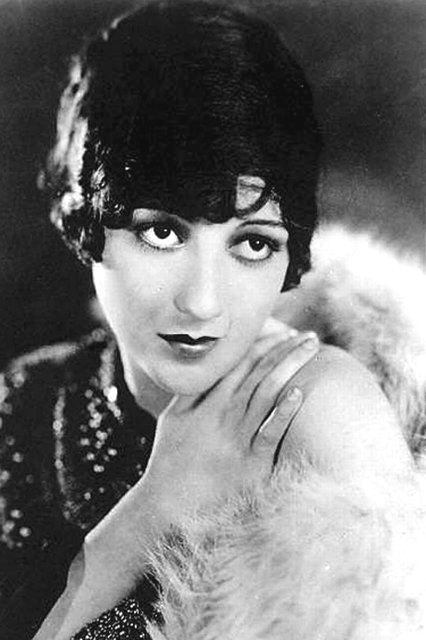
Elinor Wylie was "famous during her life almost as much for her ethereal beauty
and personality as for her melodious, sensuous poetry."
Cold-Blooded Creatures
by Elinor Wylie
Man, the egregious egoist
(In mystery the twig is bent)
Imagines, by some mental twist,
That he alone is sentient
Of the intolerable load
That on all living creatures lies,
Nor stoops to pity in the toad
The speechless sorrow of his eyes.
He asks no questions of the snake,
Nor plumbs the phosphorescent gloom
Where lidless fishes, broad awake,
Swim staring at a nightmare doom.
Pablo Neruda may have been the best love poet of modern times ...
Every Day You Play
by Pablo Neruda
loose
translation/interpretation by Michael R. Burch
Every day you play with Infinity’s rays.
Exquisite visitor, you arrive with the flowers and the water.
You are vastly more than this immaculate head I clasp tightly
like a cornucopia, every day, between my hands ...
Hafiz is one of the more appealing love poets among the ancients ...
Infectious!
by Hafiz aka Hafez
loose
translation/interpretation by Michael
R. Burch
I became infected with happiness tonight
as I wandered idly, singing in the starlight.
Now I'm wonderfully contagious—
so kiss me!
Langston Hughes wrote many fine poems; for me this is the most beautiful and
touching ...
Island
by Langston Hughes
Wave of sorrow,
Do not drown me now:
I see the island
Still ahead somehow.
I see the island
And its sands are fair:
Wave of sorrow,
Take me there.
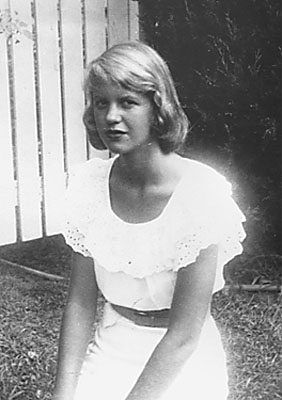
Sylvia Plath was one of the first and best of the modern confessional poets. She
won a Pulitzer Prize posthumously for her Collected Poems after
committing suicide at the age of 31, something she seemed to have been
predicting in her writing and practicing for in real life.
Poppies In October
by Sylvia Plath
Even the sun-clouds this morning cannot manage such skirts.
Nor the woman in the ambulance
Whose red heart blooms through her coat so astoundingly —
A gift, a love gift
Utterly unasked for
By a sky
Palely and flamily
Igniting its carbon monoxides, by eyes
Dulled to a halt under bowlers.
O my God, what am I
That these late mouths should cry open
In a forest of frost, in a dawn of cornflowers.
Winter landscape, with rocks
by Sylvia Plath
Water in the millrace, through a sluice of stone,
plunges headlong into that black pond
where, absurd and out-of-season, a single swan
floats chaste as snow, taunting the clouded mind
which hungers to haul the white reflection down.
The austere sun descends above the fen,
an orange cyclops-eye, scorning to look
longer on this landscape of chagrin;
feathered dark in thought, I stalk like a rook,
brooding as the winter night comes on.
Last summer's reeds are all engraved in ice
as is your image in my eye; dry frost
glazes the window of my hurt; what solace
can be struck from rock to make heart's waste
grow green again? Who'd walk in this bleak place?

Anne Sexton was a model who became a confessional
poet, writing about intimate aspects of her life, after her doctor suggested
that she take up poetry as a form of therapy. She studied under Robert Lowell at
Boston University, where Sylvia Plath was one of her classmates. Sexton won the
Pulitzer Prize for Poetry in 1967, but later committed suicide via carbon
monoxide poisoning. Topics she covered in her poems included adultery,
masturbation, menstruation, abortion, despair and suicide.
The Truth the Dead Know
by Anne Sexton
For my Mother, born March 1902, died March 1959
and my Father, born February 1900, died June 1959
Gone, I say and walk from church,
refusing the stiff procession to the grave,
letting the dead ride alone in the hearse.
It is June. I am tired of being brave.
We drive to the Cape. I cultivate
myself where the sun gutters from the sky,
where the sea swings in like an iron gate
and we touch. In another country people die.
My darling, the wind falls in like stones
from the whitehearted water and when we touch
we enter touch entirely. No one's alone.
Men kill for this, or for as much.
And what of the dead? They lie without shoes
in the stone boats. They are more like stone
than the sea would be if it stopped. They refuse
to be blessed, throat, eye and knucklebone.
Dylan Thomas's elegy to his dying father is one of the best villanelles in the English
language, and it remains one of the most powerful, haunting poems ever
written, in any language.
Do Not Go Gentle Into That Good Night
by Dylan Thomas
Do not go gentle into that good night,
Old age should burn and rave at close of day;
Rage, rage against the dying of the light.
Though wise men at their end know dark is right,
Because their words had forked no lightning they
Do not go gentle into that good night.
Good men, the last wave by, crying how bright
Their frail deeds might have danced in a green bay,
Rage, rage against the dying of the light.
Wild men who caught and sang the sun in flight,
And learn, too late, they grieved it on its way,
Do not go gentle into that good night.
Grave men, near death, who see with blinding sight
Blind eyes could blaze like meteors and be gay,
Rage, rage against the dying of the light.
And you, my father, there on the sad height,
Curse, bless, me now with your fierce tears, I pray.
Do not go gentle into that good night.
Rage, rage against the dying of the light.
In My Craft Or Sullen Art
by Dylan Thomas
In my craft or sullen art
Exercised in the still night
When only the moon rages
And the lovers lie abed
With all their griefs in their arms,
I labour by singing light
Not for ambition or bread
Or the strut and trade of charms
On the ivory stages
But for the common wages
Of their most secret heart.
Not for the proud man apart
From the raging moon I write
On these spindrift pages
Nor for the towering dead
With their nightingales and psalms
But for the lovers, their arms
Round the griefs of the ages,
Who pay no praise or wages
Nor heed my craft or art.
Edward Thomas is not as well-known as some of the other poets on this page, but
"Adlestrop" was among the top ten most-requested poems at Poetry Please,
so he continues to have fans. "Adlestrop" is a somewhat mysterious poem, because
nothing really happens and yet it seems extraordinarily sad.
Adlestrop
by Edward Thomas
Yes. I remember Adlestrop—
The name, because one afternoon
Of heat the express-train drew up there
Unwontedly. It was late June.
The steam hissed. Someone cleared his throat.
No one left and no one came
On the bare platform. What I saw
Was Adlestrop—only the name
And willows, willow-herb, and grass,
And meadowsweet, and haycocks dry,
No whit less still and lonely fair
Than the high cloudlets in the sky.
And for that minute a blackbird sang
Close by, and round him, mistier,
Farther and farther, all the birds
Of Oxfordshire and Gloucestershire.

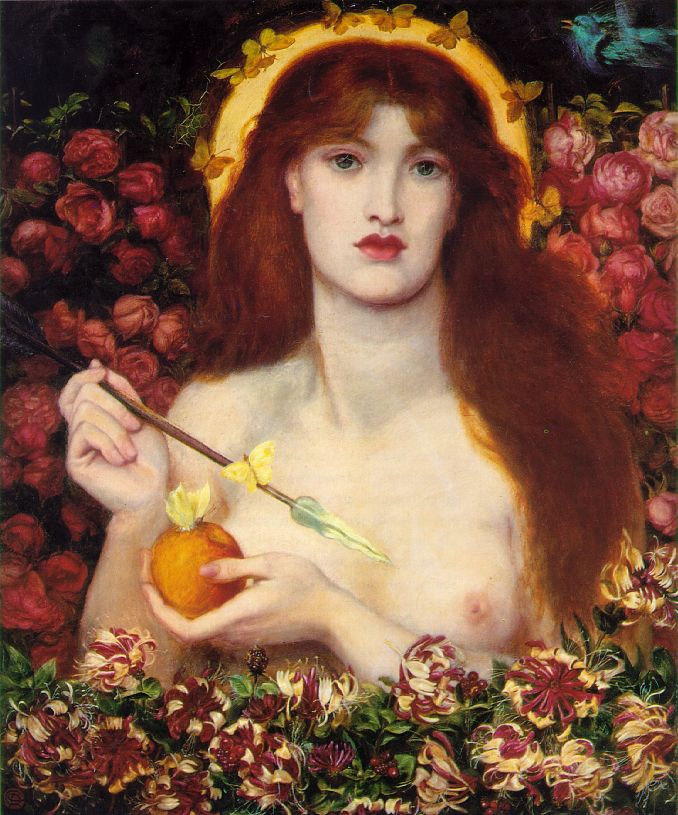
Dante Gabriel Rossetti was an English romantic poet, painter, illustrator
and translator. He was also one of the founders of the Pre-Raphaelite
Brotherhood. His art was characterized by sensuality and medieval revivalism. In
1850 he met Elizabeth Siddal (pictured above), who became his model, his
passion, and eventually in 1860, his wife.
Sudden Light
by Dante Gabriel Rossetti
I have been here before,
But when or how I cannot tell:
I know the grass beyond the door,
The sweet keen smell,
The sighing sound, the lights around the shore.
You have been mine before,—
How long ago I may not know:
But just when at that swallow's soar
Your neck turned so,
Some veil did fall,—I knew it all of yore.
Has this been thus before?
And shall not thus time's eddying flight
Still with our lives our love restore
In death's despite,
And day and night yield one delight once more?
Dante Gabriel Rossetti's sister Christina was also a poet, and perhaps the
better of the two.
Song
by Christina Rossetti
When I am dead, my dearest,
Sing no sad songs for me;
Plant thou no roses at my head,
Nor shady cypress tree:
Be the green grass above me
With showers and dewdrops wet;
And if thou wilt, remember,
And if thou wilt, forget.
I shall not see the shadows,
I shall not feel the rain;
I shall not hear the nightingale
Sing on, as if in pain:
And dreaming through the twilight
That doth not rise nor set,
Haply I may remember,
And haply may forget.
Conrad Aiken was one of the sweetest singers among American poets.
Bread and Music
by Conrad Aiken
Music I heard with you was more than music,
And bread I broke with you was more than bread;
Now that I am without you, all is desolate;
All that was once so beautiful is dead.
Your hands once touched this table and this silver,
And I have seen your fingers hold this glass.
These things do not remember you, belovèd,
And yet your touch upon them will not pass.
For it was in my heart you moved among them,
And blessed them with your hands and with your eyes;
And in my heart they will remember always,—
They knew you once, O beautiful and wise.
D. H. Lawrence is better known today for his novels, which include the
then-infamous Lady Chatterley's Lover, but he was also one of the better
early modernist poets.
Piano
by D. H. Lawrence
Softly, in the dusk, a woman is singing to me;
Taking me back down the vista of years, till I see
A child sitting under the piano, in the boom of the tingling strings
And pressing the small, poised feet of a mother who smiles as she sings.
In spite of myself, the insidious mastery of song
Betrays me back, till the heart of me weeps to belong
To the old Sunday evenings at home, with winter outside
And hymns in the cozy parlor, the tinkling piano our guide.
So now it is vain for the singer to burst into clamor
With the great black piano appassionato. The glamour
Of childish days is upon me, my manhood is cast
Down in the flood of remembrance, I weep like a child for the past.
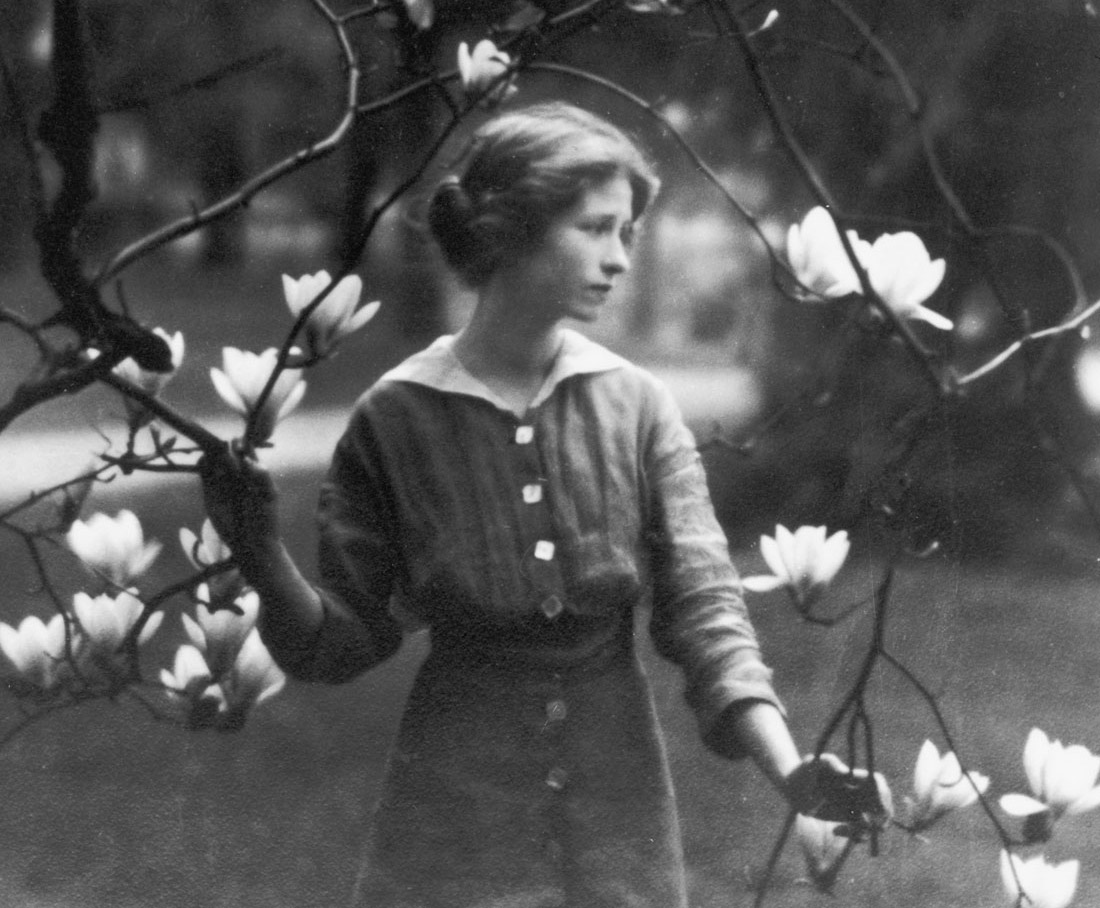
Edna St. Vincent Millay was the first woman to win a Pulitzer Prize for poetry.
She was openly bisexual and had affairs with other women and married men. When
she finally married, hers was an open marriage. Her 1920 poetry collection A
Few Figs From Thistles drew controversy for its novel exploration of female
sexuality. She was one of the earliest and strongest voices for what became
known as feminism. One of the recurring themes of her poetry was that men might
use her body, but not possess her nor have any claim over her. (And perhaps
their desire for her body gave her the upper hand in relationships.)
I, Being Born a Woman, and Distressed
by Edna St. Vincent
Millay
I, being born a woman, and distressed
By all the needs and notions of my kind,
Am urged by your propinquity to find
Your person fair, and feel a certain zest
To bear your body's weight upon my breast:
So subtly is the fume of life designed,
To clarify the pulse and cloud the mind,
And leave me once again undone, possessed.
Think not for this, however, this poor treason
Of my stout blood against my staggering brain,
I shall remember you with love, or season
My scorn with pity — let me make it plain:
I find this frenzy insufficient reason
For conversation when we meet again.
There are more poems by Edna St. Vincent Millay later on this page.
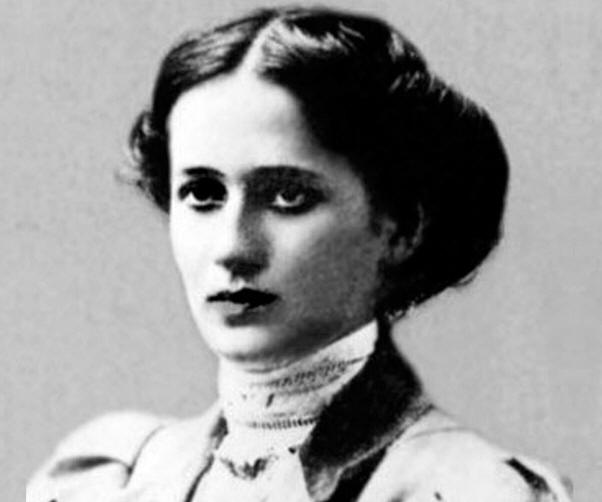
THE MUSE
by Anna Akhmatova
loose translation/interpretation by Michael R. Burch
My being hangs by a thread tonight
as I await a Muse no human pen can command.
The desires of my heart — youth, liberty, glory —
now depend on the Maid with the flute in her hand.
Look! Now she arrives; she flings back her veil;
I meet her grave eyes — calm, implacable, pitiless.
“Temptress, confess!
Are you the one who gave Dante hell?”
She answers, “Yes.”
Excerpt from “Poems for Akhmatova”
by Marina Tsvetaeva
loose translation/interpretation by Michael R. Burch
You outshine everything, even the sun
at its zenith. The stars are yours!
If only I could sweep like the wind
through some unbarred door,
gratefully, to where you are ...
to hesitantly stammer, suddenly shy,
lowering my eyes before you, my lovely mistress,
petulant, chastened, overcome by tears,
as a child sobs to receive forgiveness ...
Emily Dickinson was the first great female American poet.
Come Slowly, Eden
by Emily Dickinson
Come slowly—Eden
Lips unused to thee—
Bashful—sip thy jasmines—
As the fainting bee—
Reaching late his flower,
Round her chamber hums—
Counts his nectars—alights—
And is lost in balms!
Go, Lovely Rose
by Edmund Waller
Go, lovely Rose,—
Tell her that wastes her time and me,
That now she knows,
When I resemble her to thee,
How sweet and fair she seems to be.
Tell her that's young,
And shuns to have her graces spied,
That hadst thou sprung
In deserts where no men abide,
Thou must have uncommended died.
Small is the worth
Of beauty from the light retir'd:
Bid her come forth,
Suffer herself to be desir'd,
And not blush so to be admir'd.
Then die, that she
The common fate of all things rare
May read in thee;
How small a part of time they share,
That are so wondrous sweet and fair.
VIII — from "Sunday Morning"
by Wallace Stevens
She hears, upon that water without sound,
A voice that cries, "The tomb in Palestine
Is not the porch of spirits lingering.
It is the grave of Jesus, where he lay."
We live in an old chaos of the sun,
Or old despondency of day and night,
Or island solitude, unsponsored, free,
Of that wide water, inescapable.
Deer walk upon our mountains, and the quail
Whistle about us their spontaneous cries;
Sweet berries ripen in the wilderness;
And, in the isolation of the sky,
At evening, casual flocks of pigeons make
Ambiguous undulations as they sink,
Downward to darkness, on extended wings.
Non sum qualis eram bonae sub regno Cynarae
by Ernest Dowson
"I am not as I was under the reign of the good Cynara"—Horace
Last night, ah, yesternight, betwixt her lips and mine
There fell thy shadow, Cynara! thy breath was shed
Upon my soul between the kisses and the wine;
And I was desolate and sick of an old passion,
Yea, I was desolate and bowed my head:
I have been faithful to thee, Cynara! in my fashion.
All night upon mine heart I felt her warm heart beat,
Night-long within mine arms in love and sleep she lay;
Surely the kisses of her bought red mouth were sweet;
But I was desolate and sick of an old passion,
When I awoke and found the dawn was gray:
I have been faithful to you, Cynara! in my fashion.
I have forgot much, Cynara! gone with the wind,
Flung roses, roses riotously with the throng,
Dancing, to put thy pale, lost lilies out of mind;
But I was desolate and sick of an old passion,
Yea, all the time, because the dance was long;
I have been faithful to thee, Cynara! in my fashion.
I cried for madder music and for stronger wine,
But when the feast is finished and the lamps expire,
Then falls thy shadow, Cynara! the night is thine;
And I am desolate and sick of an old passion,
Yea, hungry for the lips of my desire:
I have been faithful to thee, Cynara! in my fashion.
La Figlia Che Piange (The Weeping Girl)
by T. S. Eliot
Stand on the highest pavement of the stair —
Lean on a garden urn —
Weave, weave the sunlight in your hair —
Clasp your flowers to you with a pained surprise —
Fling them to the ground and turn
With a fugitive resentment in your eyes:
But weave, weave the sunlight in your hair.
So I would have had him leave,
So I would have had her stand and grieve,
So he would have left
As the soul leaves the body torn and bruised,
As the mind deserts the body it has used.
I should find
Some way incomparably light and deft,
Some way we both should understand,
Simple and faithless as a smile and a shake of the hand.
She turned away, but with the autumn weather
Compelled my imagination many days,
Many days and many hours:
Her hair over her arms and her arms full of flowers.
And I wonder how they should have been together!
I should have lost a gesture and a pose.
Sometimes these cogitations still amaze
The troubled midnight, and the noon's repose.
The Garden
by Ezra Pound
Like a skein of loose silk blown against a wall
She walks by the railing of a path in Kensington Gardens,
And she is dying piece-meal
of a sort of emotional anemia.
And round about there is a rabble
Of the filthy, sturdy, unkillable infants of the very poor.
They shall inherit the earth.
In her is the end of breeding.
Her boredom is exquisite and excessive.
She would like some one to speak to her,
And is almost afraid that I
will commit that indiscretion.
Lullaby
by W. H. Auden
Lay your sleeping head, my love,
Human on my faithless arm:
Time and fevers burn away
Individual beauty from
Thoughtful children, and the grave
Proves the child ephemeral:
But in my arms till break of day
Let the living creature lie,
Mortal, guilty, but to me
The entirely beautiful.
Soul and body have no bounds:
To lovers as they lie upon
Her tolerant enchanted slope
In their ordinary swoon,
Grave the vision Venus sends
Of supernatural sympathy,
Universal love and hope;
While an abstract insight wakes
Among the glaciers and the rocks
The hermit's carnal ecstacy.
Certainty, fidelity
On the stroke of midnight pass
Like vibrations of a bell
And fashionable madmen raise
Their pedantic boring cry:
Every farthing of the cost.
All the dreaded cards foretell.
Shall be paid, but from this night
Not a whisper, not a thought.
Not a kiss nor look be lost.
Beauty, midnight, vision dies:
Let the winds of dawn that blow
Softly round your dreaming head
Such a day of welcome show
Eye and knocking heart may bless,
Find our mortal world enough;
Noons of dryness find you fed
By the involuntary powers,
Nights of insult let you pass
Watched by every human love.
Would it surprise you to know that one of the most beautiful (and saddest) poems
in the English language was written by a child prodigy, Thomas Chatterton?
Although his mother and family considered him to be "slow," around age seven the
young Chatterton discovered an ancient book with illuminated capital letters,
and he suddenly became intensely interested, quickly learned to read, and then
began writing poems. By age ten he was a published poet. But many of the poems
he wrote were in a medieval version of English, and no one would believe that a
child was capable of writing such poems. So he pretended to have "discovered" the
poems of an ancient monk named Thomas Rowley. One thing led to another, and
Chatterton was accused of being a "forger" even though the poems were his
original compositions! Spurned by stuffy literary types and unable to support
himself, but too proud to accept handouts, Chatterton committed suicide at age
17. You can click on his hyperlinked name to read the sad, lovely ballad
below, and other poems he wrote during his short, tortured life.
Song from Ælla: Under the Willow Tree, or, Minstrel's Roundelay
by
Thomas Chatterton
...
See! the white moon shines on high;
Whiter is my true-love's shroud:
Whiter than the morning sky,
Whiter than the evening cloud:
My love is dead,
Gone to his death-bed
All under the willow-tree.
...
Sir Thomas Wyatt has been credited with introducing the
Petrarchan sonnet into the English language. Wyatt's father had been one of Henry
VII's Privy Councilors and he remained a trusted adviser when Henry VIII came to
the throne in 1509. Wyatt followed his father to court, but it seems the
young poet may have fallen in love with the king’s mistress,
Anne Boleyn. Their acquaintance is certain, although whether or not the two
actually shared a romantic relationship remains unknown. But in his poetry, Wyatt called
his mistress Anna and there do seem to be correspondences. For instance, this poem might well have been written
about the King’s claim on Anne Boleyn:
Whoso List to Hunt
by Sir Thomas Wyatt
Whoso list to hunt, I know where is an hind,
But as for me, alas, I may no more.
The vain travail hath wearied me so sore,
I am of them that farthest cometh behind.
Yet may I by no means my wearied mind
Draw from the deer, but as she fleeth afore
Fainting I follow. I leave off therefore,
Since in a net I seek to hold the wind.
Who list her hunt, I put him out of doubt,
As well as I may spend his time in vain.
And graven with diamonds in letters plain
There is written, her fair neck round about:
Noli me tangere, for Caesar's I am,
And wild for to hold, though I seem tame.
Noli me tangere means "Touch me not." According to the Bible, this is
what Jesus said to Mary Magdalene when she tried to embrace him after the
resurrection. So perhaps after her betrothal to Henry, religious vows
entered into the picture, and left Wyatt out.
“Whoso List to Hunt” is a famous, very early English sonnet written by Sir Thomas Wyatt
(1503-1542) in the
mid-16th century. The poem was first published in a 1557 anthology
entitled Songes and Sonettes Written by the Ryght Honorable Lord Henry
Howard, late Earle of Surrey, and others. The anthology was published in
London by Richard Tottel and is better known today as Tottel's Miscellany.
This was the modern English language's first printed poetry anthology, and thus a
ground-breaking work of literature. Wyatt's poem, which has an alternate title, “The
Lover Despairing to Attain Unto His Lady’s Grace Relinquisheth the Pursuit,” is
commonly believed to have been written for Anne Boleyn, who married King
Henry VIII only to be beheaded at his command when she failed to
produce a male heir. (Ouch, talk about male chauvinism!) Here is my attempt at a
modernization of the poem:
Whoever Longs to Hunt
by Sir Thomas Wyatt
loose translation/interpretation/modernization by Michael R. Burch
Whoever longs to hunt, I know the deer;
but as for me, alas!, I may no more.
This vain pursuit has left me so bone-sore
I'm one of those who falters, at the rear.
Yet friend, how can I draw my anguished mind
away from the doe?
Thus, as she flees before
me, fainting I follow.
I must leave off, therefore,
since in a net I seek to hold the wind.
Whoever seeks her out,
I relieve of any doubt,
that he, like me, must spend his time in vain.
For graven with diamonds, set in letters plain,
these words appear, her fair neck ringed about:
Touch me not, for Caesar's I am,
And wild to hold, though I seem tame.
Mary Elizabeth Frye is, perhaps, the most mysterious poet who appears on this
page. Rather than spoiling the mystery, I
will present her poem first, then provide the details ...
Do not stand at my grave and weep
by Mary Elizabeth Frye
Do not stand at my grave and weep:
I am not there; I do not sleep.
I am a thousand winds that blow,
I am the diamond glints on snow,
I am the sun on ripened grain,
I am the gentle autumn rain.
When you awaken in the morning’s hush
I am the swift uplifting rush
Of quiet birds in circling flight.
I am the soft starshine at night.
Do not stand at my grave and cry:
I am not there; I did not die.
This consoling elegy had a
very mysterious genesis, as it was written by a
Baltimore housewife who lacked a formal education, having been orphaned at age
three. As far as we know, she had never written poetry before. Frye wrote the poem on a ripped-off piece of a brown grocery bag,
in a burst of compassion for a Jewish girl who had fled the Holocaust
only to receive news that her mother had died in Germany. The girl was
weeping inconsolably because she couldn't visit her mother's grave. When the poem was named Britain's
most popular poem in a 1996 Bookworm poll, with more than 30,000
call-in votes despite not having been one of the critics'
nominations, an unlettered orphan girl had seemingly surpassed all England's
many cultured and degreed ivory towerists in the public's estimation. Although the poem's
origin was disputed for some time (it had been attributed to Native American and other sources),
Frye's authorship was confirmed in 1998 after investigative research by Abigail
Van Buren, the newspaper columnist better known as "Dear Abby." The poem has
also been called "I Am" due to its rather biblical repetitions of the phrase.
Frye never formally published or copyrighted the poem, so we believe it is in
the public domain and can be shared, although we recommend that it not be used
for commercial purposes, since Frye never tried to profit from it herself.
Here is a printable version of
Mary Elizabeth Frye's "Do Not Stand at My Grave and Weep" which is not
copyrighted and is thus in the public domain.
Elizabeth Barrett Browning was an early advocate of women's rights, and a
staunch opponent of slavery. When she married Robert Browning, theirs became the
most famous coupling in the annals of English poetry.
How Do I Love Thee?
by Elizabeth Barrett Browning
How do I love thee? Let me count the ways.
I love thee to the depth and breadth and height
My soul can reach, when feeling out of sight
For the ends of Being and ideal Grace.
I love thee to the level of every day's
Most quiet need, by sun and candlelight.
I love thee freely, as men strive for Right;
I love thee purely, as they turn from Praise.
I love with a passion put to use
In my old griefs, and with my childhood's faith.
I love thee with a love I seemed to lose
With my lost saints,—I love thee with the breath,
Smiles, tears, of all my life!—and, if God choose,
I shall but love thee better after death.
For Her Surgery
by Jack Butler
I
Over the city the moon rides in mist,
scrim scarred with faint rainbow.
Two days till Easter. The thin clouds run slow, slow,
the wind bells bleed the quietest
of possible musics to the dark lawn.
All possibility we will have children is gone.
II
I raise a glass half water, half alcohol,
to that light come full again.
Inside, you sleep, somewhere below the pain.
Down at the river, there is a tall
ghost tossing flowers to dark water—
jessamine, rose, and daisy, salvia lyrata . . .
III
Oh goodbye, goodbye to bloom in the white blaze
of moon on the river, goodbye
to creek joining the creek joining the river, the axil, the Y,
goodbye to the Yes of two Ifs in one phrase . . .
Children bear children. We are grown,
and time has thrown us free under the timeless moon.
The Snow Man
by
Wallace Stevens
One must have a mind of winter
To regard the frost and the boughs
Of the pine-trees crusted with snow;
And have been cold a long time
To behold the junipers shagged with ice,
The spruces rough in the distant glitter
Of the January sun; and not to think
Of any misery in the sound of the wind,
In the sound of a few leaves,
Which is the sound of the land
Full of the same wind
That is blowing in the same bare place
For the listener, who listens in the snow,
And, nothing himself, beholds
Nothing that is not there and the nothing that is.
Come Lord and Lift
by T. Merrill
Come Lord, and lift the fallen bird
Abandoned on the ground;
The soul bereft and longing so
To have the lost be found.
The heart that cries—let it but hear
Its sweet love answering,
Or out of ether one faint note
Of living comfort wring.
The Death of a Toad
by Richard Wilbur
A toad the power mower caught,
Chewed and clipped of a leg, with a hobbling hop has got
To the garden verge, and sanctuaried him
Under the cineraria leaves, in the shade
Of the ashen and heartshaped leaves, in a dim,
Low, and a final glade.
The rare original heartsblood goes,
Spends in the earthen hide, in the folds and wizenings, flows
In the gutters of the banked and staring eyes. He lies
As still as if he would return to stone,
And soundlessly attending, dies
Toward some deep monotone,
Toward misted and ebullient seas
And cooling shores, toward lost Amphibia's emperies.
Day dwindles, drowning and at length is gone
In the wide and antique eyes, which still appear
To watch, across the castrate lawn,
The haggard daylight steer.
To Earthward
by Robert Frost
Love at the lips was touch
As sweet as I could bear;
And once that seemed too much;
I lived on air
That crossed me from sweet things,
The flow of – was it musk
From hidden grapevine springs
Downhill at dusk?
I had the swirl and ache
From sprays of honeysuckle
That when they’re gathered shake
Dew on the knuckle.
I craved strong sweets, but those
Seemed strong when I was young:
The petal of the rose
It was that stung.
Now no joy but lacks salt,
That is not dashed with pain
And weariness and fault;
I crave the stain
Of tears, the aftermark
Of almost too much love,
The sweet of bitter bark
And burning clove.
When stiff and sore and scarred
I take away my hand
From leaning on it hard
In grass or sand,
The hurt is not enough:
I long for weight and strength
To feel the earth as rough
To all my length.
Depths
by Richard Moore
Once more home is a strange place: by the ocean a
big house now, and the small houses are memories,
once live images, vacant
thoughts here, sinking and vanishing.
Rough sea now on the shore thundering brokenly
draws back stones with a roar out into quiet and
far depths, darkly to lie there
years, years—there not a sound from them.
New waves out of the night's mist and obscurity
lunge up high on the beach, spending their energy,
each wave angrily dying,
all shapes endlessly altering,
yet out there in the depths nothing is modified.
Earthquakes won't even move—no, nor the hurricane—
one stone there, nor a glance of
sun's light stir its identity.
Those Winter Sundays
by Robert Hayden
Sundays too my father got up early
and put his clothes on in the blueblack cold,
then with cracked hands that ached
from labor in the weekday weather made
banked fires blaze. No one ever thanked him.
I'd wake and hear the cold splintering, breaking.
When the rooms were warm, he'd call,
and slowly I would rise and dress,
fearing the chronic angers of that house,
Speaking indifferently to him,
who had driven out the cold
and polished my good shoes as well.
What did I know, what did I know
of love's austere and lonely offices?
Winter Night
by Robert Fitzgerald
The grey day left the dusk in doubt,
Now it is dark.
Nightfall and no stars are out,
But this black wind will set its mark
Like anger on the souls that stir
From chimney side or sepulcher.
From hill to pasture moans the snow.
The farms hug tight
Their shaking ribs against the blow.
There is no mercy in this night
Nor scruple to its wrath. The dead
Sleep light this wind being overhead.
A Noiseless Patient Spider
by Walt Whitman
A noiseless patient spider,
I mark'd where on a little promontory it stood isolated,
Mark'd how to explore the vacant vast surrounding,
It launch'd forth filament, filament, filament, out of itself,
Ever unreeling them, ever tirelessly speeding them.
And you O my soul where you stand,
Surrounded, detached, in measureless oceans of space,
Ceaselessly musing, venturing, throwing, seeking the spheres to connect them,
Till the bridge you will need be form'd, till the ductile anchor hold,
Till the gossamer thread you fling catch somewhere, O my soul.
To Celia
by Ben Jonson
Drink to me, only, with thine eyes,
And I will pledge with mine;
Or leave a kiss but in the cup,
And I'll not look for wine.
The thirst that from the soul doth rise,
Doth ask a drink divine:
But might I of Jove's nectar sup,
I would not change for thine.
I sent thee, late, a rosy wreath,
Not so much honouring thee,
As giving it a hope, that there
It could not withered be.
But thou thereon didst only breathe,
And sent'st back to me:
Since when it grows, and smells, I swear,
Not of itself, but thee.
To Daffodils
by Robert Herrick
Fair daffodils, we weep to see
You haste away so soon.
As yet the early-rising sun
Hath not attained his noon.
Stay, stay,
Until the hasting day
Has run
But to the even-song;
And, having prayed together, we
Will go with you along.
We have short time to stay, as you;
We have as short a spring;
As quick a growth to meet decay,
As you, or any thing.
We die.
As your hours do, and dry
Away
Like to the summer's rain;
Or as the pearls of morning's dew
Ne'er to be found again.
Cradle Song
by William Blake
Sleep, sleep, beauty bright,
Dreaming in the joys of night;
Sleep, sleep; in thy sleep
Little sorrows sit and weep.
Sweet babe, in thy face
Soft desires I can trace,
Secret joys and secret smiles,
Little pretty infant wiles.
As thy softest limbs I feel
Smiles as of the morning steal
O'er thy cheek, and o'er thy breast
Where thy little heart doth rest.
O the cunning wiles that creep
In thy little heart asleep!
When thy little heart doth wake,
Then the dreadful night shall break.
Tears, Idle Tears
by Lord Alfred Tennyson
Tears, idle tears, I know not what they mean,
Tears from the depth of some divine despair
Rise in the heart, and gather to the eyes,
In looking on the happy Autumn fields,
And thinking of the days that are no more.
Fresh as the first beam glittering on a sail,
That brings our friends up from the underworld,
Sad as the last which reddens over one
That sinks with all we love below the verge;
So sad, so fresh, the days that are no more.
Ah, sad and strange as in dark summer dawns
The earliest pipe of half-awakened birds
To dying ears, when unto dying eyes
The casement slowly grows a glimmering square;
So sad, so strange, the days that are no more.
Dear as remembered kisses after death,
And sweet as those by hopeless fancy feigned
On lips that are for others; deep as love,
Deep as first love, and wild with all regret;
O Death in Life, the days that are no more.
Acquainted With The Night
by Robert Frost
I have been one acquainted with the night.
I have walked out in rain—and back in rain.
I have outwalked the furthest city light.
I have looked down the saddest city lane.
I have passed by the watchman on his beat
And dropped my eyes, unwilling to explain.
I have stood still and stopped the sound of feet
When far away an interrupted cry
Came over houses from another street,
But not to call me back or say good-by;
And further still at an unearthly height,
One luminary clock against the sky
Proclaimed the time was neither wrong nor right.
I have been one acquainted with the night.
The Windhover
by Gerard Manley Hopkins
I caught this morning morning's minion, king-
dom of daylight's dauphin, dapple-dawn-drawn Falcon, in his riding
Of the rolling level underneath him steady air, and striding
High there, how he rung upon the rein of a wimpling wing
In his ecstasy! then off, off forth on swing,
As a skate's heel sweeps smooth on a bow-bend: the hurl and gliding
Rebuffed the big wind. My heart in hiding
Stirred for a bird,—the achieve of; the mastery of the thing!
Brute beauty and valour and act, oh, air, pride, plume, here
Buckle! AND the fire that breaks from thee then, a billion
Times told lovelier, more dangerous, O my chevalier!
No wonder of it: shéer plód makes plough down sillion
Shine, and blue-bleak embers, ah my dear,
Fall, gall themselves, and gash gold-vermillion.
Song
by John Donne
Go and catch a falling star,
Get with child a mandrake root,
Tell me where all past years are,
Or who cleft the devils foot;
Teach me to hear mermaids singing,
Or to keep off envy's stinging,
And find
What wind
Serves to advance an honest mind.
If thou be'st born to strange sights,
Things invisible to see,
Ride ten thousand days and nights
Till Age snow white hairs on thee;
Thou, when thou return'st wilt tell me
All strange wonders that befell thee,
And swear
No where
Lives a woman true and fair.
If thou find'st one let me know;
Such a pilgrimage were sweet.
Yet do not; I would not go,
Though at next door we might meet.
Though she were true when you met her,
And last, till you write your letter,
Yet she
Will be
False, ere I come, to two or three.
The Convergence Of The Twain
by Thomas Hardy
Lines on the loss of the "Titanic"
In a solitude of the sea
Deep from human vanity,
And the Pride of Life that planned her, stilly couches she.
Steel chambers, late the pyres
Of her salamandrine fires,
Cold currents thrid, and turn to rhythmic tidal lyres.
Over the mirrors meant
To glass the opulent
The sea-worm crawls—grotesque, slimed, dumb, indifferent.
Jewels in joy designed
To ravish the sensuous mind
Lie lightless, all their sparkles bleared and black and blind.
Dim moon-eyed fishes near
Gaze at the gilded gear
And query: "What does this vaingloriousness down here?"...
Well: while was fashioning
This creature of cleaving wing,
The Immanent Will that stirs and urges everything
Prepared a sinister mate
For her—so gaily great—
A Shape of Ice, for the time far and dissociate.
And as the smart ship grew
In stature, grace, and hue,
In shadowy silent distance grew the Iceberg too.
Alien they seemed to be;
No mortal eye could see
The intimate welding of their later history,
Or sign that they were bent
By paths coincident
On being anon twin halves of one august event,
Till the Spinner of the Years
Said "Now!" And each one hears,
And consummation comes, and jars two hemispheres.
Luke Havergal
by Edward Arlington Robinson
Go to the western gate, Luke Havergal,
There where the vines cling crimson on the wall,
And in the twilight wait for what will come.
The leaves will whisper there of her, and some,
Like flying words, will strike you as they fall;
But go, and if you listen, she will call.
Go to the western gate, Luke Havergal—
Luke Havergal.
No, there is not a dawn in eastern skies
To rift the fiery night that's in your eyes;
But there, where western glooms are gathering
The dark will end the dark, if anything:
God slays Himself with every leaf that flies,
And hell is more than half of paradise.
No, there is not a dawn in eastern skies—
In eastern skies.
Out of a grave I come to tell you this,
Out of a grave I come to quench the kiss
That flames upon your forehead with a glow
That blinds you to the way that you must go.
Yes, there is yet one way to where she is,
Bitter, but one that faith may never miss.
Out of a grave I come to tell you this—
To tell you this.
There is the western gate, Luke Havergal,
There are the crimson leaves upon the wall,
Go, for the winds are tearing them away,—
Nor think to riddle the dead words they say,
Nor any more to feel them as they fall;
But go, and if you trust her she will call.
There is the western gate, Luke Havergal—
Luke Havergal.
Full Fathom Five
by William Shakespeare
Full fathom five thy father lies;
Of his bones are coral made;
Those are pearls that were his eyes:
Nothing of him that doth fade
But doth suffer a sea-change
Into something rich and strange.
Sea-nymphs hourly ring his knell:
Ding-dong.
Hark! now I hear them — ding-dong, bell.
Composed Upon Westminster Bridge, September 3, 1802
by
William Wordsworth
Earth has not anything to show more fair:
Dull would he be of soul who could pass by
A sight so touching in its majesty:
This City now doth, like a garment, wear
The beauty of the morning; silent, bare,
Ships, towers, domes, theatres, and temples lie
Open unto the fields, and to the sky;
All bright and glittering in the smokeless air.
Never did sun more beautifully steep
In his first splendour, valley, rock, or hill;
Ne'er saw I, never felt, a calm so deep!
The river glideth at his own sweet will:
Dear God! the very houses seem asleep;
And all that mighty heart is lying still!
Song of Solomon
attributed to King Solomon
I am the rose of Sharon, and the lily of the valleys.
As the lily among thorns, so is my love among the daughters.
As the apple tree among the trees of the wood, so is my beloved among the sons.
I sat down under his shadow with great delight, and his fruit was sweet to my taste.
He brought me to the banqueting house, and his banner over me was love.
Stay me with flagons, comfort me with apples: for I am sick of love.
His left hand is under my head, and his right hand doth embrace me.
I charge you, O ye daughters of Jerusalem, by the roes,
and by the hinds of the field, that ye stir not up, nor wake my love, till he please.
Ozymandias
by Percy Bysshe Shelley
I met a traveller from an antique land
Who said: Two vast and trunkless legs of stone
Stand in the desert. Near them, on the sand,
Half sunk, a shattered visage lies, whose frown,
And wrinkled lip, and sneer of cold command,
Tell that its sculptor well those passions read
Which yet survive, stamped on these lifeless things,
The hand that mocked them, and the heart that fed;
And on the pedestal these words appear:
"My name is Ozymandias, king of kings:
Look on my works, ye Mighty, and despair!"
Nothing beside remains. Round the decay
Of that colossal wreck, boundless and bare
The lone and level sands stretch far away.
A Red, Red Rose
by Robert Burns
Oh my luve is like a red, red rose,
That's newly sprung in June:
Oh my luve is like the melodie,
That's sweetly play'd in tune.
As fair art thou, my bonie lass,
So deep in luve am I;
And I will luve thee still, my dear,
Till a' the seas gang dry.
Till a' the seas gang dry, my dear,
And the rocks melt wi' the sun;
And I will luve thee still, my dear,
While the sands o' life shall run.
And fare thee weel, my only luve!
And fare thee weel a while!
And I will come again, my luve,
Tho' it were ten thousand mile!
Upon Julia's Clothes
by Robert Herrick
Whenas in silks my Julia goes,
Then, then, methinks, how sweetly flows
The liquefaction of her clothes.
Next, when I cast mine eyes and see
That brave vibration each way free,
Oh, how that glittering taketh me!
She Walks In Beauty
by Lord Bryon
She walks in beauty, like the night
Of cloudless climes and starry skies;
And all that's best of dark and bright
Meet in her aspect and her eyes:
Thus mellow'd to that tender light
Which heaven to gaudy day denies.
One shade the more, one ray the less,
Had half impair'd the nameless grace
Which waves in every raven tress,
Or softly lightens o'er her face;
Where thoughts serenely sweet express
How pure, how dear their dwelling-place.
And on that cheek, and o'er that brow,
So soft, so calm, yet eloquent,
The smiles that win, the tints that glow,
But tell of days in goodness spent,
A mind at peace with all below,
A heart whose love is innocent!
Spring Song
by Lucy Maud Montgomery
Hark, I hear a robin calling!
List, the wind is from the south!
And the orchard-bloom is falling
Sweet as kisses on the mouth.
In the dreamy vale of beeches
Fair and faint is woven mist,
And the river's orient reaches
Are the palest amethyst.
Every limpid brook is singing
Of the lure of April days;
Every piney glen is ringing
With the maddest roundelays.
Come and let us seek together
Springtime lore of daffodils,
Giving to the golden weather
Greeting on the sun-warm hills.
Spring
by Edna St. Vincent Millay
To what purpose, April, do you return again?
Beauty is not enough.
You can no longer quiet me with the redness
Of little leaves opening stickily.
I know what I know.
The sun is hot on my neck as I observe
The spikes of the crocus.
The smell of the earth is good.
It is apparent that there is no death.
But what does that signify?
Not only under ground are the brains of men
Eaten by maggots.
Life in itself
Is nothing,
An empty cup, a flight of uncarpeted stairs.
It is not enough that yearly, down this hill,
April
Comes like an idiot, babbling and strewing flowers.
Dirge Without Music
by Edna St. Vincent Millay
I am not resigned to the shutting away of loving hearts in the hard ground.
So it is, and so it will be, for so it has been, time out of mind:
Into the darkness they go, the wise and the lovely. Crowned
With lilies and with laurel they go; but I am not resigned.
Lovers and thinkers, into the earth with you.
Be one with the dull, the indiscriminate dust.
A fragment of what you felt, of what you knew,
A formula, a phrase remains,—but the best is lost.
The answers quick and keen, the honest look, the laughter, the love,—
They are gone. They are gone to feed the roses. Elegant and curled
Is the blossom. Fragrant is the blossom. I know. But I do not
approve.
More precious was the light in your eyes than all the roses in the world.
Down, down, down into the darkness of the grave
Gently they go, the beautiful, the tender, the kind;
Quietly they go, the intelligent, the witty, the brave.
I know. But I do not approve. And I am not resigned.
Song of a Second April
by Edna St. Vincent Millay
April this year, not otherwise
Than April of a year ago,
Is full of whispers, full of sighs,
Of dazzling mud and dingy snow;
Hepaticas that pleased you so
Are here again, and butterflies.
There rings a hammering all day,
And shingles lie about the doors;
In orchards near and far away
The grey wood-pecker taps and bores;
The men are merry at their chores,
And children earnest at their play.
The larger streams run still and deep,
Noisy and swift the small brooks run
Among the mullein stalks the sheep
Go up the hillside in the sun,
Pensively,—only you are gone,
You that alone I cared to keep.
Shattered
by Vera Pavlova
loose translation/interpretation by Michael R. Burch
I shattered your heart;
now I limp through the shards
barefoot.
To continue reading more of the most beautiful poems of all time,
please click here: Poems
by the Masters of English Poetry.
Other notable beautiful poems and songs of the English language include:
The Masters
The Darkling Thrush
by Thomas Hardy
Dover Beach by Matthew Arnold
They Flee from Me that Sometime Did Me Seek by Sir Thomas Wyatt
Ode: Intimations of Immortality by William Wordsworth
Elegy Written in a Country Churchyard by Thomas Gray
Daddy by Sylvia Plath
Tom O' Bedlam's Song by Anonymous
The Tide Rises, the Tide Falls by Henry Wadsworth
Longfellow
A Psalm of Life by Henry Wadsworth Longfellow
The Highwayman
by Alfred Noyes
After the Persian by Louise Bogan
Voyages by Hart Crane
Proem: To Brooklyn Bridge by Hart Crane
Forgetfulness by Hart Crane
A Last Word by Ernest Dowson
The Old Lutheran Bells at Home by Wallace Stevens
The Idea of Order at Key West by Wallace Stevens
Tea at the Palace of Hoon by Wallace Stevens
Vitae summa brevis spem nos vetat inchohare longam
by Ernest Dowson
Fern Hill by Dylan Thomas
And Death Shall Have No Dominion by Dylan Thomas
In Memory
of W. B. Yeats by W. H. Auden
Church
Going by Philip Larkin
Contemporary Poets
After the Rain
by Jared Carter
Friday
by Ann Drysdale
Sarabande On Attaining The Age Of Seventy-Seven
by Anthony Hecht
Time in Eternity by T. Merrill
The Lovemaker
by Robert Mezey
Allayne
by Kevin N.
Roberts
Part 6 from The Dark Side of the Deity: Interlude by
Joe M. Ruggier
The Ghost Ship by
A. E. Stallings
Sea Fevers by Agnes Wathall
Songwriters
Diamonds and Rust by Joan Baez
I Walk the Line by Johnny Cash
A Change is Gonna Come by Sam Cooke
Blowin' in the Wind by Bob Dylan
Stan by Eminem
Man in the Mirror by Michael Jackson
Been to Canaan by Carole King
Imagine by John Lennon
Let It Be by Paul McCartney
Fallin' by Alicia Keys
I Will Always Love You by Dolly Parton
When Doves Cry by Prince
Tears of a Clown by Smokey Robinson
Born to Run by Bruce Springsteen
Heart of Gold by Neil Young
Wild Horses by the Rolling Stones (Mick Jagger and
Keith Richards)
Eleanor Rigby by the Beatles (Paul McCartney and John
Lennon)
Bridge Over Troubled Water by Simon and Garfunkel
(Paul Simon)
Hallelujah by Leonard Cohen
Battle Hymn of the Republic by Julia Ward Howe
This Land Is Your Land by Woody Guthrie
Where Have All the Flowers Gone by Pete Seeger
in Just- by e. e. cummings
since feeling is first by e. e. cummings
Spring and Fall, to a Young Child
by Gerard Manley Hopkins
Dulce et Decorum Est by Wilfred Owen
The Armadillo by Elizabeth Bishop
Skunk Hour by Robert Lowell
Afton Water
by Robert Burns
The Light of Other Days
by Tom Moore
The Negro Speaks of Rivers
by Langston Hughes
Let America Be
America Again by Langston Hughes
A Blessing
by James Wright
Naming of Parts
by Henry Reed
To The Virgins, To Make Much Of Time by Robert Herrick
The Love Song of J. Alfred Prufrock by T. S. Eliot
Four Quartets by T. S. Eliot
The Waste Land by T. S. Eliot
Still I Rise by Maya Angelou
I Know Why the Caged Bird Sings by Maya Angelou
So We'll Go No More A-Roving by Lord Byron
This Is Just to Say by William Carlos Williams
Ode to Autumn by John Keats
Ode on a Grecian Urn by John Keats
Ode to a Nightingale by John Keats
Bright Star by John Keats
Howl by Allen Ginsburg
Sonnet 18: Shall I Compare Thee to a Summer’s Day? by William Shakespeare
Sonnet 73: That Time of Year Thou May'st in Me Behold by William Shakespeare
Sonnet 116: Let Me Not to the Marriage of True Minds by William Shakespeare
Funeral Blues by W. H. Auden
Kubla Khan by Samuel Taylor Coleridge
The Rime of the Ancient Mariner by Samuel Taylor Coleridge
The World Is Too Much with Us by William Wordsworth
It Is a Beauteous Evening, Calm and Free
by William
Wordsworth
I Wandered Lonely as a Cloud by William Wordsworth
Birches by Robert Frost
Stopping by Woods on a Snowy Evening by Robert Frost
The Road Not Taken by Robert Frost
Mending Wall by Robert Frost
Directive by Robert Frost
After Apple Picking by Robert Frost
The Most of It by Robert Frost
The Lake Isle of Innisfree by William Butler Yeats
Sailing to Byzantium by William Butler Yeats
The Second Coming by William Butler Yeats
When You Are Old by William Butler Yeats
An Irish Airman Foresees His Death by William Butler Yeats
Love Lives Beyond the Tomb by John Clare
I Am by John Clare
Poem in October by Dylan Thomas
Bagpipe Music by Louis MacNeice
Wulf and Eadwacer by Anonymous
The Lie by Sir Walter Raleigh
One Day I Wrote Her Name upon the Strand by Sir Edmund Spenser
Prothalamion by Sir Edmund Spenser
With How Sad Steps, O Moon, Thou Climb'st the Skies by Sir Philip Sidney
The Passionate Shepherd to His Love by Christopher Marlowe
On My First Son by Ben Jonson
Virtue by George Herbert
Paradise Lost by John Milton
Lycidas by John Milton
When I Consider How My Light Is Spent by John Milton
To His Coy Mistress by Andrew Marvell
They Are All Gone into the World of Light by Henry Vaughan
The Tyger by William Blake
The Lamb by William Blake
London by William Blake
The Sick Rose by William Blake
A Poison Tree by William Blake
Proud Masie by Sir Walter Scott
Rose Aylmer by Walter Savage Landor
Jenny Kissed Me by Leigh Hunt
Ode to the West Wind by Percy Bysshe Shelley
To a Skylark by Percy Bysshe Shelley
I Am by John Clare
The Bells by Edgar Allan Poe
Annabelle Lee by Edgar Allen Poe
To Helen by Edgar Allan Poe
The Raven by Edgar Allan Poe
A Dream Within a Dream by Edgar Allan Poe
The Eagle by Alfred, Lord Tennyson
The Splendor Falls by Alfred, Lord Tennyson
Mariana by Alfred, Lord Tennyson
Ulysses by Alfred, Lord Tennyson
My Last Duchess by Robert Browning
Meeting at Night by Robert Browning
Parting at Morning by Robert Browning
Howl by Allen Ginsberg
When I Heard the Learn'd Astronomer by Walt Whitman
When Lilacs Last in the Dooryard Bloom'd by Walt
Whitman
Omeros by Derek Walcott
Love After Love by Derek Walcott
The New Colossus by Emma Lazarus
To a Waterfowl by William Cullen Bryant
Thanatopsis by William Cullen Bryant
Jabberwocky by Lewis Carroll
Don Juan by Lord Byron
The Rape of the Lock by Alexander Pope
Mac Flecknoe by John Dryden
Paul Revere's Ride by Henry Wadsworth Longfellow
The Charge of the Light Brigade by Alfred, Lord
Tennyson
If by Rudyard Kipling
Invictus by William Ernest Henley
It is Here by Harold Pinter
Exile by Hart Crane
If You Forget Me by Pablo Neruda (translation)
His
Confession by The Archpoet (translation)
Archaic Torso of Apollo by Rainer Maria Rilke
(translation)
Autumn Day by Rainer Maria Rilke (translation)
The Panther by Rainer Maria Rilke (translation)
The Inferno by Dante (translation)
The Divine Comedy by Dante (translation)
The Odyssey by Homer (translation)
The Iliad by Homer (translation)
The Aeneid by Virgil (translation)
The Sonnets of Petrarch (translation)
Related pages:
The Roses of Pieria,
Perfect Poems,
The Best Sonnets,
The Best Villanelles,
The Best Ballads,
The Best Sestinas,
The Best Rondels and Roundels,
The Best Kyrielles,
The Best Couplets,
The Best Quatrains,
The Best Haiku,
The Best Limericks,
The Best Nonsense Verse,
The Best Poems for Kids,
The Best Light Verse,
The Best Poem of All Time,
The Best Poems Ever Written,
The Best Poets,
The Best of the Masters,
The Most Popular Poems of All Time,
The Best American Poetry,
The Best Poetry Translations,
The Best Ancient Greek Epigrams and Epitaphs,
The Best Anglo-Saxon Riddles and Kennings,
The Best Old English Poetry,
The Best Lyric Poetry,
The Best Free Verse,
The Best Story Poems,
The Best Narrative Poems,
The Best Epic Poems,
The Best Epigrams,
The Most Beautiful Poems in the English Language,
The Most Beautiful Lines in the English Language,
The Most Beautiful Sonnets in the English Language,
The Best Elegies, Dirges & Laments,
The Best Poems about Death and Loss,
The Best Holocaust Poetry,
The Best Hiroshima Poetry,
The Best Anti-War Poetry,
The Best Religious Poetry,
The Best Spiritual Poetry,
The Best Heretical Poetry,
The Best Thanksgiving Poems,
The Best Autumnal Poems,
The Best Fall/Autumn Poetry,
The Best Dark Poetry,
The Best Halloween Poetry,
The Best Supernatural Poetry,
The Best Dark Christmas Poems,
The Best Vampire Poetry,
The Best Love Poems,
The Best Urdu Love Poetry,
The Best Erotic Poems,
The Best Romantic Poetry,
The Best Love Songs,
The Ten Greatest Poems Ever Written,
The Greatest Movies of All Time,
England's Greatest Artists,
Visions of Beauty,
What is Poetry?,
The Best Abstract Poetry,
The Best Antinatalist Poems and Prose,
Early Poems: The Best Juvenilia,
Human Perfection: Is It Possible?,
The Best Book Titles of All Time,
Sentimental Poetry: Is it Wrong to Like It?,
The Best Sentimental Poems,
What is Poetry?,
The Best Books of All Time,
The Best Writing in the English Language,
Horror Poetry,
The Best Poems about Mothers,
Poems for Children by Michael R. Burch,
Poetry by Michael R. Burch,
Free Wedding Poems.
The HyperTexts