The HyperTexts
The Best Free Verse Poems of All Time
Which poets wrote the best free verse poems in the English language?
As with any "best ever" or "greatest ever" list, personal taste and opinion are
involved. However, if you find poems you enjoy
here, perhaps they can help you "grow" your own reading list, even if what I produced is really
only a compilation of my favorite free verse poems. Purists may dispute some of my
choices, claiming them to be closer to traditional blank verse or accentual
verse than ad hoc free verse, but my goal here is not to draw lines
in the sand or to minutely dissect poems to see what makes them tick. All the
poems here are freer in form than traditional poetic forms such as orthodox sonnets and
villanelles. So rather than quibble, let's just relax and
enjoy some
of the best "freer" poems written in, or translated into, English ...
compiled
by Michael R. Burch,
editor of The HyperTexts
My Top Ten Free Verse Poets and Poems
For whatever it's worth, my top ten free verse poets are Hart Crane,
e. e. cummings, Emily Dickinson, T. S. Eliot, Allen Ginsberg, Langston Hughes,
D. H. Lawrence, Ezra Pound, Wallace Stevens and Walt Whitman.
Honorable Mention: Conrad Aiken, Richard Aldington, A. R. Ammons, Matthew Arnold, John Ashbery,
Margaret Atwood, Amiri Barka (Leroi Jones), John Berryman, Elizabeth Bishop, William
Blake, Louise Bogan, Gwendolyn Brooks, Stephen Crane, James Dickey, H. D. (Hilda Doolittle),
Rita Dove, Bob Dylan, James Fenton, Jorie Graham, Daniel Hall, Robert Hayden,
Seamus Heaney, Geoffrey Hill, Gerard Manley
Hopkins, Ted Hughes, Randall Jarrell, Robinson Jeffers, Stanley Kunitz, Li-Young
Lee, Denise Levertov, Robert Lowell, Archibald MacLeish, James Merrill, Tom
Merrill, Marianne Moore, Pablo Neruda (as translated by W. S. Merwin), Robert
Pinsky, Sylvia Plath, Craig Raine, Adrienne Rich, Louis Omar Salinas, Carl Sandburg,
Christopher Smart, Gary Snyder, John Updike, Derek Walcott, William Carlos Williams, James Wright,
William Butler Yeats, and the original writers and translators of the King James Bible's Psalms and Song
of Solomon (aka the Song of Songs)
These are my top ten free verse poems of all
time: (#10) "The Layers" by Stanley Kunitz, (#9) "The Garden" by Ezra Pound, (#8) "Howl" by Allen Ginsberg, (#7)
"After the Persian" by Louise Bogan, (#6) "Dover Beach" by Matthew Arnold, (#5)
"The Love Song of J. Alfred Prufrock" by T. S. Eliot, (#4) "Sunday Morning" by
Wallace Stevens, (#3) "The Snowman" by Wallace Stevens, (#2) "Voyages" by Hart
Crane, (#1) "Leaves of Grass" by Walt Whitman (the entire collection)
A Brief Timeline of Free Verse
The history of English free verse probably begins―not
with the King James Bible, per se―but with its precursor, the John Wycliffe
translation of the Psalms (circa 1380). Written around the same time, Geoffrey
Chaucer's House of Fame contains an early reference to free (or freer)
verse. Thomas Wyatt, born 1503, was accused of being too
"free" with English meter. Henry Howard, born 1516, was the
creator of unrhymed English blank verse, a precursor of English free verse.
Thomas Kyd, Christopher Marlowe and William Shakespeare employed blank verse in
their plays (c. 1580-1610). The King James Bible (1604-1611) contains
some of the oldest and best English free verse. Abraham
Cowley's Pindarique Odes (1656) may be free
verse. John Milton's Samson Agonistes (1671) has been
called free verse due to its varying line lengths and irregular rhymes.
Christopher Smart's "Jubliate Agno" (c. 1759) was
probably modeled after biblical free verse. William Blake's Marriage of Heaven and Hell
(c. 1790) modulates what
Blake called the "monotonous cadence" of English verse (i.e., the "metronome"). Walt Whitman published Leaves of Grass
(1855) around the time Emily Dickinson was "telling it slant." Matthew
Arnold's "Dover Beach" (1867) feels modern in the way it expresses strong doubts about religious faith,
any sort of certainty, and even man's future. What we now call Modernism dawned
around 1912 with the debut of Imagism, the brainchild of Ezra Pound and T. E.
Hulme. Another landmark was T. S. Eliot's Prufrock and Other
Observations (1917). William Carlos Williams became known for his
"Red Wheel Barrow" (1923) and the corresponding catchphrase "no ideas but in things."
Around the same time e. e. cummings was taking liberties with English
grammar and punctuation. Langston Hughes' The Weary Blues (1926) was a fusion of formal verse, free verse, negro spirituals,
blues and jazz. Allen Ginsberg, writing under the influence of Blake and
Whitman, published a sort of ultramodern prophecy in Howl (1956). What cannot be disputed is that when Walt Whitman published Leaves of Grass, he became the first major free verse poet of the English language. Pound admitted Whitman was his poetic father
in his poem "The Pact." Ginsberg wrote a tribute to Whitman in which he called him "dear father." Now no one seems to know exactly what "free verse"
is, or how to define it, but it is apparently with us to stay. For an expanded
timeline of free verse, please click here:
Free Verse Timeline.
My picks for the ten most influential free verse poets are: Walt Whitman,
Ezra Pound, T. S. Eliot, William Blake, Emily Dickinson, e. e. cummings, William
Carlos Williams, Allen Ginsberg, Langston Hughes and Wallace Stevens.
Free Verse
Sappho of Lesbos is perhaps the first great female poet still known to us today,
and she remains one of the very best poets of all time, regardless of gender.
She is so revered for her erotic love poetry that we get our terms "sapphic" and "lesbian" from her name
and island of residence. While Sappho did not write free verse herself, many of her
translators have used free verse to bring us her work in English. And, as you can see from the stellar epigram
below, she remains a timeless treasure:
Sappho, fragment 42
translation by Michael R. Burch
Eros harrows my heart:
wild winds whipping desolate mountains,
uprooting oaks.
If you like my translation you're welcome to share it, but please credit Sappho
as the original poet and Michael R. Burch as the translator. You can do that by
copying the title with the poem.
I find it interesting that ancient Greek epigrams like those of Sappho "feel"
very similar to haiku by ancient oriental masters like Basho. Here's my free
verse translation of a haiku by Basho, for comparison:
Matsuo Basho
translation by Michael R. Burch
The first soft snow:
leaves of the awed jonquil
bow low.
You are also welcome to share this translation if you like it, but if you do,
please credit Matsuo Basho as the original poet and Michael R. Burch as the
translator.
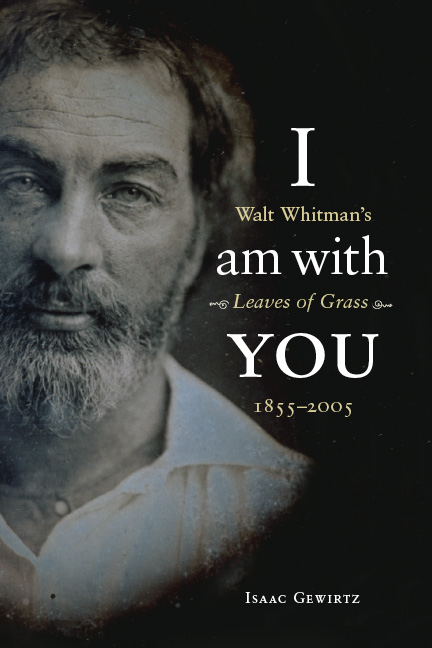
This is my favorite poem by Walt Whitman, the father of English
free verse and probably the most original and unique American poet. "A Noiseless,
Patient Spider" demonstrates how a
great poem can mesmerize us with a simple metaphor: here, a spider
weaving its web symbolizes the ever-questing and -questioning human soul.
A Noiseless Patient Spider
by Walt Whitman
A noiseless patient spider,
I mark'd where on a little promontory it stood isolated,
Mark'd how to explore the vacant vast surrounding,
It launch'd forth filament, filament, filament, out of itself,
Ever unreeling them, ever tirelessly speeding them.
And you O my soul where you stand,
Surrounded, detached, in measureless oceans of space,
Ceaselessly musing, venturing, throwing, seeking the spheres to connect them,
Till the bridge you will need be form'd, till the ductile anchor hold,
Till the gossamer thread you fling catch somewhere, O my soul.
Emily Dickinson and Walt Whitman were the mother and father of American free
verse, but they were as unalike as
night and day. Whitman claimed to be a rogue and wrote freely about sex and
homosexuality. Dickinson was a recluse who wrote about love more circumspectly.
But perhaps they were not so unalike, since it has been suggested that they both
wrote about love without ever consummating a real-life relationship. In any
case, they left us many moving and memorable poems. Dickinson's poems seem more
formal/traditional that Whitman's, but she employed slant rhymes and metrical
variations that make her sound different from any
poet before her ...
Come Slowly, Eden
by Emily Dickinson
Come slowly, Eden
Lips unused to thee.
Bashful, sip thy jasmines,
As the fainting bee,
Reaching late his flower,
Round her chamber hums,
Counts his nectars—alights,
And is lost in balms!
If Walt Whitman is the father of free verse, Ezra Pound is the rebellious son
who helped carry on the family tradition despite not always agreeing with (or
wanting to acknowledge) his patriarch. Pound is an interesting poet. He advised other poets to "make it new," then wrote some of the most
archaic-sounding poems since Chaucer. But he proved in poems like "The Garden"
that free verse can rival the best formal poetry.
The Garden
by Ezra Pound
Like a skein of loose silk blown against a wall
She walks by the railing of a path in Kensington Gardens,
And she is dying piece-meal
of a sort of emotional anemia.
And round about there is a rabble
Of the filthy, sturdy, unkillable infants of the very poor.
They shall inherit the earth.
In her is the end of breeding.
Her boredom is exquisite and excessive.
She would like some one to speak to her,
And is almost afraid that I
will commit that indiscretion.
While modern English/American free verse began with Walt Whitman, he obviously learned
much about his craft from the King James Bible. The KJV, produced
from 1604 to 1611 under the sponsorship of King James I of England, contains
some of the best and most ancient free verse in the English language. The passage below demonstrates
just how moving and musical poetry can be, without formal meter or rhyme.
Song of Solomon
attributed to King Solomon
from the King James Bible
I am the rose of Sharon, and the lily of the valleys.
As the lily among thorns, so is my love among the daughters.
As the apple tree among the trees of the wood, so is my beloved among the sons.
I sat down under his shadow with great delight, and his fruit was sweet to my taste.
He brought me to the banqueting house, and his banner over me was love.
Stay me with flagons, comfort me with apples: for I am sick of love.
His left hand is under my head, and his right hand doth embrace me.
I charge you, O ye daughters of Jerusalem, by the roes,
and by the hinds of the field, that ye stir not up, nor wake my love, till he please.
"Wulf and Eadwacer" is perhaps the first great poem in the English language,
with the caveat that at the time it was written, English still sounded a lot like
German! I hope my translation of the poem does it
justice, because it has been one of my favorite poems since I first read it. The
poem seems to have been written by a woman
and it deals with what appears to be rape, an
unwanted child, and perhaps a ménage a trois.
Wulf and Eadwacer
(Anonymous Anglo-Saxon Ballad, circa 960 AD)
loose translation by
Michael R. Burch
My clan's curs pursue him like crippled game;
they'll rip him apart if he approaches their pack.
It is otherwise with us.
Wulf's on one island; I'm on another.
His island's a fortress, fastened by fens.
(fastened=secured)
Here, bloodthirsty curs howl for carnage.
They'll rip him apart if he approaches their pack.
It is otherwise with us.
My heart pursued Wulf like a panting hound,
but whenever it rained—how I
wept!—
the boldest cur grasped me in his paws:
good feelings for him, but for me loathsome!
Wulf, O, my Wulf, my ache for you
has made me sick; your seldom-comings
have left me famished, deprived of real meat.
Have you heard, Eadwacer? Watchdog! A wolf has borne
our wretched whelp to the woods!
One can easily sever what never was one:
our song together.
NOTE: I do not claim that my interpretation of this famously ambiguous
poem is the "correct" one. In my poem, the speaker is a defiant early
feminist, the first #metoo poet of the English language. She is disgusted with her bloodthirsty tribe, who have driven her
lover Wulf away. Why? Perhaps because they wanted to sacrifice him to the
"gods." Perhaps because he broke some primitive law. We simply don't know.
But whatever the reason, the speaker claims that
it is ungelic, or "otherwise" with her. She is not like her
ferocious, bloodthirsty people. They are alien to her. Rather, she dreams of
her lover Wulf and follows him in her hopeful, loving thoughts. But even as
she dreams of Wulf, she is being raped by another man, Eadwacer. It is not
clear who Eadwacer is. He may be a priest (Heaven-Watcher), a guardian
(Property-Watcher), a family member appointed to "protect" her "purity" (a
Watchdog), or perhaps her husband against her will. The speaker defiantly insults Eadwacer.
He is unable to please her. He is deficient in "meat" compared to Wulf.
She mocks her would-be "lover" and "protector." Eadwacer has made her pregnant,
but she abhors him. Something terrible has happened to their whelp, or child.
Their "song together" will be easily severed, because they were never really
one. She waits for Wulf to put an end to Eadwacer, so that they can be reunited.
Again, please keep in mind that I cannot claim that this is the "correct"
interpretation of the poem. No one can claim to know exactly what the original poet
intended. But I think my interpretation makes sense. It's the story of many
women who have been separated from the men they love by war, religion and/or
chauvinistic men.
The earliest Old English poem still extant today is probably "Cædmon's Hymn,"
which was composed sometime between 658 and 680 AD. According to the scholar
Bede (673-735), Cædmon was an illiterate herdsman who worked at the monastery of
Whitby, a small English fishing village on the North Sea. Cædmon, as Bede's
story goes, was given the gift of poetic composition by an angel. Like "Wulf and
Eadwacer," "Cædmon's Hymn" was written in accentual meter, which utilizes four
strong beats per line and alliteration to create "word music."
Cædmon's Hymn (circa 658-680 AD)
loose translation by
Michael R. Burch
Humbly let us honour heaven-kingdom's Guardian,
the Measurer's might and his mind-plans,
the goals of the Glory-Father. First he, the Everlasting Lord,
established earth's fearful foundations.
Then he, the First Scop, hoisted heaven as a roof
for the sons of men: Holy Creator,
mankind's great Maker! Then he, the Ever-Living Lord,
afterwards made men middle-earth: Master Almighty!
The poem below, by Ezra Pound, strikes me as a "free verse Haiku." This short
poem demonstrates the ability of the better poets to capture a moment, in a few
words, for all time.
In A Station Of The Metro
by Ezra Pound
The apparition
of these faces in the
crowd:
Petals on a wet,
black bough.
Allen Ginsburg was perhaps Walt Whitman's primary heir. In this poem, Ginsburg
captures the questing spirit of Whitman, the way Whitman once captured the
questing spirit of a noiseless patient spider.
A Supermarket in California
by Allen Ginsberg
What thoughts I have of you tonight, Walt Whitman,
for I walked down the
streets under the trees with a headache self-conscious
looking at the full moon.
In my hungry fatigue, and shopping for images, I
went into the neon fruit supermarket, dreaming of your enumerations!
What peaches and what penumbras! Whole families
shopping at night! Aisles
full of husbands! Wives in the avocados, babies in the
tomatoes! — and you,
Garcia Lorca, what were you doing down by the
watermelons?
I saw you, Walt Whitman, childless, lonely old
grubber, poking among the
meats in the refrigerator and eyeing the grocery boys.
I heard you asking questions of each: Who killed the
pork chops? What price
bananas? Are you my Angel?
I wandered in and out of the brilliant stacks of
cans following you, and
followed in my imagination by the store detective.
We strode down the open corridors together in our
solitary fancy tasting
artichokes, possessing every frozen delicacy, and never
passing the cashier.
Where are we going, Walt Whitman? The doors close in
an hour. Which way does
your beard point tonight?
(I touch your book and dream of our odyssey in the
supermarket and feel
absurd.)
Will we walk all night through solitary streets? The
trees add shade to
shade, lights out in the houses, we'll both be lonely.
Will we stroll dreaming of the lost America of love
past blue automobiles in
driveways, home to our silent cottage?
Ah, dear father, graybeard, lonely old
courage-teacher, what America did you
have when Charon quit poling his ferry and you got out
on a smoking bank and
stood watching the boat disappear on the black waters of
Lethe?
Carl Sandburg is one of America's best-known penners of free verse.
Here "grass" may refer to Walt Whitman's Leaves of Grass, in which the
first American free verse poet suggests that if we want to find him after his
death, we can look for him under our boot soles. While this is not
a poem about the Holocaust, per se, every time I read it, I am reminded of the
mass graves discovered by Allied troops as they freed Europe from the Nazis.
Also, the similarity in sound of "Austerlitz" to "Auschwitz" creates an aural
link of sorts.
Grass
by Carl Sandburg
Pile the bodies high at Austerlitz and Waterloo.
Shovel them under and let me work―
I am the grass; I cover all.
And pile them high at Gettysburg
And pile them high at Ypres and Verdun.
Shovel them under and let me work.
Two years, ten years, and the passengers ask the conductor:
What place is this?
Where are we now?
I am the grass.
Let me work.
Under the Harvest Moon
by Carl Sandburg
Under the harvest moon,
When the soft silver
Drips shimmering
Over the garden nights,
Death, the gray mocker,
Comes and whispers to you
As a beautiful friend
Who remembers.
Under the summer roses
When the flagrant crimson
Lurks in the dusk
Of the wild red leaves,
Love, with little hands,
Comes and touches you
With a thousand memories,
And asks you
Beautiful, unanswerable questions.
"Dover Beach," written around 1850 and published in 1867, has been called "the
first major free-verse poem in the language." I tend to agree, as "Dover Beach"
and T. S. Eliot's "The Love Song of J. Alfred Prufrock" strike me as the first
two great modern free verse poems in the English language, out of the poems that
continue to employ meter and rhyme in a more relaxed form, while the best poems
of Walt Whitman make a more complete break. Arnold's and Eliot's poems also seem
more modern, while Whitman's sound more like the King James Bible. But I love
the best work of all three poets, so once again I don't want to split hairs.
It's interesting to compare the different styles that began to emerge from the
mid 1800's to early 1900's, but there is no more need to choose between formal
poetry and free verse than there is to choose between classical music and jazz.
Dover Beach
by Matthew Arnold
The sea is calm to-night,
The tide is full, the moon lies fair
Upon the straits; on the French coast the light
Gleams and is gone; the cliffs of England stand,
Glimmering and vast, out in the tranquil bay.
Come to the window, sweet is the night-air!
Only, from the long line of spray
Where the sea meets the moon-blanched land,
Listen! you hear the grating roar
Of pebbles which the waves draw back, and fling,
At their return, up the high strand,
Begin, and cease, and then again begin,
With tremulous cadence slow, and bring
The eternal note of sadness in.
Sophocles long ago
Heard it on the Aegean, and it brought
Into his mind the turbid ebb and flow
Of human misery; we
Find also in the sound a thought,
Hearing it by this distant northern sea.
The sea of faith
Was once, too, at the full, and round earth's shore
Lay like the folds of a bright girdle furled.
But now I only hear
Its melancholy, long, withdrawing roar,
Retreating, to the breath
Of the night-wind, down the vast edges drear
And naked shingles of the world.
Ah, love, let us be true
To one another! for the world which seems
To lie before us like a land of dreams,
So various, so beautiful, so new,
Hath really neither joy, nor love, nor light,
Nor certitude, nor peace, nor help for pain;
And we are here as on a darkling plain
Swept with confused alarms of struggle and flight,
Where ignorant armies clash by night.
"Those Winter Sundays" is a poem that is simultaneously a blank verse sonnet and
free verse. Rather than trying to label it, we should simply enjoy it, as it
tells a compelling story about a boy who once took his father for granted, until
one day he "saw the light."
Those Winter Sundays
by Robert Hayden
Sundays too my father got up early
and put his clothes on in the blueblack cold,
then with cracked hands that ached
from labor in the weekday weather made
banked fires blaze. No one ever thanked him.
I'd wake and hear the cold splintering, breaking.
When the rooms were warm, he'd call,
and slowly I would rise and dress,
fearing the chronic angers of that house,
Speaking indifferently to him,
who had driven out the cold
and polished my good shoes as well.
What did I know, what did I know
of love's austere and lonely offices?
Stephen Crane was one of the more distinctive "early adopters" of free verse.
Today he is best known for his novel The Red Badge of Courage and short
stories like The Bride Comes to Yellow Sky. But he was an accomplished
poet at an early age. Many of his poems, including the two below, fall into the
eclectic category of "free verse parables." At the time Crane was
writing, no other poet sounded like him, although other writers would later adopt his
terse, no-nonsense style. Although he died prematurely at age 28, Crane became
an influence on the early Modernists and writers like Ernest Hemingway. Crane
rejected sentimentality and said: "A story should be logical in its action and
faithful to character. Truth to life itself was the only test, the greatest
artists were the simplest, and simple because they were true." We can also find
the virtues of truthfulness and simplicity in his poems.
Fast rode the knight
by Stephen Crane
Fast rode the knight
With spurs, hot and reeking,
Ever waving an eager sword,
"To save my lady!"
Fast rode the knight,
And leaped from saddle to war.
Men of steel flickered and gleamed
Like riot of silver lights,
And the gold of the knight's good banner
Still waved on a castle wall.
. . .
A horse,
Blowing, staggering, bloody thing,
Forgotten at foot of castle wall.
A horse
Dead at foot of castle wall.
The Wayfarer
by Stephen Crane
THE WAYFARER,
Perceiving the pathway to truth,
Was struck with astonishment.
It was thickly grown with weeds.
“Ha,” he said,
“I see that none has passed here
In a long time.”
Later he saw that each weed
Was a singular knife.
“Well,” he mumbled at last,
“Doubtless there are other roads.”
Robert Creeley is a modern poet who wrote in a "spare style" similar to that of
Stephen Crane. Creeley is often associated with the Black Mountain poets, a
group that included Charles Olson, Robert Duncan and Allen Ginsberg, among
others. Creeley was a prolific writer, with more than sixty published books.
I Know a Man
by Robert Creeley
As I sd to my
friend, because I am
always talking – John, I
sd, which was not his
name, the darkness sur-
rounds us, what
can we do against
it, or else, shall we &
why not, buy a goddamn big car,
drive, he sd, for
christ’s sake, look
out where yr going.
Wallace Stevens is one of the best modern free verse poets, although many of his
best poems are written in what appears to be gorgeously-rhythmed blank verse
(i.e., unrhymed iambic pentameter). His meter is so good it defies
categorization; perhaps only Hart Crane rivals him when it comes to writing fluid verse.
The Snow Man
by Wallace Stevens
One must have a mind of winter
To regard the frost and the boughs
Of the pine-trees crusted with snow;
And have been cold a long time
To behold the junipers shagged with ice,
The spruces rough in the distant glitter
Of the January sun; and not to think
Of any misery in the sound of the wind,
In the sound of a few leaves,
Which is the sound of the land
Full of the same wind
That is blowing in the same bare place
For the listener, who listens in the snow,
And, nothing himself, beholds
Nothing that is not there and the nothing that is.
D. H. Lawrence is another poet who's difficult to categorize. "Piano" may be
the best and most musical of his poems. While most of his best-known poems are
decidedly free verse, this one is written in rhymed couplets and seems more
traditional, yet in a nicely relaxed, modern way.
Piano
by D. H. Lawrence
Softly, in the dusk, a woman is singing to me;
Taking me back down the vista of years, till I see
A child sitting under the piano, in the boom of the tingling strings
And pressing the small, poised feet of a mother who smiles as she sings.
In spite of myself, the insidious mastery of song
Betrays me back, till the heart of me weeps to belong
To the old Sunday evenings at home, with winter outside
And hymns in the cozy parlor, the tinkling piano our guide.
So now it is vain for the singer to burst into clamor
With the great black piano appassionato. The glamour
Of childish days is upon me, my manhood is cast
Down in the flood of remembrance, I weep like a child for the past.
Robinson Jeffers preferred nature to human civilizations, which he seemed to
find not all that civilized. Jeffers built a rough-hewn stone tower on the
California coast, where he lived in relative solitude with his wife Una and
their family. The four-story Gothic tower was named "Hawk Tower" after a hawk
that appeared while Jeffers was working on the structure, and which disappeared
the day it was completed.
Gwendolyn Brooks was the first African-American writer to receive a Pulitzer
Prize. Her poems often dealt with "the personal celebrations and struggles of
ordinary people in her community."
The Bean Eaters
by Gwendolyn Brooks
They eat beans mostly, this old yellow pair.
Dinner is a casual affair.
Plain chipware on a plain and creaking wood.
Tin flatware.
Two who are Mostly Good.
Two who have lived their day,
But keep putting on their clothes
And putting things away.
And remembering...
Remembering, with twinklings and twinges
As they lean over the beans in their rented back room that is full of beads and
receipts and dolls and clothes, tobacco crumbs, vases and fringes.
Shine, Perishing Republic
by Robinson Jeffers
While this America settles in the mould of its vulgarity, heavily thickening to empire,
And protest, only a bubble in the molten mass, pops and sighs out, and the mass hardens,
I sadly smiling remember that the flower fades to make fruit, the fruit rots to make earth.
Out of the mother; and through the spring exultances, ripeness and decadence; and home to the mother.
You making haste haste on decay: not blameworthy; life is good, be it stubbornly long or suddenly
A mortal splendor: meteors are not needed less than mountains: shine, perishing republic.
But for my children, I would have them keep their distance from the thickening center; corruption
Never has been compulsory, when the cities lie at the monster’s feet there are left the mountains.
And boys, be in nothing so moderate as in love of man, a clever servant, insufferable master.
There is the trap that catches noblest spirits, that caught—they say—God, when he walked on earth.
Along with Ezra Pound, T. S. Eliot helped create modern free verse. This poem
demonstrates his remarkable talents. While Eliot was a sophisticated, urbane
poet, his main theme was human love, and he often comes across as a somewhat
"nerdy," disillusioned romantic.
La Figlia Che Piange (The Weeping Girl)
by T. S. Eliot
Stand on the highest pavement of the stair —
Lean on a garden urn —
Weave, weave the sunlight in your hair —
Clasp your flowers to you with a pained surprise —
Fling them to the ground and turn
With a fugitive resentment in your eyes:
But weave, weave the sunlight in your hair.
So I would have had him leave,
So I would have had her stand and grieve,
So he would have left
As the soul leaves the body torn and bruised,
As the mind deserts the body it has used.
I should find
Some way incomparably light and deft,
Some way we both should understand,
Simple and faithless as a smile and a shake of the hand.
She turned away, but with the autumn weather
Compelled my imagination many days,
Many days and many hours:
Her hair over her arms and her arms full of flowers.
And I wonder how they should have been together!
I should have lost a gesture and a pose.
Sometimes these cogitations still amaze
The troubled midnight, and the noon's repose.
William Carlos Williams is one of the most important American free verse poets,
along with Walt Whitman, Emily Dickinson, Ezra Pound and T. S. Eliot.
This Is Just To Say
by William Carlos Williams
I have eaten
the plums
that were in
the icebox
and which
you were probably
saving
for breakfast
Forgive me
they were delicious
so sweet
and so cold
Langston Hughes is another important and highly influential
American free verse poet. He was also important as a protest poet. His
poetry contains elements of traditional poetry, negro spirituals and the blues.
I, Too, Sing America
by Langston Hughes
I, too, sing America.
I am the darker brother.
They send me to eat in the kitchen
When company comes,
But I laugh,
And eat well,
And grow strong.
Tomorrow,
I'll be at the table
When company comes.
Nobody'll dare
Say to me,
"Eat in the kitchen,"
Then.
Besides,
They'll see how beautiful I am
And be ashamed—
I, too, am America.
Luis Omar Salinas is generally considered to be one of the best Hispanic
poets to write in English, with good cause. "Sometimes Mysteriously" is one of
those mysterious poems that makes us feel a special kinship with the
poet.
The Death of the Ball Turret Gunner
by Randall Jarrell
From my mother's sleep I fell into the State,
And I hunched in its belly till my wet fur froze.
Six miles from earth, loosed from its dream of life,
I woke to black flak and the nightmare fighters.
When I died they washed me out of the turret with a hose.
Randall Jarrell was born in Nashville, Tennessee, in 1914, the year World War I
began. He earned bachelor's and master's degrees from Vanderbilt University,
where he studied under Robert Penn Warren, John Crowe Ransom and Allen Tate. In
1942 he enlisted in the Army Air Corps and worked as a control tower operator
during World War II, an experience which influenced and provided material for
his poetry. Jarrell’s reputation as a poet was established in 1945 with the
publication of his second book, Little Friend, Little Friend, which
"bitterly and dramatically documents the intense fears and moral struggles of
young soldiers."
Sometimes Mysteriously
by Luis Omar Salinas
Sometimes in the evening when love
tunes its harp and the crickets
celebrate life, I am like a troubadour
in search of friends, loved ones,
anyone who will share with me
a bit of conversation. My loneliness
arrives ghostlike and pretentious,
it seeks my soul, it is ravenous
and hurting. I admire my father
who always has advice in these matters,
but a game of chess won't do, or
the frivolity of religion.
I want to find a solution, so I
write letters, poems, and sometimes
I touch solitude on the shoulder
and surrender to a great tranquility.
I understand I need courage
and sometimes, mysteriously,
I feel whole.
The following poem by Robinson Jeffers reminds me of Robert Oppenheimer's
comparison of the atomic bomb to Shiva: "I am become Death, the destroyer of
worlds."
Shiva
by Robinson Jeffers
There is a hawk that is picking the birds out of our sky,
She killed the pigeons of peace and security,
She has taken honesty and confidence from nations and men,
She is hunting the lonely heron of liberty.
She loads the arts with nonsense, she is very cunning,
Science with dreams and the state with powers to catch them at last.
Nothing will escape her at last, flying nor running.
This is the hawk that picks out the star's eyes.
This is the only hunter that will ever catch the wild swan;
The prey she will take last is the wild white swan of the beauty of things.
Then she will be alone, pure destruction, achieved and supreme,
Empty darkness under the death-tent wings.
She will build a nest of the swan's bones and hatch a new brood,
Hang new heavens with new birds, all be renewed.
Walid Khazindar was born in 1950 in Gaza City. He is considered one of the best Palestinian poets; his poetry has been said to
be "characterized by metaphoric originality and a novel thematic approach
unprecedented in Arabic poetry." He was awarded the first Palestine Prize for
Poetry in 1997. He lives in Tunis.
Distant light
by Walid Khazindar
loose translation by
Michael R. Burch
Bitterly cold,
winter clings to the naked trees.
If only you would free
the bright sparrows
from the tips of your fingers
and release a smile—that shy, tentative smile—
from the imprisoned anguish I see.
Sing! Can we not sing
as if we were warm, hand-in-hand,
shielded by shade from a glaring sun?
Can you not always remain this way,
stoking the fire, more beautiful than necessary, and
silent?
Darkness increases; we must remain vigilant
and this distant light is our only consolation—
this imperiled flame, which from the beginning
has been flickering,
in danger of going out.
Come to me, closer and closer.
I don't want to be able to tell my hand from yours.
And let's stay awake, lest the snow smother us.
"A Blessing" is a wonderfully touching praise poem that helps us share the
poet's awe and gladness to have had such a magical experience with creatures of
another species. I like to think of poetry being an act of communion between the
poet and reader, and this poem might well be called sacred, or touching on the
sacred.
A Blessing
by James Wright
Just off the highway to Rochester, Minnesota,
Twilight bounds softly forth on the grass.
And the eyes of those two Indian ponies
Darken with kindness.
They have come gladly out of the willows
To welcome my friend and me.
We step over the barbed wire into the pasture
Where they have been grazing all day, alone.
They ripple tensely, they can hardly contain their happiness
That we have come.
They bow shyly as wet swans. They love each other.
There is no loneliness like theirs.
At home once more,
They begin munching the young tufts of spring in the darkness.
I would like to hold the slenderer one in my arms,
For she has walked over to me
And nuzzled my left hand.
She is black and white,
Her mane falls wild on her forehead,
And the light breeze moves me to caress her long ear
That is delicate as the skin over a girl's wrist.
Suddenly I realize
That if I stepped out of my body I would break
Into blossom.
"The Layers" is one of my favorite poems by a contemporary poet. Stanley Kunitz (1905-2006) was an American poet. He was
appointed Poet Laureate twice, first in 1974 and then again in 2000 (when he was 95!).
The Layers
by Stanley Kunitz
I have walked through many lives,
some of them my own,
and I am not who I was,
though some principle of being
abides, from which I struggle
not to stray.
When I look behind,
as I am compelled to look
before I can gather strength
to proceed on my journey,
I see the milestones dwindling
toward the horizon
and the slow fires trailing
from the abandoned camp-sites,
over which scavenger angels
wheel on heavy wings.
Oh, I have made myself a tribe
out of my true affections,
and my tribe is scattered!
How shall the heart be reconciled
to its feast of losses?
In a rising wind
the manic dust of my friends,
those who fell along the way,
bitterly stings my face.
Yet I turn, I turn,
exulting somewhat,
with my will intact to go
wherever I need to go,
and every stone on the road
precious to me.
In my darkest night,
when the moon was covered
and I roamed through wreckage,
a nimbus-clouded voice
directed me:
"Live in the layers,
not on the litter."
Though I lack the art
to decipher it,
no doubt the next chapter
in my book of transformations
is already written.
I am not done with my changes.
When I Heard The Learn'd Astronomer
by Walt Whitman
When I heard the learn'd astronomer,
When the proofs, the figures, were ranged in columns before me,
When I was shown the charts and diagrams, to add, divide, and measure them,
When I sitting heard the astronomer where he lectured with much applause in the
lecture-room,
How soon unaccountable I became tired and sick,
Till rising and gliding out I wander'd off by myself,
In the mystical moist night-air, and from time to time,
Look'd up in perfect silence at the stars.
in Just-
by e. e. cummings
in Just-
spring when the
world is mud-
luscious the little
lame baloonman
whistles far and wee
and eddieandbill come
running from marbles and
piracies and it's
spring
when the world is puddle-wonderful
the queer
old baloonman whistles
far and wee
and bettyandisbel come dancing
from hop-scotch and jump-rope and
it's
spring
and
the
goat-footed
baloonMan whistles
far
and
wee
Beginning My Studies
by Walt Whitman
Beginning my studies the first step pleas'd me so much,
The mere fact consciousness, these forms, the power of motion,
The least insect or animal, the senses, eyesight, love,
The first step I say awed me and pleas'd me so much,
I have hardly gone and hardly wish'd to go any farther,
But stop and loiter all the time to sing it in ecstatic songs.
Buffalo Bill's defunct
by e. e. cummings
Buffalo Bill's
defunct
who used to
ride a watersmooth-silver
stallion
and break onetwothreefourfive
pigeonsjustlikethat
Jesus
he was a handsome man
and what i want to know is
how do you like your blueeyed boy
Mister Death
Richard Moore is one of my favorite contemporary poets. He specialized
in writing formal poetry, and was a strong proponent of "perfect rhyme." But he
still managed to write one of my favorite free verse poems, "In the Dark
Season."
In The Dark Season
by Richard Moore
I
I fall out of the foliage of my feelings.
That is the beginning, the ending,
when the orange peels appear
from the shrinking lips of the snow
and broken bottles, still clinging to their labels,
in the gutter outside the church.
A silk stocking coils in the mud.
In the dark season, someone has sown
the seed of confusion. The church will graze
on the flowers, the fruits of love,
the soft nutritious pulp of remorse.
Do these events signify
summertime in another hemisphere?
One studied a new language in the darkness,
looked far down into the well,
into the hints of sunlight in its depths.
II
We are dead such a long time before
and will be dead such a long time after
this leaping into light
as a dolphin leaps from the sea
and carries the glare of that moment
back among the curious creatures
who have not known the light.
Don't tell me this is like Plato's cave;
I know that. But in death, our element,
who swims with us? Do we even?
If God is light...No, but there may be,
as the poet says, a soft monster
deeply sleeping among his thousand
arms under millennia
unnumbered, and enormous polypi.
I think we have been frightened into life
as fish leap from greater fish below.
We cry angrily in our cradles,
then overcome, grow tranquil through the years,
hopefully, ready ever for the depths
ever ready for us.
III
Yes, but of course, there is the need
for symmetry. Matter calls out
for antimatter, which forthwith
sings in the shadows. Thus, tonight
streetlight fingers new foliage
with breezes making light of it,
where unseen trunk divides itself
into a multitude of tips
above ground and below, as in
a mirror, strangers to each other,
two lives, depending on each other,
therefore the same life: in dark depth
and moisture one, in dry sunlight
the other: God and Satan, one,
female and male in each one, one.
Dolphins from darkness visit light.
Who from her glitter visits us?
These, lost inside you: look outside
in the not-you: you find them there.
Final Soliloquy of the Interior Paramour
by Wallace Stevens
Light the first light of evening, as in a room
In which we rest and, for small reason, think
The world imagined is the ultimate good.
This is, therefore, the intensest rendezvous.
It is in that thought that we collect ourselves,
Out of all the indifferences, into one thing:
Within a single thing, a single shawl
Wrapped tightly round us, since we are poor, a warmth,
A light, a power, the miraculous influence.
Here, now, we forget each other and ourselves.
We feel the obscurity of an order, a whole,
A knowledge, that which arranged the rendezvous.
Within its vital boundary, in the mind.
We say God and the imagination are one ...
How high that highest candle lights the dark.
Out of this same light, out of the central mind,
We make a dwelling in the evening air,
In which being there together is enough.
Hurt Hawks
by Robinson Jeffers
The broken pillar of the wing jags from the clotted shoulder,
The wing trails like a banner in defeat,
No more to use the sky forever but live with famine
And pain a few days: cat nor coyote
Will shorten the week of waiting for death, there is game without talons.
He stands under the oak-bush and waits
The lame feet of salvation; at night he remembers freedom
And flies in a dream, the dawns ruin it.
He is strong and pain is worse to the strong, incapacity is worse.
The curs of the day come and torment him
At distance, no one but death the redeemer will humble that head,
The intrepid readiness, the terrible eyes.
The wild God of the world is sometimes merciful to those
That ask mercy, not often to the arrogant.
You do not know him, you communal people, or you have forgotten him;
Intemperate and savage, the hawk remembers him;
Beautiful and wild, the hawks, and men that are dying, remember him.
I’d sooner, except the penalties, kill a man than a hawk; but the great redtail
Had nothing left but unable misery
From the bones too shattered for mending, the wing that trailed under his talons
when he moved.
We had fed him for six weeks, I gave him freedom,
He wandered over the foreland hill and returned in the evening, asking for
death,
Not like a beggar, still eyed with the old
Implacable arrogance. I gave him the lead gift in the twilight. What fell was
relaxed,
Owl-downy, soft feminine feathers; but what
Soared: the fierce rush: the night-herons by the flooded river cried fear at its
rising
Before it was quite unsheathed from reality.
Edge
by Sylvia Plath
The woman is perfected.
Her dead
Body wears the smile of accomplishment,
The illusion of a Greek necessity
Flows in the scrolls of her toga,
Her bare
Feet seem to be saying:
We have come so far, it is over.
Each dead child coiled, a white serpent,
One at each little
Pitcher of milk, now empty.
She has folded
Them back into her body as petals
Of a rose close when the garden
Stiffens and odors bleed
From the sweet, deep throats of the night flower.
The moon has nothing to be sad about,
Staring from her hood of bone.
She is used to this sort of thing.
Her blacks crackle and drag.
since feeling is first
e. e. cummings
since feeling is first
who pays any attention
to the syntax of things
will never wholly kiss you;
wholly to be a fool
while Spring is in the world
my blood approves,
and kisses are a better fate
than wisdom
lady i swear by all flowers. Don’t cry
—the best gesture of my brain is less than
your eyelids’ flutter which says
we are for each other: then
laugh, leaning back in my arms
for life’s not a paragraph
And death i think is no parenthesis
Winter in the Boulevard
by D. H. Lawrence
The frost has settled down upon the trees
And ruthlessly strangled off the fantasies
Of leaves that have gone unnoticed, swept like old
Romantic stories now no more to be told.
The trees down the boulevard stand naked in thought,
Their abundant summery wordage silenced, caught
In the grim undertow; naked the trees confront
Implacable winter's long, cross-questioning brunt.
Has some hand balanced more leaves in the depths of the twigs?
Some dim little efforts placed in the threads of the birch?—
It is only the sparrows, like dead black leaves on the sprigs,
Sitting huddled against the cerulean, one flesh with their perch.
The clear, cold sky coldly bethinks itself.
Like vivid thought the air spins bright, and all
Trees, birds, and earth, arrested in the after-thought
Awaiting the sentence out from the welkin brought.
Choricos
by Richard Aldington
The ancient songs
Pass deathward mournfully.
Cold lips that sing no more, and withered wreaths,
Regretful eyes and drooping breasts and wings—
Symbols of ancient songs
Mournfully passing
Down to the great white surges,
Watched of none
Save the frail sea-birds
And the lithe pale girls,
Daughters of Okeanos.
And the songs pass
From the green land
Which lies upon the waves as a leaf
On the flowers of hyacinth;
And they pass from the waters,
The manifold winds and the dim moon,
And they come,
Silently winging through soft Kimmerian dusk,
To the quiet level lands
That she keeps for us all,
That she wrought for us all for sleep
In the silver days of the earth’s dawning—
Prosperine, daughter of Zeus.
And we turn from the Kuprian’s breasts,
And we turn from thee,
Phoibos Apollon,
And we turn from the music of old
And the hills that we loved and the meads,
And we turn from the fiery day,
And the lips that were over-sweet;
For silently
Brushing the fields with red-shod feet,
With purple robe
Searing the flowers as with a sudden flame,
Death,
Thou hast come upon us.
And of all the ancient songs
Passing to the swallow-blue halls
By the dark streams of Persephone,
This only remains:
That in the end we turn to thee,
Death,
That we turn to thee, singing
One last song.
O Death,
Thou art an healing wind
That blowest over white flowers
A-tremble with dew;
Thou art a wind flowing
Over long leagues of lonely sea;
Thou art the dusk and the fragrance;
Thou art the lips of love mournfully smiling;
Thou art the pale peace of one
Satiate with old desires;
Thou art the silence of beauty,
And we look no more for the morning;
We yearn no more for the sun,
Since with thy white hands,
Death,
Thou crownest us with the pallid chaplets,
The slim colorless poppies
Which in thy garden alone
Softly thou gatherest.
And silently;
And with slow feet approaching;
And with bowed head and unlit eyes,
We kneel before thee.
And thou, leaning towards us,
Caressingly layest upon us
Flowers from thy thin cold hands,
And, smiling as a chaste woman
Knowing love in her heart,
Thou sealest our eyes
And the illimitable quietude
Comes gently upon us.
Other free verse poems of note:
Song of Myself by Walt Whitman
Out of the Cradle Endlessly Rocking Rocking by Walt Whitman
When Lilacs Last in the Dooryard Bloom'd by Walt Whitman
The Love Song of J. Alfred Prufrock by T. S. Eliot
The Waste Land by T. S. Eliot
Four Quartets by T. S. Eliot
Preludes by T. S. Eliot
Morning Song of Senlin by Conrad Aiken
The Cantos by Ezra Pound
A Pact by Ezra Pound
Dulce Et Decorum Est by Wilfred Owen
Returning, We Hear the Larks by Isaac Rosenberg
War Is Kind by Stephen Crane
Punishment by Seamus Heaney
Helenby H. D.
Orchard by H.D.
Garden by H.D.
somewhere i have never travelled, gladly beyond by e. e. cummings
The Fishby Elizabeth Bishop
The Send-Off by Wilfred Owen
After the Persian by Louise Bogan
My Grandma's Love Letters by Hart Crane
Voyagesby Hart Crane
Incidental Effects of the Revival of Fascism on a Provincial French Island by T. Merrill
Praise Song for the Dayby Elizabeth Alexander
Fog by Carl Sandburg
Grass by Carl Sandburg
Chicago by Carl Sandburg
Free Verse by Robert Graves
Little Father by Li-Young Lee
Winter Poem by Nikki Giovanni
The Fish by Marianne Moore
Poetry by Marianne Moore
Marriage by Marianne Moore
Diving Into the Wreck by Adrienne Rich
Apology for Bad Dreams by Robinson Jeffers
Spring and All by William Carlos Williams
Snake by D. H. Lawrence
The Ship of Death by D. H. Lawrence
Medlars and Sorb-Apples by D. H. Lawrence
Daddy by Sylvia Plath
Chiseled Clouds by A. R. Ammons
Soonest Mended by John Ashbery
The Dream Songs by John Berryman
Counting Small-Boned Bodies by Robert Bly
We Real Cool by Gwendolyn Brooks
Cold Summer by Charles Bukowski
Wishes for Sons by Lucille Clifton
here is another bone to pick with you by Lucille Clifton
to a dark moses by Lucille Clifton
The Rain by Robert Creeley
The Heaven of Animals by James Dickey
The Sheep Child by James Dickey
Tribute to Kafka for Someone Taken by Alan Dugan
Love Song: I and Thou by Alan Dugan
Constantly Risking Absurdity by Lawrence Ferlinghetti
September Song by Geoffrey Hill
A Martian Sends a Postcard Home by Craig Raine
An Attempt at Jealousy by Craig Raine
The Lost Pilot by James Tate
Related pages: Famous Free Verse Poems,
The Best
Writing in the English Language
The HyperTexts