The HyperTexts
Holocaust Poetry, Prose, Translations, Art and Essays
The Hebrew word for the Holocaust is Shoah; thus poems written by Jewish poets may be called Shoah poetry. We have also published
Holocaust writings by Germans who opposed the Nazis, a Romani Gypsy, an Estonian
refugee, two Hiroshima survivors, and Pope John Paul II. You can find an
extensive index of writings by victims and survivors of the Holocaust below, along with poems
about racism, intolerance, war, genocide
and ethnic cleansing. Also included are essays by Nobel
laureates Albert Einstein and Elie Wiesel, both survivors of the Holocaust.—Michael R. Burch, editor, The HyperTexts
Related pages:
Darfur Poems,
Gaza Poems,
Nakba Poems,
Haiti Poems,
Hiroshima Poems, Holocaust Poems,
9-11 Poems,
Trail of Tears
Poems,
Best Poems about the
Holocaust
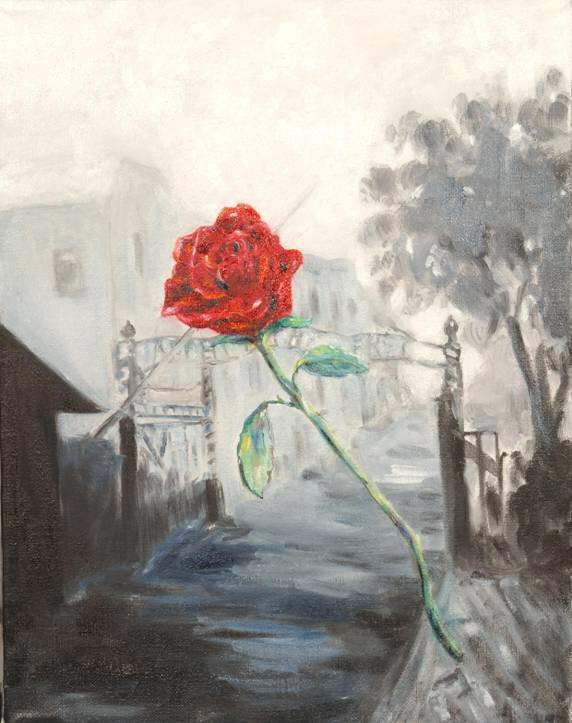
On Auschwitz now the reddening sunset settles;
they sleep alike—diminutive and tall,
the innocent, the "surgeons."
Sleeping, all ...
The poem "Auschwitz Rose" is dedicated to all
victims and survivors of the Holocaust. To read the full poem, please click the picture above. In Mary Rae's painting, the Rose is thornless,
representing women and children who are defenseless unless we choose to protect them. As we read the Witnesses who follow, let's all
say "Never again!" and pledge to protect all women and all children from all such atrocities.
Auschwitz was the largest of the Nazi concentration camps. In the poem above, the term "surgeons" appears in quotation marks
for purposes of irony because German doctors disobeyed their oaths to conduct experiments on
prisoners, one of the
ghastlier aspects of the Holocaust. The most notorious Nazi "surgeon" was Josef Mengele,
the
Todesengel (Death Angel). Mengele conducted macabre experiments on
children and sent many completely innocent women and
children to the gas chambers. Rudolf Höss testified at the Nuremberg
Trials that up to three million people died at Auschwitz alone.
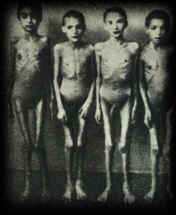
Speechless at Auschwitz
by Ko Un
loose translation/interpretation by Michael R. Burch
At Auschwitz
piles of glasses
mountains of shoes
returning, we stared out different windows.
Ko Un speaks for all of us, by not knowing what to say about the evidence of the
Holocaust, and man's inhumanity to man.
Frail Envelope of Flesh
by Michael R. Burch
for the mothers and children of the Holocaust and Nakba
Frail envelope of flesh,
lying cold on the surgeon’s table
with anguished eyes
like your mother’s eyes
and a heartbeat weak, unstable ...
Frail crucible of dust,
brief flower come to this—
your tiny hand
in your mother’s hand
for a last bewildered kiss ...
Brief mayfly of a child,
to live two artless years!
Now your mother’s lips
seal up your lips
from the Deluge of her tears ...
When we consider man's inhumanity to man, few images are as stark as the one of
Nazi "surgeons" conducting horrific experiments on innocent children.
Something
by Michael R. Burch
for the children of the Holocaust and Nakba
Something inescapable is lost—
lost like a pale vapor curling up into shafts of moonlight,
vanishing in a gust of wind toward an expanse of stars
immeasurable and void.
Something uncapturable is gone—
gone with the spent leaves and illuminations of autumn,
scattered into a haze with the faint rustle of parched grass
and remembrance.
Something unforgettable is past—
blown from a glimmer into nothingness, or less,
which denial has swept into a corner, where it lies
in dust and cobwebs and silence.
Unnecessary cruelty and brutality are horrible enough, but when
innocent children are the victims, words begin to fail us. The poem "Something" tries to capture something of the heartbreaking loss of young
lives cut short, even as the poet admits his inability to do anything more than preserve a
brief flicker of remembrance, an increasingly ethereal memory. What happened to millions of children during
the Holocaust was a horror beyond imagining. Children who had been "born wrong"
according to the Nazis—whether Jewish, Polish, Gypsy, Slavic, Russian or otherwise
"inferior"—were either killed outright or stripped of their human rights and
consigned to abysmal conditions in concentration camps and walled ghettoes. But
as the poem below points out, even to this day completely innocent
children continue to be stripped of their human rights and consigned to
abysmal, terrifying conditions in refugee camps
and walled ghettoes, while the world watches and does little or nothing
to help them.
Epitaph for a Child of the Nakba
by Michael R. Burch
I lived as best I could, and then I died.
Be careful where you step: the grave is wide.
The Hebrew word for the Holocaust is Shoah; it means "Catastrophe." The Arabic
word Nakba also means "Catastrophe." Today millions of completely innocent
Palestinian children and their mothers and grandparents languish within the walled ghetto of Gaza, the walled
bantustans of Occupied Palestine (the West Bank) and refugee camps across the
Middle East. Why are people who are obviously not "terrorists" being
collectively punished for the "crime" of having been "born wrong," just as Jews were once collectively punished by the Nazis? If it concerns you that such things continue to happen today,
and in this case are being funded and supported by the government of the United
States, please visit our
Nakba Index and read what great humanitarians and Nobel Peace Prize winners
like Albert Einstein, Mohandas Gandhi, Nelson Mandela, Desmond Tutu and Jimmy
Carter have said on the subject. The most
admired Jewish intellectual of all time, the man most responsible for the advent
of modern nonviolent resistance, the two men best known for ending South African
apartheid, and the president who helped negotiate peace between Israel and
Palestinians have all spoken firmly and eloquently against the racism and
injustices that resulted in this new catastrophe,
the Nakba.
If you are a Christian, or have an interest in such things, you may want to read
Did a
Misinterpretation of the Bible lead to the Trail of Tears, American Slavery and
the Holocaust?
January 27, 2023: The Numb Heart
by Bob Zisk
The architecture, drab, decays in silence,
Except for wind that shakes the teetering balance
Of Themis. Under onyx wings of ravens
Whose squawks protest indifference in the heavens,
God and Satan nod in disbelief,
And Furies muffle screams of useless grief.
Themis was the goddess and personification of wisdom, justice, law and order,
fairness, and custom. Her symbols include the famous Scales of Justice.
Cleansings
by Michael R. Burch
Walk here among the walking specters. Learn
inhuman patience. Flesh can only cleave
to bone this tightly if their hearts believe
that God is good, and never mind the Urn.
A lentil and a bean might plump their skin
with mothers’ bounteous, soft-dimpled fat
(and call it “health”), might quickly build again
the muscles of dead menfolk. Dream, like that,
and call it courage. Cry, and be deceived,
and so endure. Or burn, made wholly pure.
If one prayer is answered,
“G-d”
must be believed.
No holy pyre this—death’s hissing chamber.
Two thousand years ago—a starlit manger,
weird Herod’s cries for vengeance on the meek,
the children slaughtered. Fear, when angels speak,
the prophesies of man.
Do what you "can,"
not what you must, or should.
They call you “good,”
dead eyes devoid of tears; how shall they speak
except in blankness? Fear, then, how they weep.
Escape the gentle clutching stickfolk. Creep
away in shame to retch and flush away
your vomit from their ashes. Learn to pray.
Holocaust Poetry, Testimonies and Essays by Holocaust Victims and Survivors, and Great Humanitarians
Miklós Radnóti (translations of a Hungarian Jewish poet; perhaps the greatest of the Holocaust poets)
Louis Emanuel Fynaut (a Flemish resistance fighter with a keen eye and a keener pen)
Terezín Children's Holocaust Poems (poems by child poets of a Nazi concentration camp)
Martin Niemöller (he wrote the most famous of all Holocaust poems: "First they came for the Jews ...")
Einstein on Palestine (Albert Einstein was both a victim and survivor of the Holocaust)
Mahmoud Darwish (the preeminent Palestinian Holocaust poet of his day)
Erich Fried(one of the better forthright, blunt-spoken Holocaust poets)
Mary Elizabeth Frye
(she penned one of the best-loved poems of the English language, under
mysterious circumstances)
Karol Wojtyla (Pope John Paul II) (poetry by Pope John Paul II, a Holocaust victim and survivor)
Paul Celan (translations of a German Jewish poet, including his famous poem "Todesfuge" or "Death Fugue")
The Ghetto Poets (translations of Polish Jewish ghetto poets by Yala Korwin)
Dr. Martin Luther King Jr. (revisit the ringing words of the man whose impossible dream of equality became a reality)
Mohandas Gandhi (please read and consider what the great advocate of non-violent resistance had to say about the Nakba)
Nayef Hashlamoun (a prize-winning Reuters journalist shares pictures of Hebron)
As you explore these pages, please keep in mind that if Jews, Gypsies, Slavs,
homosexuals and other people deemed "inferior" by the Nazis had not been denied
access to fair laws and courts, the Holocaust could never have happened. The Holocaust was, essentially, a
failure of justice that led to the disintegration of the moral foundations of
society. In order to prevent other Holocausts, we must ensure that every
child is protected by fair laws and courts. There can be no
exceptions, because every exception begins life as a
defenseless
baby. And so please pay particular attention to our
Nakba pages, because
while the Nazi Holocaust has thankfully ended, multitudes of innocent
children are now suffering and dying in this new Holocaust.
Now is the time to ensure that all
children are protected by equal rights, fair laws and fair courts. Then we can
write celebratory poetry, rather than mournful laments and dirges.
Reuven Moskovitz (a Jewish Holocaust survivor who received the Mount Zion
Award and the Aachen Peace Prize)
Bertolt Brecht
(a German poet who opposed the Nazis)
Chaim Nachman Bialik (considered by many to be Israel's national poet)
Avraham Burg: the
Prophet-Poet of Judaism (Holocaust writings by a Jewish politician and peace
activist)
Dahlia Ravikovitch (Holocaust poetry by one of Israel's foremost poets)
What I learned from Elie Wiesel and other Jewish Holocaust Survivors (an essay by Michael R. Burch)
Dan Almagor (a Holocaust poem by an Israeli poet)
Bronislawa Wajs "Papusza" (one translation of a Romani Gypsy poet, by Yala
Korwin)
Iqbal Tamimi (a Palestinian poet who lives in exile, dreaming of a free,
independent, democratic Palestine)
If you are a student, teacher, educator, peace
activist or just someone who cares and wants to help, please read two very
important articles:
What Was
the Holocaust and Why Did It Happen?
and
How Can We End Ethnic Cleansing and Genocide Forever?
If you want to do something to end one of the worst ongoing holocausts, and help
prevent such things from ever happening again, please read and consider
supporting the Burch-Elberry Peace Initiative.
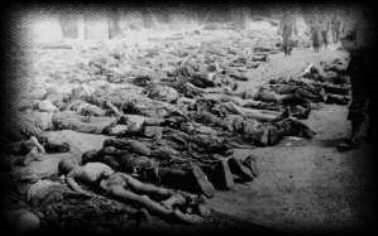
Associated Pages: Hiroshima, 9-11, the NAKBA, Darfur, the Trail of Tears, Bosnia,
etc.
Ogaden Poetry
Japan Earthquake/Tsunami Poetry
Hiroshima Poetry, Prose and
Art
9-11 Poetry
Child of 9-11, a poem for
Christina-Taylor Green
"The Whirlwinds of Revolt will continue to Shake the Foundations of our Nation
..."
The Children of Gaza Speak
Frail Envelope of Flesh, a poem for the children of
Gaza
Poems
for Gaza
At Death's
Door: a Story of Gaza
The Nakba
("Catastrophe"): The Holocaust of the Palestinians
Palestinian Poetry, Art and Photography
Night Labor, a poem for Rachel Corrie, a young peace activist who
died in Rafah
Vanessa Redgrave: A Passion for Justice
In the Shadow of Rachel's Tomb
Who the hell was Furkan
Dogan, and why should we care?
"Does Jesus Love Me?"
For
Darfur: Poetry about the Holocaust and Genocide in Darfur
Bloodshed in the Sahara: the Plight of the Sahrawi People
Poems for Haiti
The Holocaust of the
Homeless
The
Trail of Tears
Nadia Anjuman: the personal
holocaust of an Afghani poet
David Burnham's
"Bosnian Morning"
Le Trio Joubran
In Peace's Arms, Not War's: the Poets speak for Peace, not War
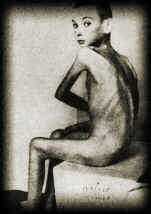
Other
Holocaust Poets, Writers and Artists
Dr.
Hanan Ashrawi (poems by a tireless campaigner for Palestinian human rights)
Yala Korwin (Holocaust
poetry and art by a Jewish Holocaust survivor)
Salomon N.
Meisels (translations of her father's poems by Yala Korwin)
Anita Dorn (poems
by an
Estonian poet who fled the advancing Red Armies as a young girl)
Takashi Tanemori (poems, prose and art by a Hiroshima survivor)
Chaya Feldman (she wrote one of the most poignant poems of the Holocaust:
"93 Daughters of Israel")
Tawfik Zayyad
(a Palestinian poet)
Fadwa
Tuqan (she has been called the Grand Dame of Palestinian poets)
Nahida Izzat (a
Jerusalem-born Palestinian refugee who has lived in exile for over forty years)
A Page from the Deportation Diary (a poem about Janusz Korczak by Wladyslaw Szlengel)
Wladyslaw Szlengel (translations of a Jewish poet who died in the Warsaw
ghetto)
Janusz Korczak (translations of a hero of the Holocaust by Esther Cameron)
Primo Levi
(translations of an Italian Jewish Holocaust survivor)
Anthony Hecht (a poet of
German-Jewish descent who helped liberate a concentration camp)
Nakba
(the pseudonym of a Palestinian American poet who speaks
very bluntly about his people's plight)
Ber Horvitz
(an unknown Jewish Holocaust poet who can only be known today by the poems he
left us)
Miryam
(Miriam) Ulinover (a Jewish writer who
wrote prose in Polish, German and Russian and poetry in Yiddish)
Itzhak (Yitzkhak) Viner
(translations of a Polish Jewish poet who was imprisoned in the Lodz Ghetto)
Jerzy Ficowski
(translations of a Polish Christian poet by Yala Korwin)
Vilem
Pollak (one translation of a Czech poet by Martin Rocek and Colin Ward)
Allama Iqbāl
(translations of a poet who is considered by many to be the founder of the
modern state of Pakistan)
Moishe (Moshe) Kaufman (a
Jewish Holocaust survivor who fled to Buenos Aires)
Peretz
Opochinski (he began writing poetry at age twelve, only to die in the Warsaw
Ghetto along with his wife and child)
Gideon Levy (he has been called the "most hated man in Israel," for speaking
out against an ongoing holocaust, the Nakba)
Hershele Danielovitch (two Holocaust poems by a Jewish poet who died in the Warsaw
Ghetto)
Kalman Lis (a poem by a Polish Jew who died during the Holocaust)
Kim Nguyen
(two letters about the suffering of Palestinians at the hands of Israeli
settlers and the IDF)
Saul Tchernichovsky
(two poems by a Russian Jew who immigrated to Palestine)
Contemporary Poets and other Writers on the Holocaust
Yakov Azriel (a Holocaust poem by an Israeli poet)
Peter Austin
(Holocaust poetry by an American poet)
Michael R. Burch (Holocaust poetry by an American poet)
Charles Adés
Fishman (Holocaust poetry by an American poet)
Dr. John Z.
Guzlowski (Holocaust poetry by an American poet)
Roger Hecht (a Holocaust
poem by an American poet)
Peggy Landsman
(Holocaust poetry by an American poet who was touched by pictures of the "little
boy with his hands up")
Christina
Pacosz (Holocaust poems by an American poet)
Elie Wiesel (Holocaust
essays by a Nobel Peace Prize laureate)
Joseph
McDonough (poetry by a stockbroker who worked in the World Trade Center
prior to 9-11)
Edward Nudelman
(a Holocaust poem by an American poet)
Sean M. Teaford (Holocaust poems by an American poet)
Students on the Holocaust
Brian Coleman (a tribute page to an American student who reached out to
Holocaust survivors)
Fardin Mohammadi (a Muslim student writes
about his feelings on the anniversary of 9-11)
Holocaust Poetry and Art (Holocaust
poetry and art by students Victoria Lassen and Meidema Sanchez)
Other Holocaust Writings
The Path to Peace in the Middle East
Wrestling Angels and Chimeras
Roll Call of Shame
The Aftermath of the Flotilla
Independence Day Madness
Osama bin Laden and the Twin Terrors
The Curious Blindness of Abba Eban
Israeli Apartheid
How Palestine Became Divided
Logic 101
Parables of Zion
The
Night the Stars Aligned
Contemporary Poets on the Holocaust
The second edition of Blood to Remember: American Poets on the Holocaust,
edited by Charles Fishman, is an important book. Please click
here to read a review of the book.
Main Index
Related pages:
Sandy Hook Poems, Aurora Poetry,
Columbine Poems,
Courtni Webb's Sandy Hook Poem and Possible Expulsion,
Darfur Poems,
Gaza Poems,
Haiti Poems,
Hiroshima Poems, Holocaust Poems,
Nakba Poems,
911 Poems,
Trail of Tears,
Best Poems about the
Holocaust
The HyperTexts