The HyperTexts
The Best Poems Ever
Which poets wrote the best poems of all time, or at least the best poems ever written in the English language?
Picking the greatest poems ever written is a very subjective task and
a matter of personal taste and fancy (so if you disagree with my
choices, please feel free to compile your own). Perhaps the most interesting
thing about my personal canon is that many of the poems are fairly recent. This
leads me to believe the "death" of poetry has been greatly exaggerated. I'm including
modern English translations of ancient classics such as "Wulf and Eadwacer" and
"Sweet Rose of Virtue" because many readers may not have read them, and that's a
shame. Other poems you won't want to miss include "The Highwayman" by Alfred
Noyes, perhaps the most musical and the most haunting story-poem in the English
language, "The Wild Swans at Coole" by William Butler Years, and "Song for the
Last Act" by Louise Bogan. And now, without further ado, here are
my personal choices for the best poems ever written ...
compiled by Michael R. Burch, editor of The HyperTexts
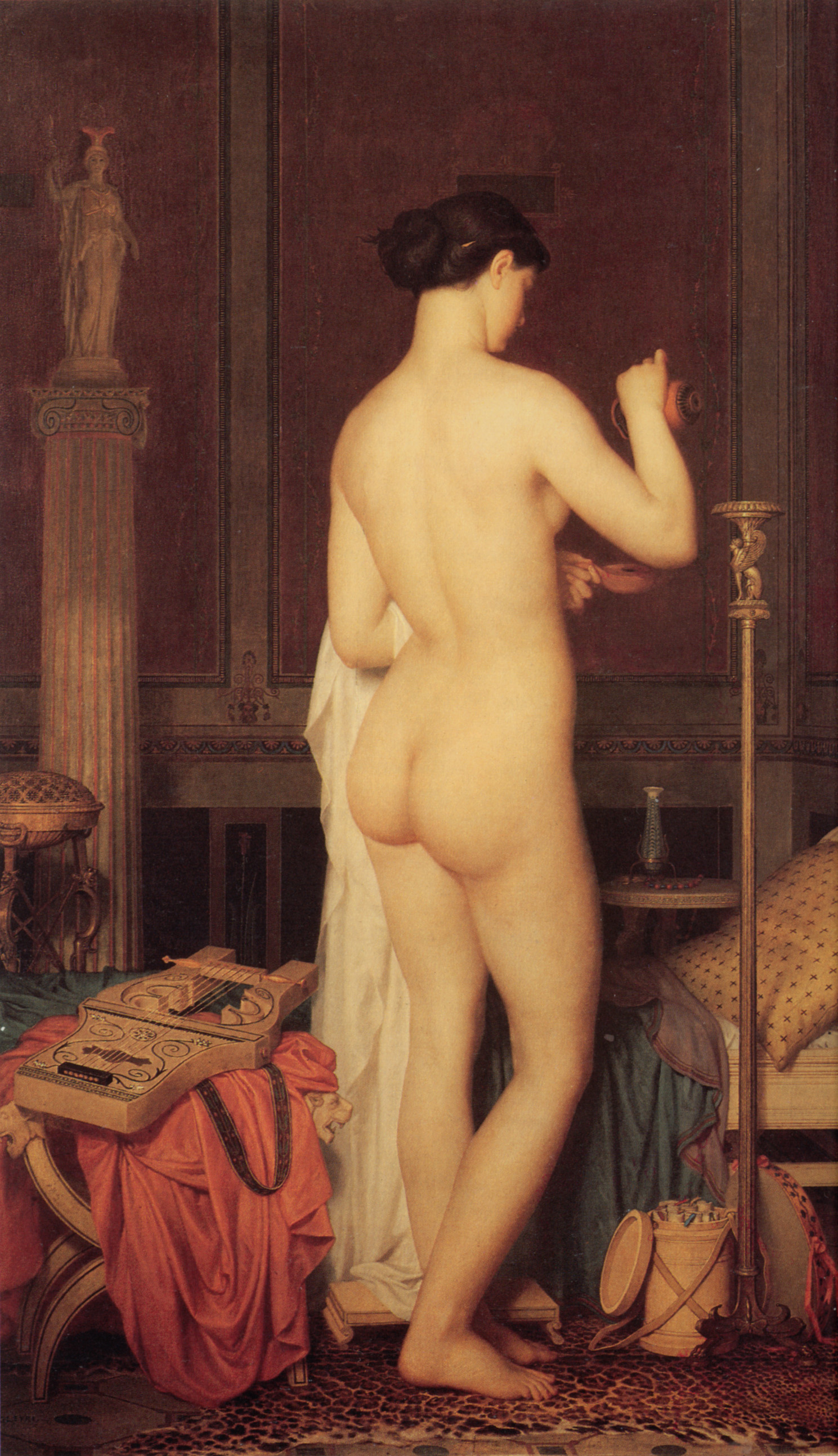
Gleyre Le Coucher de Sappho
by Marc-Charles-Gabriel Gleyre
Sappho of Lesbos is perhaps the first great female poet known to us today, and she remains one of the very best poets of all time, regardless of gender. As you can see from the utterly stellar epigrams
below, she remains a timeless treasure:
Sappho, fragment 42
loose translation by Michael R. Burch
Eros harrows my heart:
wild winds whipping desolate mountains,
uprooting oaks.
Sappho, fragment 155
loose translation by Michael R. Burch
A short revealing frock?
It's just my luck
your lips were made to mock!
Sappho, fragment 156
loose translation by Michael R. Burch
She keeps her scents
in a dressing-case.
And her sense?
In some undiscoverable place.
Sappho, fragment 58
loose translation by Michael R. Burch
Pain
drains
me
to
the
last
drop
.
Lyric poetry begins with (and derives its name from) short poems that were
either recited or sung to the strummings of the lyre, a harp-like instrument. The most famous of the
ancient Greek lyric poets is Sappho, who was born on the island of
Lesbos around 600 BC. The homoerotic nature
of some of her poems have given the words "lesbian" and "sapphic"
denotations and connotations of female homosexuality.
But Sappho was far from a one-trick pony. The poems above demonstrate her range.
For whatever it's worth, here are my top ten lyric poets of all time: William Blake, Louise Bogan, Robert
Burns, Hart Crane, A. E. Housman, Robert Frost, Wallace Stevens, Dylan
Thomas, Walt Whitman, William Butler Yeats
Among non-English lyric poets, my top ten are: The Archpoet, Basho, Charles
Baudelaire, Dante, Johan Wolfgang van Goethe, Hafiz, Federico García Lorca,
Pablo Neruda, Ranier Maria Rilke, Rumi, Sappho
Honorable Mention: W. H. Auden, Elizabeth Bishop, Lord
Byron, Geoffrey Chaucer, Sam Cooke, e. e. cummings, Emily Dickinson, John Donne, Ernest Dowson, Bob Dylan, T. S. Eliot,
Allen Ginsberg, Thomas Hardy, Seamus Heaney, Gerard Manley Hopkins, Langston Hughes, John Keats, Philip Larkin, John Lennon,
Henry Wadsworth Longfellow, Edna St. Vincent Millay, John Milton, Wilfred Owen, Sylvia Plath,
Ezra Pound, Christina Rossetti, William Shakespeare, Percy Bysshe Shelley, Paul Simon, Edmund Spenser,
Alfred Tennyson, Oscar Wilde, William Wordsworth, Thomas Wyatt
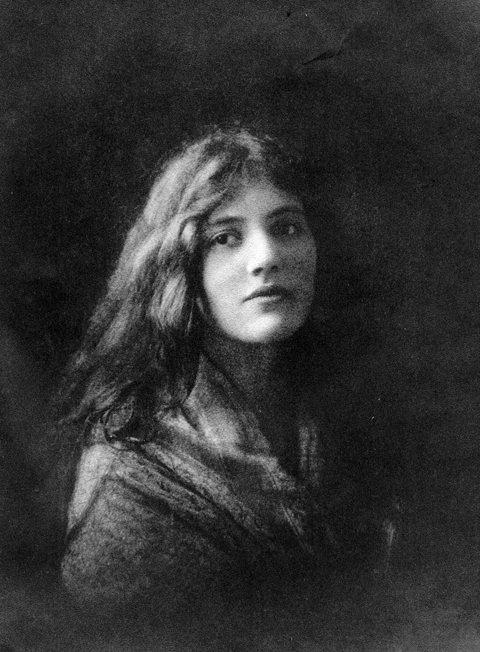
William Butler Yeats was the most famous Irish poet of all time, and his
poems of unrequited love for the beautiful and dangerous revolutionary Maud Gonne helped
make her almost as famous as he was in Ireland. The first poem below is Yeats'
loose translation of a Pierre Ronsard poem, in which Yeats imagines the love of his
life in her later years, tending a waning fire. The second poem, "The Wild Swans
at Coole" is surely one of the most beautiful poems ever written, in any
language.
When You Are Old
by William Butler Yeats
When you are old and grey and full of sleep,
And nodding by the fire, take down this book,
And slowly read, and dream of the soft look
Your eyes had once, and of their shadows deep;
How many loved your moments of glad grace,
And loved your beauty with love false or true,
But one man loved the pilgrim soul in you,
And loved the sorrows of your changing face;
And bending down beside the glowing bars,
Murmur, a little sadly, how Love fled
And paced upon the mountains overhead
And hid his face amid a crowd of stars.
The Wild Swans at Coole
by William Butler Yeats
The trees are in their autumn beauty,
The woodland paths are dry,
Under the October twilight the water
Mirrors a still sky;
Upon the brimming water among the stones
Are nine and fifty swans.
The nineteenth Autumn has come upon me
Since I first made my count;
I saw, before I had well finished,
All suddenly mount
And scatter wheeling in great broken rings
Upon their clamorous wings.
I have looked upon those brilliant creatures,
And now my heart is sore.
All’s changed since I, hearing at twilight,
The first time on this shore,
The bell-beat of their wings above my head,
Trod with a lighter tread.
Unwearied still, lover by lover,
They paddle in the cold,
Companionable streams or climb the air;
Their hearts have not grown old;
Passion or conquest, wander where they will,
Attend upon them still.
But now they drift on the still water
Mysterious, beautiful;
Among what rushes will they build,
By what lake’s edge or pool
Delight men’s eyes, when I awake some day
To find they have flown away?
Elizabeth Barrett Browning was an early advocate of women's rights, and a
staunch opponent of slavery. When she married Robert Browning, theirs became the
most famous coupling in the annals of English poetry. She is most famous for the
poem below, which appeared in her Sonnets from the Portuguese.
How Do I Love Thee?
by Elizabeth Barrett Browning
How do I love thee? Let me count the ways.
I love thee to the depth and breadth and height
My soul can reach, when feeling out of sight
For the ends of Being and ideal Grace.
I love thee to the level of every day's
Most quiet need, by sun and candlelight.
I love thee freely, as men strive for Right;
I love thee purely, as they turn from Praise.
I love with a passion put to use
In my old griefs, and with my childhood's faith.
I love thee with a love I seemed to lose
With my lost saints,—I love thee with the breath,
Smiles, tears, of all my life!—and, if God choose,
I shall but love thee better after death.
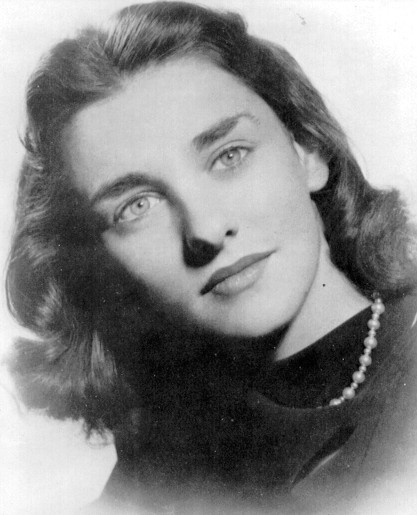
Anne Sexton was a model who became a confessional
poet, writing about intimate aspects of her life, after her doctor suggested
that she take up poetry as a form of therapy. She studied under Robert Lowell at
Boston University, where Sylvia Plath was one of her classmates. Sexton won the
Pulitzer Prize for Poetry in 1967, but later committed suicide via carbon
monoxide poisoning. Topics she covered in her poems included adultery, masturbation, menstruation, abortion, despair and suicide.
The Truth the Dead Know
by Anne Sexton
For my Mother, born March 1902, died March 1959
and my Father, born February 1900, died June 1959
Gone, I say and walk from church,
refusing the stiff procession to the grave,
letting the dead ride alone in the hearse.
It is June. I am tired of being brave.
We drive to the Cape. I cultivate
myself where the sun gutters from the sky,
where the sea swings in like an iron gate
and we touch. In another country people die.
My darling, the wind falls in like stones
from the whitehearted water and when we touch
we enter touch entirely. No one's alone.
Men kill for this, or for as much.
And what of the dead? They lie without shoes
in the stone boats. They are more like stone
than the sea would be if it stopped. They refuse
to be blessed, throat, eye and knucklebone.
Mary Elizabeth Frye is, perhaps, the most mysterious poet who appears on this
page, and perhaps in the annals of poetry. Rather than spoiling the mystery, I
will present her poem first, then provide the details ...
Do not stand at my grave and weep
by Mary Elizabeth Frye
Do not stand at my grave and weep:
I am not there; I do not sleep.
I am a thousand winds that blow,
I am the diamond glints on snow,
I am the sun on ripened grain,
I am the gentle autumn rain.
When you awaken in the morning’s hush
I am the swift uplifting rush
Of quiet birds in circling flight.
I am the soft starshine at night.
Do not stand at my grave and cry:
I am not there; I did not die.
This consoling elegy had a
very mysterious genesis, as it was written by a
Baltimore housewife who lacked a formal education, having been orphaned at age
three. She had never written poetry before. Frye wrote the poem on a ripped-off piece of a brown grocery bag, in a burst of compassion for a Jewish girl who had fled the Holocaust
only to receive news that her mother had died in Germany. The girl was
weeping inconsolably because she couldn't visit her mother's grave to share her
tears of love and bereavement. When the poem was named Britain's
most popular poem in a 1996 Bookworm poll, with more than 30,000
call-in votes despite not having been one of the critics'
nominations, an unlettered orphan girl had seemingly surpassed all England's
many cultured and degreed ivory towerists in the public's estimation. Although the poem's
origin was disputed for some time (it had been attributed to Native American and other sources), Frye's authorship was confirmed in 1998 after investigative research by Abigail
Van Buren, the newspaper columnist better known as "Dear Abby." The poem has
also been called "I Am" due to its rather biblical repetitions of the phrase.
Frye never formally published or copyrighted the poem, so we believe it is in
the public domain and can be shared, although we recommend that it not be used
for commercial purposes, since Frye never tried to profit from it herself.
Here is a printable version of
Mary Elizabeth Frye's "Do Not Stand at My Grave and Weep" which is not
copyrighted and is thus in the public domain.
Dylan Thomas's elegy to his dying father is the best villanelle in the English
language, in my opinion, and one of the most powerful and haunting poems ever
written in any language.
In poems like "Do Not Go Gentle into that Good Night," "In My Craft or Sullen
Art" and "Fern Hill," the Welsh poet ranks with any poet who
wrote in English. Several of his poems can be found on the Masters
page of The HyperTexts. Dylan Thomas was fond of the unusual word
"spindrift" and used it in a number of his poems, including the second one
below.
Do Not Go Gentle Into That Good Night
by Dylan Thomas
Do not go gentle into that good night,
Old age should burn and rave at close of day;
Rage, rage against the dying of the light.
Though wise men at their end know dark is right,
Because their words had forked no lightning they
Do not go gentle into that good night.
Good men, the last wave by, crying how bright
Their frail deeds might have danced in a green bay,
Rage, rage against the dying of the light.
Wild men who caught and sang the sun in flight,
And learn, too late, they grieved it on its way,
Do not go gentle into that good night.
Grave men, near death, who see with blinding sight
Blind eyes could blaze like meteors and be gay,
Rage, rage against the dying of the light.
And you, my father, there on the sad height,
Curse, bless, me now with your fierce tears, I pray.
Do not go gentle into that good night.
Rage, rage against the dying of the light.
In My Craft Or Sullen Art
by Dylan Thomas
In my craft or sullen art
Exercised in the still night
When only the moon rages
And the lovers lie abed
With all their griefs in their arms,
I labour by singing light
Not for ambition or bread
Or the strut and trade of charms
On the ivory stages
But for the common wages
Of their most secret heart.
Not for the proud man apart
From the raging moon I write
On these spindrift pages
Nor for the towering dead
With their nightingales and psalms
But for the lovers, their arms
Round the griefs of the ages,
Who pay no praise or wages
Nor heed my craft or art.
Edward Thomas is not as well-known as some of the other poets on this page, but
"Adlestrop" was among the top ten most requested poems at Poetry Please, so he continues to have fans. "Adlestrop" is a somewhat mysterious poem, because
nothing really happens and yet it seems extraordinarily sad.
Thomas was a literary critic, biographer and book reviewer who became a close
friend of Robert Frost when he moved to England. It was Frost who persuaded
Thomas to begin writing poetry around 1913-14, and Thomas was on his way to meet
Frost when he wrote the poem below. Thomas was also close to the "tramp" or
"hobo" poet W. H. Davies, and help bring him to the attention of the reading
public. Thomas died at the battle of Arras in 1917, so all his poems were
written within a very narrow window of time. It is said that he decided to
enlist at the age of 37 after reading a pre-publication version of Frost's
famous poem about indecision, "The Road Not Taken." Thomas
died never having seen any of his poems in print.
Adlestrop
by Edward Thomas
Yes. I remember Adlestrop—
The name, because one afternoon
Of heat the express-train drew up there
Unwontedly. It was late June.
The steam hissed. Someone cleared his throat.
No one left and no one came
On the bare platform. What I saw
Was Adlestrop—only the name
And willows, willow-herb, and grass,
And meadowsweet, and haycocks dry,
No whit less still and lonely fair
Than the high cloudlets in the sky.
And for that minute a blackbird sang
Close by, and round him, mistier,
Farther and farther, all the birds
Of Oxfordshire and Gloucestershire.
Robert Frost has often been portrayed as a pragmatic farmer-poet, which he may
have been. He certainly comes off that way in some of his poems about rural
life. But "To Earthward" is one of the loveliest love poems in the English
language and poems like "Birches" and "After Apple Picking" also reveal his
dreamy, romantic side.
To Earthward
by Robert Frost
Love at the lips was touch
As sweet as I could bear;
And once that seemed too much;
I lived on air
That crossed me from sweet things,
The flow of — was it musk
From hidden grapevine springs
Downhill at dusk?
I had the swirl and ache
From sprays of honeysuckle
That when they’re gathered shake
Dew on the knuckle.
I craved strong sweets, but those
Seemed strong when I was young:
The petal of the rose
It was that stung.
Now no joy but lacks salt,
That is not dashed with pain
And weariness and fault;
I crave the stain
Of tears, the aftermark
Of almost too much love,
The sweet of bitter bark
And burning clove.
When stiff and sore and scarred
I take away my hand
From leaning on it hard
In grass or sand,
The hurt is not enough:
I long for weight and strength
To feel the earth as rough
To all my length.
Percy Bysshe Shelley and Mary Wollstonecraft Shelley may have been the most notorious married
couple of their era. He was a dashing romantic poet and heretic who wrote a
tract, "The Necessity of Atheism," that got him expelled from Oxford. He also
wrote in favor of nonviolence and against monarchies, imperialism and war. She was the daughter of one of the earliest feminist
writers of note, Mary Wollstonecraft, and the liberal philosopher William
Godwin. In 1814, at age seventeen, she
became romantically involved with Percy Shelley, who was married at the time but
threatened to commit suicide if she spurned his advances. They spent time
together in France and Switzerland; when they returned, Mary was pregnant. Percy's wife Harriet, who was also pregnant, committed suicide in 1816; Percy
and Mary married soon thereafter. The same year they spent the summer with Lord
Byron. It was at this time that Mary conceived the story that became her famous
gothic novel Frankenstein. In 1822, Percy drowned at sea at age thirty. Who knows what he would
have accomplished if he had lived longer, but he is still considered to be one
of the greatest English poets. Here is one especially lovely example of his
wonderful touch with rhythm and rhyme:
Music When Soft Voices Die (To
—)
by Percy Bysshe Shelley
Music, when soft voices die,
Vibrates in the memory—
Odours, when sweet violets sicken,
Live within the sense they quicken.
Rose leaves, when the rose is dead,
Are heaped for the belovèd's bed;
And so thy thoughts, when thou art gone,
Love itself shall slumber on.
The Snow Man
by Wallace Stevens
One must have a mind of winter
To regard the frost and the boughs
Of the pine-trees crusted with snow;
And have been cold a long time
To behold the junipers shagged with ice,
The spruces rough in the distant glitter
Of the January sun; and not to think
Of any misery in the sound of the wind,
In the sound of a few leaves,
Which is the sound of the land
Full of the same wind
That is blowing in the same bare place
For the listener, who listens in the snow,
And, nothing himself, beholds
Nothing that is not there and the nothing that is.
Wallace Stevens had an exquisite touch with meter and may have written more
great poems than any modern English language poet. He claimed that the poet was
the "priest of the invisible" and seemed to see poetry replacing religion in
men's hearts and minds.
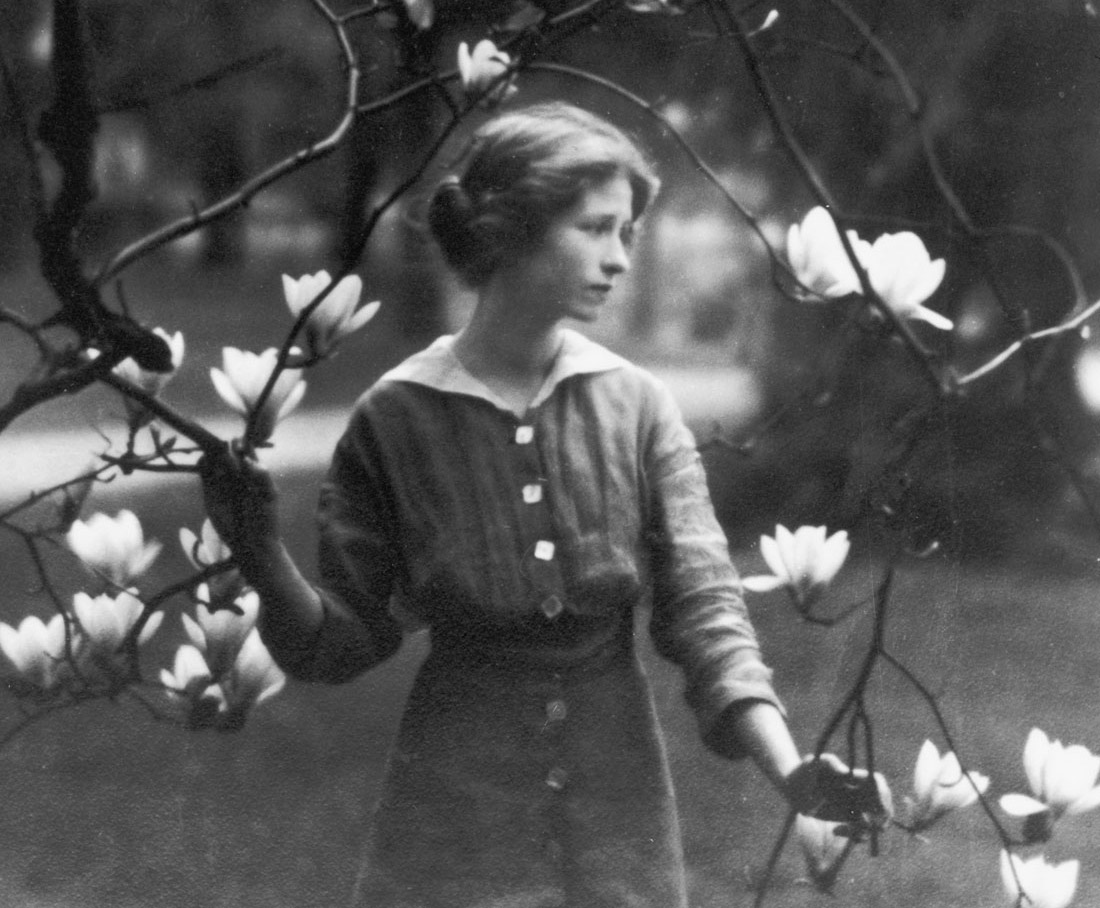
Edna St. Vincent Millay was the first woman to win a Pulitzer Prize for poetry.
She was openly bisexual and had affairs with other women and married men. When
she finally married, hers was an open marriage. Her 1920 poetry collection A
Few Figs From Thistles drew controversy for its novel exploration of female
sexuality. She was one of the earliest and strongest voices for what became
known as feminism. One of the recurring themes of her poetry was that men might
use her body, but not possess her or have any claim over her. (And perhaps that
their desire for her body gave her the upper hand in relationships.)
I, Being Born a Woman, and Distressed
by Edna St. Vincent
Millay
I, being born a woman, and distressed
By all the needs and notions of my kind,
Am urged by your propinquity to find
Your person fair, and feel a certain zest
To bear your body's weight upon my breast:
So subtly is the fume of life designed,
To clarify the pulse and cloud the mind,
And leave me once again undone, possessed.
Think not for this, however, this poor treason
Of my stout blood against my staggering brain,
I shall remember you with love, or season
My scorn with pity — let me make it plain:
I find this frenzy insufficient reason
For conversation when we meet again.
Love Is Not All
by Edna St. Vincent Millay
Love is not all: It is not meat nor drink
Nor slumber nor a roof
against the rain,
Nor yet a floating spar to men that sink
and rise and
sink and rise and sink again.
Love cannot fill the thickened lung with breath
Nor clean the blood, nor set the fractured bone;
Yet many a man is making
friends with death
even as I speak, for lack of love alone.
It well may be
that in a difficult hour,
pinned down by need and moaning for release
or
nagged by want past resolution's power,
I might be driven to sell your love
for peace,
Or trade the memory of this night for food.
It may well be. I
do not think I would.
Millay is not just another penner of sonnets. Her sonnets sparkle with life and
lust amid the foreshadowing of death. She also has an interesting quality of
resolve: she seems willing to give herself to men, but not to give herself away.
If she is playing games, she is playing them knowingly, and probably understands
the rules better than her partners.
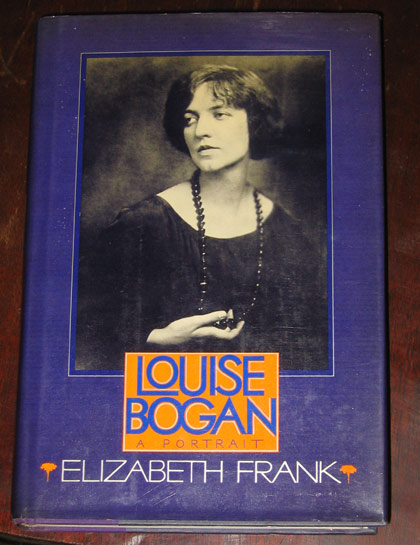
Louise Bogan is one of the best unknown or under-known poets of all time. Her
best poems make her a major poet, in my opinion. She's a poet who deserves to be
read and studied. In particular, her "After the Persian," "Juan's Song"
and "Song for the Last Act" are "must reads."
Song For The Last Act
by Louise Bogan
Now that I have your face by heart, I look
Less at its features than its darkening frame
Where quince and melon, yellow as young flame,
Lie with quilled dahlias and the shepherd's crook.
Beyond, a garden. There, in insolent ease
The lead and marble figures watch the show
Of yet another summer loath to go
Although the scythes hang in the apple trees.
Now that I have your face by heart, I look.
Now that I have your voice by heart, I read
In the black chords upon a dulling page
Music that is not meant for music's cage,
Whose emblems mix with words that shake and bleed.
The staves are shuttled over with a stark
Unprinted silence. In a double dream
I must spell out the storm, the running stream.
The beat's too swift. The notes shift in the dark.
Now that I have your voice by heart, I read.
Now that I have your heart by heart, I see
The wharves with their great ships and architraves;
The rigging and the cargo and the slaves
On a strange beach under a broken sky.
O not departure, but a voyage done!
The bales stand on the stone; the anchor weeps
Its red rust downward, and the long vine creeps
Beside the salt herb, in the lengthening sun.
Now that I have your heart by heart, I see.
Louise Bogan's exquisite "After the Persian" can be read on our page of
The Best Long(ish)
Poems of All Time.
Randall Jarrell was one of the better war poets, and this is his most famous
poem, and justly so. He worked in a control tower during World War II, after not
being able to pass flight training as a pilot.
The Death of the Ball Turret Gunner
by Randall Jarrell
From my mother's sleep I fell into the State,
And I hunched in its belly till my wet fur froze.
Six miles from earth, loosed from its dream of life,
I woke to black flak and the nightmare fighters.
When I died they washed me out of the turret with a hose.
Dante Gabriel Rossetti was an English romantic poet, painter, illustrator and
translator. He was also one of the founders of the Pre-Raphaelite Brotherhood. His
art was characterized by sensuality and medieval revivalism. He frequently wrote
sonnets to accompany his works of visual art. In 1850 he met Elizabeth Siddal
(pictured above), who became his model, his passion, and eventually in 1860, his
wife. But his sister Christina Rossetti may have been the better poet.
Sudden Light
by Dante Gabriel Rossetti
I have been here before,
But when or how I cannot tell:
I know the grass beyond the door,
The sweet keen smell,
The sighing sound, the lights around the shore.
You have been mine before,—
How long ago I may not know:
But just when at that swallow's soar
Your neck turned so,
Some veil did fall,—I knew it all of yore.
Has this been thus before?
And shall not thus time's eddying flight
Still with our lives our love restore
In death's despite,
And day and night yield one delight once more?
Song
by Christina Rossetti
When I am dead, my dearest,
Sing no sad songs for me;
Plant thou no roses at my head,
Nor shady cypress tree:
Be the green grass above me
With showers and dewdrops wet;
And if thou wilt, remember,
And if thou wilt, forget.
I shall not see the shadows,
I shall not feel the rain;
I shall not hear the nightingale
Sing on, as if in pain:
And dreaming through the twilight
That doth not rise nor set,
Haply I may remember,
And haply may forget.
William Dunbar's wonderful "Sweet Rose of Virtue" is one of my favorite
poems from the good auld days of English poetry.
Sweet Rose of Virtue
by William Dunbar [1460-1525]
loose translation by Michael R. Burch
Sweet rose of virtue and of gentleness,
delightful lily of youthful wantonness,
richest in bounty and in beauty clear
and in every virtue that is held most dear―
except only that you are merciless.
Into your garden, today, I followed you;
there I saw flowers of freshest hue,
both white and red, delightful to see,
and wholesome herbs, waving resplendently―
yet everywhere, no odor but bitter rue.
I fear that March with his last arctic blast
has slain my fair rose of pallid and gentle cast,
whose piteous death does my heart such pain
that, if I could, I would compose her roots again―
so comforting her bowering leaves have been.
Conrad Aiken, in his best poems, rivals Wallace Stevens and Hart Crane as
masters of modern English poetic meter. Aiken's "Bread and Music" is one of my
very favorite poems, regardless of era.
Bread and Music
by Conrad Aiken
Music I heard with you was more than music,
And bread I broke with you was more than bread;
Now that I am without you, all is desolate;
All that was once so beautiful is dead.
Your hands once touched this table and this silver,
And I have seen your fingers hold this glass.
These things do not remember you, belovèd,
And yet your touch upon them will not pass.
For it was in my heart you moved among them,
And blessed them with your hands and with your eyes;
And in my heart they will remember always,—
They knew you once, O beautiful and wise.
D. H. Lawrence is better known today for his novels than for his poetry, but "Piano"
is an immortal poem, and thus makes Lawrence an immortal poet.
Piano
by D. H. Lawrence
Softly, in the dusk, a woman is singing to me;
Taking me back down the vista of years, till I see
A child sitting under the piano, in the boom of the tingling strings
And pressing the small, poised feet of a mother who smiles as she sings.
In spite of myself, the insidious mastery of song
Betrays me back, till the heart of me weeps to belong
To the old Sunday evenings at home, with winter outside
And hymns in the cozy parlor, the tinkling piano our guide.
So now it is vain for the singer to burst into clamor
With the great black piano appassionato. The glamour
Of childish days is upon me, my manhood is cast
Down in the flood of remembrance, I weep like a child for the past.
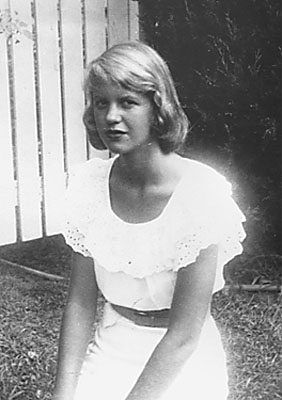
Sylvia Plath was one of the first and best of the modern confessional poets. She
won a Pulitzer Prize posthumously for her Collected Poems after
committing suicide at the age of 31, something she seemed to have been
predicting in her writing and practicing for in real life.
Winter landscape, with rocks
by Sylvia Plath
Water in the millrace, through a sluice of stone,
plunges headlong into that black pond
where, absurd and out-of-season, a single swan
floats chaste as snow, taunting the clouded mind
which hungers to haul the white reflection down.
The austere sun descends above the fen,
an orange cyclops-eye, scorning to look
longer on this landscape of chagrin;
feathered dark in thought, I stalk like a rook,
brooding as the winter night comes on.
Last summer's reeds are all engraved in ice
as is your image in my eye; dry frost
glazes the window of my hurt; what solace
can be struck from rock to make heart's waste
grow green again? Who'd walk in this bleak place?
Sir Thomas Wyatt has been credited with introducing the
Petrarchan sonnet into the English language. His father, Henry Wyatt, had been one of Henry
VII's Privy Councilors, and remained a trusted adviser when Henry VIII came to
the throne in 1509. Thomas Wyatt followed his father to court. But it seems the
young poet may have fallen in love with the king’s mistress. Many legends and
conjectures suggest that an unhappily married Wyatt had a relationship with
Anne Boleyn. Their acquaintance is certain, but whether or not the two
actually shared a romantic relationship remains unknown. But in his poetry, Wyatt called
his mistress Anna, and sometimes embedded pieces of information that seem to correspond with
her life. For instance, this poem might well have been written
about the King’s claim on Anne Boleyn:
Whoso List to Hunt
by Sir Thomas Wyatt
Whoso list to hunt, I know where is an hind, [Whoever longs to hunt , I know
where there is a female deer]
But as for me, alas, I may no more.
The vain travail hath wearied me so sore,
I am of them that farthest cometh behind.
Yet may I by no means my wearied mind
Draw from the deer, but as she fleeth afore
Fainting I follow. I leave off therefore,
Since in a net I seek to hold the wind.
Who list her hunt, I put him out of doubt,
As well as I, may spend his time in vain.
And graven with diamonds in letters plain
There is written, her fair neck round about:
Noli me tangere, for Caesar's I am, [Touch me not, for I belong
to the King]
And wild for to hold, though I seem tame.
Noli me tangere means "Touch me not." According to the Bible, this is
what Jesus said to Mary Magdalene when she tried to embrace him after the
resurrection. So perhaps after her betrothal to Henry, religious vows also
entered into the picture, and left Wyatt out.
They Flee from Me
by Thomas Wyatt
They flee from me that sometime did me seek
With naked foot stalking in my chamber.
I have seen them gentle tame and meek
That now are wild and do not remember
That sometime they put themselves in danger
To take bread at my hand; and now they range
Busily seeking with a continual change.
Thanked be fortune, it hath been otherwise
Twenty times better; but once in special,
In thin array after a pleasant guise,
When her loose gown from her shoulders did fall,
And she me caught in her arms long and small;
And therewithal sweetly did me kiss,
And softly said, Dear heart, how like you this?
It was no dream, I lay broad waking.
But all is turned thorough my gentleness
Into a strange fashion of forsaking;
And I have leave to go of her goodness
And she also to use newfangleness.
But since that I so kindly am served,
I would fain know what she hath deserved.
In my opinion, Hart Crane's "Voyages" is the best love poem of all time, and the
second-best love poem isn't even close. Because of its length, "Voyages" appears
on the following page.
Other poems of Crane's such as "To Brooklyn Bridge" and "The Broken Tower"
also rank with
the best poems in the English language.
To Brooklyn Bridge
by Hart Crane
How many dawns, chill from his rippling rest
The seagull's wings shall dip and pivot him,
Shedding white rings of tumult, building high
Over the chained bay waters Liberty—
Then, with inviolate curve, forsake our eyes
As apparitional as sails that cross
Some page of figures to be filed away;
—Till elevators drop us from our day ...
I think of cinemas, panoramic sleights
With multitudes bent toward some flashing scene
Never disclosed, but hastened to again,
Foretold to other eyes on the same screen;
And Thee, across the harbor, silver-paced
As though the sun took step of thee, yet left
Some motion ever unspent in thy stride,—
Implicitly thy freedom staying thee!
Out of some subway scuttle, cell or loft
A bedlamite speeds to thy parapets,
Tilting there momently, shrill shirt ballooning,
A jest falls from the speechless caravan.
Down Wall, from girder into street noon leaks,
A rip-tooth of the sky's acetylene;
All afternoon the cloud-flown derricks turn ...
Thy cables breathe the North Atlantic still.
And obscure as that heaven of the Jews,
Thy guerdon ... Accolade thou dost bestow
Of anonymity time cannot raise:
Vibrant reprieve and pardon thou dost show.
O harp and altar, of the fury fused,
(How could mere toil align thy choiring strings!)
Terrific threshold of the prophet's pledge,
Prayer of pariah, and the lover's cry,—
Again the traffic lights that skim thy swift
Unfractioned idiom, immaculate sigh of stars,
Beading thy path—condense eternity:
And we have seen night lifted in thine arms.
Under thy shadow by the piers I waited;
Only in darkness is thy shadow clear.
The City's fiery parcels all undone,
Already snow submerges an iron year ...
O Sleepless as the river under thee,
Vaulting the sea, the prairies' dreaming sod,
Unto us lowliest sometime sweep, descend
And of the curveship lend a myth to God.
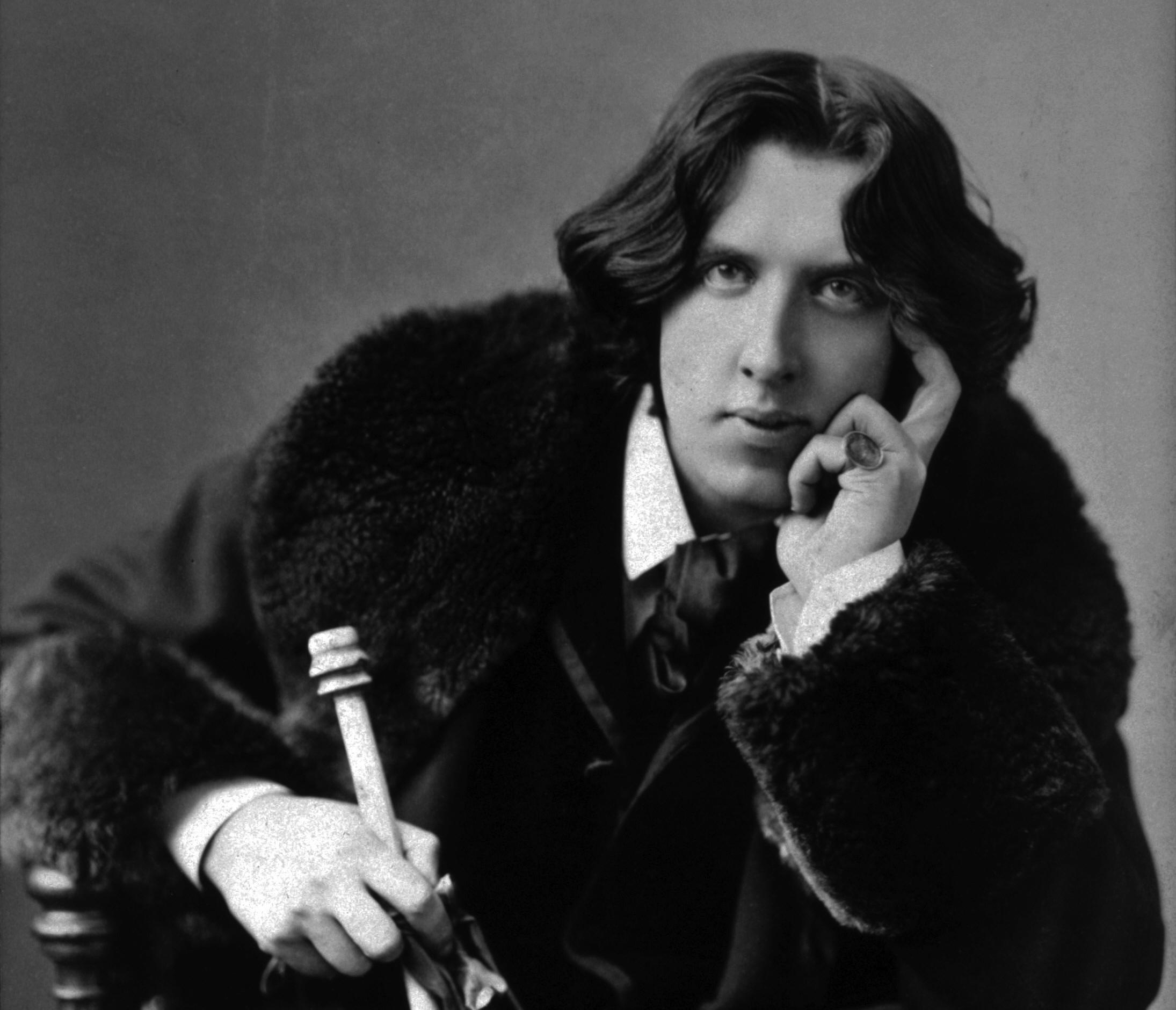
Oscar Wilde may be the most notorious "bad boy" in the annals of poetry and
literature. He was flamboyantly gay at a time when polite society was prim, proper and violently homophobic. As a result, he was sentenced to hard labor at
Reading Gaol and died soon after his release. Wilde is justly famous today for
his disdain for "respectability" and dull and dulling conformity, as his witty
epigrams prove. But the lovely, wonderfully moving poem below proves that he was
also a true poet.
Requiescat
by Oscar Wilde
Tread lightly, she is near
Under the snow,
Speak gently, she can hear
The daisies grow.
All her bright golden hair
Tarnished with rust,
She that was young and fair
Fallen to dust.
Lily-like, white as snow,
She hardly knew
She was a woman, so
Sweetly she grew.
Coffin-board, heavy stone,
Lie on her breast,
I vex my heart alone,
She is at rest.
Peace, Peace, she cannot hear
Lyre or sonnet,
All my life's buried here,
Heap earth upon it.
To continue reading the
Best Poems Ever (listed below), please click the hyperlinked page title.
To read The Best
Long(ish) Poems of All Time, including
Tom O' Bedlam's Song by Anonymous,
His Confession by the Archpoet, In Memory of
W. B. Yeats by W. H. Auden,
After the Persian
by Louise Bogan, Voyages by Hart Crane,
La Figlia Che Piange (The Weeping Girl)
and The Love Song of J. Alfred Prufrock by T. S. Eliot, The Highwayman
by Alfred Noyes,
Daddy by Sylvia Plath, and Mariana by Lord Alfred Tennyson, please the hyperlinked page title.
Other Poems for Continued Reading, at the First Link Above
Dover Beach
by Matthew Arnold
Lullaby
by W. H. Auden
The Hippopotamus by Hillaire Belloc
One Art by Elizabeth Bishop
Jerusalem
by William Blake
Cradle Song by William Blake
Juan's Song
by Louise Bogan
Cædmon's Hymn (circa 658-680 AD) loose translation by Michael R. Burch
Wulf and Eadwacer (circa 960-990 AD)
loose translation by Michael R. Burch
A Red, Red Rose
by Robert Burns
For Her Surgery
by Jack Butler
After the Rain by Jared Carter
Mouse's Nest
by John Clare
The Broken Tower by Hart Crane
At Melville's Tomb
by Hart Crane
in Just- by E. E. Cummings
Hope Is A Thing With Feathers by Emily Dickinson
Song ("Go and catch a falling star")
by John Donne
Non sum qualis eram bonae sub regno Cynarae by Ernest Dowson
Friday by Ann Drysdale
Word Made Flesh by Ann Drysdale
The Skeleton's Defense of Carnality by Jack Foley
Acquainted With The Night by Robert Frost
The Most of It
by Robert Frost
Nothing Gold Can Stay by Robert Frost
Directive by Robert Frost
A Supermarket in California by Allen Ginsberg
The Darkling Thrush
by Thomas Hardy
Those Winter Sundays
by Robert Hayden
Sarabande On Attaining The Age Of Seventy-Seven
by Anthony Hecht
To Daffodils
by Robert Herrick
The Windhover by Gerard Manley Hopkins
I - Easter Hymn
by A. E. Housman
XII ("The laws of God, the laws of man")
by A. E. Housman
XXXVI ("Here dead lie we")
by A. E. Housman
I, Too, Sing America
by Langston Hughes
To Celia
by Ben Jonson
Du by Janet Kenny
Distant light
by Walid Khazindar
The Layers
by Stanley Kunitz
On His Seventy-Fifth Birthday
by Walter Savage Landor
The Listeners by Walter De La Mare
Come Lord and Lift
by
T. Merrill
Madame LaBouche by T.
Merrill
Time in Eternity
by T. Merrill
In The Dark Season
by Richard Moore
The Light of Other Days
by Tom Moore
The Turtle by Ogden Nash
Dulce Et Decorum Est
by Wilfred Owen
The Unreturning
by Wilfred Owen
Alone by Edgar Alan Poe
The Garden
by Ezra Pound
The Love Song of Shu-Sin: The Earth's Oldest Love Poem?
A Blessing by James Wright
The Death of a Toad
by Richard Wilbur
The Man Whose Pharynx Was Bad by Wallace Stevens
Tea at the Palaz of Hoon by Wallace Stevens
Sunday Morning
by Wallace Stevens
A Noiseless Patient Spider
by Walt Whitman
When I Heard The Learn'd Astronomer
by Walt Whitman
Luke Havergal
by Edward Arlington Robinson
Sometimes Mysteriously
by Luis Omar Salinas
Naming of Parts
by Henry Reed
An Irish Airman Foresees His Death by William Butler Yeats
Leda and the Swan by William Butler Yeats
On the Eve of His Execution by Chidiock Tichborne
Bagpipe Music by Louis MacNeice
My Heart Leaps Up When I Behold by William Wordsworth
The Ghost Ship by
A. E. Stallings
Go, Lovely Rose by Edmund Waller
Sea Fevers
by Agnes Wathall
Sonnet 147
("My love is as a fever, longing still")
by William Shakespeare
Full Fathom Five by William Shakespeare
True Love by Robert Penn Warren
BBC "The Nation's Favourite Poems"
In 1995, the BBC asked its viewers and listeners to name their favorite poems, then published them as a book. This is a list of the poems in the book. I
have bolded the ones that are among my personal favorites. From the book's
back cover:
"In a nationwide poll to discover Britain's favourite poem, Rudyard Kipling's
'If—' was voted number one. This unique anthology brings together the results
of the poll in a collection of the nation's 100 best loved poems. Among the
selection are popular classics such as Tennyson's 'The Lady of Shallott' and
Wordsworth's 'The Daffodils' alongside contemporary poetry such as Allan
Ahlberg's 'Please Mrs Butler' and Jenny Joseph's 'Warning'. Also included is the
poignant 'Do not Stand at my Grave and Weep'."
1 If— by Rudyard Kipling
2 The Lady of Shalott by Alfred by Lord Tennyson
3 The Listeners by Walter de la Mare
4 Not Waiting but Drowning by Stevie Smith
5 The Daffodils by William Wordsworth
6 To Autumn by John Keats
7 The Lake Isle of Innisfree by W.B. Yeats
8 Dulce et Decorum Est by Wilfred Owen (the greatest anti-war poem of
all time, in my opinion)
9 Ode to a Nightingale by John Keats
10 He Wishes for the Cloths of Heaven by W.B. Yeats
11 Remember by Christina Rossetti
12 Elegy Written in a Country Churchyard by Thomas Gray (perhaps the
most picture-perfect longer poem in the English language)
13 Fern Hill by Dylan Thomas
14 Leisure by William Henry Davies
15 The Highwayman by Alfred Noyes (my choice for the most musical poem
in the English language, and the best ghost story as well)
16 To His Coy Mistress by Andrew Marvel
17 Dover Beach by Matthew Arnold
18 The Tyger by William Blake (the most-anthologized poem)
19 Twelve Songs IX by W.H. Auden
20 Adlestrop by Edward Thomas
21 The Soldier by Rupert Brooke
22 Warning by Jenny Joseph
23 Sea-Fever by John Masefield
24 Upon Westminster Bridge by William Wordsworth
25 Sonnets from the Portuguese XLIII by Elizabeth Barrett Browning
26 The Love Song of J. Alfred Prufrock by T.S. Eliot; 1885-1965
27 Cargoes by John Masefield
28 Jabberwocky by Lewis Carroll
29 The Rime of the Ancient Mariner by Samuel Taylor Coleridge
30 Ozymandias by Percy Bysshe Shelley
31 Stopping by Woods on a Snowy Evening by Robert Frost
32 Abou Ben Adhem by Leigh Hunt
33 Everyone Sang by Siegfried Sassoon
34 The Windhover by Gerard Manley Hopkins
35 Do Not Go Gentle into That Good Night by Dylan Thomas (an elegy for
the poet's dying father)
36 Sonnet 18 by William Shakespeare
37 When You Are Old by W.B. Yeats
38 Naming of Parts by Henry Reed
39 The Darkling Thrush by Thomas Hardy; 1840-1928
40 Please Mrs Butler by Allan Ahlberg
41 Kubla Khan by Samuel Taylor Coleridge
42 Home-Thoughts from Abroad by Robert Browning
43 High Flight by John Gillespie Magee
44 Journey of the Magi by T.S. Eliot
45 The Owl and the Pussy-Cat by Edward Lear
46 The Glory of the Garden by Rudyard Kipling
47 The Road Not Taken by Robert Frost
48 The Way through the Woods by Rudyard Kipling
49 Anthem for Doomed Youth by Wilfred Owen
50 Bloody Men by Wendy Cope
51 Emmonsail’s Heath in Winter by John Clare
52 La Figlia Che Piange by T.S. Eliot
53 The Whitsun Weddings by Philip Larkin
54 The Ballad of Reading Goal by Oscar Wilde
55 I Remember, I Remember by Thomas Hood
56 This Be the Verse by Philip Larkin
57 Snake by D.H. Lawrence
58 The Great Lover by Rupert Brooke
59 A Red, Red Rose by Robert Burns
60 The Sunlight on the Garden by Louis MacNeice
61 The Old Vicarage, Grantchester by Rupert Brooke
62 Diary of a Church Mouse by John Betjeman
63 Silver by Walter de la Mare
64 Pied Beauty by Gerard Manley Hopkins
65 Prayer before Birth by Louis MacNeice
66 Macavity: The Mystery Cat by T.S. Eliot (one of the poems that became the
musical Cats)
67 Afterwards by Thomas Hardy
68 The Donkey by G.K. Chesterton
69 My Last Duchess by Robert Browning
70 Christmas by John Betjeman
71 The Thought-Fox by Ted Hughes
72 Preludes by T.S. Eliot
73 Love (III) by George Herbert
74 The Charge of the Light Brigade by Alfred Tennyson
75 I Am by John Clare
76 The Hound of Heaven by Francis Thompson
77 The Passionate Shepherd to his Love by Christopher Marlowe
78 The Song of Wandering Aengus by W.B. Yeats
79 She Walks in Beauty by Lord Byron
80 Loveliest of Trees, the Cherry Now by A.E. Housman
81 The Flea by John Donne
82 Ducks by F.W. Harvey
83 An Arundel Tomb by Philip Larkin
84 Sonnet 116 by William Shakespeare
85 Ulysses by Alfred Tennyson
86 Snow by Louis MacNeice
87 Let Me Die a Youngman’s Death by Roger McGough
88 The Ruined Maid by Thomas Hardy
89 Toilet by Hugo Williams
90 Futility by Wilfred Owen
91 The Raven by Edgar Allan Poe
92 Tam o’ Shanter by Robert Burns
93 Love’s Philosophy by Percy Bysshe Shelley
94 The Song of Hiawatha by H.W. Longfellow
95 God’s Grandeur by Gerard Manley Hopkins
96 Chocolate Cake by Michael Rosen
97 Jenny Kissed Me by Leigh Hunt
98 Blackberry-Picking by Seamus Heaney
99 The Prelude by William Wordsworth
100 Warming Her Pearls by Carol Ann Duffy
Related pages:
The Best Sonnets,
The Best Villanelles,
The Best Ballads,
The Best Sestinas,
The Best Rondels and Roundels,
The Best Kyrielles,
The Best Couplets,
The Best Quatrains,
The Best Haiku,
The Best Limericks,
The Best Nonsense Verse,
The Best Poems for Kids,
The Best Light Verse,
The Best Poem of All Time,
The Best Poems Ever Written,
The Best Poets,
The Best of the Masters,
The Most Popular Poems of All Time,
The Best American Poetry,
The Best Poetry Translations,
The Best Ancient Greek Epigrams and Epitaphs,
The Best Anglo-Saxon Riddles and Kennings,
The Best Old English Poetry,
The Best Lyric Poetry,
The Best Free Verse,
The Best Story Poems,
The Best Narrative Poems,
The Best Epic Poems,
The Best Epigrams,
The Most Beautiful Poems in the English Language,
The Most Beautiful Lines in the English Language,
The Most Beautiful Sonnets in the English Language,
The Best Elegies, Dirges & Laments,
The Best Poems about Death and Loss,
The Best Holocaust Poetry,
The Best Hiroshima Poetry,
The Best Anti-War Poetry,
The Best Religious Poetry,
The Best Spiritual Poetry,
The Best Heretical Poetry,
The Best Thanksgiving Poems,
The Best Autumnal Poems,
The Best Fall/Autumn Poetry,
The Best Dark Poetry,
The Best Halloween Poetry,
The Best Supernatural Poetry,
The Best Dark Christmas Poems,
The Best Vampire Poetry,
The Best Love Poems,
The Best Urdu Love Poetry,
The Best Erotic Poems,
The Best Romantic Poetry,
The Best Love Songs,
The Ten Greatest Poems Ever Written,
The Greatest Movies of All Time,
England's Greatest Artists,
Visions of Beauty,
What is Poetry?,
The Best Abstract Poetry,
The Best Antinatalist Poems and Prose,
Early Poems: The Best Juvenilia,
Human Perfection: Is It Possible?,
The Best Book Titles of All Time
The HyperTexts