The HyperTexts
Hiroshima Poetry, Prose and Art
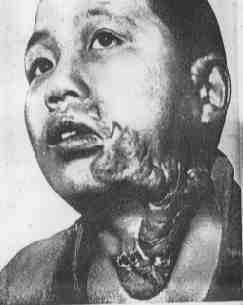
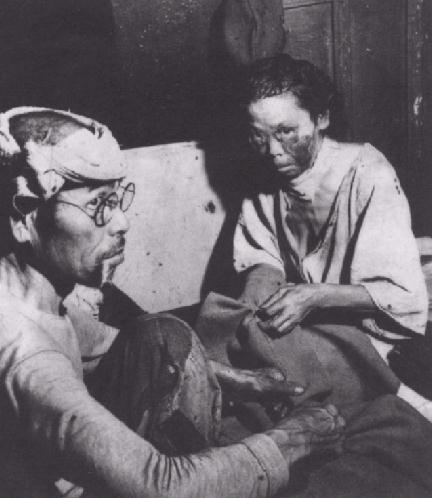
This page contains poems, prose and art by survivors of the Hiroshima and Nagasaki atomic bomb blasts, the work of other Japanese writers and artists, and the thoughts and observations of poets and writers around the globe.
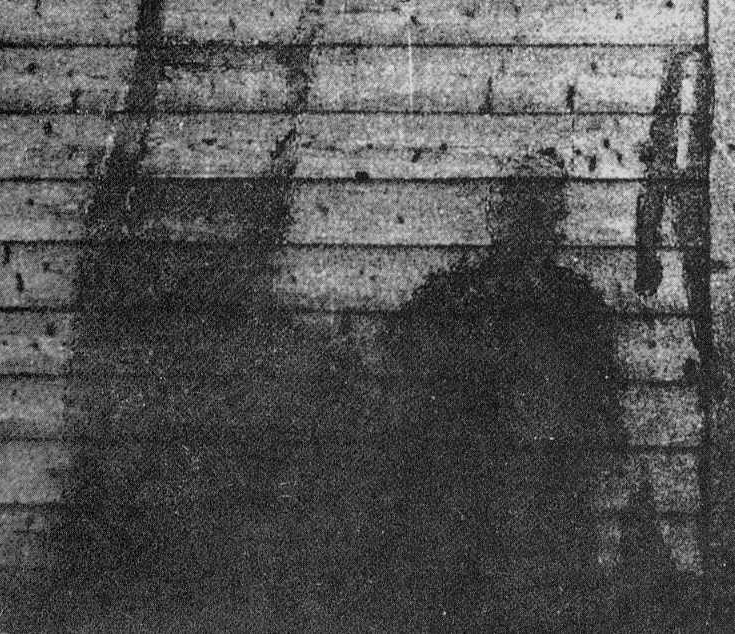
The intense heat and light of the Hiroshima and Nagasaki atomic bomb blasts left
behind ghostly silhouettes of human beings whose lives were erased in an
instant.
Hiroshima Shadows
by Michael R.
Burch
Hiroshima shadows ... mother and child ...
Oh, when will our hearts ever be beguiled
to end mindless war ... to seek peace,
reconciled
to our common mortality?
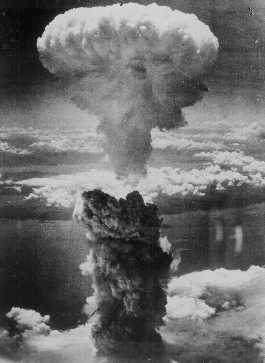
The following is one of the best poems about Hiroshima that I have found to
date. It takes an unflinching look at the horror, but also recognizes the
courage, humanity and compassion of the victims.
Let Us Be Midwives!
by Hiroshima survivor Sadako Kurihara
loose translation/interpretation by
Michael R. Burch
Midnight . . .
the basement of a shattered building . . .
atomic bomb survivors sniveling in the darkness . . .
not a single candle between them . . .
the odor of blood . . .
the stench of death . . .
the sickly-sweet smell of decaying humanity . . .
the groans . . .
the moans . . .
Out of all that, suddenly, miraculously, a voice:
"The baby's coming!"
In the hellish basement, unexpectedly,
a young mother has gone into labor.
In the dark, lacking a single match, what to do?
Scrambling to her side,
forgetting their own . . .
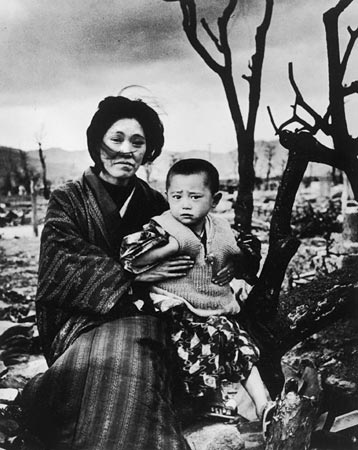
This haiku by the Japanese poet Takaha Shugyo, who was born in 1930 and lived
through World War II, might have been written for the victims, using flowers as
metaphors for the fragile lives of innocents:
Oh, fallen camellias,
if I were you,
I'd leap into the torrent!
— Takaha Shugyo, loose translation/interpretation by
Michael R. Burch
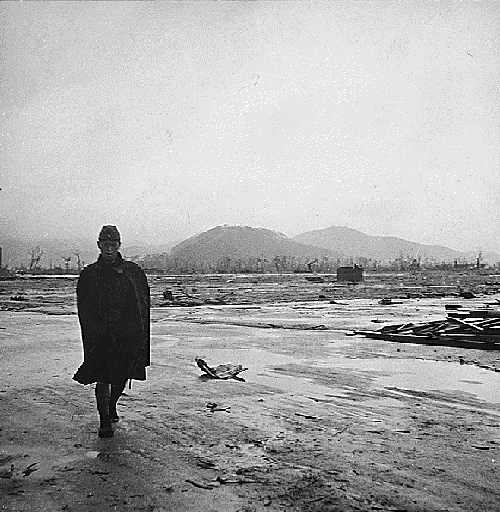
This poem asks us to consider the terrible costs of war for ourselves, as well
as for innocent children. I have dedicated this poem to the children of
Hiroshima, and to all children who face suffering and death due to the
madness of adults:
I lived as best I could, and then I died.
Be careful where you step: the grave is wide.
—Michael
R. Burch, "Epitaph for a Child of Hiroshima"
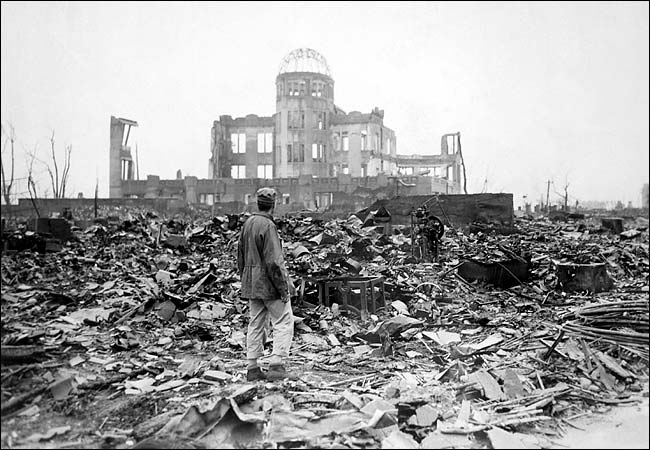
Now, for a moment, let us turn to the words of
the man perhaps most responsible for the creation of the atomic bomb:
I am become Death [Shiva],
the Destroyer of Worlds.
Robert Oppenheimer, the Supervising Scientist of the Manhattan Project who has
been called "the father of the atomic bomb," quoted these words from the poetry
of the Bhagavad-Gita, after watching the first detonation of a nuclear weapon.
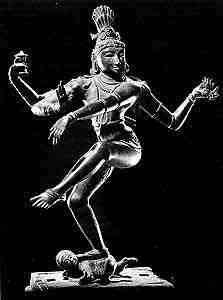
If the radiance of a thousand suns
Were to burst at once into the sky
That would be like the splendor of the Mighty One ...
I am become Death,
The Destroyer of Worlds.
—Bhagavad-Gita
Seeing your great form
with many faces, many eyes, many arms, many thighs and feet,
and many terrible tusks and stomachs,
O Mighty Armed,
the worlds are terrified and so am I.
—Bhagavad-Gita
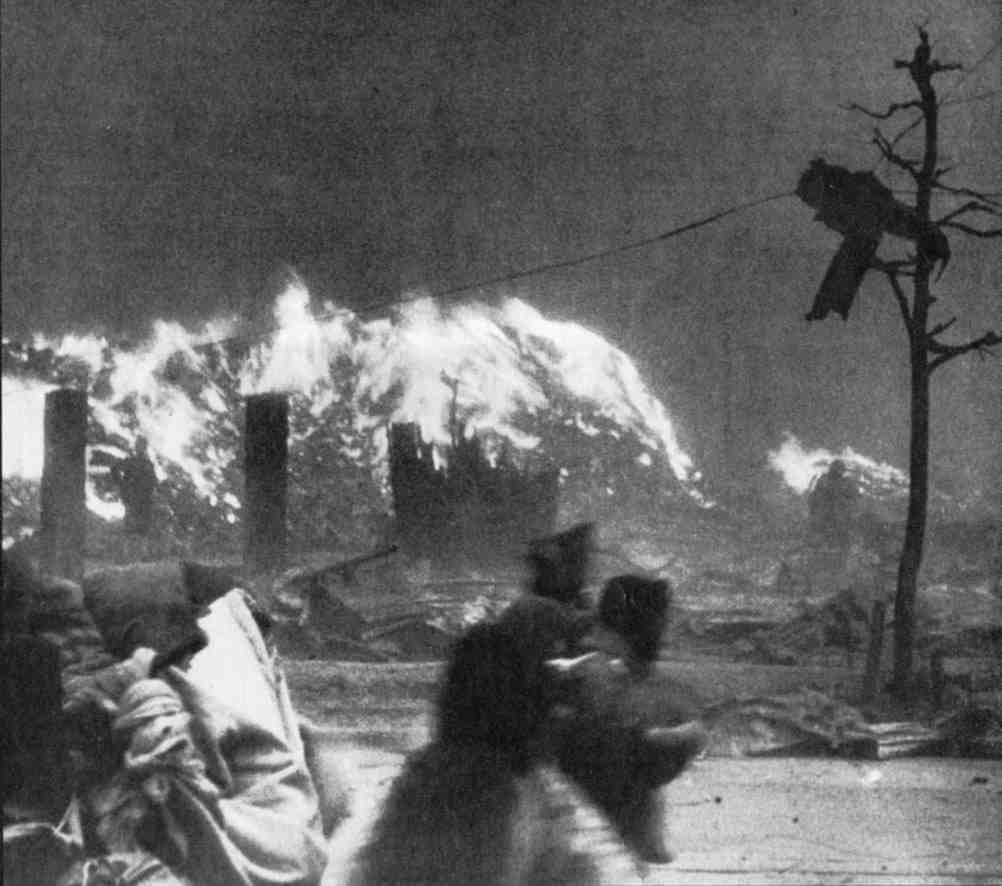
The haiku below by a Japanese master of the form reminds us of the transience of
life:
Grasses wilt:
the braking locomotive
grinds to a halt
—Yamaguchi Seishi, loose translation/interpretation by
Michael R. Burch
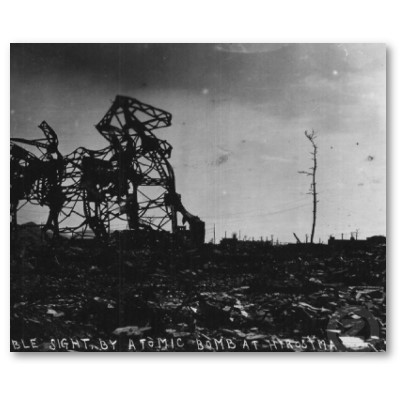
Those who do not learn from the past
are doomed to repeat it.
—George Santayana
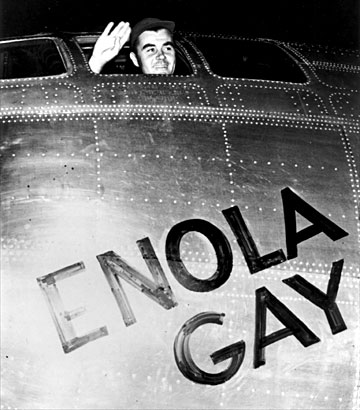
Lucifer, to the Enola Gay
by Michael R. Burch
Go then, and give them my meaning
so that their teeming
streets
become my city.
Bring back a pretty
flower,
a chrysanthemum,
perhaps, to bloom
if but an hour,
within a certain room
of mine
where
the sun does not rise or fall,
and the moon,
although it is content to shine,
helps nothing at all.
There,
if I hear the wistful call
of their voices
regretting choices
made
or perhaps not made
in time,
I can look back upon it and recall,
in all its pale forms sublime,
still
Death will never be holy again.
This is a touching poem by a Turkish poet:
Hiroshima Child
by Nazim Hikmet
loose translation/interpretation by Michael R. Burch
I come to beg at every door,
but who can hear my phantom tread?
I knock and yet remain unseen,
for I am dead,
for I am dead.
I’m only seven, though I died
in Hiroshima so long ago.
I’m seven now, as I was then,
for how can phantom children grow?
White incandescence charred my hair;
my eyes grew dim, then I was blind;
my fragile bones became fine ash;
my ash was scattered by the wind.
Today I need no fruit, no rice;
I crave no sweets, nor even bread.
I beg for nothing for myself,
for I am dead,
for I am dead.
All that I beg of you is peace:
You fight today! You fight today!
Peace, so earth’s living children may
live and grow and laugh and play.
Now any remaining Hiroshima survivors are elderly, and they must wonder if the
world has learned anything from their harrowing ordeal. The Japanese master
Matsuo Basho draws us a compelling picture:
See: whose surviving sons
visit the ancestral graves
white-bearded, with trembling canes?
— Matsuo Basho, loose translation/interpretation by
Michael R. Burch
The Atomic Age began at exactly 5:30 Mountain War Time on the morning of July
15, 1945, on a stretch of semi-desert land about five airline miles from
Alamogordo, New Mexico. And just at that instance there rose from the bowels of
the earth a light not of this world, the light of many suns in one.—William
Laurence, New York Times, September 26, 1945
O Krishna, son of Devaki,
Lord of the universe, of inexhaustible powers,
Krishna of the blue-lotus skin,
Krishna of the white-lily eyes,
Saffron-robed Krishna,
Help me now!
—Draupadi's cry to Krishna in Book Three The Forest (P. Lal)
You Who Read No Calm
by T. Merrill
You, who read no calm reportings
Of alien, distant, dire events,
But shriek and keen as loves go down
Beyond all help, to violence;
Whose temple's walls, stormstruck and split
by sizzling bolts collapse around,
While mid the crash of chaos hope
Whirls in a death-spin to the ground;
You, who alone in deep distress
Cry out for help where there is none,
All you whom I shall never know:
I know a portion nonetheless
Of cruel trials you undergo.
Killers in many guises come:
Sudden as electric shock
Or looming ghostly as a shark
Leisurely finning toward its mark.
I who breathless and sweating once
Wrestled a devil to the floor,
And saw him rise again when he
Finished what he began before,
I who re-learned each childhood prayer
Forgotten, to the stars once more
Send up a poor and hopeless plea
For spirit's peace beyond despair.
How could I understand?
by Michael R. Burch
How could I understand
that light
might
be painful?
That sight
might
be crossed?
How could I understand
the cost
of my ignorance,
or the sun’s
inflorescence?
Who was there to tell me
that I, too,
might be one of the
Lost?
I don't know what weapons World War III will be fought
with, but World War IV will be fought with sticks and stones.—Albert
Einstein
Excerpts from "Under Siege"
by Mahmoud Darwish
translated by Marjolijn De Jager
Here on the slopes of hills, facing the dusk and the cannon of time
Close to the gardens of broken shadows,
We do what prisoners do,
And what the jobless do:
We cultivate hope.
A country preparing for dawn. We grow less intelligent
For we closely watch the hour of victory:
No night in our night lit up by the shelling
Our enemies are watchful and light the light for us
In the darkness of cellars.
Here there is no "I".
Here Adam remembers the dust of his clay.
When the planes disappear, the white, white doves
Fly off and wash the cheeks of heaven
With unbound wings taking radiance back again, taking possession
Of the ether and of play. Higher, higher still, the white, white doves
Fly off. Ah, if only the sky
Were real [a man passing between two bombs said to me].
Alone, we are alone as far down as the sediment
Were it not for the visits of the rainbows.
Oh watchmen! Are you not weary
Of lying in wait for the light in our salt
And of the incandescence of the rose in our wound
Are you not weary, oh watchmen?
A little of this absolute and blue infinity
Would be enough
To lighten the burden of these times
And to cleanse the mire of this place.
Resisting means assuring oneself of the heart’s health,
The health of the testicles and of your tenacious disease:
The disease of hope.
Greetings to the one who shares with me an attention to
The drunkenness of light, the light of the butterfly, in the
Blackness of this tunnel!
Greetings to the one who shares my glass with me
In the denseness of a night outflanking the two spaces:
Greetings to my apparition.
My friends are always preparing a farewell feast for me,
A soothing grave in the shade of oak trees
A marble epitaph of time
And always I anticipate them at the funeral:
Who then has died...who?
Our technology has exceeded our humanity.—Albert
Einstein
But what happens if we don't learn
from the voices of the past?
Of what use to the world
is a poet
or a prophet
whose words go unheeded? . . .
—Miklós
Radnóti, a victim of the Holocaust, translated by Gina Gönczi
The poem that follows is based on a vision of Zyskandar Jaimot. I believe this
is a poem he was working on up to his death, as he emailed me (Mike Burch)
revisions to the poem shortly before he died on the evening of March 30, 2010.
As Miklós Radnóti, a victim of the Holocaust, asked in his poem above, what
happens if we don't learn from the voices of the past, and don't heed the word
of poets and prophets? . . .
The future of Iran and Israel
by Zyskandar
Jaimot
unleashed in a nanosecond – DAEMONS to despoil the world . . .
wisps of a dream
a vision
pornographic in nature
i am alone
watching our destruction
by beings created — created in our fervid ejaculatory madness
the egg lies there waiting to hatch — alembic in amoral innocence
and i feel cold
i shiver
from fear
and from the air temperature
kept frigid
by giant refrigeration systems
chilling those hot coils
freezing destructive desire
those mechanical prods
raw
undressed
about the size and width
of an adult porpoise
innocent
frolic freely
while losing
heat to
the universe’s quantum waves
each encased
in a latex bodice
like
a
dominant mistress
shiny
silvery
stainless steel struts
hold
parts
conjoined in breathless expectation
as the corset inhibits
every damned gasp of air
wrapped
by layers of valuable
oh-so valuable gold leaf
to increase desire’s fervor
fashioned
with priapic polyethylene protrusions
little fake dildos
only to penetrate once
to extract life’s essence
only for an instant of transmogrified time
like the allure of film stars
able to entice via mere visions and sounds
a shuddering momentary
breathless encounter
seduced
by the power of fission
to shatter
the air’s invulnerability
with copper threads
that strangle and cut
the dark dull grey core of plutonium
lusting
to escape with a whoosh of heat
more vicious
than ten thousand thousand suns’
able to melt the colours
from butterflies’ wings
thin bands of deuterium
as translucent as white frothy sea foam
relentlessly breaking the sandy shore
of our indurate creation
pornography has a new permissive nature
to destroy us all in waves of sudden desire
amorality awaits —to immolate all life
At the Peace Park, Hiroshima
by Zyskandar Jaimot
The tilted dome stands
and reflects like a silent mirror
While balding grey-feathered pigeons hide
among twisted agonized steel
Long naked metal fingers open
strive to grasp the still empty air
Emaciated shadows linger among
ruins of anonymous burial mounds
Murmurs of weeping fountains add background calm
to hours devoted to atomic remembrance
Forgotten ashen silences yield
miraculously to clean lanes swept continuously
But before you, one street segregated by bitter hatreds
A single cement pole inscribed with Korean names
marks slave laborers' forbidden even in death
Proper respect to mingle in the teary Japanese sky.
Something
by
Michael R. Burch
Something inescapable is lost—
lost like a pale vapor curling up into shafts of moonlight,
vanishing in a gust of wind toward an expanse of stars
immeasurable and void.
Something uncapturable is gone—
gone with the spent leaves and illuminations of autumn,
scattered into a haze with the faint rustle of parched grass
and remembrance.
Something unforgettable is past—
blown from a glimmer into nothingness, or less,
and finality has swept into a corner where it lies
in dust and cobwebs and silence.
Frail Envelope of Flesh
by
Michael R. Burch
Frail envelope of flesh,
lying cold on the surgeon’s table
with anguished eyes
like your mother’s eyes
and a heartbeat weak, unstable ...
Frail crucible of dust,
brief flower come to this—
your tiny hand
in your mother’s hand
for a last bewildered kiss ...
Brief mayfly of a child,
to live two artless years!
Now your mother’s lips
seal up your lips
from the Deluge of her tears ...
Here short poems and epigrams that speak to the moment ...
But what am I?
An infant crying in the night:
An infant crying for the light:
And with no language but a cry.
—Alfred, Lord Tennyson
I lived to see that and this,
the air feels heavy to me.
A war sound-filled silence hugs me
as before my nativity.
—Miklós
Radnóti, translated by Gina Gönczi
Whoever fights monsters should see to it
That in the process he does not become a monster.
If you gaze too long into an abyss,
the abyss gazes also into you.
—Friedrich Nietzsche
Forgive, O Lord, my little jokes on Thee
And I'll forgive the great big one on me.
—Robert Frost
Ring the bells that still can ring
Forget your perfect offering
There is a crack in everything
That's how the light gets in.
—Leonard Cohen
What indeed is Earth but a Nest
from whose rim we are all falling?
—Emily Dickinson
I took one Draught of Life—
I'll tell you what I paid—
Precisely an existence—
The market price, they said.
—Emily Dickinson
I know the truth – give up
all other truths!
No need for people anywhere on earth to struggle.
Look – it is evening, look , it is nearly night:
What do you speak of, poets, lovers, generals?
The wind is level now,
the earth is wet with dew,
the storm of stars in the sky will turn to quiet.
And soon all of us will sleep under the earth, we
who never let each other sleep above it.
—Marina Tsvetaeva, translated by Elaine Feinstein
Which plunderer’s hand
ransacked the pure gold statute of your dreams
In this horrendous storm?
—Nadia Anjuman,
Afghani poet
I was angry with my friend,
I told my wrath, my wrath did end;
I was angry with my foe,
I told it not, my wrath did grow.
—William Blake
... For we are guilty too, as other peoples are,
knowing full-well when and how and why we've sinned so far,
but workers live here too, and poets, without sin
and tiny babies in whom intellect will flourish;
it shines in them and they guard it, hiding in dark cellars
until the finger of peace once again marks our nation,
and with fresh voices they will answer our muffled words.
Cover us with your big wings, vigil-keeping evening cloud!
—Miklós
Radnóti, translated by Gina Gönczi
If more politicians knew poetry,
and more poets knew politics,
I am convinced the world
would be a little better place to live.
—John Fitzgerald Kennedy
I have torn speech like a tattered robe and let words go;
you who are still dressed in your clothes, sleep on.
—Jalaluddin Rumi, translated by Jack Marshall
The day the Cloud reigned
—Michael R. Burch
I.
The sky was clear on Hiroshima,
sealing her fate.
The report of the weather plane,
neither early nor late,
was certainly plain.
II.
The few innocuous clouds did not refrain
from abandoning the city.
Only the silence, monstrous in its complicity,
regarding man’s error
anticipated the terror.
III.
Only the small, astonished victims
understood the immaculate heavens:
the inconceivable light
igniting their bones;
the Cloud, all of a sudden,
billowing unbidden,
and then the apocalyptic rain
descending again and again and again.
So that where white chrysanthemums
had once whispered delicately with eloquent tongues
instantly only ashes remained
the day the Cloud reigned.
War Close Up
by Hiroshima survivor Sadako Kurihara
loose translation/interpretation by
Michael R. Burch
Stirring bugles! Rousing martial music!
The announcer reporting "victory"
like some messenger from on high,
fanning, fanning the fervored flames of battle!
Masterful state magicians materializing
in a wizardly procession,
spreading cleverly poisoned words
to bewilder reason!
Artistic expression abracadabra-ed into state-sponsored magic!
The sound of boots, guns, bombs, cannons
as our army advances, advances, advances toward the enemy!
The thunder of our invincible tanks advancing! Alleluia!
The sudden, sweet gurgles of drowning enemy ships!
The radio broadcasts the sounds of battle:
A war hymn resounding to the skies,
sung by courageous men and women
who worship this cruel idol, War.
Oh, so powerful the merest whiff
addles even the most independent spirit—
the opium of patriotism!
the religion of race!
While on scenic islands
scattered like stepping stones across the globe,
and on farflung continents,
driven by boundless avarice,
the landlords rage and rave again,
instilling hatred in indigenous populations
then prodding, driving them into battle.
Full of high-sounding pretexts
inevitably adapted to expediency
they raise indisputable banners—
God is on our side!
Righteous war!
Holy war!
"Right" becomes the password of thieves.
They square their shoulders:
"To secure world peace
annihilate
the evil opponent!"
They bark commands:
"For ten years, a hundred years,
fight to the last man, the last woman!"
The master magicians' martial music
resounds magisterially;
fanatic bull-mad patriots
roar and run amok;
completely bewitched, the people carol in unison:
"O, let me die by the side of my sweet Sovereign!"
We must extirpate false patriotic ideas from the minds of our youth, just as we
must extirpate them from those of the false patriots, out of love for our
mothers, the concept of the nation as Mother. How could she ever be our mother
if, as you tell us, we have to give the last drop of our blood for her! We must
be the sons of the true fatherland: the fatherland of love and
equality.—Federico Garcia Lorca
The Blade of Grass in a Dreamless Field
by Takashi "Thomas" Tanemori
Only a few knew it existed;
No one knew its power;
The world would never be the same again,
Changing irrevocably and forever.
The six-hundred-year history of Hiroshima
Disappeared in the ashes,
On this Judgment Day, on this Morning!
(i)
Blameless souls forever vanish
on this morning, this judgment day.
Our silent cries, to heaven we appeal,
scattered like the ash of withered leaves.
Our ebbing souls
cling to that lonely sky;
we try in vain to escape this sea of flame.
Oh, Hiroshima, once my haven,
why has your life been sacrificed?
(ii)
The abounding sadness within my heart . . .
drowning my loneliness in tears of self-pity.
Four abandoned children;
wishing to feel our mother's love,
just once more;
if only in our dreams.
The heat of yet another long night lingers.
Oh, Hiroshima, once my home,
my tears run dry waiting for the breaking dawn.
(iii)
My soul is torn—this rage inside,
an orphan of war;
why does this make me feel guilty?
Why do my neighbors turn away
or, close their ears when I speak?
Bitterness poisons this innocent child,
I madly waste away.
Oh, Hiroshima, once my cradle,
I am waiting to die.
(iv)
Gathering remnants of my courage,
I stand alone in this notorious America, land of the enemy.
An outcast with slanted eyes,
I fall before the indifference of strangers;
sightlessly, they trample upon my dignity.
This life of anguish seems to be my destiny.
Praying for death, I endure time.
Oh, Hiroshima, once my comfort,
I am lost in dreams of revenge.
(v)
Budding leaves renew this tired place, this tired soul;
gently the rain is embraced—your love,
comforting this savaged heart.
A blade of grass emerges from the ashes,
and my heart becomes a light,
connecting me to heaven.
Living for one another, this is my path!
Oh Hiroshima, forever my love,
may my life become a bridge from you and others.
(vi)
At the dawn of the 21st century,
we honor this passage through darkness.
We must have the courage to enter
the void again . . . and again,
emerging with the gift of new life.
Healing only comes through learning to forgive
and making peace with our past.
Only then, will the wind whisper:
"Hibakusha, you have not lived in vain!"
These are short poems, epigrams and quotes that deserve our consideration:
I expect to pass this way but once;
any good therefore that I can do,
or any kindness that I can show to any fellow creature,
let me do it now.
Let me not defer or neglect it,
for I shall not pass this way again.
—Etienne Griellet
We live upon one another according
to the law, ancient and timeless.
Let us live thus in loving-kindness.
—Khalil Gibran
I am convinced
That if all mankind
Could only gather together
In one circle
Arms around each other's shoulders
And dance, laugh and cry
Together
Then much
of the tension and burden
of life
Would fall away
In the knowledge that
We are all children
Needing and wanting
Each other's
Comfort and
Understanding
We are all children
Searching for love
—Leonard
Nimoy
Peace cannot be kept by force.
It can only be achieved by understanding.
—Albert
Einstein
There never was a good war
nor a bad peace.
—Benjamin Franklin
Takashi's Story
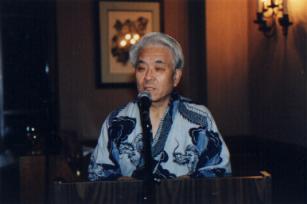
This is the story of Takashi “Thomas” Tanemori, the descendent of a proud
Samurai family, who survived the Hiroshima atomic bomb blast to become a peace
activist, poet and artist, in his own words ...
My life, since I was eight years old, has been a long struggle to understand
the demise of my home town, the confiscation of my childhood, and the horrible
indignity of a bomb attack that marked the beginning of the Nuclear Age. It has
led me to finding peace in my heart, and becoming a man of peace.
Long ago I was lifted from the ashes of Hiroshima to find my way in the world.
Before then my Father, a descendent of a proud Samurai family, dressed in a
kimono emblazoned with the family crest, "Maru ni Tachi Aoi," of the "hollyhock"
[Tokugawa Shogunate lineage], taught me patiently to live—the ancient code of
Samurai. How important it was to him to make sure that he had correctly passed
on to me the "Seven Codes of the Samurai", as he insisted that we must repay our
debts to our ancestors—passing on to our children what we have received. On
September 3, 1945 I bade farewell to my Father.
I became a "hibakusha" (a survivor of the Hiroshima atomic bombing) leaving
the charred cradle of childhood with a heart twisted—hatred, for a harsh journey
toward manhood. As a teenager, I immigrated to America, my youthful mind
thinking it my duty to seek revenge for the destruction of my family.
Now a naturalized American citizen, my Father's teaching has become the
touchstone of my life, enabling me to survive and setting me on the "Path of
Peace" to the wisdom of manhood with an open heart of love and forgiveness. I am
now a product of two cultures—traditional Japan, the nation of my birth—and
America, my adopted nation.
Looking back on the last 60 years of my life, my life-journey has not been
what I expected; my final destination not exactly as I had charted it. But I am
neither dismayed nor disappointed. The conflicts of my past shaped and
redirected me. I now honor both the past and the present while expressing my
love for two countries that both wounded and nurtured me. My life is like
embroidery, many different lengths of threads, crisscrossing in many colors,
adding to an iridescent tapestry of human dignity.
Although I was young and filled with anger, after many turbulent years both in
postwar Japan and America, I had to search into the deepest chamber of my soul
in my deepest anguishing hour. I realized that I had not only survived the
bombing of Hiroshima, but that my Father’s teaching of the Seven Codes of the
Samurai had kept my heart and soul intact, preserved the essence of who I am,
and saved me from self-destruction!
On August 5, 1985 I had a personal epiphany that changed my life’s direction.
In a moment of anger, I suddenly remembered the dream about a white Crane and
Butterfly I had the night before the bombing in Hiroshima.
I would like to share the story of the crane and the butterfly, and my journey
from revenge to forgiveness and peace, symbolized—folding an origami paper crane
and transforming it into a butterfly. This story begins the night before the
bombing, as I sat in a community bomb shelter with my family. I had a
transcendent vision of the crane and the butterfly. In my vision, I was taken to
see the white crane, Senba-zuru, as mighty as a thousand cranes, who talked to
me of loss, survival and transformation. I was shown many of the horrors to come
and also told that the keys to survival were to remember who I am and to follow
the light within. At the end of the vision, I was horrified to see Senba-zuru
perish in a giant fireball. But then, as I lay desolate, sobbing on the ground,
I saw him return as a white butterfly.
In the aftermath of the bombing, I forgot this vision for forty years until
August 5, 1985, while driving to a remembrance rally in San Francisco—a
mushroom-shaped cloud formation in the distance brought the memory flooding
back. A white butterfly flew into my car, gracefully landing on the dashboard.
It stayed there momentarily, a fluttering pair of iridescent wings, recreating
the symphonic melodies that I had heard on that night of the vision—then
it flew out, soaring freely into the blue sky. At that moment, the weight of the
past was lifted from my heart. Looking back, I realize that the crane and the
butterfly had been guiding me like an unseen rudder through stormy seas of
hatred and revenge to forgiveness to peace.
My spiritual journey, reconnecting with and reconciling my past with the
events of history and applying this experience to the present, for the benefit
of future generations, is my life goal. The message is clear and simple. At
last, I come home to my real promise to my Father, a place called "PEACE through
forgiveness"—letting go of my painful past. I can say at last I am now a man of
"PEACE".
I was finally able to embrace my Father’s teaching, the Seven Codes of
Samurai, which has allowed me, having gone through the darkest clouds of raging
storms, to enter into the “eye of the storm”, where I am now able to see the
world from a different perspective. I set a lifetime goal of helping future
generations live in Heiwa: peace, with harmony and equality. At the Silkworm
Peace Institute, a nonprofit organization I founded, we foster the message of
hope, healing, cultural understanding, attempting to transform revenge and anger
into peace and forgiveness to others.
Please consider reading
How Can We Prevent another Hiroshima, another Holocaust, another Trail of Tears,
another Civil War?
We have also published
Japan Earthquake/Tsunami Poetry, a collection of poems dedicated to the
people of Japan after they were hit by a 9.0-magnitude earthquake and tsunami.
Our thoughts, prayers and well wishes are with all the victims and survivors.
Other related pages: Holocaust Poems,
Gaza
Poems,
Nakba Poems,
9-11 Poems,
Trail
of Tears Poems,
Sandy Hook Poems, Aurora Poems,
Columbine Poems,
Darfur
Poems,
Haiti Poems
The HyperTexts