The HyperTexts
The Best of The HyperTexts
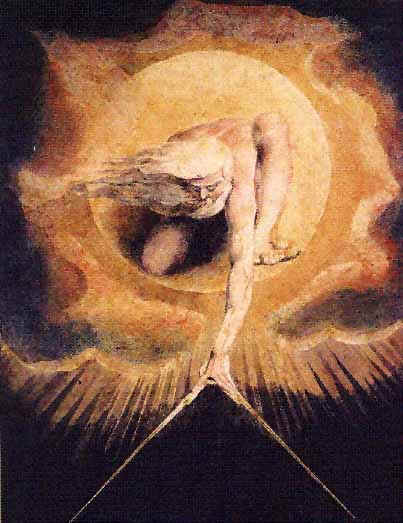
The following are the best poems published by The HyperTexts over
the last three decades, in the admittedly subjective opinion of its
founder.
Some of the older poems were published via our "Blasts from
the Past" pages. This "Best of THT" page is
a work in progress, so if you like what we're up to, please bookmark and
revisit it from time to time.—Michael R. Burch
Poets represented here include Conrad Aiken, Louise Bogan, Greg
Alan Brownderville, Jack Butler, Jared Carter, Catherine Chandler, Eunice de
Chazeau, Hart Crane, Ann Drysdale, Rhina P. Espaillat, Henry George Fischer, Jack Foley,
Robert Frost, Conrad Geller, David B. Gosselin, Rob
Griffith, R. S. Gwynn, Seamus Heaney, Anthony Hecht, Rose Kelleher, X. J. Kennedy, Janet Kenny,
Zyskandar A. Jaimot, Quincy R. Lehr, Martin Mc Carthy, Tom Merrill, Robert Mezey, Richard Moore,
Dorothy Parker, Philip Quinlan,
Jennifer Reeser, Joe Ruggier, Joseph S. Salemi, Luis Omar Salinas, Adam Sedia, A. E.
Stallings, Don Thackrey, Agnes Wathall, Gail White, Richard Wilbur and Bob Zisk.
Skaters
by Conrad Geller
Phantom skaters in the park
turn, and glide, and never fall,
faces clouded, figures dark.
They are phantoms, after all.
Turn and glide with awful grace,
leave no measure, make no sound,
out of moment, out of place
all the earthly year around.
Phantom skaters on the lake,
known by no one else but me,
making figures for my sake,
invisibly, eternally.
Conrad Geller, a native Bostonian, now lives in Northern Virginia.
For Her Surgery
by Jack Butler
I
Over the city the moon rides in mist,
scrim scarred with faint rainbow.
Two days till Easter. The thin clouds run slow, slow,
the wind bells bleed the quietest
of possible musics to the dark lawn.
All possibility we will have children is gone.
II
I raise a glass half water, half alcohol,
to that light come full again.
Inside, you sleep, somewhere below the pain.
Down at the river, there is a tall
ghost tossing flowers to dark water—
jessamine, rose, and daisy, salvia lyrata . . .
III
Oh goodbye, goodbye to bloom in the white blaze
of moon on the river, goodbye
to creek joining the creek joining the river, the axil, the Y,
goodbye to the Yes of two Ifs in one phrase . . .
Children bear children. We are grown,
and time has thrown us free under the timeless moon.
This has long been one of my favorite poems by a contemporary poet. When people
bemoan the "state of the art," I think of poems like this one and find small
cause for concern.
The Ghost Ship
by A. E. Stallings
She plies an inland sea. Dull
With rust, scarred by a jagged reef.
In Cyrillic, on her hull
Is lettered, Grief.
The dim stars do not signify;
No sonar with its eerie ping
Sounds the depths—she travels by
Dead reckoning.
At her heart is a stopped clock.
In her wake, the hours drag.
There is no port where she can dock,
She flies no flag,
Has no allegiance to a state,
No registry, no harbor berth,
Nowhere to discharge her freight
Upon the earth.
A. E. Stallings is a contemporary poet who's leaving her mark on the world in
the form of memorable poems like this one.
Sea Fevers
by Agnes Wathall
No ancient mariner I,
Hawker of public crosses,
Snaring the passersby
With my necklace of albatrosses.
I blink no glittering eye
Between tufts of gray sea mosses
Nor in the high road ply
My trade of guilts and glosses.
But a dark and inward sky
Tracks the flotsam of my losses.
No more becalmed to lie,
The skeleton ship tosses.
While few readers today may have heard of Agnes Wathall, her "Sea Fevers" is a poem that
deserves, even demands, remembering.
Come Lord and Lift
by Tom Merrill
Come Lord, and lift the fallen bird
Abandoned on the ground;
The soul bereft and longing so
To have the lost be found.
The heart that cries—let it but hear
Its sweet love answering,
Or out of ether one faint note
Of living comfort wring.
This poem (the poet is an atheist) seems like both an earnest, heartfelt prayer
and a condemnation of religion's dubious "God" to me. Why doesn't he have
compassion for fallen fledglings, one wonders? . . .
Little Thrush
by
Martin Mc Carthy
for a slain child
When your songs no longer flow,
little thrush;
when gunfire lays you low,
little thrush;
where does your spirit go,
little thrush?
What happens to all you know,
little thrush?
HIDEOUS
by
Shannon Winestone
Do you have color in your cheeks? I watched
Your lilies singe to a crimson flush, your rose
Recast in bloody shades of Lancaster.
And like a tolling bell, your body swayed
Because they knew you lied, that time you bled
Them dry and said, “I don’t know how they died.”
With every vowel, every consonant,
That tumbled from your mouth, my disgust grew
Like a cancer in the lungs, or a
toxic plant.
You tried to mend your quilt with patchwork lies,
Deception woven like a tapestry
With wooden-nickeled affability.
So let your “fringe” unravel, let it go
That you may lie exposed as night draws nigh,
That morning’s light may shine upon your deeds.
You stood there frozen like a startled doe,
Lost in a blank and vacant haze, so still—
Each strand of hair a work of art, your eyes
Pale Ceylon blue sublime. They were the Nile,
And like Parmenio’s son, I sank and drowned
In you. Those pretty fools all sighed and pined,
Cursing the day church floors were swept by lace
(White as the virgin snow, her bridal train),
When to the sound of bagpipes, promises
Were made. Recast in shades of Yorkist woe—
For now I see the pretty fool is me,
And what brought mirth once now is hideous.
I cooked the meals and scrubbed the grimy floor,
Immersing myself in life’s mundane routine.
But then your name came falling from all lips,
Came flooding all my zones, like breaking news,
Just in. Strange thoughts of you invaded me—
The Gog and Magog of my battered brain.
They scaled the walls like mighty men of war—
My galleys sank—ablaze, defeated, swamped.
If you have lit my pyre, if I’m on fire,
Then you must burn and turn to ashes too.
Because it’s not enough that we have read
The same old works of literature—not
Enough that numbers addle both our brains,
That you observe the horns (their height, their breadth),
As I do here in quietness—my thoughts,
Directed more towards the ancient past.
For if you’re frost, then I’m a glowing coal.
If you were Persian, I was surely Greek.
My tears should stain your face instead of mine.
I’d be the victor, not the vanquished one,
Repay Thermopylae with Salamis,
Sip your Assam. Ukrainian grain would fill
My fingers, like an English lord or like
A Russian czar—two lands, two roots of me.
A Lyssa rage, a paralyzing fear,
The voiceless bird inside a gilded cage—
I’d pour my agony upon your soul,
Come flooding all your zones, like breaking news,
Just in. So hideous, like one who loves
The rack, the iron maiden, and the screw.
I cannot be a pillar in your temple.
I hate the standard that you bear, so why
Do you pervade and haunt my every thought?
I rise up from my sleepless bed each night,
Now pacing back and forth, now wishing you...
And yet I deem your tyrant’s dream to be
No better than a menstrual rag. You’d love
The sound of jackboots on our streets, a bust
Of Castro gracing every public square,
A granite Lenin peering down state halls,
A marble Mao directing courts of law,
With Stalin scowling at cathedral doors.
And you’d be there to crown each one with gold—
An acrid taste now left upon my tongue.
It doesn’t matter what you named your son,
Or that He made your root spring from the land
Of crimson maple leaves and from that land
That birthed the guillotine, or that we both
Are wont to linger at the glass. Oh you—
A bleach-stained dress that would no longer do,
No longer do. I swore it with an oath;
I said, “Adieu.” Now, Antinous, I’m through.
My mind a Gaugamela rout—in flight
I left my shield, my mantle, my war-chariot,
My bow; my soldiers bled out on the plain.
My head lay on the pillow; I could feel
You sinking in, dreamt whispered pleas and sighs.
So hideous, as when King David had
To take Bathsheba, like a trophy or
An Ammonite crown. In the evening air
He watched her bathe and brought her to his bed,
Then spilled Uriah’s blood to take her hand.
The wind—I’m jealous of the wind that swept
Her fingers through your hair. I grudge the rain
Because she soaked your clothes and touched your skin—
Elysium of vales and snowy peaks,
Of wild nights, of mooring in a sea
As beautiful as blue-green lakes and hills
Of islands west of Portugal. The place
Where a maelstrom erupts then bliss ignites
To quell the storm, to calm the raging sea.
For seven years complete you drank their blood,
Partook of feasts where man was duly served.
But Sappho’s fingers struck the lyre; she sang
A piper’s song—stirred up to highest treason
My quickened pulse against all reasoning.
Her final strains fade into frenzied haze—
No wild nights, no mooring in your sea!
The wounded voice my scorn; my eyes leak tears
For them, but I would kiss your mouth in secret.
So I can’t meet their gaze, or speak of you
At length, lest someone turn to me and say,
“Do you have color in your cheeks? I watched...”
Dispensing Keys
by Hafiz
loose translation by Michael R. Burch
The imbecile
constructs cages
for everyone he knows,
while the sage
(who has to duck his head
whenever the moon glows)
keeps dispensing keys
all night long
to the beautiful, rowdy,
prison gang.
I love the wisdom and spirit of Hafiz in this subversive (pardon the pun)
little poem. I can see Trump putting refugees in cages, while Hafiz goes around
letting them out for a moondance!
Sometimes Mysteriously
by Luis Omar Salinas
Sometimes in the evening when love
tunes its harp and the crickets
celebrate life, I am like a troubadour
in search of friends, loved ones,
anyone who will share with me
a bit of conversation. My loneliness
arrives ghostlike and pretentious,
it seeks my soul, it is ravenous
and hurting. I admire my father
who always has advice in these matters,
but a game of chess won't do, or
the frivolity of religion.
I want to find a solution, so I
write letters, poems, and sometimes
I touch solitude on the shoulder
and surrender to a great tranquility.
I understand I need courage
and sometimes, mysteriously,
I feel whole.
Luis Omar Salinas (1937-2008) was a leading American Chicano poet who called himself the
"Aztec Angel" and the "Crazy Gypsy" in two of his best-known poems. Salinas
has been called
"one of the founding fathers of Chicano poetry in America" and his poems have
been "canonized in U.S. Hispanic literature." I met this fine poet and
gentleman through the artist Karen Harlow, and it was my honor and pleasure to
publish his work.
Release
by R. S. "Sam" Gwynn
Slow for the sake of flowers as they turn
Toward sunlight, graceful as a line of sail
Coming into the wind. Slow for the mill-
Wheel's heft and plummet, for the chug and churn
Of water as it gathers, for the frail
Half-life of
spraylets as they toss and spill.
For all that lags and eases, all that shows
The winding-downward and diminished scale
Of days
declining to a twilit chill,
Breathe quietly, release into repose:
Be still.
Sam Gwynn is one of the better-known contemporary formalists.
Resemblances
by Gail White
Somewhere along the primrose path
That led to my seventies,
I lost the blithe agility
Of the young springbok's knees,
The swift gait of the wildebeest
Running with its herd,
And the keen eye of the crouching cat
Under the nesting bird,
Retaining only the stoic love
Of the elephant for its kin
And the fierce desire of the salmon
For the stream it was nurtured in.
First Confession
by X. J.
Kennedy
Blood thudded in my ears. I scuffed,
Steps stubborn, to the telltale booth
Beyond whose curtained portal coughed
The robed repositor of truth.
The slat shot back. The universe
Bowed down his cratered dome to hear
Enumerated my each curse,
The sip snitched from my old man's beer,
My sloth pride envy lechery,
The dime held back from Peter's Pence
with which I'd bribed my girl to pee
That I might spy her instruments.
Hovering scale-pans when I'd done
Settled their balance slow as silt
While in the restless dark I burned
Bright as a brimstone in my guilt
Until as one feeds birds he doled
Seven our Fathers and a Hail
Which I to double-scrub my soul
Intoned twice at the altar rail
Where Sunday in seraphic light
I knelt, as full of grace as most,
And stuck my tongue out at the priest:
A fresh roost for the Holy Ghost.
I have absolutely loved this poem by X. J. Kennedy since the day I first read
it. It
captures both the spirit and the sense of a boy's "First Confession," and his
truant tongue's triumphant revenge.
I Have a Crush on the Devil
by Rose Kelleher
I have a crush on the devil, teehee!
It’s wrong, but those horns just do something to me,
that little mustache, the seductive goatee.
I’ve got a crush on Beelzebub, dash it!
That arrow-tipped tail of his has such panache; it
would make a nice whip. I like watching him thrash it.
I’ve got a longing for Lucifer, darn it!
There’s something about all that Evil Incarnate,
his naked red skin like a shimmering garnet.
I’ve got a school-girlish thing for Hell’s King,
infernal, eternally barbecuing!
The respectable angels just haven’t his zing.
This zany poem by a contemporary poet has long been one of my personal
favorites.
After the Rain
by Jared Carter
After the rain, it’s time to walk the field
again, near where the river bends. Each year
I come to look for what this place will yield—
lost things still rising here.
The farmer’s plow turns over, without fail,
a crop of arrowheads, but where or why
they fall is hard to say. They seem, like hail,
dropped from an empty sky,
yet for an hour or two, after the rain
has washed away the dusty afterbirth
of their return, a few will show up plain
on the reopened earth.
Still, even these are hard to see—
at first they look like any other stone.
The trick to finding them is not to be
too sure about what’s known;
conviction’s liable to say straight off
this one’s a leaf, or that one’s merely clay,
and miss the point: after the rain, soft
furrows show one way
across the field, but what is hidden here
requires a different view—the glance of one
not looking straight ahead, who in the clear
light of the morning sun
simply keeps wandering across the rows,
letting his own perspective change.
After the rain, perhaps, something will show,
glittering and strange.
I admire this poem by the contemporary poet Jared Carter, especially its closing lines. This poem capitalizes on the
poet's capacity for wonder.
I empty
by Zyskandar A. Jaimot
myself
into
you
And wonder
afterwards
lying spent
at times
still twitching
if recovery
will include
those same
small dreams
whispered
once again.
Rondel
by Kevin N.
Roberts
Our time has passed on swift and careless feet,
With sighs and smiles and songs both sad and sweet.
Our perfect hours have grown and gone so fast,
And these are things we never can repeat.
Though we might plead and pray that it would last,
Our time has passed.
Like shreds of mist entangled in a tree,
Like surf and sea foam on a foaming sea,
Like all good things we know can never last,
Too soon we'll see the end of you and me.
Despite the days and realms that we amassed,
Our time has passed.
Love among the Ruins
by Bob Zisk
Come down from your lightning-struck tower,
My love, come play with me.
Step lightly on broken stem and flower,
Salute the rough debris.
Tarry longer than an hour
In the smoke of this burned-out tree,
Tarry longer than an hour
And play the while with me.
Come down from your lightning-struck tower,
My love, come play with me.
Step lightly on broken stem and flower,
Salute the rough debris.
The Chrysanthemums
by Adam Sedia
When torrid Summer’s greenery,
Its vibrant hues and spiced perfume
Lie far, fast-fading memory,
Your flowers bloom.
When all the world around you fades,
Dries up, and withers, seeing death
Approach in night’s increasing shades,
You breathe sweet breath.
When long, dark Winter’s icy blast,
Whose hints fly in the breezes’ chill,
Inevitably nears at last —
You flourish still.
Your colors, rather than exclaim
Like childish March or vain July,
Burn bold with shades of earth and flame
So modestly.
You brighten up a world that dies,
Reminding you what soon must be.
Your fate surrounds you: therein lies
Your tragedy.
And thus I love you most: despite
The futile lateness of your prime,
You dare to thrive in dying light
And shine sublime.
The Deep Season
by
Catherine Chandler
Good-bye to lavish mercies. Green and lush,
the harmless scam
lies exposed by little deaths—a blush,
a fissured dam,
some mild dismay. Diminishment. The hush
of who I am.
First snow has not yet fallen, and the sun
is stinging bright,
demanding discipline, as one by one,
my once airtight
beloved arguments have come undone,
overnight.
I see the forest. I can see each tree,
the blackened ground,
the field behind, the space inside of me
that makes no sound,
yet aches for what I’m not, but need to be—
lost. Then found.
Catherine Chandler won the 2016 Richard Wilbur award for her book The Frangible
Hour.
In The Dark Season
by Richard Moore
I
I fall
out of the foliage of my feelings.
That is
the beginning, the ending,
when
the orange peels appear
from
the shrinking lips of the snow
and
broken bottles, still clinging to their labels,
in the
gutter outside the church.
A silk
stocking coils in the mud.
In the
dark season, someone has sown
the
seed of confusion. The church will graze
on the
flowers, the fruits of love,
the
soft nutritious pulp of remorse.
Do
these events signify
summertime in another hemisphere?
One
studied a new language in the darkness,
looked
far down into the well,
into
the hints of sunlight in its depths.
II
We are
dead such a long time before
and
will be dead such a long time after
this
leaping into light
as a
dolphin leaps from the sea
and
carries the glare of that moment
back
among the curious creatures
who
have not known the light.
Don't
tell me this is like Plato's cave;
I know
that. But in death, our element,
who
swims with us? Do we even?
If God
is light...No, but there may be,
as the
poet says, a soft monster
deeply
sleeping among his thousand
arms
under millennia
unnumbered, and enormous polypi.
I think
we have been frightened into life
as fish
leap from greater fish below.
We cry angrily in our cradles,
then
overcome, grow tranquil through the years,
hopefully, ready ever for the depths
ever
ready for us.
III
Yes, but of course, there is the need
for symmetry. Matter calls out
for antimatter, which forthwith
sings in the shadows. Thus, tonight
streetlight fingers new foliage
with breezes making light of it,
where unseen trunk divides itself
into a multitude of tips
above ground and below, as in
a mirror, strangers to each other,
two lives, depending on each other,
therefore the same life: in dark depth
and moisture one, in dry sunlight
the other: God and Satan, one,
female and male in each one, one.
Dolphins from darkness visit light.
Who from her glitter visits us?
These, lost inside you: look outside
in the not-you: you find them there.
Richard Moore was a poet, performer, novelist, essayist, teacher, philosopher
and mathematician―a real renaissance man.
Depths
by Richard Moore
Once more home is a strange place: by the ocean a
big house now, and the small houses are memories,
once live images, vacant
thoughts here, sinking and vanishing.
Rough sea now on the shore thundering brokenly
draws back stones with a roar out into quiet and
far depths, darkly to lie there
years, years—there not a sound from them.
New waves out of the night's mist and obscurity
lunge up high on the beach, spending their energy,
each wave angrily dying,
all shapes endlessly altering,
yet out there in the depths nothing is modified.
Earthquakes won't even move—no, nor the hurricane—
one stone there, nor a glance of
sun's light stir its identity.
This is a wonderfully haunting poem by the contemporary poet Richard Moore, who
lived in a dilapidated mansion close by the sea, until his death.
Miscarried
by Rhina P.
Espaillat
Blind little fish baffled but not quite
caught in the net of our need, what did you taste
in us that compelled you to cheat the tide
of our biography? Minutest beast
caged by our blood’s unwisdom, what clever
stratagem so undid you that, done out
of you, we stand at the coast of Never
to bid you this farewell? Least cosmonaut
loosed from the look of us as from a suit
of time’s weaving, in what pure alien form
did you slip home again across those mute
light years to nothing, missing and still warm?
Rhina P. Espaillat, in addition to being a fine poet and translator, is also a
wonderful human being.
Novenas
by Tom Merrill
After defeat, in grief's most hopeless hours,
With no resort remaining but the void,
The vanquished yet may turn to hidden powers,
Begging protection for a heart destroyed.
As crown or cross perhaps recalls some scene,
Bead by sad bead they may beseech the air,
As though in precincts silent and unseen
Lost angels could be helped by human prayer.
Each may, as if some hearing had begun
In secret parts where all the dead yet live,
Cry out to walls the innocence of one
Whom now no other aid is left to give.
And whether justice anywhere may reign,
None here can prove their witness was in vain.
Cicada Cadence
by
Henry
George Fischer
Again the sounds of summer resonate
As chitinous cicadas, locusts, crickets
Some stridently, some softly, stridulate
In hills and valleys, meadows, woods and thickets.
They're here, those ambient gambists, each astride
A twig or leaf or swaying blade of grass,
And mesmerize our dozing ears, misguide
Us into thinking none of this will pass—
A notion the nocturnal croaking caucus
Of katydids denies, whose farthest cry
By day's outdone in August by the raucous
Buzzing of the dogday harvest fly,
Ripsawing inspissated heat, portending,
In its crescendo, an inevitable ending.
In addition to being an accomplished poet, Henry George Fischer
[1923-2006] was the Metropolitan Museum of Art curator emeritus of Egyptology who helped the Temple of Dendur find a new life in New York.
Friday
by Ann Drysdale
The print of a bare foot, the second toe
A little longer than the one which is
Traditionally designated "great".
Praxiteles would have admired it.
You must have left in haste; your last wet step
Before boarding your suit and setting sail,
Outlined in talcum on the bathroom floor
Mocks your habitual fastidiousness.
There is no tide here to obliterate
Your oversight. Unless I wipe or sweep
Or suck it up, it will not go away.
The thought delights me. I will keep the footprint.
Too slight, too simply human to be called
Token or promise; I am keeping it
Because it is a precious evidence
That on this island I am not alone.
Ann Drysdale is one of the better contemporary poets that I've had the honor and
pleasure of publishing. Her poem "Friday" evinces a keen eye, irony, humor and
something of a child's sense of wonder.
The Lovemaker
by Robert Mezey
I see you in her bed,
Dark, rootless epicene,
Where a lone ghost is laid
And other ghosts convene;
And hear you moan at last
Your pleasure in the deep
Haven of her who kissed
Your blind mouth into sleep.
But body, once enthralled,
Wakes in the chains it wore,
Dishevelled, stupid, cold,
And famished as before,
And hears its paragon
Breathe in the ghostly air,
Anonymous carrion
Ravished by despair.
Lovemaker, I have felt
Desire take my part,
But lacked your constant fault
And something of your art,
And would not bend my knees
To the unmantled pride
That left you in that place,
Forever unsatisfied.
This is another of my favorite poems by a contemporary poet. Other poems by Robert Mezey appear elsewhere on this page.
Through the fields of solitude
by Hermann Allmers
translation by David B. Gosselin with Michael R. Burch
Peacefully, I rest in the tall green grass
For a long time only gazing as I lie,
Caught in the endless hymn of crickets,
And encircled by a wonderful blue sky.
And the lovely white clouds floating across
The depths of the heavens are like silky lace;
I feel as though I have long been dead,
Softly drifting with them through eternal space.
Translation © David B. Gosselin
Gasp
by
Martin Mc Carthy
I did not expect to find you here,
among these little shells and things
skittering from shore to shore
in a vast eternity of sea-foam;
but here you are, light years
from when I met you,
seeing the sea with eyes
still open to astonishment.
I did not expect to see you,
with your face lit up in eager joy,
nor to feel the fading day being charged again
by the sudden voltage of your touch;
but here you are, as the night undresses
in an alcove of dreams and moonbeams,
uttering the long tidal gasp
of a longing echoed from every shore.
Originally published by The Madrigal Press
Wulf and Eadwacer
(Anonymous Anglo-Saxon poem, circa 960 AD)
loose translation/interpretation by Michael R. Burch
To my people he's prey, a pariah.
They'll rip him apart if he approaches their pack.
Ungelīc is ūs! (We are unalike, otherwise, aliens)
Wulf fled to a faraway island:
his fen-fastened fortress.
Here, slaughter-cruel curs howl for carnage.
They'll rip him apart if he approaches their pack.
Ungelīc is ūs!
My heart hounded Wulf's weary wanderings ...
but whenever it rained, while I wept,
big battle-strong arms embraced me:
good feelings to a point but the end loathsome!
Wulf, my Wulf! These violent love-longings
have left me limp; your seldom-comings
have made me famished, deprived of real meat!
Have you heard, Heaven-Watcher? Watch-dog!
A wolf has borne our wretched whelp to the woods!
One can easily sever what never was one:
our song together.
"Wulf and Eadwacer" is, perhaps, the first great English poem by a female poet,
although it was written in a language closer to German than modern English. I
was never enthused by the "modernized" versions of the poem I was able to find,
so I decided to translate it myself. The poem's closing metaphor of a loveless sexual relationship being
like a song in which two voices never harmonized is stunning: one
of the first great metaphors in the English poetic tradition. "Wulf and
Eadwacer" appeared in the Exeter Book, which has been dated at around 960 AD,
but the poem itself may be much older. Is it possible that the first truly great English
poem was written by a woman? "Wulf" appears to be older than "Beowulf" and
certainly gets my vote.
Partying with the Intelligentsia
by Gail White
Poets will eat you out of house and home,
no matter how much booze you've squirreled away,
and afterwards they simply won't go home
till fading darkness warns of coming day
and then they burble "Goo'bye! Time to g'ome!"
Poets will drink you out of house and home.
Architects aren't much better, by the way,
and theater people have IQs of foam.
At 3 AM they simply won't go home.
These artsy types want someone else to pay
for dinner, want to use your car, your comb.
Poets will drink you out of house and home,
leaving your living room in disarray,
swearing they find your house a pleasure dome.
Even at dawn they simply won't go home—
some have passed out, others regroup and bray
a chorus of "Wherever I may roam".
Poets will drink you out of house and home,
and afterwards they simply WON'T go home.
Published in Light and Orbis
The Missionary's Position
by Joseph S. Salemi
I maintain it all was for the best—
We hacked our way through jungle and sought out
These savage children, painted and half-dressed,
To set their minds at ease, and dispel doubt.
Concerning what? Why, God's immense design,
And how it governs all we do and see.
Before, they had no sense of the divine
Beyond the sticks and bones of sorcery.
Granted, they are more somber and subdued,
Knowing that lives are watched, and judged, and weighed.
Subject to fits of melancholy mood,
They look upon the cross, and are afraid.
What would you have me say? We preached the Word
Better endured in grief than left unheard.
This is a poem that ought to cure "Christian" missionaries of their evangelistic
zeal, if only they had hearts capable of compassion for the children they
terrorize, and brains capable of reason. I have long admired this powerful poem,
which was written by a contemporary Catholic poet.
The Examiners
by John Whitworth
Where the house is cold and empty and the garden's overgrown,
They are there.
Where the letters lie unopened by a disconnected phone,
They are there.
Where your footsteps echo strangely on each moonlit cobblestone,
Where a shadow streams behind you but the shadow's not your own,
You may think the world's your oyster but it's bone, bone, bone:
They are there, they are there, they are there.
They can parse a Latin sentence; they're as learned as Plotinus,
They are there.
They're as sharp as Ockham's razor, they're as subtle as Aquinas,
They are there.
They define us and refine us with their beta-query-minus,
They're the wall-constructing Emperors of undiscovered Chinas,
They confine us, then malign us, in the end they undermine us,
They are there, they are there, they are there.
They assume it as an impost or they take it as a toll,
They are there.
The contractors grant them all that they incontinently stole,
They are there.
They will shrivel your ambition with their quality control,
They will desiccate your passion, then eviscerate your soul,
Wring your life out like a sponge and stuff your body down a hole,
They are there, they are there, they are there.
In the desert of your dreaming they are humped behind the dunes,
They are there.
On the undiscovered planet with its seven circling moons,
They are there.
They are ticking all the boxes, making sure you eat your prunes,
They are sending secret messages by helium balloons,
They are humming Bach cantatas, they are playing looney tunes,
They are there, they are there, they are there
They are there, they are there like a whisper on the air,
They are there.
They are slippery and soapy with our hope and our despair,
They are there.
So it's idle if we bridle or pretend we never care,
If the questions are superfluous and the marking isn't fair,
For we know they're going to get us, we just don't know when or where,
They are there, they are there, they are there.
It Is Too Late
by Kevin N.
Roberts
It is too late. Though we would reinspire
Our dream, rewake a dead desire,
A dismal sea divides our sighs and smiles;
Between us now so many months and miles
And tears for all things torn away by time,
For faded flowers grown pale and past their prime.
And no sweet words can make sick joys revive,
no mystic kiss keeps loves long dead alive.
What mortal hand can stay the hand of fate?
It is too late.
The Pool at Noon
by Jared Carter
She is the secretary. She wears a bathing cap
of white rubber, to enclose her brittle hair,
and an elasticized suit of shirred green fabric.
She does not dive into the water, but descends,
backwards, down the shaky tubular ladder,
into the shallows, where the water is calm
and strangely luminous, and smells always
of chlorine—
the echoes, among high girders
and skylights long ago painted over, of water
lapping in the scum-gutter, of dishes clinking,
far away, in the kitchen—
and everywhere,
across the glazed bottom and sides of the pool,
the shifting reflections and bands of soft light
in endless permutations—
she settles down
amid the water, spreads her arms, launches
herself, with her head back, into the stillness,
and begins her slow, symmetric sweeping.
We are in the YMCA of an ancient city
of abandoned mills and red-brick factories
that stretch along the river. This is the pool
built years ago, for the youth of the town,
when there was still some money. These days
the walls are pocked with broken tiles, pipes
conveying the water are discolored with rust,
but still the elementary children of the town
are bussed here, and taught how to swim
by teen-aged instructors not much older
than themselves.
The children are brown
and black and pale white, they are separated
by gender, they swim naked, according to
an old custom, in this high-ceilinged pool
that booms with their squeals, their voices—
although now it is noon, they are dressed,
and made to line up. Toting their backpacks,
herded outside, they form circles on the lawn,
and eat their lunch from plastic containers.
Here, in the pool’s silence, and the constant
flickering of reflections, is the secretary,
who weekdays at this hour will backstroke
across the still water—
at the other end,
the deep end, is the pool maintenance man,
retired and in his seventies, with flaccid skin
and patches of grizzled hair on his arms
and legs and chest, who receives no pay,
and volunteers his services—
in order that
day after day, in his faded, baggy trunks
and his plastic nose-clip, he can climb up
and walk to the end of the 3-meter board,
and stand for a moment, and then step off
into the sheen of ever-shifting reflections
lining the pool’s floor—
he becomes the point
of a needle slipped into impermanence,
he is that which almost touches something
balancing in the depths—
he bobs up again,
returns once more to the world of gaskets
and broken tiles and murmuring children.
Re-emerging, he floats improbably, since
he lacks bulk, and is nothing more than
a scarecrow, with white hair rayed out
around his head—but he has learned
how to hang motionless, arms extended,
only his face showing—
thus the rituals
of these two, who are old acquaintances,
but who do not speak—him suspended,
she progressing slowly across the shallows
with her eyes closed—
one moving, the other
drifting, and all around them the silence,
the placid water, the pale tremors of light
endlessly searching and shimmering.
At the Art Institute
by Jared Carter
Once when I was in Chicago
up on the second floor
of the Art Institute, looking
at all the Impressionists
and post-Impressionists
and Fauves and Cubists,
there was this man pushing
his mother in a wheel-chair.
Now and then under his breath
he called her “Mother.”
He pushed her right up
to every painting in the room,
and read from the placard
as though announcing
departures and arrivals
in some busy air terminal —
the title of this particular work,
the years during which
the artist lived, the painting’s
place in the history of art,
and so on.
Slowly, patiently,
from one painting to the next,
he guided the ancient machine,
placing her squarely in front
of each canvas, then beginning
to read aloud in a nasal whine.
Other visitors in the room
stared and shook their heads.
Within those huge frames
the world of La Belle Époque
blazed with sudden color
and patches of dappled light,
while the names themselves
came back like a lost litany —
Renoir and Manet, Pissarro,
Sisley, Monet, and Degas —
all mispronounced, all
strangely transformed
by his harsh calling out.
The woman in the wheel-chair
ignored the other patrons.
Her eyes were hooded, her body
gnarled and shrunken —
she gripped
the tubular metal arm-rests
and peered up at the paintings
while her son recited the names
and reeled off the explanations.
So on they labored, backwards
through the nineteenth century,
finally entering the dread precincts
of the salon painters, the creators
of les grandes machines, of early
Puvis de Chavannes and late
Bougereau — vast historical
and mythological compositions
that filled entire walls — the light
in those frames becoming more dim
and muddy with each step he took,
each turn of the creaking wheels
on the contraption in which
he pushed her along —
he continuing
to bark out the words, but neither
of them really seeing the paintings
any longer, both of them caught up
in something they insisted on
accomplishing, some witnessing
that overwhelmed them now,
some courage or indomitability
or reprise of moment long ago —
and in this manner they passed
from view, down the hallways
and through the long corridors
until I could hear them no more.
Thou Art Weighed in the Balances...
by Quincy R.
Lehr
This is the story of a bunny—
add batteries and watch him go
in every unforeseen direction.
Eeny, meeny, miny, moe.
—
Someone whispers on my shoulder.
Angel? Devil? I don’t know.
Signs and wonders? Choices, choices!
Eeny, meeny, miny, moe.
—
Dream of graphs that rise like mountains—
settle for a slight plateau.
It’s all downhill; the lift is broken.
Eeny, meeny, miny, moe.
—
Fireworks and a beer-soaked picnic,
Auld Lang Syne, hung mistletoe.
Same old headache in the morning.
Eeny, meeny, miny, moe.
—
This bunny’s not a mere digression,
a rude eruption of the flow
leading to your show’s resumption.
Eeny, meeny, miny, moe.
—
Pick a designated driver.
Use protection. No means no.
This is the blood of…Christ, go figure.
Eeny, meeny, miny, moe.
—
Another loophole in the system.
Bombs explode. Volcanoes glow.
Markets plunge. There goes the weekend.
Eeny, meeny, miny, moe.
—
That pink-furred prick is always drumming,
pushing onward, to-and-fro.
Mene mene tekel upharsin.
Eeny, meeny, miny, moe.
I have long admired this humorous poem by a contemporary poet known for having a
bit of an "edge."
Small Child
by Vera
Ignatowitsch
Small child
with my eyes
return my heart before you wander.
Take the jewels.
I wish you plenty.
Place a flower’s petals gently.
Break a toy but not intently.
Sing once
through my eyes,
calmest cataclysm of passion;
only please return my heart
before you wander,
though I could not bear to accept it,
small child
with my eyes.
Advice for Winston
by Tom Merrill
Why not just impose the old Zurich curfew,
drive everyone indoors early, arrest
anyone caught in the street past eleven.
Surely that would bring to an end
all disapproved transactions
conducted in the blind of night
as well as providing a superabundance
of quietude, a lullaby
for the fierce upholders of right.
Maybe you've never been approached
by someone peddling forbidden fruit
and felt glad the option was there,
but far better they, any day, I'd say
than heaven's unleashed hounds
accosting anyone they please
with gratuitous curiosities.
Do you really want to live that way?
And now with all the good people
being asked to spy on everyone else
and supplement the force, Winston,
make yourself thin, shrink
out of the screen's wide eye,
it's a quarter century ago,
and so,
1984, here we come.
Tom Merrill is equally adept at formal and free verse. The poem above has long
been one of my favorites of his. Merrill has no patience with people who insist
on imposing their "morals" on other people who aren't hurting anyone, but just
seeking pleasure in their own way. Prohibition didn't work and just made things
worse. Ditto for the so-called "war on drugs." Why not fire Big Brother? But
"heavens unleashed hounds" have a way of imposing their will on the masses.
Snow
by Rhina
P. Espaillat
Deception underfoot,
deception on the bough:
it covers bud and root
to state the naked now
as the full-flowered tree
would charm this out of mind.
All presence seems to be
deception of a kind.
Willy Nilly
by
Michael R. Burch
for the Demiurge aka Yahweh/Jehovah
Isn’t it silly, Willy Nilly?
You made the stallion,
you made the filly,
and now they sleep
in the
dark earth, stilly.
Isn’t it silly, Willy Nilly?
Isn’t it silly, Willy Nilly?
You forced them to run
all their days
uphilly.
They ran till they dropped—
life’s a pickle, dilly.
Isn’t it silly, Willy Nilly?
Isn’t it silly, Willy Nilly?
They say I should worship you!
Oh, really!
They say I should pray
so you’ll not act illy.
Isn’t it silly, Willy Nilly?
While some aspiring intellectuals might turn up their noses at this poem of
mine, sniffing and calling it "doggerel," I think it makes a point similar to
Tom Merrill's, in a humorous way. If God is all-loving, all-wise and all-just,
why do people have to pray so diligently to him not to act unlovingly, unwisely
and unjustly?
Part 6 from The Dark Side of the Deity: Interlude
by
Joe M. Ruggier
When Satan hurled, before the Dawn,
defiance at the Lord of History;
and Michael stood, and Glory shone,
Whose hand controlled the timeless Mystery?
Who but the Insult was the leveler;
Deliverer and bedeviler?
When Athens, sung in verse and prose,
caught all the World's imagination;
when Ilion fell, and Rome arose,
and Time went on like pagination:
Who but the Insult was the leveler;
Deliverer and bedeviler?
When books, in numberless infinities,
cross-fertilize the teeming brain,
and warring, vex the Soul with Vanities,
and Insults hurtle, Insults rain:
Who but the Insult is the leveler;
Deliverer and bedeviler?
And when we too shall cease to be,
like all the Kingdoms of the Past,
and groaning, gasping, wrenching free,
we bite, at last, alone, the dust:
Who but the Insult is the leveler;
Deliverer and bedeviler?
When church‑bells fill the wandering fields
with Love and Fear,
the Flesh and Blood of Jesus yields
deliverance dear,
to them who believe in the Compliment Sinsear.
Joe Ruggier is quite a story, having sold over 20,000 books by going
door-to-door. He is a Maltese poet who now lives in British Columbia.
The Poem of Poems
by Greg Alan Brownderville
A boy passes ghost-like through a curtain of weeping willow.
In rainbow-stained apparel, birds are singing a cappella.
Suddenly I sense it, in the birds and in the child:
The world is a poem growing wild.
A dewdrop on a blade of grass soon slips from where it clung
Like a perfect word that gathers on the tip of a poet's tongue.
And men are merely characters to love and be defiled.
God is a poem growing wild.
This is a fine contemporary poem in the mystic tradition of Blake and Whitman.
Jack Butler and Greg Brownderville are both "Arkansas" boys . . . there must be
something in the water down there, or perhaps it's in the mayhaw jelly.
The Tally
by Hafiz
loose translation by Michael R. Burch
Lovers
don't reveal
all
their Secrets;
under the covers
they
may
count each other's Moles
(that reside
and hide
in the shy regions
by forbidden holes),
then keep final tally
strictly
from Aunt Sally!
This is admittedly a very
loose translation of the original Hafiz poem!
Compass Rose
by Jennifer Reeser
I'd buy you a Babushka doll, my heart,
and brush your ash-blonde hair until it gleams,
were Russia and our land not laid apart
by ocean so much deeper than it seems.
I have an oval pin, though—glossy lacquer
hand-made in Moscow, after glasnost came,
with fine, deft roses on a background blacker
perhaps, than history's collective shame.
I've done my best to compass you with roses:
the tablecloth, the walls, the pillowcase,
the western side-yard only dusk discloses
briefly, in Climbing Blaze and Queen Anne's lace.
May they suffice for peace when you discover
your love is not enough to turn the earth.
I dream I saw a handful of them hover
against my pane the morning of your birth.
Jennifer Reeser is a contemporary poet with a romantic bent, which in our book
is a very good thing when the poetry is well-executed, as her poem above so
obviously is. Jennifer lives in Louisiana where she writes poetry, ghost stories,
and sometimes even poetic ghost stories of the epic variety, such as her latest
book, an Amazon poetry bestseller,
The Lalaurie Horror.
Madame LaBouche
by Tom Merrill
Her ears pricked up so much, Madame
LaBouche, decrying all disturbance
Insisted sounds around be less
City-like and more suburban.
One bistro gave Madame no rest
Until it was at last subdued,
And vexed by yakky cabbies next,
She finally got their stand removed.
Yet still, some night-owl might abort
The dreamshift of LaBouche's week,
And pop her prized unconsciousness
By passing with a piercing shriek,
Or other nuisances emerge—
But when, for my part, out a window
I spot Madame surveying things,
Hard eye a-gleam, arms set akimbo
All poised to nail some passerby
With shrill bursts from her magic flute—
I see the sole noisemaker I
Have lately dreamed of going mute.
Tom Merrill is one of my favorite contemporary poets. Like Ann Drysdale, he has
a keen eye for detail and a wonderful sense of irony. He also has something of a
Swiftian loathing for fools and hypocrites (especially the "Christian" kind,
who often seem more concerned about other people's morals than their own).
How Long the Night (anonymous Old English Lyric, circa early 13th century AD)
loose translation by Michael R. Burch
It is pleasant, indeed, while the summer lasts
with the mild pheasants' song ...
but now I feel the northern wind's blast—
its severe weather strong.
Alas! Alas! This night seems so long!
And I, because of my momentous wrong
now grieve, mourn and fast.
I did a bit of fine-tuning on the meter of this poem, and I'm glad I did. It
strikes me as a strong poem: one of the very best short lyrics in the early
English stable.
The Skeleton's Defense of Carnality
by Jack Foley
Truly I have lost weight, I have lost weight,
grown lean in love’s defense,
in love’s defense grown grave.
It was concupiscence that brought me to the state:
all bone and a bit of skin
to keep the bone within.
Flesh is no heavy burden for one possessed of little
and accustomed to its loss.
I lean to love, which leaves me lean, till lean turn into lack.
A wanton bone, I sing my song
and travel where the bone is blown
and extricate true love from lust
as any man of wisdom must.
Then wherefore should I rage
against this pilgrimage
from gravel unto gravel?
Circuitous I travel
from love to lack / and lack to lack,
from lean to lack
and back.
I love this wicked little poem by the contemporary poet Jack Foley. The male
skeleton is missing an important "member" required for lovemaking, so "lean"
really does "turn into lack" when the "bone is blown."
N. W.
by Robert Mezey
On a certain street there is a certain door,
Unyielding, around which rockroses rise,
Charged with the scent of a lost paradise,
Which in the evening sunlight opens no more,
Or not to me. Once, in a better light,
Dearly awaited arms would wait for me
And in the impatient fading of the day
The joy and peace of the embracing night.
No more of that. Now, a day breaks and dies,
Releasing empty hours and impure
Fantasies, and the abuse of literature,
The lawless images and artful lies,
And pointless tears, and the envy of other men.
And then the longing for oblivion.
after Borges
This is a wonderful poem about loss, by a contemporary poet.
Evening Wind
by Robert Mezey
One foot on the floor, one knee in bed,
Bent forward on both hands as if to leap
Into a heaven of silken cloud, or keep
An old appointment—tryst, one almost said—
Some promise, some entanglement that led
In broad daylight to privacy and sleep,
To dreams of love, the rapture of the deep,
Oh, everything, that must be left unsaid—
Why then does she suddenly look aside
At a white window full of empty space
And curtains swaying inward? Does she sense
In darkening air the vast indifference
That enters in and will not be denied
To breathe unseen upon her nakedness?
after an etching by Edward Hopper
Although I haven't seen the etching by Hopper, the poem is so wonderfully
descriptive it paints a picture that stands by itself.
from Word from the Hills
a sonnet sequence in four movements
by Richard Moore
11
You were so solid, father, cold and raw
as these north winters, where your angry will
first hardened, as the earth when the long chill
deepens—as is this country's cruel law—
yet under trackless snow, without a flaw
covering meadow, road, and stubbled hill,
the springs and muffled streams were running still,
dark until spring came, and the awful thaw.
In your decay a gentleness appears
I hadn't guessed—when, gray as rotting snow,
propped in your chair, your face will run with tears,
trying to speak, and your hand, stiff and slow,
will touch my child—who, sensing the cold years
in your eyes, cries until you let her go.
This poem by the contemporary poet Richard Moore about his father and daughter
proves that real life can be darker and more frightening than any horror story.
Du
by Janet Kenny
A wisp of old woman,
curved like a scythe,
tottered to me as she
fussed her shopping,
her walking stick hooked
on her chopstick wrist.
She spoke to me then
in a dried leaf voice.
Inaudible there
in that busy street,
swept by rude gales
from passing trucks.
I leaned closer to hear:
Mein eyes not gut.
time for bus, ven comes it?
“Which bus do you want?”
She smiled, shook her head
then sang to herself
—and somebody else,
in—not German. Yiddish?
“Which bus?”
She leaned towards me,
her tiny claw reached
to stroke my face.
Du she said.
Du
This is a wonderful bit of storytelling by a contemporary poet. "Du" is the
more intimate German word for "you," so the elderly woman seems to be greeting
the poet more like a long-lost friend or family member than as a stranger.
Say, Shantih
by
Philip Quinlan
for Paul Christian Stevens
These latitudes are falsified;
wrecked deadening has done for us.
We compass the meridian,
but who will stop the sun for us?
Our sextant-blinded eyes bleed brine;
no times or tides still stay for us.
All sheets, all shrouds are cut and dried;
our cleats cannot belay for us.
In sympathy at distances:
we navigate by hunger, thirst.
Noon shadows say our will be last.
Shall stern or bow go under first?
We cross the line with rituals:
traversal which will be reversed.
We’ll Easter home at empty sail,
our mark be missed. We fare the worst.
Good Friday, 2013
This is a remarkable elegy by Philip Quinlan to his friend and fellow poet
Paul Christian Stevens.
The Death of a Toad
by Richard Wilbur
A toad the power mower caught,
Chewed and clipped of a leg, with a hobbling hop has got
To the garden verge, and sanctuaried him
Under the cineraria leaves, in the shade
Of the ashen and heartshaped leaves, in a dim,
Low, and a final glade.
The rare original heartsblood goes,
Spends in the earthen hide, in the folds and wizenings, flows
In the gutters of the banked and staring eyes. He lies
As still as if he would return to stone,
And soundlessly attending, dies
Toward some deep
monotone,
Toward misted and ebullient seas
And cooling shores, toward lost Amphibia's emperies.
Day dwindles, drowning and at length is gone
In the wide and antique eyes, which still appear
To watch, across the castrate lawn,
The haggard
daylight steer.
I can't remember where or when I first read "The Death of a Toad," but
the poem haunted me until I finally rediscovered it many years later, while flipping through
the pages of a poetry anthology in a Nashville bookstore. I had forgotten the poem's title
and its poet's name, but I had never been able to forget its words' magic.
I believe Richard Wilbur made himself immortal with this one.
Bread and Music
by Conrad Aiken
Music I heard with you was more than music,
And bread I broke with you was more than bread;
Now that I am without you, all is desolate;
All that was once so beautiful is dead.
Your hands once touched this table and this silver,
And I have seen your fingers hold this glass.
These things do not remember you, belovèd,
And yet your touch upon them will not pass.
For it was in my heart you moved among them,
And blessed them with your hands and with your eyes;
And in my heart they will remember always,—
They knew you once, O beautiful and wise.
In his best poems
Conrad Aiken rivals W. H. Auden, Dylan Thomas, Wallace Stevens and Hart Crane as
masters of modern English poetic meter. Aiken's "Bread and Music" is one of my
favorite poems, regardless of era.
The Forge
by Seamus Heaney
All I know is a door into the dark.
Outside, old axles and iron hoops rusting;
Inside, the hammered anvil’s short-pitched ring,
The unpredictable fantail of sparks
Or hiss when a new shoe toughens in water.
The anvil must be somewhere in the centre,
Horned as a unicorn, at one end and square,
Set there immoveable: an altar
Where he expends himself in shape and music.
Sometimes, leather-aproned, hairs in his nose,
He leans out on the jamb, recalls a clatter
Of hoofs where traffic is flashing in rows;
Then grunts and goes in, with a slam and flick
To beat real iron out, to work the bellows.
When I first created The HyperTexts, more than two decades ago, this
was one of the two poems that I chose for the frontispiece.
Sarabande on Attaining the Age of Seventy-Seven
by Anthony Hecht
The harbingers are come. See, see their mark;
White is their colour; and behold my head.
—George Herbert
Long gone the smoke-and-pepper childhood smell
Of the smoldering immolation of the year,
Leaf-strewn in scattered grandeur where it fell,
Golden and poxed with frost, tarnished and sere.
And I myself have whitened in the weathers
Of heaped-up Januaries as they bequeath
The annual rings and wrongs that wring my withers,
Sober my thoughts, and undermine my teeth.
The dramatis personae of our lives
Dwindle and wizen; familiar boyhood shames,
The tribulations one somehow survives,
Rise smokily from propitiatory flames
Of our forgetfulness until we find
It becomes strangely easy to forgive
Even ourselves with this clouding of the mind,
This cinerous blur and smudge in which we live.
A turn, a glide, a quarter turn and bow,
The stately dance advances; these are airs
Bone-deep and numbing as I should know by now,
Diminishing the cast, like musical chairs.
Hecht's poem makes aging seem like sitting in a foxhole, waiting for the
inevitable end, but with the somewhat hopeful note that "it becomes strangely easy to forgive
/ even ourselves with this clouding of the mind, / this cinerous blur and smudge in which we live."
Should we thank God, perhaps, for small favors, like eroding memories?
The Freeze
by Richard Moore
The deep cold comes, and even the great
pond is frozen, dusted with snow,
luminous under Venus, the moon,
suburban lights on the dark hills.
The cold wind has blown over and over
it, and now it is still, my mind,
frozen, determined, and still the wind
shrieks. Let there be no end of it.
Memory of My Father
by Eunice de Chazeau
Standing ankle deep in this black river
silted with death, I feel the rush of it
like chains and the cold of it like a collar
of locked iron. I look to the mid-stream lit
only by the pallor of your face that flows
most terribly away; but no lament
is uttered across the water that will close
secretly over you when you are spent.
You, who were always a strong swimmer, would dive,
abhorring the gradual, and skim below
the ripple, while I gasped for fear you would never
come up. Then, like a seal, you would break above
the surface and I would breathe. Sinking now
will you be able to hold your breath forever?
This is the first of three poems by Eunice de Chazeau about her mother and
father. Sometimes reading a good poem is like reading a highly condensed novel.
I believe this is one such poem.
Memory of My Mother
by Eunice de Chazeau
She saw him, knew, and waited for a year
that he should ask; then gave her perishable body
without vanity. Leaving the rectangular
town and reassurance of deep sod, she
followed him where crag and glacier
stab the sun, and rivers plunging flay
their stones. She lay beside him on sand, her
dreams unsheltered from the Milky Way.
Had she known how quickly days would spill
their splendor, only dregs of time be left—
had she known how at last, and by his will,
her ashes and bones would be strewn to drift
with his in troughs of ocean, nevertheless,
eyes wide with fear, she would have answered yes.
There is an interesting interplay of horror and human courage in this poem. If
we knew that love would lead us to be bits of ashes and bones strewn in the
troughs of an ocean, would we be able to answer, "yes"? A possible consolation
might be producing a child able to write such poems.
Man of Many Clocks
by Eunice de Chazeau
He chose them for a chime
or possibly a face.
Once a whispering chain
won him. He loved their gears
and the intricate brass
of their interiors.
He had a leaning toward
the elaborate, often
approving one that wore
a porcelain festoon
of fruits and flowers or took
an interest in the moon.
He never asked the hour,
it being always there;
a syncopated shower
of tickings, whirrs and tocks
to be among—a small
eternity of clocks.
For some reason, this poem makes me think of Einstein, who worked on his
equations about the relativity of time and other such peculiar things, even on his
deathbed.
What Would Santa Claus Say
by Michael R. Burch
What would Santa Claus say,
I wonder,
about Jesus returning
to kill and plunder?
For He’ll likely return
on Christmas day
to blow the bad
little boys away!
When He flashes like lightning
across the skies
and many a homosexual
dies,
when the harlots and heretics
are ripped asunder,
what will the Easter Bunny think,
I wonder?
I can't help liking my little anti-Christianity rant. Why do Christians
endlessly praise a being who (according to them) is so petty he'll return to
earth to destroy everyone who doesn't "believe" in him, then send them to an
"eternal hell," even though he was either unable or unwilling to speak
to them personally? Why should anyone "believe" in such a petty, cruel
monster? If we are going to believe in Invisible Friends, why not at least believe in
beings of grace, like Santa Claus and the Easter Bunny?
Word Made Flesh
by Ann Drysdale
On the broad steps of the Basilica
The feckless hopefully hold out their hands,
Often with some success; the privileged
Lighten their consciences by a few pence
On their way to receive the sacrament.
On the seventeenth step two beggars sit
Paying no regard to the worshippers
Who file past on their way to salvation.
They do not ask for alms. They are engrossed,
Skillfully masturbating one another.
Most who have noticed this pretend they haven’t;
Some of the other beggars wish they wouldn’t.
Poor relief is incumbent on the rich
And by taking things into their own hands
They spoil the scene for everybody else.
Our Lord said, “silver and gold have I none
But such as I have give I thee”. The words
Are here made flesh; with beatific sigh
One gives the other benison, slipping
All that he has into the waiting hand
Of somebody who shares his human need.
The newly shriven filter down the steps
Averting their eyes from the seventeenth,
Where the first beggar, in a state of grace,
Works selflessly towards the second coming.
I absolutely love Ann Drysdale's poem. If only there was a God whose grace
extended to beggars masturbating each other on the steps of a
Basilica! But then what use would there be for the hellfire-and-brimstone
condemners of humankind?
Leitmotif
by Tom Merrill
The eye is turned inward these days,
away from the gloom in the glass,
the window's vacancy,
the desolate picture left in the wake
of the latest revanchist crusade
to restore a compliant past.
Facing the remains, an imposed deprivation,
saddled with a heftier load of time,
one begins to make adjustments,
resorts to creating distractions
like this very problem I'm solving now,
whose unyielding grip on the mind
won't be shaken until it's fully resolved.
The social regime of rural religion
leaves one in a doctor's waiting room
and makes absorption in such problems
useful in diverting
consciousness from the creeping clock.
So the eye is turned inward these days,
turned inward because it has to be,
though a few staunch rebels
still lingering out there like sitting ducks
ensure that even now
ironically embellishing seats of wisdom
with inspired masterstrokes relieves,
a little at least, one's awareness the doctor
is seeing countless other patients first,
like that always too-busy god for which they wait.
Tom Merrill in an atheist who isn't fond of loudly clanging church bells and
busybody moralizers. And really, if the biblical God were a physician, wouldn't
we have called him a quack and fired him by now?
The Tomb of the Unknown Boy Scout
by Rob Griffith
Gilwell Park, London
A colleague mentioned it at lunch, was sure
she had it right. “A cenotaph. Yes.
Or maybe just a grave.” She stirred her soup.
“A small brick plinth, about waist-high and topped
with…something. A buffalo! In bronze, I think.”
She waved her bread knife, its tip still smeared
with butter, and left me wondering why
they’d bury Boy Scouts in a London park.
Some sort of sacrifice to Boy Scout gods?
Perhaps, like Incas, they hollowed out a hill
then threw their victim in and walled him up.
And in this barrow filled with midnight,
the boy would grip his knees and tremble,
disturbing piles of pinewood derby cars,
some books on tying knots, and merit badges
strewn about like wafers from the Eucharist.
Or maybe it’s a shrine to all those boys
who bled for England. In fen-felled keeps,
in drafty great halls packed now with tourists,
tapestries shiver on the walls. And there, picked out
in ochre, gold, and green, long-legged Crusaders
march through wastes, their warhead helms pulled low,
their leather armor creaking in the mind.
But if you look more closely, you’ll see him,
a lone Boy Scout in neckerchief and olive shorts.
He stands among those grim-eyed men-at-arms
and smiles, his apple cheeks cross-stitched in red.
But maybe that’s too early. There are other wars,
of course. I hold a dog-eared black and white,
and in the frame a group of doughboys cringe
against their mud-gut trench. Their eyes are closed,
so they don’t see the flare, don’t see the boy
who stands amid the sludge in kneesocks and stares
at the eldritch light. His mouth a perfect O,
he might be singing campfire songs. He might.
Meditation in the Woods
by Don Thackrey
He walks into the woods to meditate
On Fall and what it presages for him
As Summer's candles flare and immolate
Themselves, then sputter feebly as they dim.
He listens to the whispering of leaves
Rehearsing striking colors in surrender,
Then notes a wheeling hawk that screams and grieves
To mock the season's bold deceits of splendor;
For soon enough the woods, the hawk, and he
Will crowd together in the whited vault
That Fall constructs each year for life's debris.
With rue he ponders how Mankind's first fault
Brought Death into the World, and all our woe . . .
But darkling thrush and dancing daffodil:
Are they to be in thrall to debts we owe,
Must everything that lives endure Fall's chill?
He asked forgiveness of the woods and bird . . .
But if they answered him, we haven't heard.
Don Thackrey spent his formative years on farms and ranches of the Nebraska Sandhills before
modern conveniences, and much of his verse reflects that experience. He now
lives in Dexter, Michigan, where he is retired from the University of Michigan.
His verse has appeared in a number of journals and anthologies. His prose
includes a book on Emily Dickinson. A volume of his verse is forthcoming from
the Dakota Institute Press.
Epitaph for a Palestinian Child
by
Michael R. Burch
I lived as best I could, and then I died.
Be careful where you step: the grave is wide.
I suppose I shouldn't publish my own poems on such an auspicious page, but what
the hell: I think this one deserves to be read and considered. Christians and
Jews need to understand that when they do things that cause Muslim children to
suffer and die, the "golden rule" can come back to pursue them like an avenging
demon. What happens when we talk the talk, but don't walk the walk, and innocent
women and children suffer and die as a result? Terrible things like 9-11 and
the wars in Afghanistan and Iraq. Why? Because Muslim men love and want to protect
their women and children, just as Christian and Jewish men love and want to
protect their women and children. Until we understand this elemental truth, and
respect and honor it, we are doomed to repeat the errors of the past, which
always begin with with "chosen few" practicing injustices against their
"inferiors," who quite understandably never agree with the beliefs of their "superiors."
Spring Fever
by Tom Merrill
The current outlook has started me brooding,
asking myself as I writhe in my box
how many long stretches more
should be left to chance, to whatever
common treacheries still lie in store.
Of course,
between decidedly wishful
enlistments of any chore or bore,
there's scenery galore,
just oodles of riveting decoration
to help expel the daily prospect
of sluggish passage through a void
and expand the rescue team of vital
things like this still left to be done.
Right now it's springtime again,
and a week or two ago while pacing
the space between uneasy escapes,
I must've paused to check the view,
a proscenium arch of chartreuse leaves
disclosing an anemic row
of daffodils over across in the park,
all which might've seemed less deja vu
had the politicos ordered a headstone or two
to cap off their visionary landscape art.
In the meantime, the scene's turned green,
and I note the hanging half-wreath is capturing
a bloomless bed's gray edging of cobbles,
so I guess that brand of granite instead
must serve to show how a dream of beauty
can produce so engrossing a land of the dead.
Well, don't expect anything great.
It's just a way of knocking off
another block of time.
The future of Iran and Israel
by
Zyskandar A. Jaimot
unleashed in a nanosecond – DAEMONS to despoil the world . . .
wisps of a dream
a vision
pornographic in nature
i am alone
watching our destruction
by beings created — created in our fervid ejaculatory madness
the egg lies there waiting to hatch — alembic in amoral innocence
and i feel cold
i shiver
from fear
and from the air temperature
kept frigid
by giant refrigeration systems
chilling those hot coils
freezing destructive desire
those mechanical prods
raw
undressed
about the size and width
of an adult porpoise
innocent
frolic freely
while losing
heat to
the universe’s quantum waves
each encased
in a latex bodice
like
a
dominant mistress
shiny
silvery
stainless steel struts
hold
parts
conjoined in breathless expectation
as the corset inhibits
every damned gasp of air
wrapped
by layers of valuable
oh-so valuable gold leaf
to increase desire’s fervor
fashioned
with priapic polyethylene protrusions
little fake dildos
only to penetrate once
to extract life’s essence
only for an instant of transmogrified time
like the allure of film stars
able to entice via mere visions and sounds
a shuddering momentary
breathless encounter
seduced
by the power of fission
to shatter
the air’s invulnerability
with copper threads
that strangle and cut
the dark dull grey core of plutonium
lusting
to escape with a whoosh of heat
more vicious
than ten thousand thousand suns’
able to melt the colours
from butterflies’ wings
thin bands of deuterium
as translucent as white frothy sea foam
relentlessly breaking the sandy shore
of our indurate creation
pornography has a new permissive nature
to destroy us all in waves of sudden desire
amorality awaits —to immolate all life
Astrologia
by Kevin N.
Roberts
Based on the painting by Sir Edward Burne-Jones
What secrets burn behind the glass;
What spirits climb?
What sorry things and sad things pass;
What things sublime;
What fate, unfolding like a book,
For her from whom one brief glance took
All innocence and hope for all of time?
Behind her eyes, where grief is grown,
Desire dies
With sighs for all the sorrows flown
And joy that flies
And fades the blush upon her cheek,
Her eyes so beautiful and bleak,
Their blue the subtle blue of seas and skies.
Though knowing is a kind of curse
She can but keep,
She knows not yet which wound is worse,
Which pain more deep—
The pulse of perfect hours fled
Or endless years that lay ahead
With nothing left to do but wait and weep.
Wisdom
by Albert Einstein, as compiled by Michael R. Burch
Solitude is painful
when one is young,
but delightful
when one is more mature.
I live in that solitude
which was painful in my youth,
but seems delicious now,
in the years of my maturity.
All these primary impulses,
not easily described in words,
are the springboards
of man's actions—because
any man who can drive safely
while kissing a pretty girl
is simply not giving the kiss
the attention it deserves!
Oh, it should be possible
to explain the laws of physics
to a barmaid! . . .
but how could she ever explain,
in a million years,
love
to an Einstein?
Now it gives me great pleasure, indeed,
to see the stubbornness
of an incorrigible nonconformist
so warmly acclaimed . . .
and yet
it seems vastly strange
to be known so universally
and yet be so lonely.
Still, as far as I'm concerned,
I prefer silent vice
to ostentatious virtue:
I don't know,
I don't care,
and it doesn't make any difference!
But heroism on command,
senseless violence,
and all the loathsome nonsense
that goes by the name of patriotism:
how passionately I hate them!
Perfection of means
and confusion of ends
seem to characterize our age
and it has become appallingly obvious
that our technology
has exceeded our humanity,
that technological progress
is like an axe
in the hands of a pathological criminal,
and that the attempt to combine wisdom
and power
has only rarely been successful
and then only for a short while.
It is my conviction
that killing under the cloak of war
is nothing but an act of murder.
(I do not know what weapons
World War III will be fought with,
but World War IV will be fought
with sticks and stones.)
Oh, how I wish that
somewhere
there existed an island
for those who are wise
and of goodwill! . . .
In such a place even I
would be an ardent patriot,
for I am not only a pacifist,
but a militant pacifist.
I am willing to fight for peace,
for nothing will end war
unless the people themselves
refuse to go to war.
Our task must be to free ourselves
by widening our circle of compassion
to embrace all living creatures
and the whole of nature and its beauty.
And peace cannot be kept by force;
it can only be achieved by understanding.
I believe that a simple
and unassuming
manner of life
is best for everyone—
best both for the body
and the mind.
I used to go away for weeks in a state of confusion.
Now I think and think for months and years.
Ninety-nine times, the conclusion is false.
The hundredth time I am right.
But I never think of the future—
that comes soon enough.
If you are out to describe the truth,
leave elegance to the tailor . . .
and yet
if you can't explain it simply,
you don't understand it.
Still, if we knew what it was we were doing,
it wouldn't be called "research,"
would it?
Few are those
who see
with their own eyes,
and feel
with their own hearts,
and think
with their own minds . . .
and he who can no longer pause
to wonder
and stand rapt in awe,
is as good as dead;
his eyes are closed.
An empty stomach
is not a good political adviser,
yet anger dwells
only in the bosom of fools,
while "common sense"
is the collection of prejudices
acquired by age eighteen.
Concern for man and his fate
must always form the chief interest
of all technical endeavors.
Never forget this
in the midst of your diagrams
and equations.
Yet never over-worry
about your difficulties
in Mathematics.
I can assure you mine are still greater!
Imagination is everything.
It is the preview of life's coming attractions.
(I am enough of an artist
to draw freely upon my imagination.)
Imagination is more important than knowledge.
Information is not knowledge
and yet knowledge is still limited,
for knowledge of what is
does not open the door directly to what should be.
Yes, logic may get you from A to B,
but Imagination will take you everywhere.
Imagination encircles the world.
Imagination is everything.
Learn from yesterday,
live for today,
hope for tomorrow.
The important thing is never
to stop questioning.
Never lose a holy curiosity.
Most people say that is it is the intellect
which makes a great scientist.
They are wrong:
it is character.
Nationalism is the infantile sickness
of mankind,
the measles of the human race,
and so never do anything against your conscience
even if the state demands it.
Not everything that can be counted
counts,
and not everything that counts
can be counted.
Only one who devotes himself
to a cause
with his whole strength and soul
can be a true master.
For this reason mastery
demands all of a person.
It is a miracle that curiosity
survives formal education
and yet it is the supreme art
of the teacher to awaken joy
in creative expression
and knowledge.
Still, it sometimes seems
that "education" is what remains
after one has forgotten
everything he learned in school.
Politics is for the present,
but an equation is for eternity.
Pure mathematics is, in its way,
the poetry of logical ideas.
Reality is merely an illusion,
albeit a very persistent one.
Let every man be respected
but no man idolized.
The devil has put a penalty
on all things we enjoy in life.
Either we suffer in health
or we suffer in soul
or we get fat.
Only two things are infinite,
the universe and human stupidity,
and I'm not sure about the former.
Science without religion is lame;
religion without science is blind.
Never lose a holy curiosity.
It was the experience of mystery—
even if mixed with fear—
that engendered religion.
Before God
we are all equally wise
and equally foolish.
That deep emotional conviction
of the presence
of a superior reasoning power,
which is revealed in the incomprehensible universe,
forms my idea of God.
But I cannot imagine a God
who rewards and punishes
the objects of his creation
and is thus but a reflection
of human frailty.
Morality is of the highest importance—
but for us, not God!
Do I believe in immortality?
No, and one life is more than enough for me!
While Albert Einstein is not generally considered to have been a poet, I think
his words are both wise and moving, so I turned some of my favorite sayings of
his into a poem of sorts.
Time in Eternity
by Tom Merrill
When you were as an angel in my arms,
Had laid your bare head just below my chin,
Your length pressed up to mine, entrusting charms
My whole youth's starward longing could not win;
With still the murmur of your love in me,
Miracle-tones of all my lifelong hope,
I wished that there might start eternity
And seal forever that sweet envelope;
And as it did, my thoughts are now for you
As every star is blotted by the sun,
And so the sun itself
Has perished too,
And with it, every dream of mine
But one.
This is a wonderfully tender poem about love, loss and loneliness.
A Proof of Love
by
Joe M. Ruggier
NOW WHEN I was fresh and easy, I would go
to Church ... devotion fill’d my soul with tears.
I guessed not all Gospels could so tiresome grow—
the same words repeated for twice a thousand years.
But middle-aged I have become aware
of all the paranoia, boredom, pain,
where with lame hands I grope ... of empty air
and dust, and chances lost, and littlest gain.
Yet here I am, my God, where I relax
in warmth of heaters, and Thy glowing smile,
where words, repeated, securer are than cheques,
the Love which then I felt, now lost awhile.
Thus We gave God, Whose Love does not change the story,
a proof of Love—seal of eternal glory!
This is a devotional poem with a warm, tender spirit and a nice touch of irony.
The Rushish Baths
by Zyskandar A.
Jaimot
between 2nd Avenue and Amsterdam, NYC
Elter khakers, these old men
come to sweat out old dreams.
Hairy backs, hairy arms, layers of fat
holding recollections like a sponge.
Sidelong glances view others
Exposed silently suffering.
Wooden buckets, empty water
on superheated roundstones.
Taken from Galitsyaner cemeteries, some say,
ensuring souls of the dead will fire
reminders of days gone by through swelter
and teardrops. Old men, patriarchs,
greeting other landzmen with language
from another era. "Vos makht ir?"
Replying automatically, "Gut a dank. Un ir?"
Wondering after pleasantries
if either still reads the obituaries
of The Forverts — concerned when they too
will be disregarded along with
yesterday's Yiddisha news.
Like the taste of tsholnt, leftover
potatoes-meat-beans, served only on Shabes.
Followed by more potatoes
every day of the week.
Dated men, overcome by steam, recall faces
of relatives, kuzines, zeydes, feters,
from fotografyes indelibly etched
on eyes from a land beyond the pale.
More than the minyon number who sit and sigh
humming to themselves tunes of songfest zingyaren.
Dancing in their minds to klezmorem joys.
Allowing themselves visits from old proverbs
where a fault was taking a bride
that was too beautiful.
Learning in life it is better to marry
a broad-hipped meydl — whose hands,
furrowed and strong as the soil,
would work day and night in a faith
she would try to cultivate.
Only to see women, pastures, houses.
crops, cows, horses — spoiled and stolen
by jealous bigotries growing in Polyn.
Old men, mostly from outskirts of shtetlach
near Lubin, Minsk, Bialystock; now in Amerika,
beaten and flayed with oak leaf bouquets.
Good feelings mixed with bitter.
Like eating horosses and moror
Starets trying to sweat away old angers,
Afterward plunging into the cold pool,
Shocking waters of the schvitz.
Old bodies old memories, wishing all zayt gezunt.
The Idiot
by Leo Yankevich
Whenever I sit with the village idiot,
it's always with genuine reverence and a bit
of suspicion. Usually we just stare at the rooks,
and he sips my beer without asking, then looks
deranged as if to say he's sorry. He knows enough
about me to know I like diamonds in the rough.
And, strangely, he and I always notice the same things:
hieroglyphs in the snow, tiny holes in our fillings.
When he's not around, my wife says he's a blackguard
and a parasite, a charlatan, and a drunkard;
and I try to explain that he's just the village idiot,
and that once in a while it's necessary to sit
with him and share a pint. Later, when she falls asleep,
out of pity and out of love, I allow him to sneak
into her bed and fondle her thin white thighs,
and, if she doesn't protest, to spend the night.
Many of the best poems tell stories, and this poem tells a compelling story with nice touches of compassion and irony.
Forgive, O Lord
by Robert Frost
Forgive, O Lord, my little jokes on Thee
And I'll forgive the great big one on me.
I believe Robert Frost harbored similar doubts, reservations, disillusionments,
etc., about God. His poem "Directive," which appears later on this page,
vividly illustrates the horror of children growing up under the thumb of the
horribly unjust religion called "Christianity," whose God predestines the "chosen few" for "eternal glory" and the rest of suffering
humanity to be piss-pots ("vessels of destruction") and "chaff" fit only for an "eternal hell."
It takes courage to push yourself to places that you have never been before, to
test your limits, to break through barriers. And the day came when the risk it
took to remain tight inside the bud was more painful than the risk it took to
blossom.
—Anaïs Nin
Excerpts from "More Poems," XXXVI
by A. E. Housman
Here dead lie we because we did not choose
To live and shame the land from which we sprung.
Life, to be sure, is nothing much to lose;
But young men think it is, and we were young.
The poem above was the first ever to appear on the pages of The HyperTexts.
I believe Housman's lines disprove many of the modern mantras that
seem to accompany poetry the way dark clouds accompany lightning: "no ideas but in things," "make
it new (because normal speech is 'unoriginal' and the poetic tradition is toast)," "rhyme is passé," "meter is passé,"
"the perfect poem is silence," etc. But Housman's lines also disprove certain ancient dogmas about poetry as
well, such as the one about metaphor being the be-all and end-all of poetry.
Housman, like Shakespeare, was a master of direct statement. The great soliloquies
of Hamlet are not metaphors but abstract examinations of the human condition, from the perspective of
the ego. Poetry is the realm of the abstract as well as the concrete, and of all
forms of speech from plainspoken directness to surrealistic phantasmagoria. Great poets can pull off almost anything, and make readers
glad they did. So as you read the poems on this page, please feel free to
lean back, relax and escape the tedium of theories about poetry, for
the true joys of the most en-chant-ing of the Muses.
The births of all things are weak and tender,
therefore we should have our eyes intent on beginnings.
—Michel de Montaigne
Cradle Song
by William Blake
Sleep, sleep, beauty bright,
Dreaming in the joys of night;
Sleep, sleep; in thy sleep
Little sorrows sit and weep.
Sweet babe, in thy face
Soft desires I can trace,
Secret joys and secret smiles,
Little pretty infant wiles.
As thy softest limbs I feel
Smiles as of the morning steal
O'er thy cheek, and o'er thy breast
Where thy little heart doth rest.
O the cunning wiles that creep
In thy little heart asleep!
When thy little heart doth wake,
Then the dreadful night shall break.
If there's a single poet who influences me personally, it's William Blake. Years
ago I chose to join his "mental fight" against the Satanic Mills of organized
tyranny: church and state, if you will. While Auden opined that poetry makes
nothing happen, I disagree. Poets like Blake and Walt Whitman made all sorts of
good and interesting things happen, by appealing to the compassion and reason of
their readers. Soon after Blake wrote his wonderfully moving poems about the
miseries suffered by child chimneysweeps, the Western nations began to enact child labor laws.
Today most children in the West are protected from ruthless businessmen rather than enslaved,
so there has been real progress. Much of that progress was instigated and propelled by reformer
prophet-poets like Blake and Whitman and their heirs among singer-songwriters
like Woody Guthrie, Bob Dylan and John Lennon. Poetry, it seems to me, makes
everything happen, in the realms of compassion and social justice.
Lullaby
by W. H. Auden
Lay your sleeping head, my love,
Human on my faithless arm:
Time and fevers burn away
Individual beauty from
Thoughtful children, and the grave
Proves the child ephemeral:
But in my arms till break of day
Let the living creature lie,
Mortal, guilty, but to me
The entirely beautiful.
Soul and body have no bounds:
To lovers as they lie upon
Her tolerant enchanted slope
In their ordinary swoon,
Grave the vision Venus sends
Of supernatural sympathy,
Universal love and hope;
While an abstract insight wakes
Among the glaciers and the rocks
The hermit's carnal ecstacy.
Certainty, fidelity
On the stroke of midnight pass
Like vibrations of a bell
And fashionable madmen raise
Their pedantic boring cry:
Every farthing of the cost.
All the dreaded cards foretell.
Shall be paid, but from this night
Not a whisper, not a thought.
Not a kiss nor look be lost.
Beauty, midnight, vision dies:
Let the winds of dawn that blow
Softly round your dreaming head
Such a day of welcome show
Eye and knocking heart may bless,
Find our mortal world enough;
Noons of dryness find you fed
By the involuntary powers,
Nights of insult let you pass
Watched by every human love.
And it seems to me that Auden's poetry also makes many good things happen. It's
interesting that poets as different as Blake and Auden wrote two of the most
wonderfully tender lullabies in the English language: one for a baby, one for a
lover.
Piano
by D. H. Lawrence
Softly, in the dusk, a woman is singing to me;
Taking me back down the vista of years, till I see
A child sitting under the piano, in the boom of the tingling strings
And pressing the small, poised feet of a mother who smiles as she sings.
In spite of myself, the insidious mastery of song
Betrays me back, till the heart of me weeps to belong
To the old Sunday evenings at home, with winter outside
And hymns in the cozy parlor, the tinkling piano our guide.
So now it is vain for the singer to burst into clamor
With the great black piano appassionato. The glamour
Of childish days is upon me, my manhood is cast
Down in the flood of remembrance, I weep like a child for the past.
While Modernism sometimes makes a fetish out of imagism, this
poem shows how effectively images can be used in the hands of a genius who is
also a skilled craftsman. It's hard to imagine a more perfectly drawn or more
moving poem.
Music When Soft Voices Die (To —)
by Percy Bysshe Shelley
Music, when soft voices die,
Vibrates in the memory—
Odours, when sweet violets sicken,
Live within the sense they quicken.
Rose leaves, when the rose is dead,
Are heaped for the belovèd's bed;
And so thy thoughts, when thou art gone,
Love itself shall slumber on.
And it's hard to imagine a poem in which the sounds could fit the sense any better.
Like other of the great Romantics, Shelley died young. We can only imagine
what he might have accomplished if he had lived longer, but then it's hard to
imagine a more perfect poem than this one.
The Man Whose Pharynx Was Bad
by Wallace Stevens
The time of year has grown indifferent.
Mildew of summer and the deepening snow
Are both alike in the routine I know:
I am too dumbly in my being pent.
The wind attendant on the solstices
Blows on the shutters of the metropoles,
Stirring no poet in his sleep, and tolls
The grand ideas of the villages.
The malady of the quotidian . . .
Perhaps if summer ever came to rest
And lengthened, deepened, comforted, caressed
Through days like oceans in obsidian
Horizons, full of night's midsummer blaze;
Perhaps, if winter once could penetrate
Through all its purples to the final slate,
Persisting bleakly in an icy haze;
One might in turn become less diffident,
Out of such mildew plucking neater mould
And spouting new orations of the cold.
One might. One might. But time will not relent.
Wallace Stevens is a wonder, and an enigma. It's hard to say what he believed,
if he believed anything. Like another famous W. S., he seems somehow subsumed in
his work. But regardless of what he believed, or didn't, he wrote some of the
most gorgeous poems of the modern era.
The Old Lutheran Bells at Home
by Wallace Stevens
These are the voices of the pastors calling
In the names of St. Paul and of the halo-John
And of other holy and learned men, among them
Great choristers, propounders of hymns, trumpeters,
Jerome and the scrupulous Francis and Sunday women,
The nurses of the spirit's innocence.
These are the voices of the pastors calling
Much rough-end being to smooth Paradise,
Spreading out fortress walls like fortress wings.
Deep in their sound the stentor Martin sings.
Dark Juan looks outward through his mystic brow . . .
Each sexton has his sect. The bells have none.
These are the voices of the pastors calling
And calling like the long echoes in long sleep,
Generations of shepherds to generations of sheep.
Each truth is a sect though no bells ring for it.
And the bells belong to the sextons, after all,
As they jangle and dangle and kick their feet.
I love the last stanza of this poem, which makes it sounds as if the sexton have
lost control and are being swung about by the bells, having become human
"clappers."
Non sum qualis eram bonae sub regno Cynarae
by Ernest Dowson
"I am not as I was under the reign of the good Cynara"—Horace
Last night, ah, yesternight, betwixt her lips and mine
There fell thy shadow, Cynara! thy breath was shed
Upon my soul between the kisses and the wine;
And I was desolate and sick of an old passion,
Yea, I was desolate and bowed my head:
I have been faithful to thee, Cynara! in my fashion.
All night upon mine heart I felt her warm heart beat,
Night-long within mine arms in love and sleep she lay;
Surely the kisses of her bought red mouth were sweet;
But I was desolate and sick of an old passion,
When I awoke and found the dawn was gray:
I have been faithful to you, Cynara! in my fashion.
I have forgot much, Cynara! gone with the wind,
Flung roses, roses riotously with the throng,
Dancing, to put thy pale, lost lilies out of mind;
But I was desolate and sick of an old passion,
Yea, all the time, because the dance was long;
I have been faithful to thee, Cynara! in my fashion.
I cried for madder music and for stronger wine,
But when the feast is finished and the lamps expire,
Then falls thy shadow, Cynara! the night is thine;
And I am desolate and sick of an old passion,
Yea, hungry for the lips of my desire:
I have been faithful to thee, Cynara! in my fashion.
Ernest Dowson wrote a small handful of poems that are among the strongest in the
English language. I consider him one of the very best "unknown" or
"under-known" major poets, along with Louise Bogan. The poem above should make
him forever immortal, unless readers lose their ears and their senses.
Song
by John Donne
Go and catch a falling star,
Get with child a mandrake root,
Tell me where all past years are,
Or who cleft the devils foot;
Teach me to hear mermaids singing,
Or to keep off envy's stinging,
And find
What wind
Serves to advance an honest mind.
If thou be'st born to strange sights,
Things invisible to see,
Ride ten thousand days and nights
Till Age snow white hairs on thee;
Thou, when thou return'st wilt tell me
All strange wonders that befell thee,
And swear
No where
Lives a woman true and fair.
If thou find'st one let me know;
Such a pilgrimage were sweet.
Yet do not; I would not go,
Though at next door we might meet.
Though she were true when you met her,
And last, till you write your letter,
Yet she
Will be
False, ere I come, to two or three.
John Donne was something of an enigma: perhaps the greatest sensualist since
Solomon, yet perhaps the greatest preacher (also since Solomon). Paul Simon's lyric "I
am a Rock, I am an Island" seems to have been written to refute Donne's
famous sermon "No Man is an Island." Was Donne the reincarnation of Solomon: a
hedonistic non-believer making a living as a preacher? If there's a heaven
perhaps one day such mysteries will be revealed.
Dulce Et Decorum Est
by Wilfred Owen
Bent double, like old beggars under sacks
Knock-kneed, coughing like hags, we cursed through sludge,
Till on the haunting flares we turned our backs
And towards our distant rest began to trudge.
Men marched asleep. Many had lost their boots
But limped on, blood-shod. All went lame; all blind;
Drunk with fatigue; deaf even to the hoots
Of tired, outstripped Five-Nines that dropped behind.
Gas! GAS! Quick, boys!—An ecstasy of fumbling,
Fitting the clumsy helmets just in time;
But someone still was yelling out and stumbling
And flound'ring like a man in fire or lime...
Dim, through the misty panes and thick green light,
As under a green sea, I saw him drowning.
In all my dreams, before my helpless sight,
He plunges at me, guttering, choking, drowning.
If in some smothering dreams you too could pace
Behind the wagon that we flung him in,
And watch the white eyes writhing in his face,
His hanging face, like a devil's sick of sin;
If you could hear, at every jolt, the blood
Come gargling from the froth-corrupted lungs,
Obscene as cancer, bitter as the cud
Of vile, incurable sores on innocent tongues,—
My friend, you would not tell with such high zest
To children ardent for some desperate glory,
The old Lie: Dulce et decorum est
Pro patria mori.
"Dulce et decorum est pro patria mori" appears in Horace's Odes.
The "old lie" means: "It is sweet and fitting
to die for one's country." Wilfred Owen stands at the vanguard of the great
anti-war poets and singer-songwriters. "Dulce Et Decorum Est" may be the most
important poem in the English language: one that eventually leads to the
abolition of war. But in any case, Wilfred Owen was undoubtedly a major poet,
and one of the first great truly modern English poets. He died just before the
armistice that ended World War I. There's no telling what he might have
accomplished if he had lived, but he left behind a good number of immortal
poems: all of them penned within the short period of time between his enlistment
and death.
La Figlia Che Piange (The Weeping Girl)
by T. S. Eliot
Stand on the highest pavement of the stair —
Lean on a garden urn —
Weave, weave the sunlight in your hair —
Clasp your flowers to you with a pained surprise —
Fling them to the ground and turn
With a fugitive resentment in your eyes:
But weave, weave the sunlight in your hair.
So I would have had him leave,
So I would have had her stand and grieve,
So he would have left
As the soul leaves the body torn and bruised,
As the mind deserts the body it has used.
I should find
Some way incomparably light and deft,
Some way we both should understand,
Simple and faithless as a smile and a shake of the hand.
She turned away, but with the autumn weather
Compelled my imagination many days,
Many days and many hours:
Her hair over her arms and her arms full of flowers.
And I wonder how they should have been together!
I should have lost a gesture and a pose.
Sometimes these cogitations still amaze
The troubled midnight, and the noon's repose.
When T. S. Eliot began to write, modern poetry began to change. Harold Bloom has
suggested that Shakespeare invented the modern human being. I would venture to say that T. S. Eliot
invented the modern poet (pale, introverted, fastidious, self-absorbed and
therefore endlessly dismayed) when he portrayed himself as Prufrock in "The Love
Song of J. Alfred Prufrock." Why poets want to be, or feel obliged to be, like
Prufrock, I have no idea. But that many of them are Prufrocks seems beyond question.
Perhaps they misread the poem and believed Prufrock ended up with the girls, or
the mermaids . . .
Every saint has a past
and every sinner has a future.
—Oscar Wilde
Song For The Last Act
by Louise Bogan
Now that I have your face by heart, I look
Less at its features than its darkening frame
Where quince and melon, yellow as young flame,
Lie with quilled dahlias and the shepherd's crook.
Beyond, a garden. There, in insolent ease
The lead and marble figures watch the show
Of yet another summer loath to go
Although the scythes hang in the apple trees.
Now that I have your face by heart, I look.
Now that I have your voice by heart, I read
In the black chords upon a dulling page
Music that is not meant for music's cage,
Whose emblems mix with words that shake and bleed.
The staves are shuttled over with a stark
Unprinted silence. In a double dream
I must spell out the storm, the running stream.
The beat's too swift. The notes shift in the dark.
Now that I have your voice by heart, I read.
Now that I have your heart by heart, I see
The wharves with their great ships and architraves;
The rigging and the cargo and the slaves
On a strange beach under a broken sky.
O not departure, but a voyage done!
The bales stand on the stone; the anchor weeps
Its red rust downward, and the long vine creeps
Beside the salt herb, in the lengthening sun.
Now that I have your heart by heart, I see.
Louise Bogan is a major poet, in my opinion. Hopefully the rest of the reading
world will soon catch on. Please be sure to read her other poems on this page,
especially "After the Persian."
Brevity is the soul of lingerie.
—Dorothy Parker
The Snow Man
by Wallace Stevens
One must have a mind of winter
To regard the frost and the boughs
Of the pine-trees crusted with snow;
And have been cold a long time
To behold the junipers shagged with ice,
The spruces rough in the distant glitter
Of the January sun; and not to think
Of any misery in the sound of the wind,
In the sound of a few leaves,
Which is the sound of the land
Full of the same wind
That is blowing in the same bare place
For the listener, who listens in the snow,
And, nothing himself, beholds
Nothing that is not there and the nothing that is.
Wallace Stevens called the poet the "priest of the invisible." In this poem and
in certain other poems of his, he seems to be the "priest of the nonexistent"
who takes "negative capability" to new heights (or would it be depths?). But his
best poems are wonders, whether or not one agrees with their conclusions, or understands
them.
There are two ways to live your life:
one is as though nothing is a miracle,
the other is as though everything is a miracle.
—Albert Einstein
To Earthward
by Robert Frost
Love at the lips was touch
As sweet as I could bear;
And once that seemed too much;
I lived on air
That crossed me from sweet things,
The flow of – was it musk
From hidden grapevine springs
Downhill at dusk?
I had the swirl and ache
From sprays of honeysuckle
That when they’re gathered shake
Dew on the knuckle.
I craved strong sweets, but those
Seemed strong when I was young:
The petal of the rose
It was that stung.
Now no joy but lacks salt,
That is not dashed with pain
And weariness and fault;
I crave the stain
Of tears, the aftermark
Of almost too much love,
The sweet of bitter bark
And burning clove.
When stiff and sore and scarred
I take away my hand
From leaning on it hard
In grass or sand,
The hurt is not enough:
I long for weight and strength
To feel the earth as rough
To all my length.
Robert Frost was far more than just a pragmatic New England farmer-turned-poet. "To
Earthward" is one of the best bittersweet love poems in the English language.
Do Not Go Gentle Into That Good Night
by Dylan Thomas
Do not go gentle into that good night,
Old age should burn and rave at close of day;
Rage, rage against the dying of the light.
Though wise men at their end know dark is right,
Because their words had forked no lightning they
Do not go gentle into that good night.
Good men, the last wave by, crying how bright
Their frail deeds might have danced in a green bay,
Rage, rage against the dying of the light.
Wild men who caught and sang the sun in flight,
And learn, too late, they grieved it on its way,
Do not go gentle into that good night.
Grave men, near death, who see with blinding sight
Blind eyes could blaze like meteors and be gay,
Rage, rage against the dying of the light.
And you, my father, there on the sad height,
Curse, bless, me now with your fierce tears, I pray.
Do not go gentle into that good night.
Rage, rage against the dying of the light.
In this stunning poem Dylan Thomas disproves nearly all the conventional
"wisdom" of the workshops: always avoid adjectives or only use esoteric ones, avoid
"predictable rhyme," don't repeat words in close proximity, etc. Thomas was yet
another great Romantic poet who died young; he may have been the best of them.
Vitae summa brevis spem nos vetat inchohare longam
by Ernest Dowson
"The brevity of life forbids us to entertain hopes of long duration" —Horace
They are not long, the weeping and the laughter,
Love and desire and hate:
I think they have no portion in us after
We pass the gate.
They are not long, the days of wine and roses:
Out of a misty dream
Our path emerges for a while, then closes
Within a dream.
Dowson died at age 32 and is only known for a few poems today, but his best
poems are highly memorable. He's one of my favorite lesser-known poets.
A Last Word
by Ernest Dowson
Let us go hence: the night is now at hand;
The day is overworn, the birds all flown;
And we have reaped the crops the gods have sown;
Despair and death; deep darkness o'er the land,
Broods like an owl; we cannot understand
Laughter or tears, for we have only known
Surpassing vanity: vain things alone
Have driven our perverse and aimless band.
Let us go hence, somewhither strange and cold,
To Hollow Lands where just men and unjust
Find end of labour, where's rest for the old,
Freedom to all from love and fear and lust.
Twine our torn hands! O pray the earth enfold
Our life-sick hearts and turn them into dust.
Dowson's influence on the language and other writers can be seen in phrases like
"gone with the wind" and "the days of wine and roses." His work certainly influenced T. S.
Eliot, who once said that certain lines of Dowson "have always run in my head."
They Flee from Me
by
Thomas Wyatt
They flee from me that sometime did me seek
With naked foot stalking in my chamber.
I have seen them gentle tame and meek
That now are wild and do not remember
That sometime they put themselves in danger
To take bread at my hand; and now they range
Busily seeking with a continual change.
Thanked be fortune, it hath been otherwise
Twenty times better; but once in special,
In thin array after a pleasant guise,
When her loose gown from her shoulders did fall,
And she me caught in her arms long and small;
And therewithal sweetly did me kiss,
And softly said, Dear heart, how like you this?
It was no dream, I lay broad waking.
But all is turned thorough my gentleness
Into a strange fashion of forsaking;
And I have leave to go of her goodness
And she also to use newfangleness.
But since that I so kindly am served,
I would fain know what she hath deserved.
Wyatt's poem seems remarkably fresh and stunningly original today, although it
was one of the earliest-written sonnets in the English language. Wyatt was a
ladies' man who may have had an affair with Anne Boleyn. His other
best-known poem, "Whoso
List to Hunt," may have been written with her in mind.
Full Fathom Five
by William Shakespeare
Full fathom five thy father lies;
Of his bones are coral made;
Those are pearls that were his eyes:
Nothing of him that doth fade
But doth suffer a sea-change
Into something rich and strange.
Sea-nymphs hourly ring his knell:
Ding-dong.
Hark! now I hear them — ding-dong, bell.
I have always loved the songs of Shakespeare better than his sonnets. Other great poets
also wrote wonderful songs, including Robert Burns ("Auld Lang Syne")
and Ben Jonson ("Drink to Me Only with Thine Eyes"); even the famously difficult
T. S. Eliot wrote the lyrics that later inspired the musical "Cats."
Is there any reward?
by Hillaire Belloc
Is there any reward?
I'm beginning to doubt it.
I am broken and bored,
Is there any reward
Reassure me, Good Lord,
And inform me about it.
Is there any reward?
I'm beginning to doubt it.
It seems the only possible compassionate reactions to the "good news" of
Christianity are despair and "foxhole humor." Belloc resorts to wry good humor.
VIII—from "Sunday Morning"
by Wallace Stevens
She hears, upon that water without sound,
A voice that cries, "The tomb in Palestine
Is not the porch of spirits lingering.
It is the grave of Jesus, where he lay."
We live in an old chaos of the sun,
Or old despondency of day and night,
Or island solitude, unsponsored, free,
Of that wide water, inescapable.
Deer walk upon our mountains, and the quail
Whistle about us their spontaneous cries;
Sweet berries ripen in the wilderness;
And, in the isolation of the sky,
At evening, casual flocks of pigeons make
Ambiguous undulations as they sink,
Downward to darkness, on extended wings.
"Sunday Morning" is one of the greatest poems in the English canon. The final
stanza of "Sunday Morning" contrasts human faith and its revelations to nature
and its ambiguities. As the pigeons sink downward to darkness, what can we make
of the "ambiguous undulations" of their wings?
The Eagle and the Mole
by Elinor Wylie
Avoid the reeking herd,
Shun the polluted flock,
Live like that stoic bird,
The eagle of the rock.
The huddled warmth of crowds
Begets and fosters hate;
He keeps above the clouds
His cliff inviolate.
When flocks are folded warm,
And herds to shelter run,
He sails above the storm,
He stares into the sun.
If in the eagle's track
Your sinews cannot leap,
Avoid the lathered pack,
Turn from the steaming sheep.
If you would keep your soul
From spotted sight or sound,
Live like the velvet mole:
Go burrow underground.
And there hold intercourse
With roots of trees and stones,
With rivers at their source,
And disembodied bones.
This is wonderfully scary poem by a poet who is under-known and
under-appreciated today. One can seldom trust the "advice" of poets. If I
apprehend the wily Wylie correctly, it seems she offers us three options: (1) the dubious
warmth of the reeking herd, (2) the alien loneliness of the aloof eagle, or (3)
the blind burrowing of the velvet mole.
Nothing Gold Can Stay
by Robert Frost
Nature's first green is gold,
Her hardest hue to hold.
Her early leaf's a flower;
But only so an hour.
Then leaf subsides to leaf.
So Eden sank to grief,
So dawn goes down to day.
Nothing gold can stay.
This is a wonderfully simple poem, but hardly simplistic. Most poets raptly
praise God and Nature, but Robert Frost seems too honest and wise for such
shenanigans.
Those Winter Sundays
by Robert Hayden
Sundays too my father got up early
and put his clothes on in the blueblack cold,
then with cracked hands that ached
from labor in the weekday weather made
banked fires blaze. No one ever thanked him.
I'd wake and hear the cold splintering, breaking.
When the rooms were warm, he'd call,
and slowly I would rise and dress,
fearing the chronic angers of that house,
Speaking indifferently to him,
who had driven out the cold
and polished my good shoes as well.
What did I know, what did I know
of love's austere and lonely offices?
I believe Robert Hayden became an immortal poet with this poem. I wonder how
many children will read it and suddenly realize how much of their lives
their parents sacrificed to their upbringing.
Tea at the Palaz of Hoon
by Wallace Stevens
Not less because in purple I descended
The western day through what you called
The loneliest air, not less was I myself.
What was the ointment sprinkled on my beard?
What were the hymns that buzzed beside my ears?
What was the sea whose tide swept through me there?
Out of my mind the golden ointment rained,
And my ears made the blowing hymns they heard.
I was myself the compass of that sea:
I was the world in which I walked, and what I saw
Or heard or felt came not but from myself;
And there I found myself more truly and more strange.
This is an interesting poem because Wallace Stevens seems to have been an
atheist, and yet he wrote one of the most mystical poems in the English
language.
Acquainted With The Night
by Robert Frost
I have been one acquainted with the night.
I have walked out in rain—and back in rain.
I have outwalked the furthest city light.
I have looked down the saddest city lane.
I have passed by the watchman on his beat
And dropped my eyes, unwilling to explain.
I have stood still and stopped the sound of feet
When far away an interrupted cry
Came over houses from another street,
But not to call me back or say good-by;
And further still at an unearthly height,
One luminary clock against the sky
Proclaimed the time was neither wrong nor right.
I have been one acquainted with the night.
This is a deliciously scary poem about human alienation. It seems we can be not
only alienated from each other, but even from ourselves. Madness ran in Frost's
family, along with a dark Calvinism. Ah, the sweet joys of fundamentalism!
A Noiseless Patient Spider
by Walt Whitman
A noiseless patient spider,
I mark'd where on a little promontory it stood isolated,
Mark'd how to explore the vacant vast surrounding,
It launch'd forth filament, filament, filament, out of itself,
Ever unreeling them, ever tirelessly speeding them.
And you O my soul where you stand,
Surrounded, detached, in measureless oceans of space,
Ceaselessly musing, venturing, throwing, seeking the spheres to connect them,
Till the bridge you will need be form'd, till the ductile anchor hold,
Till the gossamer thread you fling catch somewhere, O my soul.
Walt Whitman is the most mystical of American poets: the American Blake and
Rumi. This is one of my favorite poems of all time. I never get tired of reading
it.
Dover Beach
by Matthew Arnold
The sea is calm to-night,
The tide is full, the moon lies fair
Upon the straits; on the French coast the light
Gleams and is gone; the cliffs of England stand,
Glimmering and vast, out in the tranquil bay.
Come to the window, sweet is the night-air!
Only, from the long line of spray
Where the sea meets the moon-blanched land,
Listen! you hear the grating roar
Of pebbles which the waves draw back, and fling,
At their return, up the high strand,
Begin, and cease, and then again begin,
With tremulous cadence slow, and bring
The eternal note of sadness in.
Sophocles long ago
Heard it on the Aegean, and it brought
Into his mind the turbid ebb and flow
Of human misery; we
Find also in the sound a thought,
Hearing it by this distant northern sea.
The sea of faith
Was once, too, at the full, and round earth's shore
Lay like the folds of a bright girdle furled.
But now I only hear
Its melancholy, long, withdrawing roar,
Retreating, to the breath
Of the night-wind, down the vast edges drear
And naked shingles of the world.
Ah, love, let us be true
To one another! for the world which seems
To lie before us like a land of dreams,
So various, so beautiful, so new,
Hath really neither joy, nor love, nor light,
Nor certitude, nor peace, nor help for pain;
And we are here as on a darkling plain
Swept with confused alarms of struggle and flight,
Where ignorant armies clash by night.
This may be the first truly great modern poem, along with "The Love Song of J.
Alfred Prufrock" by T. S. Eliot. Matthew Arnold stopped writing poetry when he
could no longer "create joy," but this magnificent poem will
undoubtedly remain a joy forever.
In My Craft Or Sullen Art
by Dylan Thomas
In my craft or sullen art
Exercised in the still night
When only the moon rages
And the lovers lie abed
With all their griefs in their arms,
I labour by singing light
Not for ambition or bread
Or the strut and trade of charms
On the ivory stages
But for the common wages
Of their most secret heart.
Not for the proud man apart
From the raging moon I write
On these spindrift pages
Nor for the towering dead
With their nightingales and psalms
But for the lovers, their arms
Round the griefs of the ages,
Who pay no praise or wages
Nor heed my craft or art.
I believe this poem is a wonderful validation of the art and craft of the
Romantic Poet, who writes for the sake of love, even if lovers misapprehend or
ignore him.
The Garden
by Ezra Pound
Like a skein of loose silk blown against a wall
She walks by the railing of a path in Kensington Gardens,
And she is dying piece-meal
of a sort of emotional anemia.
And round about there is a rabble
Of the filthy, sturdy, unkillable infants of the very poor.
They shall inherit the earth.
In her is the end of breeding.
Her boredom is exquisite and excessive.
She would like some one to speak to her,
And is almost afraid that I
will commit that indiscretion.
This poem is a wonderful bit of commentary on the utter strangeness of human
societies and their castes. How many of us long for companionship, but are
reluctant to seek it below our station? Is it worse to be alone, or to associate
with our "inferiors"?
Luke Havergal
by Edward Arlington Robinson
Go to the western gate, Luke Havergal,
There where the vines cling crimson on the wall,
And in the twilight wait for what will come.
The leaves will whisper there of her, and some,
Like flying words, will strike you as they fall;
But go, and if you listen, she will call.
Go to the western gate, Luke Havergal—
Luke Havergal.
No, there is not a dawn in eastern skies
To rift the fiery night that's in your eyes;
But there, where western glooms are gathering
The dark will end the dark, if anything:
God slays Himself with every leaf that flies,
And hell is more than half of paradise.
No, there is not a dawn in eastern skies—
In eastern skies.
Out of a grave I come to tell you this,
Out of a grave I come to quench the kiss
That flames upon your forehead with a glow
That blinds you to the way that you must go.
Yes, there is yet one way to where she is,
Bitter, but one that faith may never miss.
Out of a grave I come to tell you this—
To tell you this.
There is the western gate, Luke Havergal,
There are the crimson leaves upon the wall,
Go, for the winds are tearing them away,—
Nor think to riddle the dead words they say,
Nor any more to feel them as they fall;
But go, and if you trust her she will call.
There is the western gate, Luke Havergal—
Luke Havergal.
"Luke Havergal" is like a ghost story in which the reader becomes one with the
ghost. When we recognize our affinity with the poem's protagonist, the poem
becomes all the more terrifying.
I ― Easter Hymn
by A. E. Housman
If in that Syrian garden, ages slain,
You sleep, and know not you are dead in vain,
Nor even in dreams behold how dark and bright
Ascends in smoke and fire by day and night
The hate you died to quench and could but fan,
Sleep well and see no morning, son of man.
But if, the grave rent and the stone rolled by,
At the right hand of majesty on high
You sit, and sitting so remember yet
Your tears, your agony and bloody sweat,
Your cross and passion and the life you gave,
Bow hither out of heaven and see and save.
Housman is among the most direct and plainspoken of poets, and therefore among the
very strongest. He is also one of our best critics of human societies and
religion, along with Blake, Wilde, Whitman and a few others. Housman didn't
create art for art's sake, but art for humanity's sake.
The Darkling Thrush
by Thomas Hardy
I leant upon a coppice gate
When Frost was spectre-gray,
And Winter's dregs made desolate
The weakening eye of day.
The tangled bine-stems scored the sky
Like strings of broken lyres,
And all mankind that haunted nigh
Had sought their household fires.
The land's sharp features seemed to be
The Century's corpse outleant,
His crypt the cloudy canopy,
The wind his death-lament.
The ancient pulse of germ and birth
Was shrunken hard and dry,
And every spirit upon earth
Seemed fervourless as I.
At once a voice arose among
The bleak twigs overhead
In a full-hearted evensong
Of joy illimited;
An aged thrush, frail, gaunt, and small,
In blast-beruffled plume,
Had chosen thus to fling his soul
Upon the growing gloom.
So little cause for carolings
Of such ecstatic sound
Was written on terrestrial things
Afar or nigh around,
That I could think there trembled through
His happy good-night air
Some blessed Hope, whereof he knew
And I was unaware.
If I remember things correctly, this poem was written at the close of the
nineteenth century, perhaps to usher in the twentieth. If so, at least
it closes on a somewhat hopeful note. Perhaps there is a Hope of which humanity
is unaware, and which Religion (hopefully) misapprehends.
Ozymandias
by Percy Bysshe Shelley
I met a traveller from an antique land
Who said: Two vast and trunkless legs of stone
Stand in the desert. Near them, on the sand,
Half sunk, a shattered visage lies, whose frown,
And wrinkled lip, and sneer of cold command,
Tell that its sculptor well those passions read
Which yet survive, stamped on these lifeless things,
The hand that mocked them, and the heart that fed;
And on the pedestal these words appear:
"My name is Ozymandias, king of kings:
Look on my works, ye Mighty, and despair!"
Nothing beside remains. Round the decay
Of that colossal wreck, boundless and bare
The lone and level sands stretch far away.
Many of the best poems are stories. This poem tells a compelling story in a
meter that seems both natural and effortless. Later poets like Wallace Stevens
and Hart Crane would also manage to write poems that remained metrical without
descending into "sing-songy-ness."
When You Are Old
by William Butler Yeats
When you are old and grey and full of sleep,
And nodding by the fire, take down this book,
And slowly read, and dream of the soft look
Your eyes had once, and of their shadows deep;
How many loved your moments of glad grace,
And loved your beauty with love false or true,
But one man loved the pilgrim soul in you,
And loved the sorrows of your changing face;
And bending down beside the glowing bars,
Murmur, a little sadly, how Love fled
And paced upon the mountains overhead
And hid his face amid a crowd of stars.
This is a near-perfect loose translation of a poem by the French poet Ronsard.
Yeats no doubt wrote it with the love of his life, Maude Gonne, in mind.
The Convergence Of The Twain
by Thomas Hardy
Lines on the loss of the "Titanic"
In a solitude of the sea
Deep from human vanity,
And the Pride of Life that planned her, stilly couches she.
Steel chambers, late the pyres
Of her salamandrine fires,
Cold currents thrid, and turn to rhythmic tidal lyres.
Over the mirrors meant
To glass the opulent
The sea-worm crawls—grotesque, slimed, dumb, indifferent.
Jewels in joy designed
To ravish the sensuous mind
Lie lightless, all their sparkles bleared and black and blind.
Dim moon-eyed fishes near
Gaze at the gilded gear
And query: "What does this vaingloriousness down here?"...
Well: while was fashioning
This creature of cleaving wing,
The Immanent Will that stirs and urges everything
Prepared a sinister mate
For her—so gaily great—
A Shape of Ice, for the time far and dissociate.
And as the smart ship grew
In stature, grace, and hue,
In shadowy silent distance grew the Iceberg too.
Alien they seemed to be;
No mortal eye could see
The intimate welding of their later history,
Or sign that they were bent
By paths coincident
On being anon twin halves of one august event,
Till the Spinner of the Years
Said "Now!" And each one hears,
And consummation comes, and jars two hemispheres.
This is a near-perfect poem by one of the first modern masters. Hardy didn't
seem to believe in a benevolent God, but in some sort of inexorable process of Fate.
The Turtle
by Ogden Nash
The turtle lives 'twixt plated decks
Which practically conceal its sex.
I think it clever of the turtle
In such a fix to be so fertile.
Ogden Nash was a wonderfully clever poet; this is my favorite poem of his, but
he wrote any number of poems that are comparable in quality.
The Hippopotamus
by Hillaire Belloc
I shoot the Hippopotamus
With bullets made of platinum,
Because if I use leaden ones
His hide is sure to flatten 'em.
I once watched a nature show in which a whole pride of lions was unable to bring
down a single hippopotamus, because its hide was so thick their fangs seemed
unable to penetrate it. (Being a poet, I can appreciate the advantages of
having Thick Skin.)
Song
by Christina Rossetti
When I am dead, my dearest,
Sing no sad songs for me;
Plant thou no roses at my head,
Nor shady cypress tree:
Be the green grass above me
With showers and dewdrops wet;
And if thou wilt, remember,
And if thou wilt, forget.
I shall not see the shadows,
I shall not feel the rain;
I shall not hear the nightingale
Sing on, as if in pain:
And dreaming through the twilight
That doth not rise nor set,
Haply I may remember,
And haply may forget.
Christina Rossetti, in her strongest poems, is one of the best of the Romantics,
and a stronger poet than her more famous brother, the poet/painter Dante Gabriel
Rossetti.
Bagpipe Music
by Louis MacNeice
It's no go the merrygoround, it's no go the rickshaw,
All we want is a limousine and a ticket for the peepshow.
Their knickers are made of crepe-de-chine, their shoes are made of python,
Their halls are lined with tiger rugs and their walls with head of bison.
John MacDonald found a corpse, put it under the sofa,
Waited till it came to life and hit it with a poker,
Sold its eyes for souvenirs, sold its blood for whiskey,
Kept its bones for dumbbells to use when he was fifty.
It's no go the Yogi-man, it's no go Blavatsky,
All we want is a bank balance and a bit of skirt in a taxi.
Annie MacDougall went to milk, caught her foot in the heather,
Woke to hear a dance record playing of Old Vienna.
It's no go your maidenheads, it's no go your culture,
All we want is a Dunlop tire and the devil mend the puncture.
The Laird o' Phelps spent Hogmanay declaring he was sober,
Counted his feet to prove the fact and found he had one foot over.
Mrs. Carmichael had her fifth, looked at the job with repulsion,
Said to the midwife "Take it away; I'm through with overproduction."
It's no go the gossip column, it's no go the Ceilidh,
All we want is a mother's help and a sugar-stick for the baby.
Willie Murray cut his thumb, couldn't count the damage,
Took the hide of an Ayrshire cow and used it for a bandage.
His brother caught three hundred cran when the seas were lavish,
Threw the bleeders back in the sea and went upon the parish.
It's no go the Herring Board, it's no go the Bible,
All we want is a packet of fags when our hands are idle.
It's no go the picture palace, it's no go the stadium,
It's no go the country cot with a pot of pink geraniums,
It's no go the Government grants, it's no go the elections,
Sit on your arse for fifty years and hang your hat on a pension.
It's no go my honey love, it's no go my poppet;
Work your hands from day to day, the winds will blow the profit.
The glass is falling hour by hour, the glass will fall forever,
But if you break the bloody glass you won't hold up the weather.
Louis MacNeice seems like the modern Irish heir of Solomon (wisdom-wise) and
Kipling (meter-wise). In any case, this is a wonderfully entertaining poem with
a devilish sense of humor.
Cold-Blooded Creatures
by Elinor Morton Wylie
Man, the egregious egoist
(In mystery the twig is bent)
Imagines, by some mental twist,
That he alone is sentient
Of the intolerable load
That on all living creatures lies,
Nor stoops to pity in the toad
The speechless sorrow of his eyes.
He asks no questions of the snake,
Nor plumbs the phosphorescent gloom
Where lidless fishes, broad awake,
Swim staring at a nightmare doom.
This is another scary poem by the wily Wylie. If the bent twig refers to the
garden of Eden myth, as I suspect, Wylie may be making the point that since
cold-blooded creatures understand evil (death), man was taken to the cleaners by
his "god" or his religion, or both, since he got nothing of value from the
"forbidden fruit."
To Brooklyn Bridge
by Hart Crane
How many dawns, chill from his rippling rest
The seagull's wings shall dip and pivot him,
Shedding white rings of tumult, building high
Over the chained bay waters Liberty—
Then, with inviolate curve, forsake our eyes
As apparitional as sails that cross
Some page of figures to be filed away;
—Till elevators drop us from our day ...
I think of cinemas, panoramic sleights
With multitudes bent toward some flashing scene
Never disclosed, but hastened to again,
Foretold to other eyes on the same screen;
And Thee, across the harbor, silver-paced
As though the sun took step of thee, yet left
Some motion ever unspent in thy stride,—
Implicitly thy freedom staying thee!
Out of some subway scuttle, cell or loft
A bedlamite speeds to thy parapets,
Tilting there momently, shrill shirt ballooning,
A jest falls from the speechless caravan.
Down Wall, from girder into street noon leaks,
A rip-tooth of the sky's acetylene;
All afternoon the cloud-flown derricks turn ...
Thy cables breathe the North Atlantic still.
And obscure as that heaven of the Jews,
Thy guerdon ... Accolade thou dost bestow
Of anonymity time cannot raise:
Vibrant reprieve and pardon thou dost show.
O harp and altar, of the fury fused,
(How could mere toil align thy choiring strings!)
Terrific threshold of the prophet's pledge,
Prayer of pariah, and the lover's cry,—
Again the traffic lights that skim thy swift
Unfractioned idiom, immaculate sigh of stars,
Beading thy path—condense eternity:
And we have seen night lifted in thine arms.
Under thy shadow by the piers I waited;
Only in darkness is thy shadow clear.
The City's fiery parcels all undone,
Already snow submerges an iron year ...
O Sleepless as the river under thee,
Vaulting the sea, the prairies' dreaming sod,
Unto us lowliest sometime sweep, descend
And of the curveship lend a myth to God.
Hart Crane has long been one of my favorite poets. Few poets can rival his
strongest poems. He and Wallace Stevens wrote some of the most fluid rhythms to
be found in modern English poetry.
The Most of It
by Robert Frost
He thought he kept the universe alone;
For all the voice in answer he could wake
Was but the mocking echo of his own
From some tree–hidden cliff across the lake.
Some morning from the boulder–broken beach
He would cry out on life, that what it wants
Is not its own love back in copy speech,
But counter–love, original response.
And nothing ever came of what he cried
Unless it was the embodiment that crashed
In the cliff's talus on the other side,
And then in the far distant water splashed,
But after a time allowed for it to swim,
Instead of proving human when it neared
And someone else additional to him,
As a great buck it powerfully appeared,
Pushing the crumpled water up ahead,
And landed pouring like a waterfall,
And stumbled through the rocks with horny tread,
And forced the underbrush—and that was all.
I imagine this poem to be about a poet seeking "original response" rather than
"copy speech," only to be confronted by a force of nature beyond speech and
understanding. And yet Frost managed to turn the experience into a damn good
poem!
Resume
by Dorothy Parker
Razors pain you;
Rivers are damp;
Acids stain you;
And drugs cause cramp.
Guns aren't lawful;
Nooses give;
Gas smells awful;
You might as well live.
It seems that for all man's inventiveness, particularly in matters of mayhem, he
still hasn't figured out a really good way to end his own existence.
Athenian Epitaphs
Now that I am dead sea-enclosed Cyzicus shrouds my bones.
Faretheewell, O my adoptive land that nurtured me, that held me;
I take rest at your breast.
—Michael R. Burch,
after Erycius
Mariner, do not ask whose tomb this may be,
but go with good fortune: I wish you a kinder sea.
—Michael R. Burch,
after Plato
Does my soul abide in heaven, or hell?
Only the sea gulls in their high, lonely circuits may tell.
—Michael R. Burch,
after Glaucus
Passerby,
tell the Spartans we lie
here, dead at their word,
obedient to their command.
Have they heard?
Do they understand?
—Michael R. Burch,
after Simonides
The epitaphs the ancient Greeks left engraved on their tombstones are the
literary ancestors of our modern epigrams. The four epitaphs above are from a
collection of loose translations of mine called Athenian Epitaphs.
Allayne
by Kevin N.
Roberts
The dawn of day is drawing near—
Would that explain
Why I should wake and find you here,
My lost Allayne?
I see you wear the look of saints,
The face you feign,
To hide the hungry beast that waits
To strike, Allayne.
But parted lips betray the thirst
You can't restrain,
And kissing them would make them burst
And bleed, Allayne.
So relish now the single kiss
Real love has lain,
And when you die, remember this
In hell, Allayne:
To love you was my single sin—
Could I abstain?
Fair flesh has felled far better men
Than I, Allayne.
Your perfect mouth was made to please
And bring me pain
With brazen teeth that taunt and tease
My soul, Allayne.
That I should chasten you by the rod
The gods ordain.
What breed of fierce infernal god
Forged you, Allayne?
What sort of strange sadistic spawn,
What brand of bane,
Made you a dark delicious pawn
Of death, Allayne?
When you were born, the devil swore
He would obtain
Your body and the soul it bore
With shame, Allayne.
Your Lord's perversely pulsing heart
Was torn in twain
That he might place the blackest part
In you, Allayne.
But when he tore you from the womb
Did you complain,
Or did you like his torrid tomb
Much more, Allayne?
He filled you with each kind of curse
You could contain,
And left you with a lust far worse
Than his, Allayne.
Henceforth you were his cherished prize
And chatelaine;
You rule the world of grim demise
With glee, Allayne.
You hold his horde of fiends in thrall,
A queen you reign,
And walk in shadows where they fall,
By night, Allayne.
And though you hate me for it, yet
I still maintain,
I love you, though you would forget
I lived, Allayne.
A sweet and subtly scented sea,
Your splendid mane
Excites my soul, enticing me
To drown, Allayne.
Your shameless cryptic shoulder's curve
Is half profane;
It shifts with fire in every nerve
That burns, Allayne.
But of your charms that mesmerise
And seek to chain,
Your brilliant black voracious eyes
Are best, Allayne.
They seethe with all the eager slaves
Your love has slain;
You sent them gladly to their graves
Alone, Allayne.
The pressure of your piercing teeth
Would prick the vein
And draw the flood that flows beneath
The flesh, Allayne.
The fragments of their fleeting lives
Would rush and rain
To feed the fiendish life that thrives
In you, Allayne.
You flourish by the fevered lips
And life you drain;
With lusty sighs and hungry sips
You drink, Allayne.
You seem a vile, envenomed thing
And less than sane;
Your kiss so like a serpent's sting
Can kill, Allayne.
The poison in that brutal kiss
Now wracks my brain
And sends my blood to mortal bliss
In you, Allayne.
Against your scarlet silken dress
The nipples strain
And raise to meet the hard caress
You crave, Allayne.
But you could never stoop to love,
Nor would you deign
To hold a mortal man above
Yourself, Allayne.
Your only longing is for death
And things arcane;
Your breathing is the tainted breath
Of tombs, Allayne.
Destroying me will be the cost,
And what you gain
Is freedom from the soul you lost
Long since, Allayne.
But when I'm gone will you forget,
Or entertain,
The passions you could not permit
To grow, Allayne?
I've one last wish, but would my wishing
Be in vain?
Just once, I'd hear the hateful thing
You hide, Allayne.
So now I ask you to confess,
By love of Cain,
The joy it gives you to possess
My gift, Allayne.
I leave you something that will stay,
A fatal stain,
That you could never wash away
With blood, Allayne.
The touch of my deferring hand
You will retain,
A touch you may well understand
In time, Allayne.
Until the end of all your days
It will remain,
And then the fiend you dared to praise
Will fall, Allayne.
Angelic armies will descend
And him arraign;
They'll bring about his brutal end
On earth, Allayne.
The remnant of his writhing form
Will wax and wane
And perish in a reeking storm
Of dust, Allayne.
You'll stand alone to face the fall
Of his domain
And watch the ruin of every wall
He built, Allayne.
And then, my love, we both will see
If you disdain
The only soul that would not flee
Your touch, Allayne.
I sink into the strangest sleep,
Whilst you sustain;
As dark as death and twice as deep
I doze, Allayne.
With death die all my mortal fears
I shan't regain,
And I can wait a swarm of years
For you, Allayne.
You think you've seen the last of me,
You slavish swain,
But mine will be the face you see
In dreams, Allayne.
I swear it now, my wicked thing,
We'll meet again.
Then will you wear the devil's ring...
Or mine, Allayne?
Based on my conversations with Kevin Roberts over the years, I believe "Allayne"
was his personal favorite of his own poems. — Michael R.
Burch
“Whoso List to Hunt” is a famous, very early English sonnet written by Sir Thomas Wyatt
(1503-1542) in the
mid-16th century. The poem was first published in a 1557 anthology
entitled Songes and Sonettes Written by the Ryght Honorable Lord Henry
Howard, late Earle of Surrey, and others. The anthology was published in
London by Richard Tottel and is better known today as Tottel's Miscellany.
This was the modern English language's first printed poetry anthology, and thus a
ground-breaking work of literature. Wyatt's poem, which has an alternate title, “The
Lover Despairing to Attain Unto His Lady’s Grace Relinquisheth the Pursuit,” is
commonly believed to have been written for Anne Boleyn, who married King
Henry VIII only to be beheaded at his command when she failed to
produce a male heir. (Ouch, talk about male chauvinism!) Here is my attempt at a
modernization of the poem:
Whoever Longs to Hunt
by Sir Thomas Wyatt
loose translation/interpretation/modernization by Michael R. Burch
Whoever longs to hunt, I know the deer;
but as for me, alas!, I may no more.
This vain pursuit has left me so bone-sore
I'm one of those who falters, at the rear.
Yet friend, how can I draw my anguished mind
away from the doe?
Thus, as she flees before
me, fainting I follow.
I must leave off, therefore,
since in a net I seek to hold the wind.
Whoever seeks her out,
I relieve of any doubt,
that he, like me, must spend his time in vain.
For graven with diamonds, set in letters plain,
these words appear, her fair neck ringed about:
Touch me not, for Caesar's I am,
And wild to hold, though I seem tame.
Incidental Effects of the Revival of Fascism on a Provincial French Island
by Tom Merrill
And now they begin
to get uppity, par exemple
as when Alex, a freewheeling
handsome young local
schizophrenic and militant
tippler (I mean, it's
his right. . .it's
. . .his destiny!) on his way
to my door the other day (de
rigueur bottle in hand)
was accosted by some smart
superior new neighbor and advised
to scram, take a hike
exit the area, or
Mr. Class would stick forth a grand
digit, regally
poke off a trio of beeps, blow
his personal horn, order
a special unscheduled pickup, and
in short, summon
some troops to sweep
out the trash. Now, Alex, who was born
just a few houses down,
has lived in and around
the neighborhood all his life,
while the arriviste
prick, whoever it was
but likely equipped
with a custom-crafted
bathroom throne in the shape of
an ice cream cone (that thick,
squat waffle-wafer model, say)
to sit on and be moved,
as prompted by his muse,
sublimely to extrude
and duly
t
h
e
r
i
n
drop
impeccably, his
most richly inspired passages
in softly
spiraling swirls (each maybe with
a maraschino cherry on top)
is only an imported gift,
one tip of an insidious
viral transmigration from
a very correct, catechistic world. But,
like Alexander, Julius and a lot
of bugs, he has conquered, can afford
the rent (perhaps not
alone) in the adjacent
newly refurbished Victorian
flat-front apartment house adorned
with sooty brick,
stained and leaded
windows, doors,
iron-railed balconies and a few
transitional art deco
architectural frills,
so of course
supposes he's the boss,
just like the tall
bald guy with the little
dog the other evening as I
was putting out my
weekly donation of well-drained
bottles and stale news:
"Contravention!" he yells
(me thinking: Mon Dieu!
not another
Fudge Sundae on the block?) "Well,
but what should one do?
I'm asleep when the new
law says to
put it out," I protest. "It's true,"
he admits, "but it's not
very pretty, after all, and you'll
be fined if they find
your name in it." Recalling
a sticker on The Gazette,
I took my cue,
hauled it back in,
concerned lest Mr. Park Avenue
should have a trigger
finger
too. It even occurred
to me from his arresting yammer he
might be an official
Bloomenbroom Party member,
or maybe
a quaintly
camouflaged cop. It anyway
seems my turn had come
to learn the price
of Eden, see
how it feels to be out of grace
with the lord of the manor, welcome
as a turd on the kitchen floor, invasively
checked, challenged, monitored,
saddled with the fate of being
a foreigner
in your own backyard. It's hard
facing an alien infiltration,
enduring the callous axioms
of a purifying regime,
a circumambient animus,
a purging, pestilent atmosphere
aggressively seeded with threats
by slime-leaking snots. For
the window boxes this year,
I wanted black flowers,
draping down from mon balcon, yes
to mark a funereal mood, but more
by way of displaying dissent
from the clean, pretty, homogenous,
uniform, ceaselessly
patrolled and guarded
stifling prison culture where
blossoms are rife but somehow merde
is still the only
scent in the air (though,
no doubt, they'd
just be smelling gardenias there)
but had to settle instead for the cheery
standard party-colored rainbow
of saumons, purples, yellows, reds,
as if the daily promenade
still featured la resistance francaise
and not Bloomenbroomers on parade,
as if there were cause
to celebrate,
anything more ahead than that
when someday Alex and I are vagrantly
sipping a vintage Armagnac
from my popular crystal snifters,
some sitting local resident bard
will plosively half-evacuate
both nether and nasal
outlets, sniff his
heady art, decide to apply
for a patent on that nifty
poetic device of mine for royal
asses (in white or tan
shiny gold-crested porcelain) and
thereby
make such a splashy killing off my
cone-thrones he can scoop up every
piece of the Skippy
Peanut Butter pie, take
Gray Poupon to the cleaner's, become
The Emperor of Ice Cream, rake
in shitloads of cash by
providing a fitting place,
a due
repository for the race's
ripest, most eloquent,
most reliable product:
... waste.
In the poem above, Tom Merrill has turned "potty talk" into an art form. His
disgust with "polite society" is apparent, and his disdain is well-deserved.
Other outstanding poems that have been published by The HyperTexts
include:
Voyages by Hart Crane
Tom O' Bedlam's Song, an
anonymous ballad, circa 1620
Directive
by Robert Frost
His Confession by the Archpoet
When I Heard The Learn'd Astronomer by Walt Whitman
The Light of Other Days by Tom Moore
Jerusalem by William Blake
After the Persian by Louise Bogan
The Armadillo by Elizabeth Bishop
The Fish by Elizabeth Bishop
Morning Song of Senlin by Conrad Aiken
The Highwayman by Alfred Noyes (a song my mother recited to her
children from memory)
First Fig by Edna St. Vincent Millay
The Sick Rose by William Blake
Methought I Saw
by John Milton
Sonnet 147 by William Shakespeare
When I have fears that I may cease to be by John Keats
So We'll Go No More A-Roving by George Gordon, Lord Byron
The Unreturning by Wilfred Owen
To Celia by Ben Jonson
On His Seventy-Fifth Birthday by Walter Savage Landor
To Daffodils by Robert Herrick
Go, Lovely Rose
by Edmund Waller
Cirque d'Hiver by Elizabeth Bishop
Requiem by Robert L. Stevenson
The Garden Of Love by William Blake
At Melville's Tomb by Hart Crane
Mouse's Nest by John Clare
The Windhover by Gerard Manley Hopkins
One Art by Elizabeth Bishop
Hope Is A Thing With Feathers by Emily Dickinson
My Heart Leaps Up When I Behold by William Wordsworth
On My First Son by Ben Jonson
Anthem For Doomed Youth by Wilfred Owen
The Bustle In A House
by Emily Dickinson
The Listeners by Walter De La Mare
Love Is Not All
by Edna St. Vincent Millay
Advice to a Girl by Sara Teasdale
The Solitary by Sara Teasdale
A Supermarket in California by Allen Ginsberg
On the Eve of His Execution
by Chidiock Tichborne
Song of Solomon
attributed to King Solomon
Naming of Parts
by Henry Reed
The Broken Tower
by Hart Crane
An Irish Airman Foresees His Death by William Butler Yeats
Leda and the Swan by William Butler Yeats
A Red, Red Rose by Robert Burns
the Cambridge ladies who live in furnished souls
by e. e. cummings
in Just- by e. e. cummings
Juan's Song by Louise Bogan
Buffalo Bill's defunct
by e. e. cummings
Related pages:
The Best Thanksgiving Poems and Poems of Gratitude and Hope
The HyperTexts