The HyperTexts
Zyskandar Jaimot Memorial and Tribute
Zyskandar A. Jaimot was an American poet who passed away on the evening of March 30, 2010. He had been
widely published in European and American journals such as Wasafiri, The Tampa Review, Green Hills Literary Lantern, Stray Dog,
Revista Americana, Troubadour, Coal City Review, British Haiku Society, American
Tanka, The American Dissident, Karamu, Chimera, Poetry Superhighway, Muse
Apprentice Guild, Square Lake, Maryland Poetry Review and The Hexagon
(Point and Circumference),
among others. Jaimot was awarded the Indiana Review Poetry
Prize for the poem "The Wrestler's Shower"' and the Thomas
Burnett Swann Poetry Prize by Revelry for the poem "Test Of
Faith." In his own words, "To me—poetry is a long
summer night full of fits and starts—when dark walls come close suffocating me
in my airless cubicle—and only eventually am I able to peal the sticky
sonnets from my spent skin. As regards academic credentials—none. No
degrees—no writing pedigree. I work when I can and when I have to in
order to maintain a roof and electricity and food and spirits, of which I usually
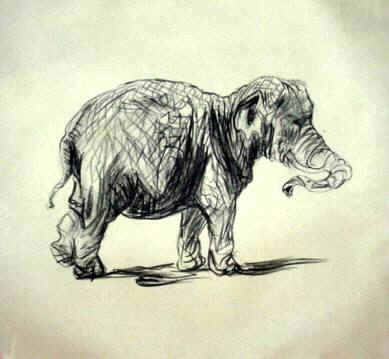
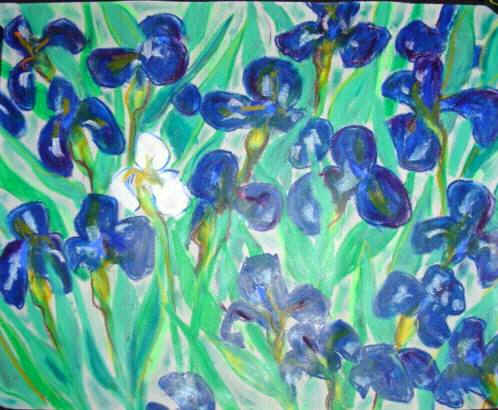
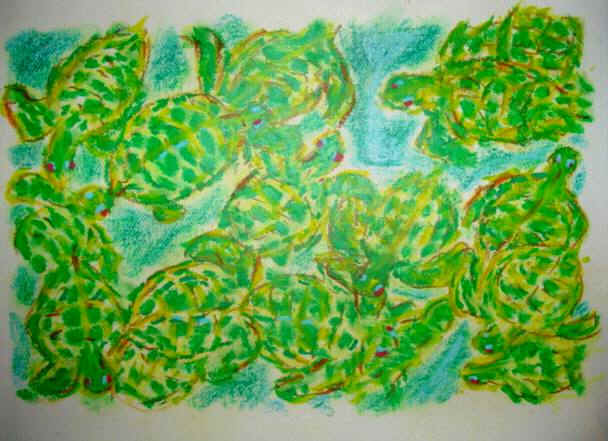
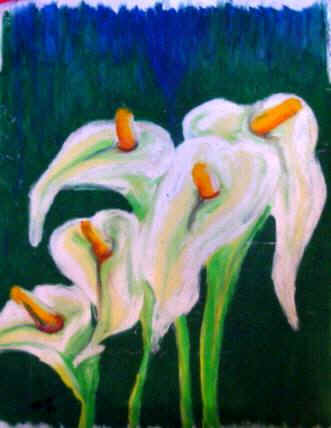
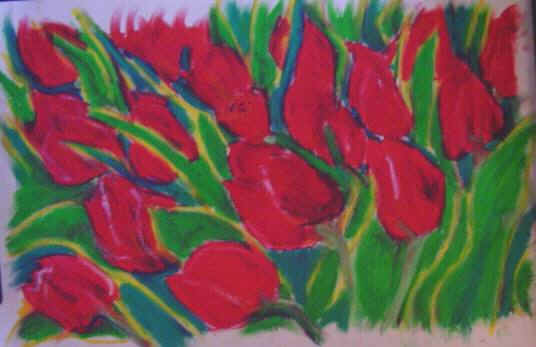
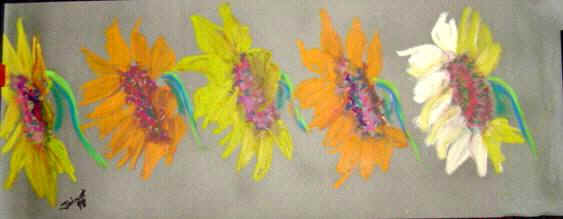
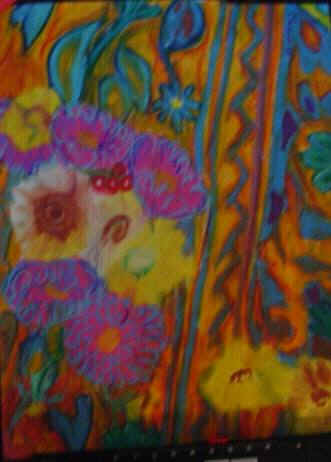
eat and drink too much." The sketches and artwork on this page are the
original work of the multitalented man his friends called "Zaj."
The HyperTexts and Joe Ruggier of Multicultural Books combined to publish a
collection of Zaj's poetry, Take Me Home to Pringus.
I empty
myself
into
you
And wonder
afterwards
lying spent
at times
still twitching
if recovery
will include
those same
small dreams
whispered
once again.
The Rushish Baths
between 2nd Avenue and Amsterdam, NYC
Elter khakers, these old men
come to sweat out old dreams.
Hairy backs, hairy arms, layers of fat
holding recollections like a sponge.
Sidelong glances view others
Exposed silently suffering.
Wooden buckets, empty water
on superheated roundstones.
Taken from Galitsyaner cemeteries, some say,
ensuring souls of the dead will fire
reminders of days gone by through swelter
and teardrops. Old men, patriarchs,
greeting other landzmen with language
from another era. "Vos makht ir?"
Replying automatically, "Gut a dank. Un ir?"
Wondering after pleasantries
if either still reads the obituaries
of The Forverts — concerned when they too
will be disregarded along with
yesterday's Yiddisha news.
Like the taste of tsholnt, leftover
potatoes-meat-beans, served only on Shabes.
Followed by more potatoes
every day of the week.
Dated men, overcome by steam, recall faces
of relatives, kuzines, zeydes, feters,
from fotografyes indelibly etched
on eyes from a land beyond the pale.
More than the minyon number who sit and sigh
humming to themselves tunes of songfest zingyaren.
Dancing in their minds to klezmorem joys.
Allowing themselves visits from old proverbs
where a fault was taking a bride
that was too beautiful.
Learning in life it is better to marry
a broad-hipped meydl — whose hands,
furrowed and strong as the soil,
would work day and night in a faith
she would try to cultivate.
Only to see women, pastures, houses.
crops, cows, horses — spoiled and stolen
by jealous bigotries growing in Polyn.
Old men, mostly from outskirts of shtetlach
near Lubin, Minsk, Bialystock; now in Amerika,
beaten and flayed with oak leaf bouquets.
Good feelings mixed with bitter.
Like eating horosses and moror
Starets trying to sweat away old angers,
Afterward plunging into the cold pool,
Shocking waters of the schvitz.
Old bodies old memories, wishing all zayt gezunt.
The future of Iran and Israel
unleashed in a nanosecond – DAEMONS to despoil the world . . .
wisps of a dream
a vision
pornographic in nature
i am alone
watching our destruction
by beings created — created in our fervid ejaculatory madness
the egg lies there waiting to hatch — alembic in amoral innocence
and i feel cold
i shiver
from fear
and from the air temperature
kept frigid
by giant refrigeration systems
chilling those hot coils
freezing destructive desire
those mechanical prods
raw
undressed
about the size and width
of an adult porpoise
innocent
frolic freely
while losing
heat to
the universe’s quantum waves
each encased
in a latex bodice
like
a
dominant mistress
shiny
silvery
stainless steel struts
hold
parts
conjoined in breathless expectation
as the corset inhibits
every damned gasp of air
wrapped
by layers of valuable
oh-so valuable gold leaf
to increase desire’s fervor
fashioned
with priapic polyethylene protrusions
little fake dildos
only to penetrate once
to extract life’s essence
only for an instant of transmogrified time
like the allure of film stars
able to entice via mere visions and sounds
a shuddering momentary
breathless encounter
seduced
by the power of fission
to shatter
the air’s invulnerability
with copper threads
that strangle and cut
the dark dull grey core of plutonium
lusting
to escape with a whoosh of heat
more vicious
than ten thousand thousand suns’
able to melt the colours
from butterflies’ wings
thin bands of deuterium
as translucent as white frothy sea foam
relentlessly breaking the sandy shore
of our indurate creation
pornography has a new permissive nature
to destroy us all in waves of sudden desire
amorality awaits —to immolate all life
The Nutritive and Therapeutic Uses of the Banana
(A treatise in horticulture funded by the United Fruit Company)
And I was serving tropical drinks
in that posh cafe
quenching arrogant souls
perfumed against the heat
all of us dying by degrees
And in you walked
your school years past
full of private boarding snobberies
where hired help tended
only the best cloistered gardens
camouflaging whispers
uttered by selfish tongues
cultured with proper generations of money
And I was serving tropical drinks
quenching arrogant souls
when you told me in that fashionable cafe
during the passing of a happy-hour
your boyhood recollections
of Central America’s bountiful harvests
all those "Great White Ships"
of your dear father’s fleet
and the power
of true Yanqui dollar diplomacy
Gathering fruit from a continent’s loins
your elegant arm outstretched
beckoning me to refill your glass
you said watching dark-skinned natives
carrying circumcised limbs
of banana trees up those rotting planks
deposited in the bleeding maw
of America’s dark hold —was difficult
And all the while
I was serving tropical drinks
perfumed against the truth
wondering about natives losing their colour
bleached away by a benevolent company
planting wreaths of pure pain
as you solemnly explained how one poor fellow
stung by a tiny green snake
dropped his precious cargo
Sliding in death — down that walkway
You plopped another oyster
of grey remorse into your mouth
devouring it like all the others
harvested without thought to feed only appetite
as you told me you would never forget that sight
full of imported rum
and the fresh snapped spines of bitter lime
in that fashionable cafe
all of us dying by degrees
patronized by your family’s yellowing wealth
passing a life of supposed happy hours
as you confessed to me it was such a pity
such a dreadful pity
about those poor fellows dying by degrees
and to charge this brief afternoon’s penance
to your chilling account of privilege.
On Making Love in a Lesbian Household
“The pressures TO CONFORM in a society increasingly
conservative in mood
have become more intense.”―Adrienne
Rich
You led me to that nest
set squarely among the Somerville working classes
You led me by the hand
to stretch us both precariously
on sheets accustomed
only to women’s scented ceremony
The puzzle of our coupling
waiting to be unraveled
as if liking the same trendy vermicelli
or the latest theories on chromosomes
could hold some secret for attraction
in their twisty sweaty coils
Which could never explain
Annie’s disdainful mouth
muttering something about “a strange alien aura”
invading their space
Or Lisa seated downstairs in her velvet chair
silent as if attending a wake
pulling her headband ever-tighter
that made her eyes bulge from hateful sockets
consecrating sisterhood in a rosary of pain
Both of them jealous suitors
Both of them unwilling to let you love
outside their sorority
And when you broke faith with moonlit shadows
as you blushed crimson before a stranger
Still afraid that I like those
you had been taught to fear
Would spear you with infected want
and then demand to shave your silky stubble
into bloody furrows of Rorschach blots
only to drip cultivating seeds of maleness
Between your knees that smelled of lilacs
on a naked carpet of exhausted innocence
Where we combined easily
in ripples of laughter
Effortless while we joined at the hip
as Paul Horn’s lute played inside
the Taj Mahal of our minds that built
a refuge for pilgrims
about to embark
on a new journey of immersion
And our breaths echoed in responsive dharmas
all during the nights and days of that hide-and-seek pastel
Autumn
While mystical music
of our arrangement
Blanketed us both
in the consequence of gentle sleep.
Dreams of Marilyn Monroe
Her curves
cause us to desire the dead,
like men accursed.
Wishing to feed
that pouty mouth
the same way
ancient Aegyptians
left food and lavish offerings
for spirits
exhumed
by forbidden curses
from the mummy’s tomb.
Her image of pink sensuous flesh,
partially unwrapped;
teasing us
daring us
finally
summoning us
to our preordained fates…
When our imaginations run so extremely hot,
like engine radiators boiling over;
ghosts
sap
our strength.
This is the way
You effect me my luv
I boil over every tyme
I think about you
As you tease me
Dare me
Summoning me to
My glorious fate with you
Forever
my mate.
wounded BULL sketched on a bar-nap
Of all Picasso's works
i have seen the drawings the paintings
some with both eyes placed on one-sided faces
regarding us in absolute staring mania
the abstract collages of outrageous cubist colours
some with explanatory titles some not
i remember most the sketch on that bar-nap
the size of an overlarge cantaloupe
shining like some large lucent egg of intellect
A bull’s head it seemed three times normal size
almost as large as Senor Pablo's ego
No connection to body or form
Somehow tuned to the universal
At the start—the sand in the bullring
was free and clean
Much like the images of that Spanish Miura fighting BULL
This BULL'S large black bulk
ready to snort and charge
Like the 'MINOTAUR' of myth—a
primal force
Then after more absinthe
the image changed in ‘blurred haze’
Lines on a cocktail napkin
A head lying there and i imagined it could be
a Dagon tribal mask of fearsome spirit
or maybe it was a Neanderthal species of sacrifice
or some succubus waiting to steal my soul
or Yorick's skull held by an invisible character
or a death's head enigma symbolizing Nazi SS nightmare
And i stared at that representation
wondering if souls intersect like lines
coming together from different dimensions
of some vast unknown hypotenuse
And as i stared the BULL seemed to pulse
but i could not touch those black furrows
cut deep into that smooth yet white linen wildness of napkin
stroked with black lines
a jagged creature or intentional desecration
which tried to release that which was buried or resurrected in
blood
on that sandy bullring floor
The head—massive and then suddenly melting
deteriorating just a dark umber hole
its tongue severed which is where and how
all artists must begin in soundlessness
But we still hear the wild bellows of this beast
if only in our minds eye
For what is an artist?
if he is not to catch lightning
if he is not to create thunder
if he is not to freeze time in unravelled light
if he is not too create and then magically transform
For what is an artist of realities gained from absinthe?
lying there—a bull suspended on a bar-nap
lying there—a bull with its open wounds bled raw
lying there—a bull changed by a thousand different visions
It is a black outline at the start
marked forever by potential power and bulk
leading to lines that could be anything
stretched and protruded
beyond form as if these features
were a bird's weightless bones
a simple miracle
soaring upwards to clouds
of incomprehensible miracles
Black lines on a white linen bar-nap
Our minds trying to comprehend
your ongoing creations
that so move us all.
Young Girls Christened with Names of Saints . . .
in the hurriedness of the bloom of teenaged heat
recite dutiful daytime promises. Rosaries
soon forgotten in reverberations of electric guitars
accompanied by neon streaked hair scented
by a studded leather subculture.
Young girls dressed in names of saints ache.
Encumbered by pleated skirts
of plaid supervision just as their mothers before them -
who never realized their parents could feel
the blush of teenaged heat. Or speak a language
only understood in the restlessness of youth.
Young girls swear the names of saints
as they smart from the public sting
of wooden parochial rule.
Only to sneak secret puffs of supposed cigarette
sophistication.
On lips that crave caresses sweetened
by cherry—coke syrup which stains pink-tongues
the deep blood colour of awakened nipples
corseted in starched spotless white shirts
that smell of laundered uniform purity.
Young girls invoke the name of saints
watched over by that statue of the Madonna.
Unlike any video star; steadfast and approachable.
Dressed in robes of porcelain patinaed piety.
Eroded in certain scumbled spots where
anxious hands hurriedly rub gold crosses.
While prayers are said before first dates for luck
in flames from votive candles
that send out sparks of giddy expectation.
Which makes hair burnished and brushed Renoir-red
brighter than a Magdalene’s burning.
Young girls intoxicated with the swirl of secrets,
travel throughout old neighborhoods where
the night summons them—from cloistered rooms
to stairs of roof top walk—ups.
Which leads always to the most basic
and worrisome desires. In the natural air
of unrepentant stormy youth charged
with an electricity of sex. Young girls watch
as their mothers kneel in the sacred shadow
of a faience figure. Which glistens with comfort and inner
peace.
Mothers now painfully aware of how
teenagers grow and couple lost in devotion.
As they reverently pray just as their mothers
before them—yet hoping to summon
and invoke the help of protecting saints.
Within the flames are spirits*
(*canto xxvl, line 50, The Inferno of Dante)
I remember what the 60's were before things began
To change reverberations of a jukebox
Between my legs poems pulsing in my head like
Smoky suffering false patterns of Carnaby street
Fashions worn everywhere as the easy-influenced men
Sported Nehru jackets into bars where I would hang-out
At first innocent the girl-next-door
Looking like a virgin until I learned to smoke
Then waiting like some predator trying to look sexy
Sullen dangerous done up in shiny smooth leather
Common and easy but cunning as any Cleopatra
Lighting up cig after cig making it with
Intoxicatingly eager boys or men as whiskers tickled
My ear while tobacco speckled lips made prints
Of fire down my neck to aroused nipples
Allowing them to continue their moaning about
"How hot I was—how turned on they were" and I could
Feel their burning so that we couldn't wait
Rearing like wild horses from stale sheets never
Laundered filled with sweat screaming
Nicotine addicted nights watching us both as if
I was a magician's girl observing our act knowing the secret
And when they were spent discarded like
Crushed butts still glowing thick painted with my
Lipstick where every flame enfolds me with
A forlorn trust that burns I remove a cigarette from
The pack holding it by the tip savoring the sex
That brings out the taste of illicitness planting
It wantonly in my mouth even now defying prohibition
Hoping for the groovy tunes to fire me up again.
The Sadness of Outfielders
i never want to grow old
like Willie Mays
i hope his age never shows
Willie Mays jogs toward centerfield
and doesn't see the reality
that it is 1972 and he is playing for the NY Mets
and that he is no longer young
that he is not 'The Say-Hey Kid' anymore
And I watch him move without grace
Willie Mays the most nimble of outfielders
bends down to field an easy single
a nothing ground ball to the outfield
in a game that doesn't matter
and a base hit that turns into tragedy
as the ball rolls past his outstretched gloved hand
And for a moment he can not believe
the ball rolling behind him
not entrapped in the leather glove
that made a mockery
of so many sure hits
in that 'basket style sweeping' catch
And I begin to cry
remembering the Mays of 1957
the Giant who
swatted three homers
against the Cubs
as I watched
from my outfield seat at the Polo Grounds
marveling at how the white baseballs
seemed to leap out of the stadium
when Willie snapped that perfect swing
Willie is always the ‘Say-Hey Kid’
while Mr. Leo smiles acknowledging perfection
Watching ‘the kid’ spinning throwing tumbling
like some continuously twirling top
only to lose inertia and fall returning to earth
the way he did in the World Series of ‘54
to rob Cleveland’s Vic Wertz in black-and-white footage
of another yet amazing over-the-shoulder catch
Just proving he could do the impossible
Sprinting turning his back to the infield
Running into our youthful memories
And I weep not just for Willie
but for myself as I want never
to grow old to grow old as Willie Mays
looked this day and how embarrassed
finally to be relegated
to play first base for the Mets
Because first basemen are always ‘butter-fingered’ or
‘has-beens’
especially when they join ‘the mahvelous Mets’
A freakish attraction of what once was
And I never want to fumble
reaching for something
that isn't there anymore
And I still cry as I can remember
how old he and I became
when that easy ground ball
rolled by Willie and me forever.
The Blueberry Fields of August Machias, Maine
The lowbush upland blueberry,
vaccinium lamarckii, is
thinned out every two years by burning to improve the next season’s yield.
Gardeners blister berries of indigo
With terrible measures of fire
Scorching each spine and ridge
Singeing obedience on rows of enveloped sadness
Their cupped hands scooping out swirls of arsoned acreage
As refilled buckets drip kerosene below
Summoning forth flaming fists of metaphor
As gleaners sow garlands of fire
From pails fueling a ritual flame
To fields of August purple madness
Swept away by fiercer embraces hotter than any summer sky’s
While vines wither in a terrible burning roar
Scalding blasts fierce as a prophet’s oratorio
Score purple fields of fire forever
Roots fully plump like nurturing mothers
Withstanding storms of cremating caresses
Summer fire-walkers spread rows of sadness to others
Blazing bracelets of blueberries set aglow
A season and an hour on a hill
Scorched bald and fruitless by ceremonial fire
From which a man of lonely pilgrimage
Atop a rood of cedar waits sinless
From which He might watch and judge
Green leafed innocence charred black and still
As heavy pails empty on dreams below
Gleaners sow terrible measures of fire
Exploding gentle berries of indigo
To spatter the juices of burning ritual madness
Onto bodies stained forever in this summer tableau
Where weary souls set blameless vines aglow.
At the Governor's Mansion, Kingstown, Jamaica
The tour guide hurries us
from room to room. Pointing
at parlor paintings, flounced men
and women dressed in silk
all adorned with sashes of rank
arranged on walls tinted pale blue-green
the shade of Europe's eyes
which match seas sparkling
in sun's tattoo of island paradise.
Ushering us up broad polished stairs
to airy bedrooms. Catching breezes
which travel like gossip on lips
of clouds. While we were allowed
to quickly examine part of the past.
Feeling the goose down pillows
or the bed where Sir Henry Morgan
slept. Hearing stories that
caused us to laugh at how
his pirate exploits gained Henry
fame, titles, and this structure.
White-washed pillars, large balconies
overhung with shady fruit trees,
mangos, avocados growing
all around for nourishment
and aromatic cool cover.
Regarding the old clock
still ticking generations away
in mahogany shiny long case
while we were informed
ever so briefly about how
seventeenth century
Kingstown was a haven
for rascals, buccaneers,
and slave sellers who supplied
bodies for the sugar cane farmers.
"And of course, pleeze
try our rum. None finer
anywhere in the world.
Duty free, and much less
expensive in our shops."
Told to us in perfect English.
Blue blazer worn with panache.
His smile set in that chocolate hued
laughing face, white full teeth like
some zoo attendant. Eager for us
to glance at the exhibits—
but see none of the animal 's
pain. As if on cue, we could
hear steel drums begin
rhythmically vibrating,
causing us to drift away
to some melodic joyous place.
This island like a happy lilypad,
floating in a blue-green world
painted by some drunken impressionist.
Adding to this coloured view
of an island as plantation
for tourists. So we were led
down into the dirtfloored kitchen.
The domain of a woman,
Rosamund by name, whose picture
hung on a wall. And our eyes
focused on her likeness—
a dark face which we regarded as
judgmentally as if she were stock
in a meadow. A crude sketch of her
wearing an old straw hat
in sepia tones which bled
earth's color. At that moment
Calibans howled in frustration
imprisoned by her gaze.
Looking but unspeaking.
Listening to our guide explain that
Sir Henry treated her
just like family.
Showing us the large cast iron stove.
All the time fired and hot.
Needed to heat water for
bathing. Large enameled
basins to wash in. Pots,
pans, platters for daily
cooking and entertainments.
Pointing to the pile
Rosamund got wood from,
how she split kindling with
her own axe. Arising before
dawn to ensure the chores
were done. Grinding meal
by hand. Making bread.
Washing clothes. How she took
pride when fixing biscuits.
(A favorite of Henry's so
it says in his diary) "Rosamund the lady
of dis kitchen, makin' love
wid her pots," said our guide.
Adopting the "Yeh Me Mon"
Jamaica dialect. Breaking from
cultured voice of civil
refinement which masked sins
easily. And it was only when
we exited the kitchen
moving to another historic
gallery that we saw
the old chains and ankle clamps
attached to the stove.
Test of Faith
At a twilight camp meeting
Deep in poor Meshack Miss-issip
On an open field sheltered by palmettos
Where lovely women of all shades
Butterscotch ginger and eggplant hues
Gather to help y'all call the Lord
They drag their young'uns with 'em
Far from temptations in wicked Nineveh
Song fluttering over heads like angels
Looking down in a mirror at sisters
Singing separately but competitively
In pious fervor right hands raised
To God above calling on brother Gabriel
To sound his golden horn which promises miracles
It is jes' when Big Mama Francis
Purely covered in yards of delicate white chiffon
Rises as slow as smoke of offering from
An ancient wooden folding chair
An she begins to proclaim and sway
religiously allowing time before she falls
Overcome by the moment waiting for hands
On an invisible clock to reach
An appointed time for faith will surely save
Like we assume automatic doors will open
Admitting us effortlessly into rapture
Hoping to be carried away like a 50's bobby-soxer
As Big Mama swoons backwards into what is surely
The ready waiting arms of her twin boys
Eight-year olds Enoch and Esau
Properly schooled in how to catch the spirit.
Undercurrent
No one knows
Why the sharks
In the flood
Of spotlights
Madly churn the surf
And strike at the steel piers
Of modern Cozumel hotels
Concrete and glass ice-cube trays set on end
Awaiting visitors hiding behind dark glasses
Who will use this island sanctuary
And never notice
The evening tremors that deeply redden the waves
Staining the sandy beach
Made sacred by tread of tourist feet
While downtown
Far from the unfathomed fury of these giant fish
Between broad walkways
Bright in the glare of jaundiced neon
All-purpose department stores
Sell bottles of turtle lotion
Those precious shells ground-down
To lubricate sunburned flesh
Of aliens
Who never see or hear,
The shelves shake or the wordless
Cry for revenge.
Our breath slows and...
I imagine you always at sixteen
when I knew nothing of you
drifting miraculously like a snowflake
in the fading Northern lights
where it's always later and closer to evening
And I knew you would always be smiling
with that face of raw beauty which caused
many a Vermont boy sleepless green nights
Dreaming of coupling with you
Hidden by long ashen silences leading to
white forests when wisps of early frost
cling to clothes scattered still warm
like embers smoldering
in gasps of adolescent acceptance
And after nighttime's freeze
seeing burst trunks of trees where sap
exploded in tortured release
And I view you forever at sixteen
after feeling your soft presence
next to me in that Yucatan village
close by the jungle
Where the bruja* read my tarot
in bones cut from a language foreign
to my experience
Mystical rialtos of recurrence summoning
me to be part of you
In mind as well as flesh
Summoning me to be part of your music
Learning that when you love a Vermont girl—
you must spend your truth
And how we would sleep in wool
awaking to run out in the cold
avoiding cow "gifts" dropped in pastures
Afterwards brushing and rubbing with mittened hands
to revive frozen buttocks still tingling
from creating our joined snow angels
And I am here at your side
our youth drying on our skin
When you ask me to count your hairs of gray
turned pale as the fading winter sun
As we are naked and unashamed
Our breath finally slowing
to the same
ordered
rhythm.
*bruja in Spanish means sorceress or witch

Colors of pity—Appearances of love
(The Pre-Raphaelite Brotherhood paints women)
Of those men —
We remember only the women they painted.
Fanny Cornforth became Nimue, the sorceress,
hair floating around her like a cloud.
Lizzie Siddal as Ophelia, doomed
to drown in laudanum surrender.
All these poses with bright color palettes,
foreshadowing movie stars like
Marilyn, Kim, Julia, all "vogueing"
for unseen admirers as if they were
perfectly idle, with nothing to do,
quite happy merely to be seen.
Yes, we know the painters' names.
But we only remember the faces and forms of these women.
Because after all, wasn't Antonia Cacia's figure
used for all bodies as if perfect heads
of upper middle class women could be grafted
onto the working class—as if true ladies
only had heads and women were just mindless bodies?
We remember these women—
Jane Morris was the Astarte Syriaca
with her grey eyes, full lips;
staring out like some spirit
from the underworld haunting us.
Anne Miller with her phosphorescent white skin,
large sad eyes, was a tremendously powerful combination
of beauty and misfortune as Troy's never forgotten Helen.
All these women: Maria Zambaco,
Effie Ruskin, Marie Spatali Stlllman,
Christina Rossetti, their likenesses
with us still in posters and prints.
Painted and decked out in literary allusions,
while they titillated our imaginations
in sometimes shocking Victorian boudoir art.
They are there and nowhere
with long necks, "ten kisses long."
They are the synthesis
for all our Eves fallen from Eden.
They stand before us
laden with symbols.
Loosened hair signifying downfall.
Virgins descending a staircase
to the door marking an innocent threshold.
Unwrapping themselves like
unfolding buds of sycamore trees,
harbingers of Spring.
We gaze upon these women—
All with brilliant eyes beyond ordinary.
All with pale and creamy skin,
the colour of clotted cream.
So alive we know their aroma
is of fresh milk, or almonds,
or rosewater, or some divine oriental spice.
Which excites our senses and makes our breaths quicken.
We are captivated, much the same way,
Alice Liddel caused a Wonderland
to be created for her.
All these women painted as a manifesto
to beauty by men who preferred to regard
these creatures as raw material for art.
Rather than to understand how much more they were.
Of those men—
We remember the women they painted.

Saicon
(In the Annamese tonal dialect of Southern Vietnam, the former capital,
Saicon, is pronounced "sigh-Ghone", while Tudo Street, the broad
avenue in the center of the city, is pronounced "Too-dah". The French
word,
ville was spoken by Americans stationed there as "vill" rhyming with
"ill".
Cholon was the old Chinese section of Saicon and Route one was
the largest highway running North and South.)
Beautiful ville
in this fertile delta of ancient goddesses
guarding the recurring cycle of time.
established when Khmer kings excreted
their
primacy at dawn of history -
decapitating friend and foe in sparkling rivers
of venetian reds that
whetted the appetite
from a dry earth never satisfied.
A body lying face down
in the center of Route One.
An Asian face hardly worth a look.
Beautiful ville
surrounded by plains of grass
where no one ventures.
A city of inscrutable religions
where shaven skulls crinkle
from octane fires of refined immolation.
While others kneel to portraits of Victor Hugo.
And black is sacred
for paper gods are white
and consigned to die in flame.
In a land of all-knowing bronze Buddhas
who see all and never blink.
Jeeps—APC's—roll back and forth.
Raw flesh sticks to tire treads
manufactured in Dayton and Akron.
Beautiful ville
ablaze with hibiscus and bougainvillea,
smelling sweetly of feces and rotting fruit.
A city of slant-eyed girls wanting
easy tricks. Filled with whine of Vespas and Honda 50s
carrying whores in hot-pants,
their slippery breath prostituting a nation.
On Tudo Street the bar-girls
sweat soft and moan
in air-conditioned drone
while over-sized traffic lights,
symbols of grandeur that marked French colonialism,
change colour as effortlessly as a farmer by day
changes to a black pajammaed V.C. in unholy
night.
A single body lies in an unclean road.
A black wound where streams of ants ebb and flow
against a tide of power driven death.
Beautiful ville
where Chinese businessmen of Cholon
are old and set in their ways of trade.
Buying—selling—anything—anyone—anytime,
even truth or lies. Payment in rubber trees,
dongs, piastras, purple script, gold leaf,
just more monopoly money for the game.
Because selling favors is the price of freedom
and all manner of addicts hungrily bite
the empty air craving the safety of opiate dreams.
A pile of bloody refuse.
A being flattened into mud and filth.
Repeatedly driven over in that dead place
of our souls.
Beautiful ville
like some naked almond skinned woman squatting
splay-legged. Unashamed of her openness.
Glistening after the time of desire.
Inviting all to be strangled by embraces
hot as napalm's wind.
A naked woman
waiting
for the monsoon season to wash away her sins.
Substance of the image
Lot's
Wife — Helen Frankenthaler,
lithograph, 1971
Larger
paths
than
any
living
prophet
a
single
pillar
of
salty
color
not
quite
pure flows
pure flows
white
but more
dark
like
marrow
or
bone as if
a
corpse had
been
left to
blue
weather
out
in
desolation.
Picked
over by
the
winds of
ancient
things
than
as
the skeleton
is
worn smooth
while
it remains
upright
balanced
by a slash
suddenly
green
planted
there by stern
command.
Like a stalagmite,
growing
from a desert.
A
tapering interrupted
shape
sliced
by holy myth
which
directs our eyes
finally
towards
the ambiguity of
heaven
while red
crayon
shades
cover
unnamed skin in
dried
blood
which
has never bowed
down
to
an unseen Lord
leaving
an
abstract bible garden
creation
where
a woman's steps
of
persistent vision
are
marked forever by yellow
stain.
Anonymously
entombed in dust of
sleepless
atonement for daring to
turn
and ask where is God's heart?
Abraham's Diner, Machias, Maine
This is a country condemned
to never appreciate a fully revealed G-d.
A place of sacred spots replete with prophecy.
Given unto fathers and sons
taking daughters and sisters to wed.
This is land of the Old Book
where cold rivers run fast to the sea.
Time is marked by seasons
instead of digital clocks,
and evergreens ensure scenes change very little.
Civilization starts here seeking outsiders
to find again the language spoken in Eden.
Great forested mountains are alive
with screaming birds. It is a wild place
fit for love's raw madness when
an undying wind carries words of commandment
across the sky.
In this wilderness region full of miracles,
fifty miles separates
a society of distant tribes.
Convoys of tractors and trailers
go forth along the state highway.
Many wheels hauling commerce,
sheets and boards of lumber.
Their scent of sawdust and sweat
mingling with smoke from wood stoves,
fills the air as if you could smell
rams sacrificed as burnt offering.
Alongside this caravan road
dilapidated and scabbed autos,
abandoned to rusty nature, testify,
to the wrath of a vengeful Pharaoh.
Condemning all to an exodus
far from metropolitan creature comforts.
Strangers cast out to wander on foot.
Old men and women, faces hanging loose
from bone, silently acknowledge
other sojourners. Looking for their way
among parched souls
in dwellings heated
by Sodomite hot fires of propane.
And close by this highway,
Abraham's Diner is an oasis.
A respite from an unbelieving world.
The initial owner like that original
Abraham—a father of his clan,
has long since departed.
This rest stop opens at dawn
and closes at dusk existing
with the passing of the sun.
Only to fade in starlight after
bartering bread for being.
At this diner bubbling hot coffee
warms hearts and hands as butter melts
between wheatcakes on the griddle.
Gossip and news is exchanged
in mica-sharp mornings of cold
at the change to winter season
when the wind stings like
the voice of an avenging prophet.
Specialties linger: soups and stews
as proud as any birthright.
Good enough to sell your soul for
in the hunger of daily judgement.
During endless winters
of logging and hunting,
oaths are declared cursing existence.
Down by Tunk Lake where we lost
the skidder through the ice during quick-thaw,
dams and leg hold-traps
block and hold wild animals.
Until other omnivores
come to claim struggling prey.
Which leave bloody tracks
where lifeless creatures have been dragged,
cutting slashes of bright redness
into a skin of snow.
Gouged and furrowed into worn paths,
giant tree trunks are pulled,
as great around as those cedars of Lebanon,
across frozen paths that chill
the very holiness out of white bone.
While precious fat needed for warmth
congeals from raw deer meat
that has been left outside to cure.
Nailed to a sacrificial beam
out of reach of other creatures,
then sold to the highest bidder.
The steel saw sings soprano
at the mill, ripping oaks of arboreal majesty
into planks of common two-by-fours.
Sturdy men in iron-toed work boots
blow their hot damning breaths on hands.
Calloused and bruised, scarred with life and crisscrossed
by those covenants made long-ago.
Which remain to this day at Abraham's Diner
as the printed menus for the children of Hagar.
Must have SASE
Would the New Yorker
publish a poem
by Charles Bukowski?
His words stained
with the juice
from strange excitements
His bubble still a bit off
plumb from composing
a California commune
of racing forms that tout
a different family of poems
Full of drunky phrases
and barhall floozies
Eager to engage
in qwik sex where
stale cigarette smells
and spilt beer
pervade souls and clothes
Utilizing words like
fuck and shit and spit
to shock and hopefully
arouse dumb pricks and cunts
to understand
that they also create
Separate from illegitimate cousins
once removed who are published
in the more respected anthologies and zines
now even online 24/7
Who strive to be thought of
as great versifiers
who call things worldly names
as a way to hide
their true selves
But then again
significant novelty is rarely welcome
And what should a poem sound like?
As these better known bastards
are convinced creativity is found
in an impressive academic resume
These well thought-of instructors
who obscure all feeling
with sprinklings of foreign phrases
Never realizing a weltanschauung of names
does not induce the spasms
that give birth to poetry
Never to sense that it is
the convulsions and rumblings
of naked flesh which initiate poetic bodies
into uncontrollable passion
Never experiencing the arch of a spine
adorned by sweat of anticipation
before that instance when eyes close
and pages or monitors are blank
while breathless release streaks
through veins until
eventual submission
For in that surrender to the written word
whether it occurs on back of a square flimsy bar-napkin
or on a limegreen phosphorescent display screen—
We commit ourselves to be gulled once again
into reliving our painful rejections
Hoping that someone will see our worth
while with moist lips
we kiss gummy goodbyes
to envelopes filled with fervor
As if in a dream
which becomes our own torrent of delusion
Imagining we see our manuscripts
drift through self-addressed
stamped sibilance of mailstorms
or returned with the click of a computer
key
Only to fall in cold slushpiles
of unsolicited metaphysical heaps
Which go unopened and unread
at the feet of so-called prestigious editors
All of us obsessed and fixated
from the son et lumiere
of having a poem
published in the New Yorker.
The HyperTexts