The HyperTexts
Iqbal Tamimi
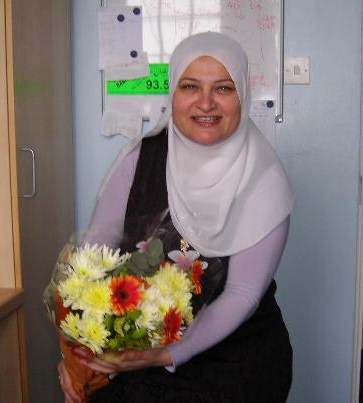
Iqbal Tamimi is a Palestinian poet, and the Editor in Exile of The HyperTexts. She also
has an online magazine, Journomania, and
was recently named one of the top fifty Tweeters among Arab women, and number
one in the journalism category, by Birds on the Blog. You can get to know Iqbal by reading her poems
about the Nakba ("Catastrophe") of the Palestinian people and the plight and
perils of being a Palestinian woman in exile . . .
Separation
by Iqbal Tamimi
She sketched him in the froth of her coffee,
Hoping he would never leave.
She could not turn off the siren
Or the storm that leapt
Inside her cup.
She saw soldiers
Chasing him down the track,
Ordering him to surrender.
The shackles howled;
There was no turning back.
Echoes died.
Raindrops fell.
Their hopes plummeted like autumn leaves.
Their shadow cracked,
Splitting into two.
Her reflection stood lonely on the wall
As he was dragged off to prison.
His hand turned into a handkerchief
Waving goodbye
Until her window stopped exhaling their song.
Her femininity exuded letters untamed by language.
She was his sails
And his port.
He used to tie a knot,
Hanging on for life,
Because she was at the end of that rope.
Whenever they met,
His body welcomed her perfume.
Her lips and breath bore the clemency of mint.
She furnished the street
With their dreams ...
Peeping out from the cloak of night,
Stealing through the cracks of doors
Like seeds of light.
From the ashes of his concessions
He made her a wreath
Worthy of an angel of jasmine.
It was hard for him to leave.
The flute was burning in his chest
While the wind snatched from her pillow
The messages of oranges.
He was forced to go.
She stood there
Raining him with her panic,
Leaving him her footsteps
And the trembling thoughts
attached to the soles of her feet.
Believe it or not, Palestinians still fall in love, and the most common
problem facing couples today is forced separation. Since Israel began its
illegal occupation of the West Bank and Gaza in 1967, more than 650,000
Palestinians have been detained at least once, representing approximately twenty
per cent of the current total Palestinian population in the Occupied
Territories. This makes Palestinians the people with the highest percentage of
detainees in the world. And these numbers exclude couples who can’t live
together because Israel created racist laws which prevent Arabs from traveling
in their own country to get married, or to be reunited with their spouses who
have been banned and forced to live in exile. One can only imagine the number of
broken hearts in my homeland! Still, many Palestinian women meet to have their
coffee together, and to read each other’s fortunes after drinking their Turkish
coffee, gazing hard inside their cups, hoping to make sense of the images formed
by the coffee residues, hoping to catch a glimpse of what might be translated as
good news, such as the release of a detained loved one. This poem is a
translation of a poem I wrote in Arabic about a couple who were forced to split
when the husband was dragged off by Israeli soldiers and jailed like so many
Palestinian men.
A Poem for the Mothers of Gaza:
Give Me Time
by Iqbal Tamimi
Gaza gave birth
Her pavements smiled with red roses.
Her children were shepherds of the morning dew
She became pregnant with hope
But the conspiracy targeted her womb
Now her mothers are terrified
Wrapping their children inside their sighs
With bleeding hands
They harvest the rockets' neighs
Their cries
Punctured the ear of hypocrisy
The shirt of justice was torn from behind
Tell me why?
Why does your sweeping hatred
Keep ordering the clouds of my eye to rain?
Tell me why?
Why does the hand of death steal every child I have?
Will I ever find a seed of light in this darkness?
Merciless men wearing shiny shoes are sipping tea
Discussing holiday destinations
Glancing at the screens of their TVs
Eating cakes, talking about sending more arms
To maintain the rivers of blood
While my family lies crucified
I want to know
Why the stains of blood refuse to dry?
How many more waves are left in your sea,
aiming at breaking my buoy?
There isn’t any sadness left
That did not find its home in me
My tired heart is a wreck,
My paddles are torments and sorrows
I am tired of swimming against the current,
Hoping to reach the shores of human kindness
The salt in the tears of sobbing mothers
Ignites my open wound,
The smells of gunpowder, white phosphorus and burning flesh
Occupy my lungs
We are the mothers
Hugging the shadows of our children,
Who are no more flying kites
Searching under heaps of dust
Scanning empty playgrounds,
Kissing vacant beds,
Making daily trips, towards what used to be school gates … alone
Give me time to clean up your mess
The Limbs of my children are mixed with the clutter
Give me time to plead again
Give me time to sign another condemning letter
Give me time to forget what I miss
Give me time to empty the morgue
Give me time to bury another child
Give me time to tidy my cell
Give me time to dismantle your hell
Give me time to grieve
The First Person
for Mariane Pearl
by Iqbal Tamimi
Freedom is a wild child
Cresting pandemonium,
Looting opportunities.
I’m unfolding myself in difficult-to-access pockets
Until the winds calm down.
Crucified many times under the sun,
I lack enough fingers to count
the many times I was blindfolded by pain.
Pain burrowed into my lungs
While I was sniffing the streets to find my way home.
Pain's wall was erected in my throat.
My songs used to wander in a land free of barriers,
Uninhibited by road blocks,
Until my kingdom was built against his chest.
Once, I was me
And my voice never bounced off walls.
But now it is hard to be detained
between the cell and the sea.
The bird of his eye
Was fluttering its wings
Whenever my dawn tore the shirt of his night.
Have I been falling intensely in love ... was it insecurity?
Or merely the masked face of slavery!
I had a discussion with the brave journalist Mariane Pearl about women, loss and
journalism. This poem is the part of the conversation that we did not manage to
finish when she kissed my cheek in a hurry while dragging her suitcase towards
the lift to catch her plane. Please read about Mariane and the way she lost her
husband while she was still pregnant.
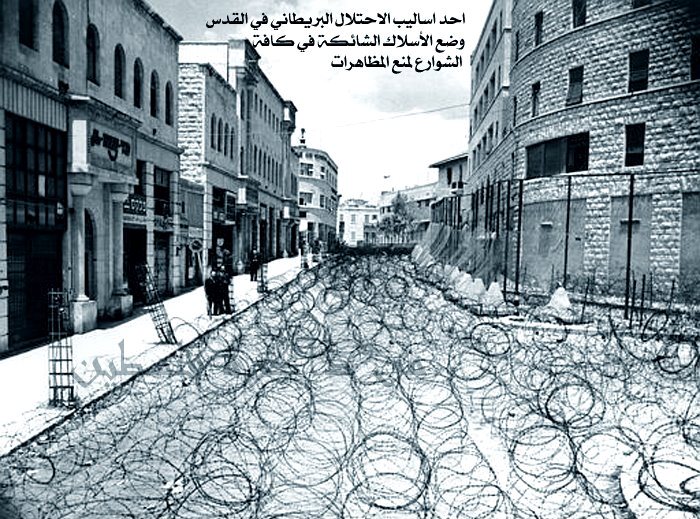
Humiliation
by Iqbal Tamimi
At the first checkpoint
Between Jordan and Palestine
An Israeli soldier asked me
About my nationality.
I almost screamed:
"Look at me!
Tell me what you see!"
Out of my veins I pulled an olive tree.
Moved to fury,
I showed him my mother's dress, still
Embroidered with my grandfather’s blood.
For two days
We waited on the bridge . . .
Caged like cattle,
Crammed in a pen swarming with flies
who bathed in our sweat.
The weather was hell-hot.
Hungry and thirsty children cried,
Their throats parched, cracked dry.
Sipping a cold drink
A soldier, shorter than his gun,
Flicked through my documents.
His hand brushed his girlfriend’s military uniform,
Stroked her hair,
Kissed her mouth.
They looked so young
That I thought, "They ought to be in school!"
Instead they were having fun
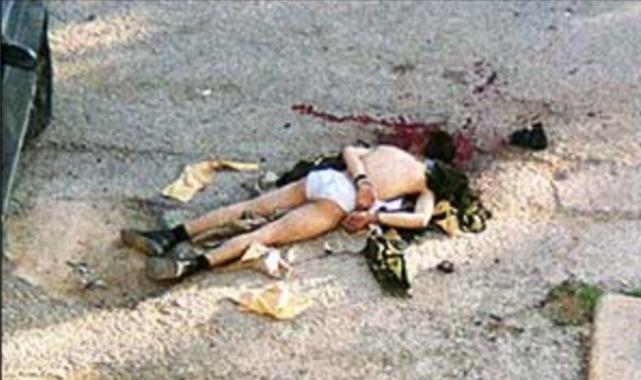
Degrading an old Palestinian man,
Forcing him to strip
And wear a woman’s underslip.
They giggled,
Decided to take
Another break.
Time meant a great deal to us
but what did they care?
Morning departed . . . afternoon came . . .
At last they returned,
Eying me with disgust.
My passport was in his hand
but still he quizzed me about my homeland.
"Where are you from?" he asked,
Refusing to acknowledge my hometown’s Arabic name.
I told him: "Alkhaleel."
I do not barter its shadows.
He disappeared again
into the air-conditioned room.
We all knew
It was a humiliation game:
The occupiers make the rules.
Hours passed . . .
I was called to be searched.
It seemed
I might be caught
Smuggling a poem!
They passed a metal detector all over my body.
Then the strip-search began.
Their hands groped under my armpits.
I was instructed to take off my headscarf.
They did not even spare
Checking my underwear,
My blood-stained towel!
They strip-searched my little girls,
Then pointed at my baby with a stick,
Their faces wrinkling with disgust.
I was ordered to remove her diaper.
They even searched her milk!
"Take off your shoes!"
A soldier shouted at me.
My children clung to my dress.
Frightened and confused,
I took them off.
The hot platform baked my feet;
Probably they would find in my heels
A shooting star.
Fury… Fury… Fury!
They found nothing
but burning feet in silhouette shadows.
They confiscated my identity card.
What were they looking for?
My birth certificate and my family tree
are flowing in my bloodstream.
I stood there half naked,
Angry and ashamed,
My face turning red.
I started to pray:
"From my country’s thyme
And its hilltops’ sage
And from the fluff of its sparrows
May spring fall
To clothe my bare soul."
Dare not test my patience,
Or test it if you wish . . .
It does not matter to me at all.
Palestine is my homeland
And always will be.
Acknowledge or deny,
Still I will never crawl.
In Al-Khalil's mountains
My heart resides.
There I stand tall,
A neighbor of heaven.
I sat there
On one of the foothills,
Combing my hair,
The teeth of my comb
Catching the clouds.
Search me
As many times as you wish.
Erect more army checkpoints.
Build as many roadblocks as you can.
Invent more devious ways
Of creating time delays.
You fail to see:
I belong here.
You can’t uproot me like a tree;
I will keep coming back.
My voice will keep feeding the thunder
Until your foreheads
breed white flags.
Iqbal Tamimi explains:
"Humiliation" is one of a series of six poems I wrote about being a Palestinian
living in exile. This poem describes a
journey I took to my home in Palestine across the Jordan River after the six day
war that started on the 5th of June, 1967. It was a journey of degradation; many
Palestinians were subjected to various humiliations by the Israeli occupation
forces. Alkhaleel is the name of my hometown; in English is called Hebron. The
following is a translation of one of my poems about what we, the Palestinians in
exile, go through when the occupying forces of Israel grant us a permit to visit
our homes: an experience of being humiliated at checkpoints erected by the
Israeli occupiers.
Water aches
by Iqbal Tamimi
When I dozed off
locusts of darkness
invaded my arteries:
blocking the sun,
releasing my paralysis.
Rain-swept fields eroded;
thin, desiccate scraps of parchment thirst scattered;
silence fled to the graveyard.
You were content with
observing the signals flashing
between eyes of salt and
coquettish sugary confections.
Polished lips,
circles of hatred,
hovered like buzzards above them.
How could I curtain my window
where distances were separated from the joints of ecstasy
hiding its heavy shadow in suspicion's bed?
I squeezed the grapes of wild despair
but failed to produce a stream of wine;
nor did my feeble drops manage to wake those
who lay sleeping through the drought.
My cloud passes through each text
Pleading for rain through the cracked clay ...
O my poem!
Flounce,
defraud me!
I might be able to pass through a needle’s eye,
shielded by sand.
The word's giant keeps poking my patience
with his letters' crooked staff,
trying to dislodge the fortune-teller
from the shoulders of my prayer.
I have been burdened
carrying the pains of water;
this season has not miscarried its winter.
His palm, drenched with melting despair,
calloused by hunger,
informs me ...
How can I
redeem the sobbing seasons
and how can I scaffold my martyred sighs?
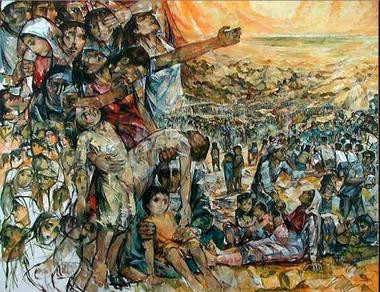
The painting above, "Thirst on the Way," is by the great Palestinian artist Ismael Shammout. His family was forced to
flee from Palestine in 1948 during the Nakba (Arabic for "Catastrophe") after being attacked by Jews. They ended up refugees in Khan
Yonis in Gaza Strip. On their way to Gaza his little brother Tawfeeq died of thirst, so he painted this wonderful, painful work of art in the
memory of his brother.
Aching clay
by Iqbal Tamimi
for Ismael Shammout
I bridge two points with hesitation
It's a step back
The shoulders of memories
That used to jostle me in a crowd
Evade me
I slip in the bosom of surprise
Your eyes undressed
Exposing … silent cries
You were panicking
Frightened of shaking my hand
That is wet
With a culture of emergency
And signals you do not understand
I bear the pains of clay
You knead the sand
I am the bread of the strangers
You are my homeland of olive and palm trees
The groves I return to when I’m cold
Let’s hide our poem
In the evening’s silk
Tonight we will be a field
Until the trees yawn wearing their birds
As daylight returns from its night out
We have voiced
All the hopes of the faithful
Scaffolding our souls
Still we fear frequent defeats
You are a meteorite
Chased to earth while I sleep
and I am a tempest battering the streets
Our pulses give us away
Two poles you and I
Though my night
Adores perfuming the sleeves of your daylight
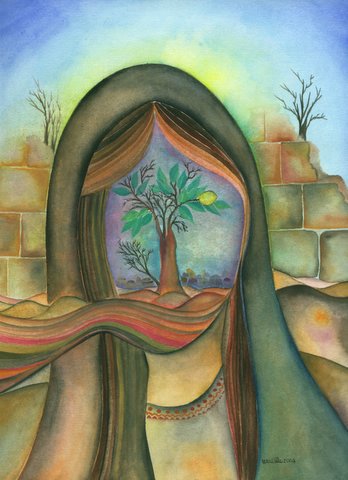
The picture above is by Yosef Katalo.
Leave your sin on my palm before you go
For Mahmoud Darwish, who left before my dream awoke,
10/8/2008.
We came from the same tribe of drifters
I left my head behind
Dangling in the well
Swinging with the horsing doors
Can you ... please ...
Leave your sin on my palm before you go
Or send me
An embarrassed tune
Written with your silent eyes
Since we have made a hole
In that ugly apartheid wall
And because I have left behind a poem
Sunbathing with your olive trees in the dunes
And because we
Have paved the way
For armies of wise shoes
Because the feet colluded with heads
Did not know how to choose
And because I ...
Have fallen between the letters
Got stuck between two commas
And because I was the shepherd of my wild dream
Declaring my fears to strangers
Rebelling against the snow
Shivering whenever I read a map
That did not lead home
Or whenever a nation of ignorance
Called my country by a pseudo name
Last night
I saw love sneaking from the crack of my dream
Rarely do I commit such follies
So ... if you don’t mind ..,
Please
Leave your algae on my shirt
It might just bloom some peace
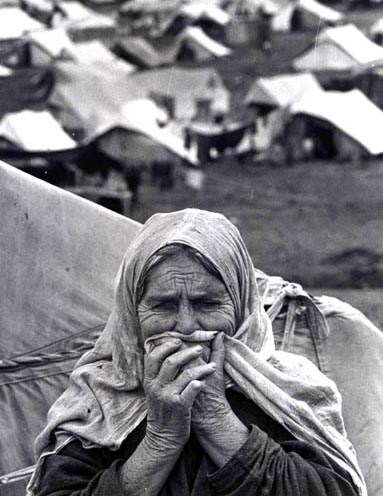
Take me home when I’m dead
Take me home
When I’m dead
I am crowded by corpses
Occupying me
A long queue of departed loved ones
Are still marching in
One after the other
Changing me from within
While one of my eyes
Is teasing the other
Hiding its despair
Behind my sleep
Take me home to my homeland
Where the houses that lost their doors
Are crouching at the borders,
Waiting to hug their orphaned keys
Take me home when I’m dead
To where the hills are waiting
To clothe me in the bush of thyme,
Or resurrect me an olive tree
Take me home when I’m dead
To
where the stones of my demolished home
Became the toys of an angry child
Stripped of his right to fly a kite
Take me home when I’m dead
To
where I will join the battalions of the freed oppressed
Abandoning their prisons at last
Death will set them free
A thousand years of exile
Will never issue a new birth certificate
For the occupiers’ lies
I might wear a hat
My tongue may forget its name
But my feet will still identify
With the soil
That found its refuge in me
Take me home when I’m dead
To
where the houses will embrace their long lost windows
To
where the skin of the soil will breathe
When I am reborn an apple tree
I dream of sleeping in the womb of my mother land
Take me home
I am cold
I need to wear my dignity
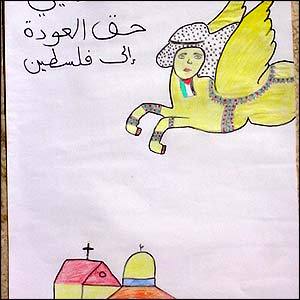
The picture above was painted by a young Palestinian boy refugee who wrote
in Arabic "We have the right of return."
The striver's departure
I wrote this poem for George Habash, a Christian Palestinian
hero who was exiled. He was a doctor and a fighter for his city, Lid. He had a
tough time in exile, as he had to move from one place to another until he died
brokenhearted before he could actualize his dream of returning home. He was
nicknamed Al-Hakeem, which means "the Wise Man" in Arabic.
In Memory of a Real Man, the Palestinian Hero, Al-Hakeem ( the
Wise Man), George Habash
UK
16/2/2008
He left us,
the dean of strivers.
As he departed us
the pleasure of harvest
was in his hands.
He wore the orange's wounds
to wash the blood of defeat
from his cross ...
A thousand resolutions
in its birth conspired,
Halleluiah!,
for the victory of
feathered wings it sprouted.
Give tribute to the man,
for he paid the price
of amputating his own legs to fly ...
O sky ...
Decorate yourself with jeweled dewdrops
to welcome the free prisoner.
O sky ...
The Hakeem came to you
encompassing
honor and identity ...
The harvesting season.
Pregnant with sorrow, the spikes were
hoping to miscarry the shame
they carried in their womb.
The lover of
Palestine
died.
Died ... like the sacred olive trees he represented
standing on his feet.
Died ... the man
who tore his voice's cry
to heal the harp's raucousness.
like autumn's browning leaves.
His pains fell
with the cause he was embracing;
from one trench to another
he decamped.
He was intoxicated
with life's longing
at half a glance
to see Al-Quds' braids
from a hole in the wall.
In our life's bread
Al-Lid's son left us a heritage.
In the almond tree's navel
was his bride's dowry:
a crescent and a cross,
a scalpel and an anthem,
patience and exile,
a handful of sugar and salt,
and a chain of pains
like a bracelet.
O sky ...
Al-Hakeem left us,
an aging cause awaiting its knight.
Singing
while stitching its wounds.
Praying ...
while cursing the sons of the dollar.
Al-Hakeem
you have been
mending the sky's wounds
while your own wounds were
widening,
deepening,
burning
and blazing.
In your pockets
you gathered the stings of fire and gunpowder.
Rejoice ...
for you have joined the clouds' battalions.
Oh Sky ...
Rain now
on Palestine,
blossoms
of violets ...
Rain sweet as the scent
on Al-Lid's scarf.
Oh Sky,
Oh Al-Hakeem!
On churches and on mosques' domes
mercy you pour.
Al-Fateheh
read
from the sky.
For
Deir Yassin's babies' skulls.
And for the blood
of those buried under Jenin's debris.
And for the martyrs of Ibrahim Al-Khalil's house
whose blood
spilled while they knelt in prayer;
they were praying
for
mercy, happiness and relief ...
praying to God;
they were
praying for salvation,
riddance
from the assassins
who attacked from every door ...
Oh Sky ...
The killers dried up the sea,
fired up their swarming hatred
to put the clouds
under curfew.
They pulled up the ground
from under the young ones' feet.
They poisoned
every book's page.
Oh those with Mercy ...
Pray for mothers
who drift without their children.
Pray for stones resting in
our youngsters' hands.
And a dawn that tore its shirt.
on the long nights' doors
to announce his guiltlessness
from Joseph's blood.
Pray
for the eleven thousand
war prisoners
who are crucified
on anticipation's doors.
Pray
for eyes that never sleep.
Stones that sprouted legs
Written for the memory of my Iraqi
colleague
Atwar Bahjat who was killed while reporting from Iraq.
The bed of defeat has always been feminine.
Ever since the sky was within reach
a woman fluffing a wombless vanilla pillow
has given birth to scandals.
The thorns took advantage,
climbing the shoulders of the bare peach,
stealing the bride
whose perfume never swirled in the wind.
The apple went mad,
glued in his grief
to the fingers of his land.
Stripping off his desire
He shouted, cried,
"I’ve perfected banging water drums
because my share of plight is
exactly like yours,
although my teardrops
could quench hatred’s fire."
We all perfected the game
attacking the features of things.
We dallied with the nails of our jailer
who bought the East
sometimes with prayers,
at other times
with a convoy of female slaves.
The knight of the mountains
has been collecting our wounds
to sprinkle them on a heap of dew.
He waited a long time
until the stones sprouted legs,
chasing the mud groom
who tested the virginity of the heavens,
bearing his imported season
on the shoulders of winter.
I screamed into his shirt,
"Rescue me please, from this cold body.
My circle has been defeated by armies of frost,
chased by eagles of dust.
Toss your body
against the ink lorry,
Drown your sorrow in a cup of coffee or . . .
die standing up like a wall:
defend the hymen of the thyme;
defend a wagon
ready to load the victims of
terror.
Fight for
honey-flavoured Poems,
document your defeat . . . if you
choose
on a sobbing poem.
For a lilac became a naked martyr
in becoming a trembling pavement for a camera crew."
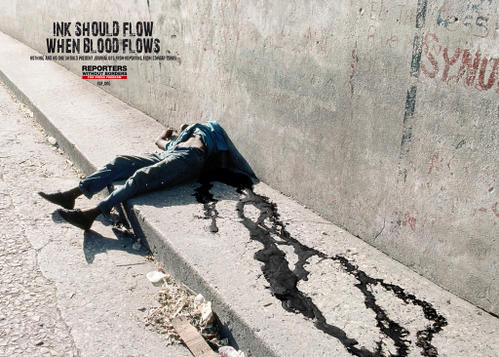
Murdered by my own ink
The ports of my papers,
are fields of uncertainties.
I plant my anchor
to secure my old face
while it ages toward oblivion.
My dream is stretching
between a place
under the umbrella of the wind,
and
an illusion under the rain.
The distance
is . . . too far
to arrest the dead man,
who crucified me
in a hideous, unthinkable moment.
I am just a number within an army
of unlucky ones,
killed by the poison of their own ink,
and the stupidity of their own fingers,
slaughtered by despair.
Our traps
race us in our sleep,
to attend a wedding
between the rain and the desert.
Our pains . . . twitter
While we assassinate ourselves,
hoping some one;
not one of us
will rise
to write a better dirge
while watching the skittering feet of the poor
following their own footprints,
forgetting the phantoms behind,
to the side,
on some other route,
swarming with the dust of honor,
as we abandon our bevy
to increase our number
by . . . one.
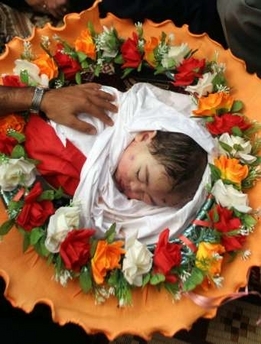
Shut the door behind you
Your absence creeps up on me,
Peeping through my sleepy eyes,
Yawning from the look of surprise.
Did you return .... to apologize?
My prides roars, rears back
in the face of my submission.
The clock has swallowed
the hands that danced through my tears.
My wounds have licked their salt.
I will never breathe your breath again.
My sadness is folded away
in the worn purse of memory.
The gulls' wings that weaved
spells beyond the window,
the rusty needle that once
stitched our photos back together
must be shattered beyond repair.
Stuff the sky in an envelope
if you must, stick on all the stamps.
Your letters will never be delivered.
See what remains from the harvest of slaves.
I have been drowned in dew.
Gather me up in a bottle
and like the nectar of pain
spray me on your arid heart.
My fingertip is plucking
on a string which yearns instead
for the touch of a lost legend.
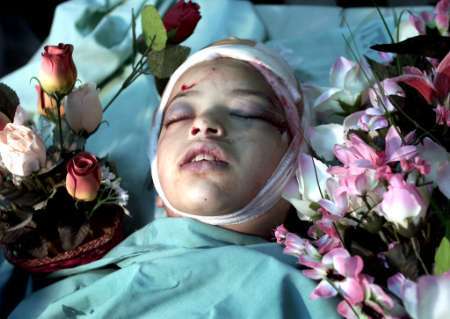
Do not open the diary
Do not open the diary:
I'm afraid the birds
Carrying the sugar plantations under their wings
Will fly away.
My lie has put on its high heels.
I’m still sixteen and a half years old,
Walking on one hair stretched between
Your first promise
And your next one.
And I have never stumbled.
I still believe that silence is more eloquent than words—
But my high is jaded because of one letter.
I don't get drunk on poetry as I used to:
Deception doesn't hurt me any more.
I sleep deeply
And the sky complains:
I cover myself with its rainbows.
I no longer shed bitter tears:
The race of the lines of my face in the mirrors
Has stopped, and I have patched the dress
Of my achievements.
I no longer get a buzz from my persistence.
I no longer cry on a festive day
Because the dust has taken the shine
From my shoes.
I have given up my throne of illusions.
Now I understand the deathly cement crawling on the braids of
the thyme,
crushing them beneath its corpselike weight.
Everything is going fine:
Chaos erupts regularly
And all my worries
Seem smaller in size.
I've stopped craving to play with water.
I've stopped watching the sun
Change its scarf behind
The evening’s curtains.
I beg you.
Do not open the diary.
The birds that keep the sugar plantations
Under their wings
Might fly away.
Armed with a prayer
Once upon a crime,
the night
hijacked the face of my homeland.
The next day,
the spring was pronounced dead.
My blood
lost its way rivuletting through sand.
I was not courageous enough
to declare
the theft of my skin;
It was stretched by loathsome hands
to create a new face for an old drum.
There . . .
sat my anxiety
on the banks of pain,
washing my punctured voice,
asking me
how would I . . .
fish for my poem’s crumbs in a mine field?
What could I say?
For . . .
I had lost the dawn in the market,
my mouth was stuffed
with the sweat of my exile,
nothing of me remained
but
my few half-living fingers
exhuming the guts of lines,
a nose . . .
striving hard to find its way home,
and a pair of eyes,
that looked but could not see
any
of the absent loved ones,
who used to be there for me.
My pulse was swinging,
documenting my name,
alongside others hanging
on the verge of plight.
My loaf was naked.
I was armed only with a prayer.
A child beneath the rubble
Screamed, calling my name
Mama . . . Please . . .
tell them not to execute my kite.
Iqbal Tamimi's Resume
Organizations and Titles:
Arab Women Media Watch Centre (UK)—Director
The Hypertexts (www.thehypertexts.com)—Associate Editor ("Editor in Exile")
National Union of Journalists (UK & Ireland)—Member
Dubai Press Club (UAE)—Member
Bristol Multi Faith Forum (UK)- Volunteer
The European Journalism Centre-Member
Bio:
She was shortlisted for The Anna Lindh Mediterranean Journalist Award of 2012 in
Berlin and the 2010 UK Journalism Award for accurate and ethical reporting of
Muslim World News, besides winning the first prize of Social Photography in 2008
in Birmingham, where her chosen subject was refugee communities.
She has spent 20 years campaigning for women's human rights, especially in the
Middle East.
She was one of the first bloggers to publish in Arabic, starting in early 2005.
She campaigned for women’s freedom of choice when it comes to their appearance,
education, choosing a partner, line of work.
She campaigned against men of faith who manipulate or misinterpret religious
texts to oppress women.
She campaigned for female colleagues who were detained or smeared because of
their work in journalism (her profession).
She highlighted the blight of women in minority groups such as the Roma women of
Iraq.
She highlighted the lack of balance of male-dominated media organisations in the
Middle East.
She reported Saudi the Sheiks' obsession with sex fatwas.
She highlighted the work of prominent women such as Professor Kulthum Odeh,
Afifa Karam and other leading Arab women personalities to empower women.
Publications:
• The impact of television programs on the formation of the awareness of
children and youth in the Arab world. Available in Arabic at academia.edu.
• Women Story writers in the GCC and the Emirates: Writing Shifts and
Morphologies. Alkhaleej Althaqafi, May 30, 2005 Issue 9507.
• TV Satellites and marketing an alleged culture, Shoun Adabia Journal of
research, Writers Union of UAE, Issue No. 49, 2005.
• Palestinian Women Photojournalists Published at the European Journalism
Centre.
• The Palestinian Kulthum Odeh (1892 -1965): The first woman professor in the
Arab world, Palestine Think Tank, 2009.
• Arabic Drama, Politics & Palestine on TV during Ramadan, Uruknet Info, Art.
57349, 2009
• Muslim Women Cartoonists, (2009) Middle East Online, Art. 36107.
• Palestinian Women in Sport and Journalism: the History of creating the first
women's football team, Emirates Tribune, Art. 289627 (2009)
• The Palestinian Refugees of Iraq, 2008, URUKNET Info, Article. 57349.
• Khulaa law in Islam (On women’s right to divorce men) Universal Academy- UK,
2005.
• Informal Mechanisms of Political Participation: Saudi Women’s Cyber Sphere:
Democratizing Society from Home
Her articles and poems have appeared on Middle East Online, the London
Progressive Journal, Palestine Think Tank, International News Safety Institute,
The weekly Worker, Online Journal, EJN News, The Arab American Dialogue, Global
Post, The HyperTexts, Muslim News, The Intelligence Daily, United Progressives,
Alkhaleej, Alquds Alarabi, Alriyadh, Alrafid, Alrai, AlShaab, Aldustoor, Fact
International, Tlaxcala, The Oslo Times and Women’s eNews.
Other Accomplishments:
She earned an MA degree in journalism from the University of West of England in
2010.
Her thesis was "The role of Internet and online Media in the segregated society
of Saudi Arabia and women’s use of the Internet as a democratizing tool of
communication."
She currently runs the online news website Journomania.net, where she oversees
the publication and circulation of articles of interest to Arab and UK
professionals interested in learning about media women’s work in the Middle
East.
She researched and reported the effect of the internet as a campaigning tool for
Saudi women, especially when they are living in a segregated society and
interaction with men across borders becomes possible.
She has worked in various media establishments and newsrooms at the leading edge
of societal change, helping to create a responsive communications and public
affairs strategy for the past 20 years, while campaigning for women’s rights.
During this service she attended and participated in a considerable number of
media interviews, events and conferences.
She has worked on media campaigns and research on diverse projects such as
refugees, women genital mutilation, media transparency, women’s rights,
Interfaith efforts, and promoting professional journalism among journalists.
Workshops and Conferences:
The fourth Annual Conference / Arab Women working in the Media—Centre of Media
for Women (September 6-9, 2005, Amman, Jordan)
Women in Leadership (December 12-15, 2004, Dubai, UAE)
Evaluation of the Arab Human Progress Report to establish the community of
knowledge (January 6, 2004, The Studies Unit, Sharjha, UAE)
International conference of Sport Verses Crime—Dubai Police (November 22-24,
2004)
Reform and Democratic changes in the Arab world—AlKhaleej Centre for Research
(May 9-10, 2006, Sharjha, UAE)
The Almanal, Conference / The Image of the Disabled in the Media (May 22-24,
2005, Sharjah UAE)
The Fifth annual conference / Arab Identity Versus Globalization (May 10-11,
2005, Sharjah UAE)
Working for a Better and more Effective Prevention of Drug Abuse—Mentor
International (December 2-3, 2004, Dubai, UAE)
Challenges in meeting the mental health needs of asylum seekers and refugees
(June 21, 2007, Centennial Centre, Birmingham UK)
Shariah Law in the UK: Theory and Practice held at the Centre for the Study of
Ethnicity and Culture (April 25, 2007, Department of Sociology, University of
Birmingham)
The HyperTexts