by Michael R. Burch
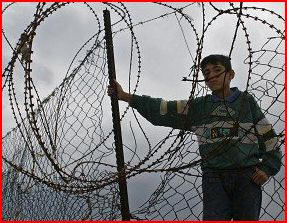
Where does the butterfly go
when lightning rails
when thunder howls
when hailstones scream
while winter scowls
and nights compound dark frosts with snow?
Where does the butterfly go?
Where does the rose hide its bloom
when night descends oblique and chill
beyond the capacity of moonlight to fill?
When the only relief's a banked fire's glow,
where does the butterfly go?
And where shall the spirit flee
when life is harsh, too harsh to face,
and hope is lost without a trace?
Oh, when the light of life runs low,
where does the butterfly go?
Ahmad Al-Za’tar
by Mahmoud Darwish
translated by Tania Nasir
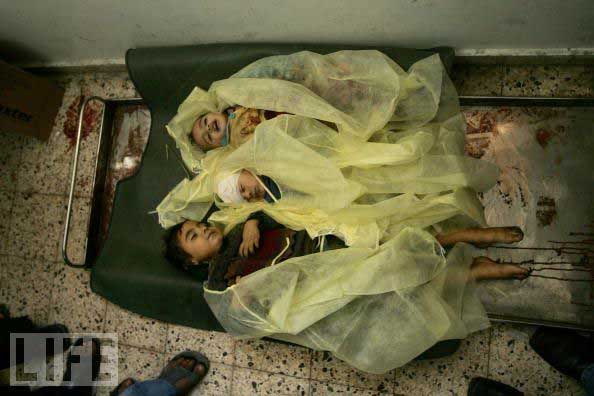
For two hands, of stone and of thyme
I dedicate this song. For Ahmad, forgotten between two butterflies
The clouds are gone and have left me homeless, and
The mountains have flung their mantles and concealed me
From the oozing old wound to the contours of the land I descend, and
The year marked the separation of the sea from the cities of ash, and
I was alone
Again alone
O alone? And Ahmad
Between two bullets was the exile of the sea
A camp grows and gives birth to fighters and to thyme
And an arm becomes strong in forgetfulness
Memory comes from trains that have left and
Platforms that are empty of welcome and of jasmine
In cars, in the landscape of the sea, in the intimate nights of prison cells
In quick liaisons and in the search for truth was
The discovery of self
In every thing, Ahmad found his opposite
For twenty years he was asking
For twenty years he was wandering
For twenty years, and for moments only, his mother gave him birth
In a vessel of banana leaves
And departed
He seeks an identity and is struck by the volcano
The clouds are gone and have left me homeless, and
The mountains have flung their mantles and concealed me
I am Ahmad the Arab, he said
I am the bullets, the oranges and the memory
The Deluge and the Tree
by Fadwa Tuqan
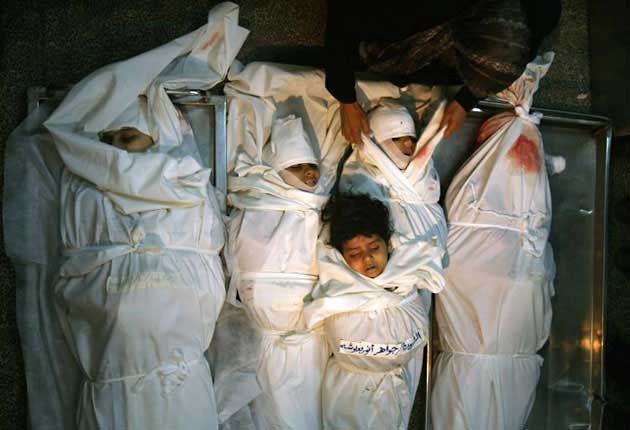
When the hurricane swirled and spread its deluge
of dark evil
onto the good green land
'they' gloated. The western skies
reverberated with joyous accounts:
"The Tree has fallen !
The great trunk is smashed! The hurricane leaves no life in the Tree!"
Had the Tree really fallen?
Never! Not with our red streams flowing forever,
not while the wine of our thorn limbs
fed the thirsty roots,
Arab roots alive
tunneling deep, deep, into the land!
When the Tree rises up, the branches
shall flourish green and fresh in the sun
the laughter of the Tree shall leaf
beneath the sun
and birds shall return
Undoubtedly, the birds shall return.
The birds shall return.

Look at me
by Nahida Izzat
Look at me
I would love to write poetry about love,
Paint rainbows and butterflies,
Smell the scent of pink rose buds,
And dance;
Dance with the melody of jubilant bluebirds
I would love to close my eyes and see children smiling
No guns pointing at their heads
Tell them stories of lily-like fairies in far-away lands
Not of bullets shrieking … of missiles exploding
But
How can I?
There is a dagger in my heart
I am hurting
Hurting
I bleed,
I cringe
I cry
HUMANITY, WHERE ARE YOU?
I am being slaughtered
Under your watchful eyes
I am cold … cold … cold
I cringe
I cry
Humanity, where are you?
Why do you turn your face away?
Why do you keep looking the other way?
I am here
Languishing
In
Humanity, where are you?
Look at me
See me
I am here
Sighing
In
I cringe
I cry
Humanity,
Enough turning the other way !
Turning a deaf ear
Turning a blind eye
While I,
and oh ! my poor children
Die
Armed with a prayer
by Iqbal Tamimi
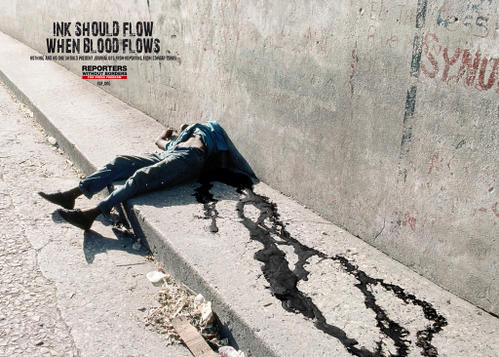
Once upon a crime,
the night
hijacked the face of my homeland.
The next day,
the spring was pronounced dead.
My blood
lost its way rivuletting through sand.
I was not courageous enough
to declare
the theft of my skin;
It was stretched by loathsome hands
to create a new face for an old drum.
There …
sat my anxiety
on the banks of pain,
washing my punctured voice,
asking me
how would I …
fish for my poem’s crumbs in a mine field?
What could I say?
For …
I had lost the dawn in the market,
my mouth was stuffed
with the sweat of my exile,
nothing of me remained
but
my few half-living fingers
exhuming the guts of lines,
a nose …
striving hard to find its way home,
and a pair of eyes,
that looked but could not see
any
of the absent loved ones,
who used to be there for me.
My pulse was swinging,
documenting my name,
alongside others hanging
on the verge of plight.
My loaf was naked.
I was armed only with a prayer.
A child beneath the rubble
Screamed, calling my name
Mama … Please …
tell them not to execute my kite.
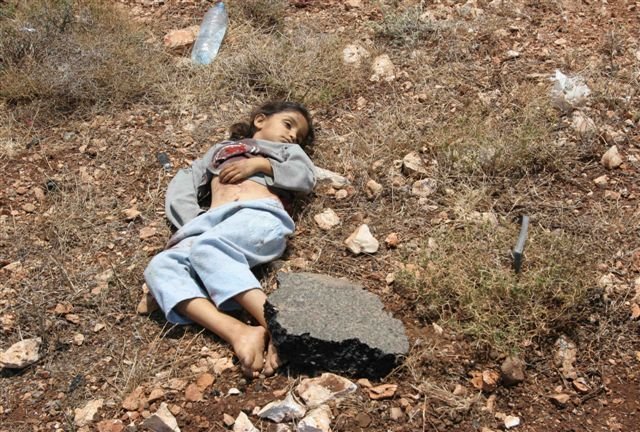
Suffer the Little Children
by Nakba, an alias of Michael R. Burch
I saw the carnage … saw girls' dreaming heads
blown to red atoms, and their dreams with them …
saw babies liquefied in burning beds
as, horrified, I heard their murderers’ phlegm …
I saw my mother stitch my shroud’s black hem,
for in that moment I was one of them …
I saw our Father’s eyes grow hard and bleak
to see frail roses severed at the stem …
How could I fail to speak?
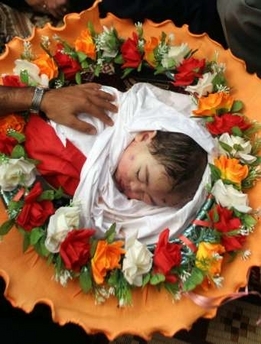
I Pray Tonight
by Michael R. Burch
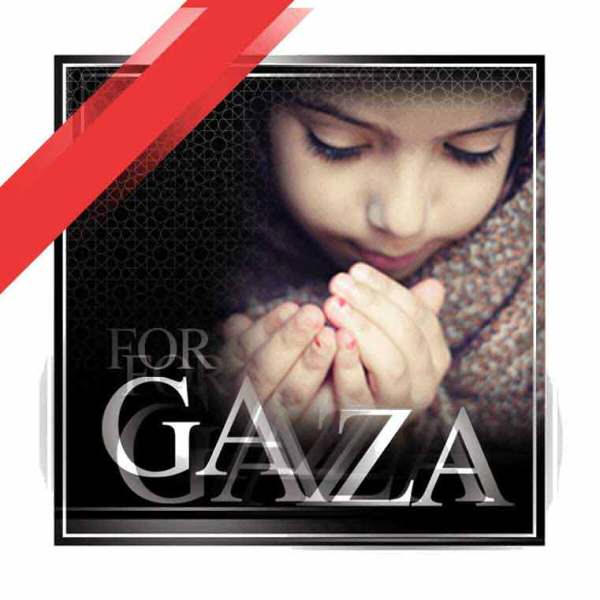
for the children of Gaza
and their mothers
I pray tonight
the starry Light
might
surround you.
I pray
by day
that, come what may,
no dark thing confound you.
I pray ere tomorrow
an end to your sorrow.
May angels' white chorales
sing, and astound you.
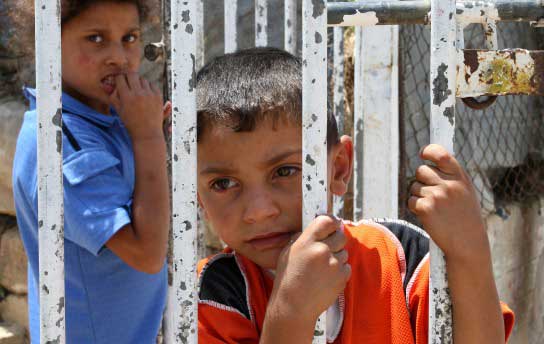
Something
by Michael R. Burch
for the mothers and children of Gaza
Something inescapable is lost—
lost like a pale vapor curling up into shafts of moonlight,
vanishing in a gust of wind toward an expanse of stars
immeasurable and void.
Something uncapturable is gone—
gone with the spent leaves and illuminations of autumn,
scattered into a haze with the faint rustle of parched grass
and remembrance.
Something unforgettable is past—
blown from a glimmer into nothingness, or less,
and finality has swept into a corner where it lies
in dust and cobwebs and silence.
Mother’s Smile
by Michael R. Burch
for the mothers of Gaza and their children
There never was a fonder smile
than mother’s smile, no softer touch
than mother’s touch. So sleep awhile
and know she loves you more than “much.”
So more than “much,” much more than “all.”
Though tender words, these do not speak
of love at all, nor how we fall
and mother’s there, nor how we reach
from nightmares in the ticking night
and she is there to hold us tight.
There never was a stronger back
than father’s back, that held our weight
and lifted us, when we were small,
and bore us till we reached the gate,
then held our hands that first bright mile
till we could run, and did, and flew.
But, oh, a mother’s tender smile
will leap and follow after you!
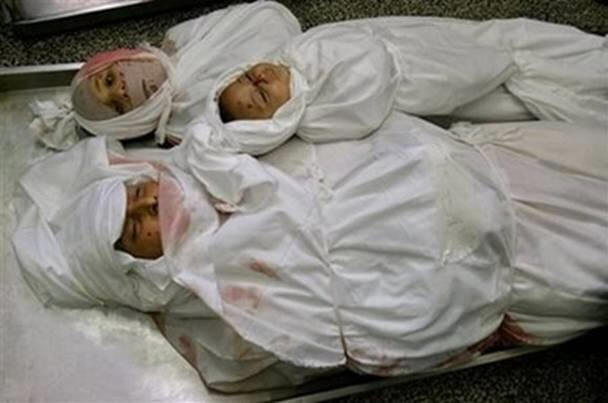
Haiku for the Mothers and Children of Gaza
by Michael R. Burch
How can she bear her grief?
Mightier than Atlas, she shoulders the weight
of one fallen star.
Dark-bosomed clouds
pregnant with heavy thunder —
the water breaks.
The sun warms
a solitary stone.
Let us abandon no one.
You astound me;
your name on my lips
remains unpronounceable.
Born into the delicate autumn,
too late to mature,
pale petals …
Soft as daffodils fall
all the lamentations
of life’s smallest victims,
unheard …
Crushed grapes
surrender such sweetness!
A mother’s compassion.
My footprints
so faint in the snow?
Ah yes, you lifted me.
An emu feather
still falling?
So quickly you rushed to my rescue.
The eagle sees farther
from its greater height—
a mother’s wisdom
Dry leaf flung awry:
bright butterfly,
goodbye!
Late autumn; all
the golden leaves turn black underfoot:
soot …
Hadeel's Song
by Hanan Ashrawi
Some words are hard to pronounce—
He-li-cop-ter is most vexing
(A-pa-che or Co-bra is impossible)
But how it can stand still in the sky
I cannot understand—
What holds it up
What bears its weight
(Not clouds, I know)
It sends a flashing light—so smooth—
It makes a deafening sound
The house shakes
(There are holes in the wall by my bed)
Flash-boom-light-sound—
And I have a hard time sleeping
(I felt ashamed when I wet my bed, but no one scolded me).
Plane—a word much easier to say—
It flies, tayyara,
My mother told me
A word must have a meaning
A name must have a meaning
Like mine,
(Hadeel, the cooing of the dove)
Tanks, though, make a different sound
They shudder when they shoot
Dabbabeh is a heavy word
As heavy as its meaning.
Hadeel—the dove—she coos
Tayyara—she flies
Dabbabeh—she crawls
My Mother—she cries
And cries and cries
My Brother—Rami—he lies
DEAD
And lies and lies, his eyes
Closed.
Hit by a bullet in the head
(bullet is a female lead—rasasa—she kills,
my pencil is a male lead—rasas—he writes)
What’s the difference between a shell and a bullet?
(What’s five-hundred-milli-meter-
Or eight-hundred-milli-meter-shell?)
Numbers are more vexing than words—
I count to ten, then ten-and-one, ten-and-two
But what happens after ten-and-ten,
How should I know?
Rami, my brother, was one
Of hundreds killed—
They say thousands are hurt,
But which is more
A hundred or a thousand (miyyeh or alf)
I cannot tell—
So big—so large—so huge—
Too many, too much.
Palestine—Falasteen—I’m used to,
It’s not so hard to say,
It means we’re here—to stay—
Even though the place is hard
On kids and mothers too
For soldiers shoot
And airplanes shell
And tanks boom
And tear gas makes you cry
(Though I don’t think it’s tear gas that makes my mother cry)
I’d better go and hug her
Sit in her lap a while
Touch her face (my fingers wet)
Look in her eyes
Until I see myself again
A girl within her mother’s sight.
If words have meaning, Mama,
What is Is-ra-el?
What does a word mean
if it is mixed
with another—
If all soldiers, tanks, planes and guns are
Is-ra-el-i
What are they doing here
In a place I know
In a word I know—(Palestine)
In a life that I no longer know?
Excerpts from Under Siege
by Mahmoud Darwish
translated by Marjolijn De Jager
Here on the slopes of hills, facing the dusk and the cannon of time
Close to the gardens of broken shadows,
We do what prisoners do,
And what the jobless do:
We cultivate hope.
A country preparing for dawn. We grow less intelligent
For we closely watch the hour of victory:
No night in our night lit up by the shelling
Our enemies are watchful and light the light for us
In the darkness of cellars.
Here there is no "I".
Here Adam remembers the dust of his clay.
You who stand in the doorway, come in,
Drink Arabic coffee with us
And you will sense that you are men like us
You who stand in the doorways of houses
Come out of our morningtimes,
We shall feel reassured to be
Men like you!
When the planes disappear, the white, white doves
Fly off and wash the cheeks of heaven
With unbound wings taking radiance back again, taking possession
Of the ether and of play. Higher, higher still, the white, white doves
Fly off. Ah, if only the sky
Were real [a man passing between two bombs said to me].
Cypresses behind the soldiers, minarets protecting
The sky from collapse. Behind the hedge of steel
Soldiers piss—under the watchful eye of a tank—
And the autumnal day ends its golden wandering in
A street as wide as a church after Sunday mass …
[To a killer] If you had contemplated the victim’s face
And thought it through, you would have remembered your mother in the
Gas chamber, you would have been freed from the reason for the rifle
And you would have changed your mind: this is not the way
to find one’s identity again.
The siege is a waiting period
Waiting on the tilted ladder in the middle of the storm.
Alone, we are alone as far down as the sediment
Were it not for the visits of the rainbows.
We have brothers behind this expanse.
Excellent brothers. They love us. They watch us and weep.
Then, in secret, they tell each other:
"Ah! if this siege had been declared … " They do not finish their sentence:
"Don’t abandon us, don’t leave us."
Our losses: between two and eight martyrs each day.
And ten wounded.
And twenty homes.
And fifty olive trees …
Added to this the structural flaw that
Will arrive at the poem, the play, and the unfinished canvas.
Oh watchmen! Are you not weary
Of lying in wait for the light in our salt
And of the incandescence of the rose in our wound
Are you not weary, oh watchmen? …
Greetings to the one who shares my glass with me
In the denseness of a night outflanking the two spaces:
Greetings to my apparition.
My friends are always preparing a farewell feast for me,
A soothing grave in the shade of oak trees
A marble epitaph of time
And always I anticipate them at the funeral:
Who then has died … who?
We should not justify suicide bombers.
We are against the suicide bombings,
but we must understand what drives these young people to such actions.
They want to liberate themselves from such a dark life.
It is not ideological, it is despair …
We have to understand—not justify—what gives rise to this tragedy.
It's not because they're looking for beautiful virgins in heaven, as Orientalists portray it.
Palestinian people are in love with life.
If we give them hope—a political solution—they'll stop killing themselves.
―Mahmoud Darwish
What I learned from Elie Wiesel and other Jewish Holocaust Survivors is the personal account of how Mike Burch learned more from some of the Jewish Holocaust survivors he worked with, than they seemingly wanted him to know.
Hidden dimensions
by Nahida Izzat
My first son Hassan
Was born on April the 9th
You might think
So what … why are you saying it
With such a gloomy tune
What is wrong with the 9th of April?
You have to be a Palestinian
To understand
For on the 9th of April 1948
The massacre of Deir Yassin
Took place
Where every man women and child
Of that peaceful farming village
Was killed in cold blood
No one survived
Except those
Who pretended to be dead
As we celebrate the birth of a newborn
With joy
We mourn and grieve
Lost loved ones
In our midst
Nothing becomes insular
Nothing is disjointed
No single colours
The fabric of our lives
Makes the most amazing tapestry
If you hold it backwards
Looking at the wrong side
You’ll see a mirror image
Of shades of a blurred picture
With loops … knots and fraying thread
If you turn it over
It looks much neater
But still you can’t actually see
The full picture
Only colours and shadows
But hey … take a little time
And walk backwards
Further back
Look at the tapestry
From a distance
You will be amazed
At its outstanding beauty
All these murky shades
That didn’t make sense to you
Even disturbed you
When you were near
From afar
These dark shadows
Are precisely what makes this piece
So unique
So spectacular
These unfathomable hues
Are what give our life portrait
Its depth
And hidden dimensions
Since that day of 1948
Many … many babies were born
On April the 9th
Our joys are always stained
With hints of sorrow
Our sadness is always coloured
With hues of hope
Without which
The tapestry of our lives
Will never be complete
Won’t be as rich
Or as beautiful
Don’t waste much time
Staring at the wrong side with fury
Turn it over …walk further back … and feel the glory
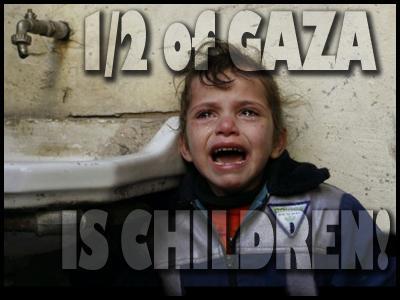
Dead Life
by Olfa Philo
Hey you, hurrying off to the doctor in case of flu or toothache,
what if you suffered like the people of Gaza from a chronic heartache?
Hey you, your kids have a lot of toys to play with and change their moods,
but kids like them in Gaza are being robbed of their innocent moments of childhood!
Hey you, your kids are lucky enjoying food, shelter and comfy beds,
but parents in Gaza are traumatized by their kids' exploded stomachs and heads!
Hey you, you're showing off your new brand-name clothes to your peers?
For their lifelong 'red uniforms', kids of Gaza are drenched in tears!
Hey you, you're complaining every now and then about a lack of fun?
What if your ears were deafened by the noise of rockets and guns!
Hey you, you shout and swear if your kids fall or bleed somewhere?
People of Gaza have been bleeding in silence for decades, as if No one does care!
Hey you, you feel humiliated if you don't celebrate your birthday every year with friends, candles and a cake?
People of Gaza have only wakes and are burning candles daily for their land's sake!
Hey you, you listen to music to calm down and release your stress?
People of Gaza have no other melody but the melancholic lyric of death!
Hey you, you're enraged because your lover didn't call you on the phone?
People of Gaza can only express their displeasure with a stone!
Hey you, you're reluctant to see horrible pictures of atrocities and scattered body parts?
Will you survive a minute if your eyes witness your family members literally falling apart?
Hey you, you're enjoying beer, marijuana and secret dating on Twitter and Facebook?
Did you also swallow all the anesthetizing pills and poisoned hooks?
Hey you, you're hypnotized by the wide range of drama, thriller, soccer and porn TV channels?
Why don't you become a pioneer in launching soul-uplifting, intelligence-boosting and peace-promoting panels?
Hey you, do you feel frustrated when you miss a party or a famous star's show?
What if you lived a life where the sun never rises to melt the years of snow?
Hey you over there, proud of having two feet not four,
What makes you feel superior,
if your brain is (b)locked,
your tongue is tied and
your heart is congealed to the core?
I, too, have a dream …
by Michael R. Burch writing as The Child Poets of Gaza
I, too, have a dream …
that one day Jews and Christians
will see me as I am:
a small child, lonely and afraid,
staring down the barrels of their big bazookas,
knowing I did nothing
to deserve such enmity.
I only asked to live
in a world where things are fair;
I only asked for love
in a world where people share;
if you let me play and learn, kind sir,
then I’ll know you truly care;
if not, your words are hollow
and your religion empty air.
Look at me … I am flesh …
I laugh … I bleed … I cry.
Look at me sir; I dare you
to look me in the eye
and tell me and my mother
how I deserve to die.
I'm not a chess piece, I’m a child!
I'm not a number, I'm a child!
I'm not a lab rat, I'm a child!
If you are human … I'm YOUR child!
If your faith is true, we’re both God’s child!
Jesus loves the little children,
all the children of the world;
red and yellow, black and white,
they are precious in his sight.
Jesus loves the little children,
ALL the children of the world.
Suffer the Little Children
by Nakba, an alias of Michael R. Burch
I saw the carnage … saw girls' dreaming heads
blown to red atoms, and their dreams with them …
… saw babies liquefied in burning beds
as, horrified, I heard their murderers’ phlegm …
I saw my mother stitch my shroud’s black hem,
for in that moment I was one of them …
I saw our Father’s eyes grow hard and bleak
to see frail roses severed at the stem …
How could I fail to speak?
Lockheed, Take Heed
by Nakba, an alias of Michael R. Burch
Terror fell upon my children. Wailing,
they ran toward my arms—small, pale with fright.
They seemed eternities from me … so distant!
Their day exploded. Now I live in night.
"Made in America"? I find that tragic.
Though far less tragic than my sweet doves, blown
to atoms by your profits’ ill-bought magic!
Land of the "brave," the "free"? Brave freedom’s flown
to heights unknown—too high to see my people
crushed in the dust by those you "love" so well.
Sing hymns. Praise God. Erect some higher steeple.
Condemn my kind to poverty, and hell.
"Shock and awe?" Yes, I feel awe—and shock.
You jackals killed my doves, my lambs, my flock!
Apollyon I - Night of the Apocalypse
by Nakba, an alias of Michael R. Burch
His eyes meet mine with blank incomprehension.
How did you come, my friend, to harm this child?
"She was not mine, and no report’s been filed.
So what, old chum?" (Strange lines beyond my scansion.)
A girl so sweet, if woebegone?
Why, surely she was everyone’s!
He lifts his eyes, shifts, sighs, spits, unbeguiled.
He does not know that I have come to judge him.
"What’s it to you?" he threatens, with a leer.
She was my child …
"That thing defiled?"
Ten trillion wavering stars blink, disappear.
Her Slender Arm
by Nakba, an alias of Michael R. Burch
Her slender arm, her slender arm,
I see it reaching out to me!—
wan, vulnerable, without a charm
or amulet to guard it. Flee!
I scream at her in wild distress.
She chides me with defiant eyes.
Where shall I go? They scream, "Confess!
Confess yourself, your children lice,
your husband mantis, all your kind
unfit to live!"
See, or be blind.
I cannot see beyond the gloom
that shrouds her in that terrible dungeon.
I only see the nightmare room,
the implements of torture.
Sudden
shocks contort her slender frame!
She screams, I scream, we scream in pain!
I sense the shadow-men, insane,
who gibber, drooling, Why are you
not just like US, the Chosen Few?
Suddenly, she stares through me
and suddenly I understand:
I hear the awful litany
of names I voted for. My hand
lies firmly on the implement
they plan to use, next, on her children
who huddle in the corner. Bent,
their bidden pawn, I heil Amen!
to their least wish. I hone the blade
"Made in America," their slave.
She has no words, but only tears.
I turn and retch. I vomit bile.
I hear the shadow men’s cruel jeers.
I sense, I feel their knowing smile.
I paid for this. I built this place.
The little that she had, they took
at my expense. Now they erase
her family from life’s tattered book.
I cannot meet her eyes again
for I now stand one with the shadow men.
The Least of These
by Nakba, an alias of Michael R. Burch
Here lies a child of the Holocaust
along with her dreams—lost, buried, unknown …
dreams buried, unlived. And who knows their cost?
No roses grace this stone, stark as bone.
"Dearly Beloved," her marker reads,
as many quaint sermons on Love have begun …
but this is her end. She lies among weeds
more somber than widows’, six feet from the sun.
Whom shall we cherish? Friends, whom shall we love?
The war profiteer, or the peaceable dove?
"Made in America," her Cruise Line said:
now a tender dove lies here—cold, shattered, dead.
Here lie her pieces. Friend, read them, and weep.
Stand firmly for justice, or lie, in your sleep.
Lines for a Palestinian Mother and Child
by Nakba, an alias of Michael R. Burch
I swear her eyes were gentle … that she was
a child herself, although she bore a child
close to her breast: her one and only cause.
I watched in apprehension as men filed
in close, goose-stepping ranks on either side,
as if they longed for blood, on Eastertide.
I thought of women slain for being born
the "wrong" race, sex, caste, or the "wrong" religion.
I thought of Joan of Arc, her tunic torn,
her breasts exposed, her bloody Inquisition.
I felt the flames and then her screams explode.
I thought of Mary and her dolorous road.
When will religion learn men must repent
of killing even one mild innocent—
whether before or after Lent?
The Horror
by Nakba, an alias of Michael R. Burch
the Horror is a child who died because
we closed our eyes to tribal Nature’s laws,
who knows no justice, but red fangs and claws
the Horror is the child we led to stray
into dark wilds where evil Men hold sway,
abandoned her, then swiftly walked away
now she lies dead, and many innocents!
the Tiger prowls; He longs to kill; He pants
for blood, as children die, unheard, like ants
the Tiger rules by Law, red Claw and Tooth,
while Barnums laugh, count Beans, and sip Vermouth.
In her dread repose (I)
by Nakba, an alias of Michael R. Burch
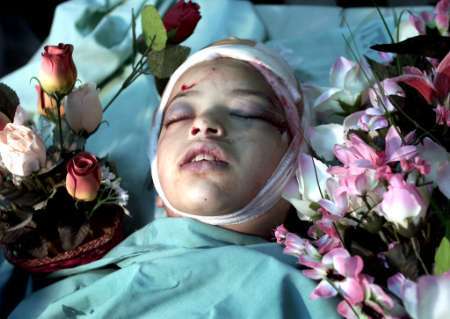
Find in her pallid, dread repose—
no hope, alas!, for the Rose.
In her dread repose (II)
by Nakba, an alias of Michael R. Burch
Find in her pallid, dread repose—
no hope for the World. O, my violated Rose!
US Schoolboys
by Nakba, an alias of Michael R. Burch
The simple path to peace
begins with a single step,
as the sun breaks bright to the East
though the schoolboy has long overslept.
O, when will he rise and yawn!
Will he miss how dew spangles the lawn?
The simple peace path begins
when the schoolboy repents of his sins,
for his balmy vacation’s long over.
There’s no time to be lolling in clover!
Now that the bright day has begun,
he must rise in accord with the sun.
The path is called Justice … and now
he must walk it, and stoutly avow
to follow wherever it leads
till the sun sets its blaze to the weeds …
He must thresh, so his brothers can find
peace’s path, though the world seems blind.
Related pages: Sandy Hook Poems, Aurora Poetry, Columbine Poems, Courtni Webb's Sandy Hook Poem and Possible Expulsion, Darfur Poems, Gaza Poems, Haiti Poems, Hiroshima Poems, Holocaust Poems, Nakba Poems, 911 Poems, Trail of Tears
The HyperTexts