The HyperTexts
The Best Sad Songs Ever: the Greatest Sad/Dark/Haunting Songs of All Time
Who wrote and performed the best sad, dark, haunting songs of all time?
Some of the top singers and songwriters of sad songs include Eric Clapton, Sam Cooke,
Bob Dylan, Dan Fogelberg, Aretha Franklin, Marvin Gaye, Mick Jagger, Elton John,
George Jones, Janis Joplin, Carole King, John Lennon, Paul McCartney, Freddy
Mercury, Willie Nelson, Steve Perry, Elvis Presley, Prince, Smokey Robinson, Paul Simon, Bruce
Springsteen, Cat Stevens, James Taylor, Roger Waters, Hank Williams Sr. and Neil
Young.
If you're a lyric nut like me, you may want to check out my page on
the greatest
rock lyrics of all time. That page considers
songs strictly as poems, on the merits of their words alone.
This page considers sad/dark/haunting songs as comprehensive
works of art. When words and
music are considered together, some songs rise in my rankings while others drop.
Please keep in mind that both lists are the result of my personal taste in
music, and my strong preference for killer lyrics. The purpose of my list is not to dictate
anything to anyone, but simply to say, paraphrasing Buffalo Springfield, "Here's what I think, for what it's
worth ..."
compiled by
Michael R. Burch
As with my other music pages, I have included snippets of trivia about songs here and
there, answering
questions such as:
Is the saddest song of all time an Irish air that was written by an English
lawyer who never visited Ireland?
Which soul singer-songwriter wrote a heartfelt plea for love, understanding and mercy, only to be murdered by his father?
Which country singer-songwriter pledged to always be faithful to his wife, only to record a song
written by his mistress?
What pagan Celtic song became a Christian children's hymn, then a hit for
the West's most famous Muslim
singer?
What line from a sermon by John Donne spurred the bitter refutation of a young
monkish troubadour?
What does Led Zeppelin's "Stairway to Heaven" have in common with
Saint Peter's second sermon after Pentecost?
Which incredibly sad song was written as an anti-suicide message?
Which famously dark song was written shortly after the assassination of John F.
Kennedy?
Why do so many people get married to the dark,
relationship-in-the-process-of-disintegrating lyrics of my number one love
song, which is also my
number one anti-love song of all time?
I will now count down my top 25 sad/dark songs of all time, then reveal my "honorable
mentions" ...
#25 —
Tie: Several Songs, Old and New, Borrowed and Exceptionally Blue ...
"Everybody Hurts" by R.E.M. is an empathetic song written
for people struggling with suicidal thoughts
"Tears in Heaven" was written by Eric Clapton after the death of
his infant son
"The Sound of Silence" was written by Paul Simon shortly after the assassination
of John F. Kennedy
"I'm So Lonesome I Could Cry" was written by Hank Williams Sr. during the
breakup of his marriage
"He Stopped Loving Her Today" was performed soulfully by country music legend George Jones
"At Seventeen" is a song of intense loneliness and alienation written and
performed by Janis Ian
"Love Hurts" was written by Boudleaux Bryant and performed by Nazareth, Roy
Orbison and the Everly Brothers
"Hurt" was recorded by Johnny Cash shortly before his death; it was a
cover of a Nine Inch Nails song written by Trevor Reznor, who said "The song
isn't mine anymore" after Cash covered it
"Wish You Were Here" and "Shine On You Crazy Diamond" were written by
Roger Waters for Pink Floyd's former lead singer, Syd Barrett, who showed up at
the studio during the recording, but was not recognized by his former band-mates
#24 — Funeral for a Friend/Love Lies Bleeding
music by Elton John; lyrics by Bernie Taupin; performed by Elton John
This eleven-minute track was too long to be released as a single but it received
quite a bit of radio air play (one critic suggested that it allowed DJs time for
extended "potty breaks"). Elton John is said to have written the music while
thinking about what he wanted played at his own funeral. The song is full of
furious, somewhat bombastic chords, but they all seem to work remarkably well,
as do the dark, angry lyrics.
#23 — Fever and Blue Moon
(early Sun recordings) and Peace in the Valley
performed by Elvis Presley
Elvis Presley was like the little girl who had a little curl right in the middle
of her forehead: sometimes he was very, very good, and sometimes he was horrid
(i.e., the ultimate cheesy/bombastic Vegas lounge singer). If you haven't heard
the young Elvis Presley sing "Fever" and "Blue Moon," hie thee quickly to
YouTube to check out the really, really good Elvis. These are songs of
passionate longing channeled through an exceptional, almost otherworldly voice.
"Peace in the Valley" is a hymn.
#22 — Mad World
by Roland Orzabal; as performed by Adam Lambert (originally performed by
Tears for Fears)
If any contemporary male singer can rival the young Elvis, perhaps it's
Adam Lambert. His cover of "Mad World" is scary-good. Lambert
has one of those atmospheric voices that can hit all the high notes, and so far
he seems to have an instinct for picking out the right songs, for him. If you
don't "tear up" while listening to this song about intense
loneliness and alienation, you probably need to see a heart specialist.
#21 — Taxi
and Cat's in the Cradle
by Harry Chapin
Harry Chapin's "Taxi" is a
ghost story in which both ghosts are still partially alive. I once saw
Chapin in concert, and he was a wonderful storyteller: both in his songs and in
his interactions with the audience. "Taxi" is another intensely sad song about
loneliness and alienation. Chapin's "Cat's in the Cradle" is about a father who
is always too busy to spend time with his son, who pledges to grow up to be like
his father. By the end of the song, the grown-up son
is too busy for his aging father. The song began as a poem by Chapin's wife
Sandy. Chapin died in a car accident in 1981 and never got to see his children
grow up, making the song seem not only sadder, but darkly prophetic.
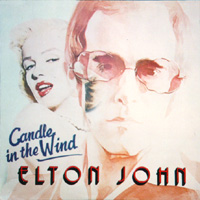
#20 — Candle in the Wind
music by Elton John; lyrics by Bernie Taupin; performed by Elton John
Goodbye Norma Jean
Though I never knew you at all
You had the grace to hold yourself
While those around you crawled
Bernie Taupin's evocative lyrics tell a haunting
story about an enchanting artist: Marilyn Monroe (the former Norma Jean Baker).
The music was written and the song was originally performed by Elton John. The
original song not only causes us to empathize with Marilyn Monroe, but also with
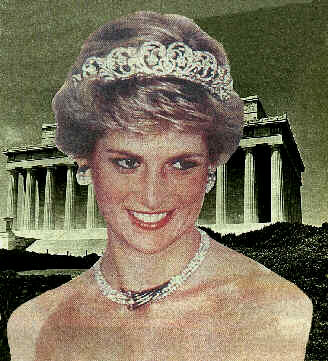
the young boy who felt such empathy for her. Bernie Taupin later wrote new
lyrics for the song, honoring England's fairest Rose, Princess Diana, after her
tragic death in an automobile accident.
#19 — Imagine
by John Lennon
Imagine there's no Heaven
It's easy if you try
No hell below us
Above us only sky
While I'm not a hard-core Beatles fan (preferring the Stones, Led Zeppelin,
Queen and a number of other groups), I have long admired John Lennon's
"Imagine" and its vision of a world where there is finally a true
"brotherhood of man." His dreamy vision of a Utopian world has inspired the
anti-war, pro-peace movement for decades and is one of the most influential
pieces of anti-religion writing on record, perhaps making Lennon the English
equivalent of Mark Twain (a fierce American critic of Christianity). The song is sad
because its vision has never been realized, and
doubly so because Lennon, a prophet of peace and equality, was murdered by a
"born-again Christian," Mark David Chapman.
#18 — Eleanor Rigby
by John Lennon and Paul McCartney; performed by the Beatles
Eleanor Rigby
Died in the church and was buried along with her name
Nobody came
Father McKenzie
Wiping the dirt from his hands as he walks from the grave
No one was saved
"Eleanor Rigby" is yet another haunting ghost story. In this ghost story, the
ghosts were both dead while they were still alive, then one of the ghosts
(Father McKenzie) buried the other ghost (Eleanor Rigby). This song contains
powerful, moving commentary on the inadequacy of love and religion to comfort
some
people, much less make them happy.
#17 — House of the Rising Sun
writer unknown; performed by the Animals
There is a house in New Orleans
They call the Rising Sun;
It's been the ruin of many a poor boy
And God I know I'm one ...
"House of the Rising Sun" is an American folk ballad whose authorship remains
unknown. The best-known version of the song was performed by a British
"invasion" group,
the Animals. (Hey, what were they doing, stealing our best songs?) Like many other songs on this page, it tells a
dark, haunting, compelling story.
#16 — Born to Run
by Bruce Springsteen; performed by Bruce Springsteen and the E Street Band
Every day we sweat it out in the streets of a runaway American dream
At night we ride through mansions of glory in suicide machines
"Born to Run" is a rip-roaring dark anthem perhaps inspired to some degree by badass
actors like James Dean, Marlon Brando and Dennis Hopper. What happens when
machismo-dripping young men straddle Harleys? A song like "Born to Run" seems
almost inevitable. A fundamental line may be: "And the boys try to look so
hard." There's quite a discrepancy between the lyrics of songwriters like John
Lennon and Paul Simon, and those of "the Boss" above. But this song is
perhaps the sadder for all its bravura defiance.
#15 — Blowin' in the Wind
by Bob Dylan
How many roads must a man walk down
Before you call him a man?
Yes, 'n' how many seas must a white dove sail
Before she sleeps in the sand?
Yes 'n' how many times must the cannonballs fly
Before they're forever banned?
The answer, my friend, is blowin' in the wind,
The answer is blowin' in the wind.
"Blowin' in the Wind," like John Lennon's "Imagine," is a highly influential
song that may still be transforming human hearts and minds. How many other singers
and songwriters have been influenced by these songs, and how many people
have they influenced in turn? But the song is sad because, as with "Imagine,"
the song's vision of peace remains far from being achieved.
#14 — A Change Is Gonna Come
by Sam Cooke
It's been too hard living
but I'm afraid to die
'Cause I don't know what's up there
beyond the sky ...
"A Change Is Gonna Come" was written after Sam Cooke heard and was moved by Bob
Dylan's "Blowin' in the Wind." Cooke's song soon became an anthem for the
American Civil Rights Movement. While the song's title seems hopeful, few songs
have ever been more melancholic.
#13 — Comfortably Numb
by Roger Waters and David Gilmour; performed by Pink Floyd
When I was a child I had a fever;
my hand felt just like two balloons ....
I have become
comfortably numb.
If Pink Floyd has ever done a bad song, I haven't heard it. This was the last
song written by Roger Waters and David Gilmour, and perhaps their greatest, but
they have so many wonderful collaborations that it's hard to say. "Comfortably
Numb" is sad in a different way than the other songs on this list, as the
singer seems to be drowning in apathy.
#12 — A
Whiter Shade of Pale
by Matthew Fisher, Gary Brooker and Keith Reid; performed by Procol Harum
And so it was that later,
As the miller told his tale,
That her face, at first just ghostly,
Turned a whiter shade of pale.
"A
Whiter Shade of Pale" has been the most-played song at venues in the United
Kingdom over the last 75 years, and justly so. It's a song that tells
a haunting if somewhat surrealistic tale. The song is based on a party at which Keith Reid heard the phrase "a
whiter shade of pale" ... the rest, as they say, is history. The phrase "as the
miller told his tale" probably refers to the Miller's Tale of the poet Geoffrey
Chaucer's "Canterbury Tales." The Miller's Tale was about a man's attempt to
seduce a young woman, so we may perhaps deduce that the woman who blanched at the party
turned "a whiter shade of pale" because she was being propositioned.
#11 — Piece of My Heart
by James Ragovoy and Bert Berns; performed by Janis Joplin and Big Brother
and the Holding Company
Didn't I make you feel
like you were the only man?
An' didn't I give you nearly everything
that a woman possibly can?
Rolling Stone nominated "Piece of My Heart" as the 344th greatest song
of the modern era, which only illustrates the dark, murky depths to which music
"experts" are capable of sinking. This may be the greatest all-out rock/blues
performance by a female singer, or by any rock/blues singer, male or female.
While many songs are "heart rippers," this is the only one that actually
encourages the act of heartbreaking.
#10 — Knockin' on Heaven's Door
by Bob Dylan; performed by Dylan, Eric Clapton, Bob Marley, The Grateful
Dead, Guns 'n' Roses, U2 and many other artists
A great song became one of the greatest ever when Guns 'n' Roses covered it in
1987. The song was originally written and performed by Bob Dylan for the movie
"Pat Garret & Billy the Kid." (There must be something magical about the song
because even Dylan sounded remarkably good when he sang it.) "Knockin' on
Heaven's Door" was later covered in reggae versions by Eric Clapton and Bob
Marley. It must surely be the only song to have been recorded by the Boss, Boy
George, The Grateful Dead, The Sisters of Mercy, Warren Zevon, Ladysmith Black
Mambazo and Dolly Parton!
#10 — Mercy, Mercy Me and
What's Goin' On
by Marvin Gaye; performed by Marvin Gaye
After writing the haunting lines ...
Father, Father, we don't need to escalate
For war is not the answer
Only love can conquer hate
You know we've got to find a way
To bring some lovin' here today
... Marvin Gaye was unfortunately shot and killed by his own father.
#9 — Who Wants to Live Forever?
and The Show Must Go On
written by Brian May; performed by Queen with Freddy Mercury singig the lead vocals
There's no time for us
There's no place for us ...
Who wants to live forever?
"Who Wants to Live Forever" is especially poignant because Freddy Mercury, one
of the greatest singers and performers of all time, didn't. And while he sang
that the show must go on, in the end Queen's shows went on without him.
#8 — Layla
by Eric Clapton; performed by Derek and the Dominoes
Layla, you got me on my knees;
Layla, you got me singing darlin' please ...
"Layla" was written by Eric Clapton as a song of unrequited love for his friend
George Harrison's wife, Pattie Boyd ... talk about a lovers' triangle! At least
this one was immortalized, as Pattie Boyd has been called the inspiration for
"Layla," "Something," "Wonderful Tonight" and other songs by Harrison and
Clapton. Both the original and the "unplugged" versions of "Layla" are
utterly stellar. The song is a longing plea for love, with no indication that
reciprocation is expected.
#7 — Nothing Compares 2 U
by Prince; performed by Sinead O'Connor
"Nothing Compares 2 U" is a wonderfully tender, poignant song, sung exquisitely
by Sinead O'Connor. The tear she shed in her video was real, and unscripted. She
had shaved her head when she started singing because she wanted to be known for
her music, not her looks (but she looked better without hair than most women
with flowing manes). When the head of her record label heard the song the first
time, he cried. When O'Connor heard that he had cried, she asked: "Was it that
bad?" No, silly, it was that magnificent!
#7 — Go Rest High on that Mountain
by Vince Gill
I am not normally a country music fan, but this song, a modern hymn, is
wonderfully moving and exquisitely sung by Vince Gill, a former lead singer of
Pure Prairie League. Gill wrote the song originally for Keith Whitley, a fellow
country music singer who died in 1989, but didn't finish it until after the
death of his brother Bob, who died in 1993. Ricky Skaggs and Patty
Loveless sang the background vocals on a song that is sure to be an enduring
classic.
#6 — The Freshmen
by Brian Vander Ark; performed by The Verve Pipe
I can't be held responsible
'cause she was touching her face
I won't be held responsible
she fell in love in the first place ...
For the life of me, I cannot remember
what made us think that we were wise and we'd never compromise
for the life of me, I cannot believe we'd ever die for these sins
we were merely freshmen
When the Verve Pipe released "The Freshmen" there were debates on the Internet about just what
they meant by lines like "stop a baby's breath and a shoe full of rice."
While "stop a baby's breath" might refer to an abortion, "shoe full of rice"
might refer to a wedding, in which case "baby's breath" might be a sprig of
flowers. Song lyrics, like all forms of poetry, are open to interpretation.
#5 —
Hallelujah
by Leonard Cohen; performed by Cohen and many other artists (my favorite
performers of the song include Alexandra Burke, K. D. Lang and Jeff Buckley)
Now I've heard there was a secret chord
That David played, and it pleased the Lord
But you don't really care for music, do ya?
It goes like this: the fourth, the fifth
The minor fall, the major lift,
The baffled king composing Hallelujah ...
Hallelujah is an utterly stellar song that transforms love into a cold and
broken Hallelujah.
#4 — Unchained Melody
music by Alex North; lyrics by Hy Zaret; performed by the Righteous Brothers
(vocals by Bobby Hatfield)
Oh, my love,
my darling
I've hungered for your touch
a long, lonely time ...
"Unchained Melody" is one of the most popular songs of all time, having been
recorded by many different artists in various languages. If you haven't heard the version
recorded by the Righteous Brothers, please be sure to browse over to YouTube and
check out Bobby Hatfield's stunning, soaring vocals.
This is a haunting song of inconsolable longing that became popular again
when it was featured in the movie "Ghost" starring Patrick
Swayze and Demi Moore.
But the song had an inauspicious beginning. At first it was intended to be only
an album track. Then it was released as the B-side of "Hung on You." So the
group and its label apparently didn't realize that they had cut an all-time
classic!
The Righteous Brothers have two other contenders for the best sad song of all
time in "Ebb Tide" and "You've Lost That Lovin' Feelin'" (the latter their first
number one single and the most-played single of the 20th century according to
BMI).
Bill Medley and Bobby Hatfield have been dubbed the kings of "blue-eyed soul." I
remember watching a YouTube "reaction" video by a hip-hop fan who was stunned to
learn that the Righteous Brothers weren't black soul singers! The duo started
calling themselves the Righteous Brothers after black marines used the term to
describe them. At times in their careers they opened for the Beatles and the
Rolling Stones.
#3 — Bridge Over Troubled Water
by Paul Simon; performed by Simon & Garfunkel (vocals by Art Garfunkel)
When you're down and out
When you're on the street
When evening falls so hard
I will comfort you
I'll take your part
When darkness comes
And pain is all around
Like a bridge over troubled water
I will lay me down
Like a bridge over troubled water
I will lay me down
"Bridge Over Troubled Water" is a classic rock hymn. Paul Simon wrote the song
specifically for Art Garfunkel, shortly before the breakup of Simon & Garfunkel.
Garfunkel's vocals make the original recording one of the best of all time; the
song has also been performed by many other singers, including Elvis
Presley, Aretha Franklin, Roy Orbison, Johnny Cash, Josh Groban and Charlotte
Church. While the song does suggest a "light at the end of the tunnel," for
the most part it is a dark masterpiece.
#2 — Without You
written by Pete Ham and Tom Evans of Badfinger; the most famous
performance of the song was by Harry Nilsson
Paul McCartney, who knows a thing or two about songwriting, called "Without
You" the "killer song of all time." While the original Badfinger version is
good, the atmospheric, soaring vocals of Harry Nilsson took the song to new
heavenly levels of unrequited longing. The song has since been covered
by Mariah Carey and other accomplished singers, but for me
the Harry Nilsson version is unique and untouchable.
#2 — The First Time Ever I Saw Your Face
written and first performed by Robert Flack
"The First Time Ever I Saw Your Face" was written and first performed by
Robert Flack; it has since been performed by Celine Dion, among others; one
of my favorite versions is a somewhat darker version by an unknown singer,
Josh Krajcik, which can be found on YouTube.
I think the two songs above go well together, and tie for my best sad, dark,
haunting love songs of all time.
Now here, without further ado, is my number one song of all time ... named,
in an interesting synchronicity, "One." One might call it an
anti-love song.
#1 — One
by Bono (Paul Hewson), The Edge (David Evans), Adam Clayton and Larry Mullen Jr.; performed by U2
Have you come here for forgiveness?
Have you come to raise the dead?
Have you come here to play Jesus
To the lepers in your head?
"One" was written and recorded in Berlin, on the eve of the reunification of
Germany. At the time U2 was experiencing internal disharmony: the song has been
credited with helping keep the band together. The Edge came up with the music
first; Bono said his lyrics "just fell out of the sky, a gift." The entire song
was composed in about 15 minutes.
Okay, I'm going to cheat, or at least hedge my bets. I am going to suggest the
following songs as possible ties for number one, even though they're older
compositions. But they are incredibly good songs, and heart-rendingly sad, so
they certainly qualify:
Danny Boy is a lovely, haunting poem of loss written by Frederic Weatherly and sung to
the tune of "Londonderry Air"
Ave Maria and Pie Jesu,
especially as performed by Angelis with those otherworldly voices
When Johnny Comes Marching Home is the ultimate lament
for fallen soldiers who don't come marching home, credited to Patrick S. Gilmore
Greensleeves is an English folk song of uncertain origin; it
dates back to
1580, perhaps earlier
Oh Shenandoah is an older American folk song of uncertain origin
Molly Malone is a Irish folk song
Auld Lang Syne is a poem written by the great Scottish
bard
Robert ("Bobbie") Burns and sung to a Scottish folk tune
Where Have All the Flowers Gone is an anti-war song written by Pete
Seeger and performed by Seeger, The Kingston Trio and Joan Baez, among others; the
song's anthem was taken from the traditional Cossacks folk song "Tovchu,
Tovchu Mak"
Now here are my "high honorable mentions" ...
Stairway to Heaven
music by Jimmy Page; lyrics by Robert Plant; performed by Led Zeppelin
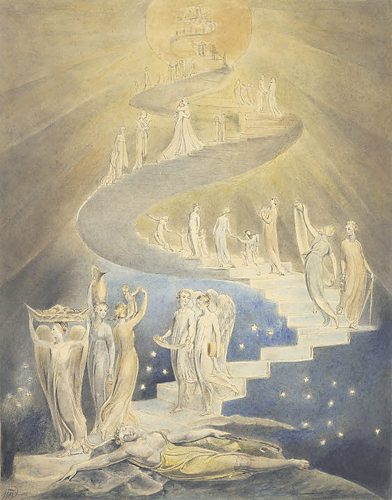
Led Zeppelin's "Stairway to Heaven" is an unusual song, to say the least. It was
originally written as an acoustic folk song, but soon became one of the
best-known rock songs of all time. It was an eight-minute-long album track that
was never released as a single, yet became one of the most-played songs
on radio stations around the world, thanks largely to listener requests.
Comments by band members make it seem the lyrics were written rather mystically,
apparently via some form of "automatic writing." (Poets like William Butler
Yeats have also claimed that poems came to them from "out of blue nothing," as if conveyed by
extraterrestrial spirits. The
ancient Greeks even created goddesses, the Muses, to explain the otherworldly
inspiration of poets.) Wherever the lyrics of "Stairway to Heaven" originated,
they certainly tell a compelling story about a very mysterious woman. While the
song was written in Wales and has a decidedly Celtic "feel," it also alludes the
Bible. Jacob, who became the patriarch and namesake of Israel, saw angels
descending from and ascending into heaven on some sort of stairway, which became
known as "Jacob's Ladder." Also, there are
a number of verses in the Bible which speak of God becoming "all in all" at the
end of time: that idea seems to be echoed in the song's closing lines: "And if you listen very hard
/
The truth will come to you at last /
When all are one and one is all." In Saint Peter's second sermon after Pentecost
he spoke of "the restitution of all things to God" which had been spoken of "by
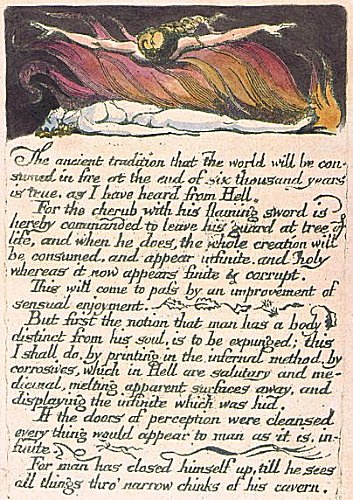
all the holy prophets since the world began." The image above is William Blake's
"Jacob's Ladder."
Sympathy for the Devil
by Mick Jagger and Keith Richards; performed by the Rolling Stones
I shouted out,
"Who killed the Kennedys?"
When after all
It was you and me
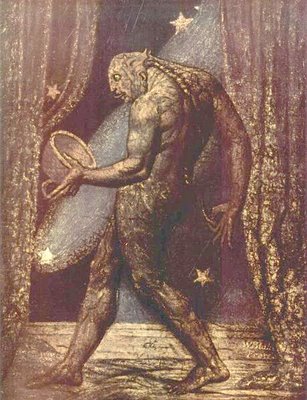
"Sympathy for the Devil," according to Mick Jagger, was inspired by the work of
the French poet, Charles Baudelaire. It was written in the first person, from
the perspective of Lucifer. The image above is by William Blake ...
Riders on the Storm
by Robbie Krieger, John Densmore, Jim Morrison and Ray Manzarek; performed by
the Doors
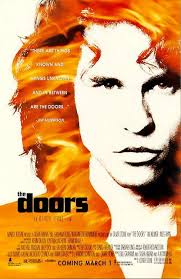
There's a killer on the road
His brain is squirmin' like a toad
"Riders on the Storm" is one of the darkest songs of all time. It was the last
song recorded by the Doors before Jim Morrison died. The band took its name from
William Blake's "Doors of Perception" [see the second image above].
Vincent
by Don McLean
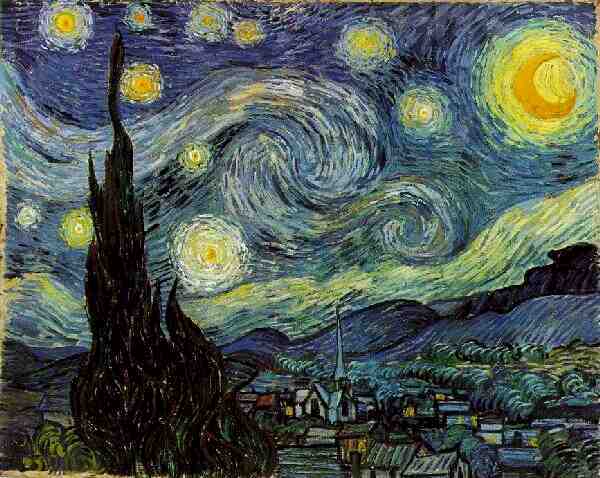
Vincent Van Gogh's "Starry Starry Night"
Starry, starry night
Paint your palette blue and gray
Look out on a summer's day
With eyes that know the darkness in my soul
Don McLean's "Vincent" got my vote as the best rock poem of all time,
based strictly on words, because
it tells a moving story and also carries us somewhere "beyond" by making
us feel a strong kinship with the troubled Dutch painter, Vincent Van Gogh. The best poems and
songs create a sort of spiritual "communion" between writer, subject and
audience ...
Morning Has Broken
Gaelic folk tune; lyrics by Eleanor Farjeon; performed by Cat Stevens,
Angelis and other artists
"Morning Has Broken" has a most interesting genesis. It was originally a Gaelic
folk tune. The lyrics of a Christian children's hymn were penned for it in 1931, by
Eleanor Farjeon. The Christian hymn then became a hit for Cat Stevens, the West's
most famous Muslim singer/songwriter!
I Am a Rock
by Paul Simon; performed by Simon & Garfunkel
A winter's day
In a deep and dark December;
I am alone,
Gazing from my window to the streets below
On a freshly fallen silent shroud of snow.
I am a rock,
I am an island.
"I Am a Rock" seems to be the refutation of a sermon preached by John Donne, who
happened to be one of England's greatest poets. In his sermon Donne proclaimed
that "no man is an island." The young, introspective singer/songwriter Paul Simon
begged to differ.
The photograph above is of the world's most famous rock island, Gibraltar, at night
...
(Sittin' on) The Dock of the Bay
by Otis Redding and Steve Cropper; performed by Otis Redding
I left my home in Georgia
Headed for the 'Frisco bay
'Cause I've had nothing to live for
And look like nothin's gonna come my way ...
"(Sittin' on) The Dock of the Bay" was recorded by Otis Redding on December 7,
1967, just three days before he died
in a plane crash outside Madison, Wisconsin.
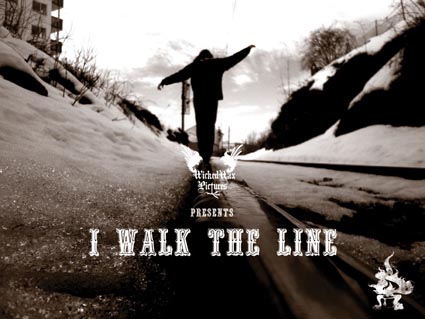
I Walk the Line
by Johnny Cash
I find it very, very easy to be true
I find myself alone when each day is through
Yes, I'll admit that I'm a fool for you
Because you're mine, I walk the line
Johnny Cash wrote "I Walk the Line" in 1956, when he was newly married and
promised to be faithful to his wife. Years later he recorded "Ring of Fire," a song
written by his mistress, June Carter, about the
torrid love affair that caused him to eventually divorce his first wife. June Carter wrote "Ring of Fire" with Merle Kilgore. Johnny Cash
had a dream in which he was singing the song with mariachi horns in the
background, which was how it was recorded.
Other sad/dark songs of note:
"All by Myself" and "I'm Through with Love" by Eric Carmen are very
touching, moving and soulful songs delivered by one of the great emotive voices
"Only Time" and the traditional hymn "O Come O Come Emmanuel"
are both sung in
a lovely, haunting voice by Enya
"God Only Knows" by the Beach Boys is intensely sad, and probably
their best song
"Stand by Me" by Ben E. King
"Private Dancer" and "What's Love Got to Do With It" by Tina Turner
"Piano Man," "Only the Good Die Young" and
"Until the Night" by Billy Joel
"Your Song,"
"Sacrifice," "Daniel," "Goodbye Yellow Brick Road" and "Sad Songs Say
So Much" by Elton John
"Faithfully,"
"Separate Ways," "Who's Crying Now" and
"It's Just the Rain" by Journey
"Foolish Heart" and "Oh Sherrie" by Steve Perry
"Mockingbird" and
"Stan" by Eminem
"Ain't No Sunshine" by Bill Withers
"The Sun Ain't Gonna Shine Anymore" by the Walker Brothers
"Stay with Me," "I Know I'm Not the Only One" and "Lay Me Down" by Sam Smith
"Angel" and "I Will Remember You" by Sarah McLachlan
"Someone Like You" and "Rolling in the Deep" by Adele
"Sam Stone" by John Prine is about a drug-addicted Vietnam vet from his son's
viewpoint
"The Needle and the Damage Done" is a Neil Young song about drug abuse
"Fire and Rain" records James Taylor's reaction to
the suicide of Suzanne Schnerr, a childhood friend
"As Tears Go By" was written by Mick Jagger, Keith Richards and Andres Loog
Oldham for Marianne Faithful
"That's the Way I've Always Heard it Should Be (We'll Marry)" is a song about
a loveless marriage by Carly Simon
"A Pirate Looks at Forty" is a song about aging and fading dreams, written and
performed by Jimmy Buffet
"Fix You" by Coldplay
"I Can't Make You Love Me" by Bonnie Raitt
"Black" is a very dark song written by Eddie Vedder and
Stone Gossard, and performed by Pearl Jam
"Angel Flying too Close to the Ground" is a song about a suffering
human angel written and performed by Willie
Nelson
"Ghosts" is a haunting song written and performed by Dan Fogelberg, an amazingly talented
singer/songwriter/musician
"Angie" was written by Mick Jagger and Keith Richards, and performed by the
Rolling Stones
"A Picture from Life's Other Side" was the favorite song of Woody Guthrie
"Nutshell" by Alice in Chains
"Something in the Way" by Kurt Cobain of Nirvana
"Paint It, Black" by Mick Jagger and Keith Richards; performed by Rolling Stones
"All Along the Watchtower" by Bob Dylan, as performed by the Jimi Hendrix
Experience
"The Logical Song" by Roger Hodgson; performed by Supertramp
"Sweet Child O' Mine" and
"Patience" by Guns 'n' Roses
"The Living Years" by Mike and the Mechanics
"When Doves Cry" by Prince
"I'm Not in Love" by 10cc
"Never Is a Promise" by Fiona Apple
"Wild Horses" by the Rolling Stones
"One Sweet Day" by Mariah Carey and Boyz II Men
"End of the Road" by Boyz II Men
"It's Only Make Believe" by Conway Twitty and Fiona Apple
"I've Been Loving You Too Long" by Otis Redding
"Smells Like Teen Spirit" by Nirvana
"Landslide" and "Go Your Own Way" by Fleetwood Mac
"For What It's Worth"
by Stephen Stills; performed by Buffalo Springfield
"Because The Night"
by Bruce Springsteen and Patti Smith; performed by the
Patti Smith Group
"Beds Are Burning" by Robert Hirst, Peter Garrett and James Moginie; performed by Midnight Oil
"After the Gold Rush"
by Neil Young
"Walking on Broken Glass" by
Annie Lennox
"She's Gone" by Daryl Hall and John Oates
"Lay Down (Candles in the Rain)" by
Melanie
"Leah," "In Dreams," "Only the Lonely" and "Crying" by Roy Orbison
"White Flag," "Thank You" and "Here with Me" by Dido
"Kathy's Song," "America" and "Homeward Bound" by Paul Simon; performed by Simon & Garfunkel
"Don't Think Twice, It's All Right" and "Like a Rolling Stone" by Bob Dylan
"Thunder Road" by Bruce Springsteen
"Abraham, Martin and John" by Dion
"Holding Back the Years" and
"If You Don't Know Me by Now" by Simply Red
"My Immortal" and
"Bring Me to Life" by Evanescence
"The End" by the Doors
"Someday Soon" by Judy Collins
"White Room" and
"Sunshine of Your Love" by Cream
"Roxanne" by Sting and the Police
"Pride (In the Name of Love)" and "With or Without You" by U2
"Imagine" by John Lennon
"Have You Ever Seen the Rain," "Who'll Stop the Rain" and
"Someday Never Comes" by Creedence Clear Water Revival
"Free Bird" by Lynyrd Skynyrd
"Unbreak My Heart" by Toni Braxton
"Bleeding Love" by Leona Lewis
"Dream On" by Aerosmith
"Always" and
"Livin' on a Prayer" by Bon Jovi
"Maggie Mae" by Rod Stewart
"Crazy" by Willie Nelson, as performed by Patsy Cline
"Let It Be,"
"A Day in the Life,"
"Yesterday" and
"Hey Jude" by the Beatles
"Careless Whisper" by Wham! with George Michael
"Heart of Glass" by Blondie
"Hatful of Stars" and
"Unhook the Stars" by Cyndi Lauper
"True" by Spandau Ballet
"Missing You" by John Waite
"You're Beautiful" by James Blunt
"Apologize" by Timbaland
"It Must've Been Love" by Roxette
"What Hurts the Most" by Rascal Flatts
"Because of You" by Kelly Clarkson
"Independence Day" by Martina McBride
"Strawberry Wine" by Matraca Berg, as performed by Deana Carter
"Here Without You" by Doors Down
"The Flame" by Cheap Trick
"Seasons in the Sun" by Terry Jacks
"My Heart Will Go On" by Celine Dion
"Somebody that I Used to Know" by Goyte featuring Kimbra
"How Can You Mend a Broken Heart," "Words" and "I Started a Joke" by the Bee Gees
"Shadow Dancing" by Andy Gibb
"Heartbreak Hotel," "Are You Lonesome Tonight?" and "It's Now or Never" by Elvis
Presley
"Dust in the Wind" by Kansas
"More than a Feeling" by Boston
"Total Eclipse of the Heart" by Bonnie Tyler
"Don't Speak" by No Doubt
"It's All in the Game" by Tommy Edwards
"Losing My Religion" by R.E.M.
"Creep" by Radiohead
"Skinny Love" by Bon Iver
"Need You Now" by Lady Antebellum
"Against All Odds (Take a Look at Me Now)" by Phil Collins
Related pages:
The Best Singers of All Time,
The Best Singer-Songwriters,
The Best Female Singer/Songwriters,
The Best Songs of All Time,
The Best Sad Songs,
The Best Protest Songs and Poems,
The Best Love Songs,
Rock Jukebox: the Poetry of Rock,
The Best Vocal Performances of All Time,
The Worst Song Lyrics Ever,
The Most Overrated Songs of All Time,
The Best Rock Lyrics,
The Best Female Poets,
The Best Sappho Translations,
The Best Metaphors and Similes,
The Best Lines from Songs and Poems
The HyperTexts