The HyperTexts
The Best War Poetry and Anti-War Poetry
The Best War Poets and Anti-War Poets
Which poets wrote the best war poems and the best anti-war poems? Picking the
greatest war and anti-war poems of all time was a subjective task, so
please keep in mind that this page is largely based on one
person's opinions. I have also included one short tribute poem of mine (the hymn
immediately below) and a few of my translations, not claiming them to be among
the best, but hopefully of some value.
Hymn for Fallen Soldiers
by Michael R. Burch
Sound the awesome cannons.
Pin medals to each breast.
Attention, honor guard!
Give them a hero’s rest.
Recite their names to the heavens
Till the stars acknowledge their kin.
Then let the land they defended
Gather them in again.
When I learned there’s an American military organization, the DPAA
(Defense/POW/MIA Accounting Agency) that is still finding and bringing home the
bodies of soldiers who died serving their country in World War II, after
blubbering like a baby, I managed to eke out this poem.
The Death of the Ball Turret Gunner
by Randall Jarrell
From my mother's sleep I fell into the State,
And I hunched in its belly till my wet fur froze.
Six miles from earth, loosed from its dream of life,
I woke to black flak and the nightmare fighters.
When I died they washed me out of the turret with a hose.
Randall Jarrell was born in Nashville, Tennessee, in 1914, the year World War I
began. He earned bachelor's and master's degrees from Vanderbilt University,
where he studied under Robert Penn Warren, John Crowe Ransom and Allen Tate. In
1942 he enlisted in the Army Air Corps and worked as a control tower operator
during World War II, an experience which influenced and provided material for
his poetry. Jarrell’s reputation as a poet was established in 1945 with the
publication of his second book, Little Friend, Little Friend, which
"bitterly and dramatically documents the intense fears and moral struggles of
young soldiers."
The ancient Greeks were truth-tellers when it came to war and the immense
sacrifices made by valiant soldiers in defense of their countrymen ...
Athenian Epitaphs
Passerby,
Tell the Spartans we lie
Lifeless at Thermopylae:
Dead at their word,
Obedient to their command.
Have they heard?
Do they understand?
Simonides, loose translation/interpretation by Michael R. Burch
Here he lies in state tonight: great is his Monument!
Yet Ares cares not, neither does War relent.
Anacreon, loose translation/interpretation by Michael R. Burch
They observed our fearful fetters, braved the encircling darkness.
Now we extol their excellence: bravely, they died for us.
Mnasalcas, loose translation/interpretation by Michael R. Burch
Mariner, do not ask whose tomb this may be,
But go with good fortune: I wish you a kinder sea.
Plato, loose translation/interpretation by Michael R. Burch
Some of the most powerful poems I have ever read are inscriptions found on the tombstones of
ancient Greeks. So I created a small collection of English epigrams modeled
after epitaphs gleaned from ancient Greek gravestones and called the collection
"Athenian Epitaphs." There are more Athenian Epitaphs later on this
page.
The Lost Pilot
by James Tate
for my father, 1922-1944
Your face did not rot
like the others—the co-pilot,
for example, I saw him
yesterday. His face is corn-
mush: his wife and daughter,
the poor ignorant people, stare
as if he will compose soon.
He was more wronged than Job.
But your face did not rot
like the others—it grew dark,
and hard like ebony;
the features progressed in their
distinction. If I could cajole
you to come back for an evening,
down from your compulsive
orbiting, I would touch you,
read your face as Dallas,
your hoodlum gunner, now,
with the blistered eyes, reads
his braille editions. I would
touch your face as a disinterested
scholar touches an original page.
However frightening, I would
discover you, and I would not
turn you in; I would not make
you face your wife, or Dallas,
or the co-pilot, Jim. You
could return to your crazy
orbiting, and I would not try
to fully understand what
it means to you. All I know
is this: when I see you,
as I have seen you at least
once every year of my life,
spin across the wilds of the sky
like a tiny, African god,
I feel dead. I feel as if I were
the residue of a stranger’s life,
that I should pursue you.
My head cocked toward the sky,
I cannot get off the ground,
and, you, passing over again,
fast, perfect, and unwilling
to tell me that you are doing
well, or that it was mistake
that placed you in that world,
and me in this; or that misfortune
placed these worlds in us.
Tate's poem is what one might call an "unfortunate masterpiece." We wish with
all our hearts, minds and souls that such poems didn't have to be written. But
then we go to war and make them inevitable, whenever rare poets like Tate are
able to communicate thoughts and feelings almost beyond comprehension. I am glad
that we have such a magnificent and important poem. I am very sorry for what
Tate and so many other fatherless and motherless children suffered, due to
mankind's wars. I hope enough people will read such poems and take them to
heart, so that we can prevent such terrible things from happening again. But as
I write this, Trump is threatening war with Iran after backing out of a peace
treaty our nation should have honored ...
È la solita storia: Remembering Bach Mai, Yemen, Ukraine and All the Faceless
Dead
by Bob Zisk
It was the end of Advent in seventy-two,
The Magi came in a B-52.
The cribs were wheeled into the basement, where
The sick and dying shook and prayed in fear.
The bombs, like rotten manna out of hell,
Gave scarcely any warning as they fell
Earthward, and filled the air with burning dead.
Their human smoke circled overhead.
Today we point and raise a weak outcry
As other little children scream and die,
All nameless as the babies of Bach Mai.
————————————————
È la solita storia: it's the same old story.
On Dec. 22, 1972, in the so called Christmas Bombing the U.S. bombed Hanoi. No
fewer than one hundred bombs struck Bach Mai Hospital, killing at least
twenty-eight staff and an unspecified number of patients who had sheltered in
the basement. In 1998 Bach Mai Hospital opened a special rehabilitation
unit sponsored by Veterans for America. In 2000 Japan sponsored a reconstruction
project at the hospital.
I was a young man at the time of the Christmas Bombing Operation. To this day I
am amazed at those wise men at my university who could talk with such passion
about categorical imperatives and Aristotle's concept of eudaimonia, but could
not find the humanity to speak out or sign a public letter decrying the
bombing of Bach Mai Hospital. But I suppose it is a mark of progress that there
are now courses in military ethics for the men and women we send to do the
terrible, the unspeakable in our name.
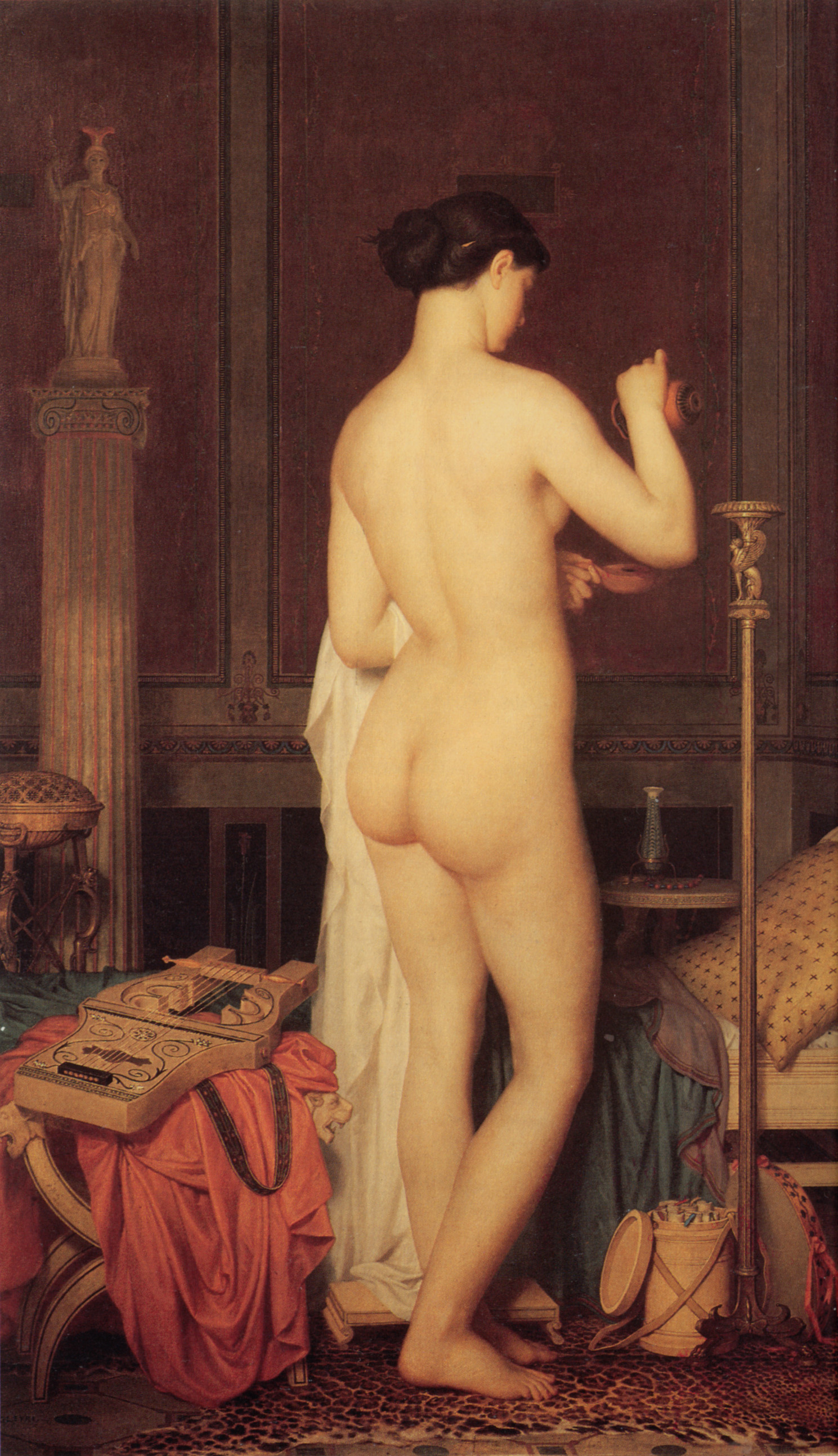
Unfortunately, the only completely intact poem left by the immortal Sappho of
Lesbos is her "Ode to
Aphrodite" or "Hymn to Aphrodite" (an interesting synchronicity since Sappho is
best known as a love poet and Aphrodite was the ancient Greek goddess of love).
However, the poem below,
variously titled “The Anactoria Poem,” “Helen’s Eidolon” and “Some People Say
...” is largely intact. Was Sappho the author of the world's first "make love,
not war" poem?
Sappho, fragment 16
loose translation/interpretation by Michael R. Burch
Warriors on rearing chargers,
columns of infantry,
fleets of warships:
some call these the dark earth's redeeming visions.
But I say—
the one I desire.
And this makes sense
because she who so vastly surpassed all other mortals in beauty
—Helen—
seduced by Aphrodite, led astray by desire,
lightly
set sail for distant Troy,
abandoning
her celebrated husband,
leaving behind her parents and child!
Her story reminds me of Anactoria,
who has also departed,
and whose lively dancing and lovely face
I would rather see than all the horsemen
and war-chariots of the Lydians,
or all their infantry parading in flashing armor.
In my opinion, for whatever it's worth, the top ten war poets of all time are:
Sappho of Lesbos, the first of the "make love not war" poets
Alfred Tennyson, esp. "The War" and "Charge of the Light Brigade"
Thomas Hardy, esp. "Drummer Hodge" and "The Man He Killed"
Rudyard Kipling has been accused of jingoism but he showed
empathy for soldiers in poems like "Common Form"
Rupert Brooke, esp. "Safety" and "The Soldier"
Siegfried Sassoon, esp. "Absolution," "Attack," "Dreamers,"
"Aftermath," "Banishment" and "The General"
Isaac Rosenberg, esp. "Dead Man's Dump," "God," "Louse Hunting," "August 1914" and
"Break of Day in the Trenches"
Walt Whitman, esp. his poems about the Civil War and Lincoln's assassination
such as "When Lilacs Last in the Dooryard Bloom'd" and "Captain, My Captain"
Miklós Radnóti, esp. the "Postcard" poems he wrote on the last days of
a Nazi death march
Wilfred Owen, esp. "Dulce et Decorum Est," "Anthem for Doomed Youth,"
"Arms and the Boy," "The Unreturning," "Disabled,"
"Futility" and "Strange
Meeting"
High Honorable Mention: Bertolt Brecht, Roy Campbell, Stephen Crane, Keith Douglas, Clifford Dyment, Robert Graves, Ivor Gurney,
David Jones, Alun Lewis, Archibald MacLeish, Marjorie Pickthall, Henry Reed, Robert Service, Charles Hamilton Sorley, Harvey Stanbrough, Wallace
Stevens, James Tate, Edward
Thomas, Bruce Weigl, Philip Larkin and anti-war songwriters such as Pete Seeger,
John Prine, Bob Dylan, John Lennon and Bruce
Springsteen
My top ten war poems, all but one of them anti-war poems, are:
(10)
"Drummer Hodge" by Thomas Hardy
(9)
"Charge of the Light Brigade" by Lord Alfred Tennyson
(8)
"Wulf and Eadwacer" is an ancient Anglo-Saxon poem that reminds us of
the heavy toll war takes on women and children, as well as soldiers
(7)
"In Flanders Fields" by John McCrea and "I Have a Rendezvous with Death" by Alan
Seeger are two of the best-known poetic memorials for fallen soldiers
(6)
"An Irish Airman Foresees His Death" by William Butler Yeats was written for
Robert Gregory, the son of his patron Lady Gregory
(5) "The Lost Pilot" by James Tate is a poem about a boy's loss of his father
(4) Walt Whitman's poems about the assassination of Abraham Lincoln: "O Captain!
My Captain!" and "When Lilacs Last in the Dooryard Bloom'd"
(3)
"The Death of the Ball Turret Gunner" by Randall Jarrell
(2) "Memorial Rain" by Archibald MacLeish is an elegy he wrote for his brother
Kenneth who died in WWII
(1)
"The Unreturning," "Strange Meeting," "Anthem for Doomed
Youth" and "Dulce Et Decorum Est" are powerful,
graphic war
poems by Wilfred Owen, a soldier-poet who died tragically a few days short of the WWI
armistice
High Honorable Mention: "Fast Rode the Knight" by Stephen Crane, "Dover Beach" by Matthew Arnold,
"Naming of Parts" by Henry Reed, "The Dug-Out" by Siegfried Sassoon,
"The Man He Killed" by Thomas Hardy,
"MCMXIV" (1914) by Philip Larkin,
"The Death of a Soldier" by Wallace Stevens,
"Here Dead Lie We" by A. E. Housman
compiled by Michael R. Burch,
an editor, translator and publisher of Holocaust, Trail of Tears and Nakba poetry
Gethsemane
by Rudyard Kipling
The Garden called Gethsemane
In Picardy it was,
And there the people came to see
The English soldiers pass.
We used to pass—we used to pass
Or halt, as it might be,
And ship our masks in case of gas
Beyond Gethsemane.
The Garden called Gethsemane,
It held a pretty lass,
But all the time she talked to me
I prayed my cup might pass.
The officer sat on the chair,
The men lay on the grass,
And all the time we halted there
I prayed my cup might pass.
It didn’t pass—it didn’t pass
It didn’t pass from me.
I drank it when we met the gas
Beyond Gethsemane!
Rudyard Kipling has been accused of being an "imperialist," an apologist for the
British Empire, and writing jingoistic poems. But the poems above suggest that
he was far from a gung-ho advocate of war.
Excerpts from "More Poems," XXXVI
by A. E. Housman
Here dead lie we because we did not choose
To live and shame the land from which we sprung.
Life, to be sure, is nothing much to lose;
But young men think it is, and we were young.
I have loved these four lines by Housman since I first read them. Housman could
write movingly without indulging in images, melodrama or sophistry, and like
Shakespeare was a master of direct statement. Housman is
certainly a major poet, and one of our very best critics of society and
religion, along with Blake, Twain and Wilde. A good number of his poems can be
found on the Masters page of The HyperTexts.
Dulce Et Decorum Est
by Wilfred Owen
Bent double, like old beggars under sacks
Knock-kneed, coughing like hags, we cursed through sludge,
Till on the haunting flares we turned our backs
And towards our distant rest began to trudge.
Men marched asleep. Many had lost their boots
But limped on, blood-shod. All went lame; all blind;
Drunk with fatigue; deaf even to the hoots
Of tired, outstripped Five-Nines that dropped behind.
Gas! GAS! Quick, boys!—An ecstasy of fumbling,
Fitting the clumsy helmets just in time;
But someone still was yelling out and stumbling
And flound'ring like a man in fire or lime...
Dim, through the misty panes and thick green light,
As under a green sea, I saw him drowning.
In all my dreams, before my helpless sight,
He plunges at me, guttering, choking, drowning.
If in some smothering dreams you too could pace
Behind the wagon that we flung him in,
And watch the white eyes writhing in his face,
His hanging face, like a devil's sick of sin;
If you could hear, at every jolt, the blood
Come gargling from the froth-corrupted lungs,
Obscene as cancer, bitter as the cud
Of vile, incurable sores on innocent tongues,—
My friend, you would not tell with such high zest
To children ardent for some desperate glory,
The old Lie: Dulce et decorum est
Pro patria mori.
"Dulce et decorum est pro patria mori" is
from Horace's Odes and means: "It is sweet and fitting
to die for one's country." This is one of the first graphic anti-war poems
in the English language, and almost certainly still the best.
Wulf and Eadwacer (Anonymous Anglo-Saxon poem, circa 960-990 AD)
loose translation/interpretation by Michael R. Burch
My people pursue him like crippled game.
They'll rip him apart if he approaches their pack.
It is otherwise with us.
Wulf's on one island; I'm on another.
His island's a fortress, fastened by fens.
There are bloodthirsty curs on this island.
They'll rip apart if he approaches their pack.
It is otherwise with us.
My thoughts pursued Wulf like panting hounds.
Whenever it rained—how I wept!—
the boldest cur took me in his paws.
Good feelings for him, but for me loathsome.
Wulf, O, my Wulf, my ache for you
has made me sick; your infrequent visits
have left me famished, deprived of real meat!
Do you hear, Eadwacer? Watchdog!
A wolf has borne
our wretched whelp to the woods.
One can easily sever what never was one:
our song together.
"Wulf and Eadwacer" is an ancient Anglo-Saxon poem that reminds us of
the heavy toll war takes on women and children, as well as combatants. This is
one of the oldest poems in the English language, and is quite possibly the first
extant English poem by a female poet. It is also one of the first English poems
to employ a refrain.
In Flanders Fields
by John McCrea
In Flanders fields the poppies blow
Between the crosses, row on row,
That mark our place; and in the sky
The larks, still bravely singing, fly
Scarce heard amid the guns below.
We are the Dead. Short days ago
We lived, felt dawn, saw sunset glow,
Loved and were loved, and now we lie
In Flanders fields.
Take up our quarrel with the foe:
To you from failing hands we throw
The torch; be yours to hold it high.
If ye break faith with us who die
We shall not sleep, though poppies grow
In Flanders fields.
During World War I, in the Second Battle of Ypres, a young Canadian artillery
officer, Lieutenant Alexis Helmer, was killed by a German artillery shell on May
2, 1915. He had been serving in the same Canadian artillery unit as his friend,
the Canadian poet, doctor and artillery commander Major John McCrae. McCrae was
asked to conduct the burial service for Helmer because the chaplain had been
called away that evening. It is believed that McCrae began the first draft of
his now-famous poem after the service. According to legend, fellow soldiers
retrieved the poem after McCrae discarded it. "In Flanders Fields" was first
published on December 8, 1915 in the London-based magazine Punch. The
poem is a rondeau. Poppies are sleep-inducing and often sprang up quickly over
the graves of soldiers buried in the Ypres area.
Postcard 1
by Miklós Radnóti
written August 30, 1944
translated by Michael R. Burch
Out of Bulgaria, the great wild roar of the artillery thunders,
resounds on the mountain ridges, rebounds, then ebbs into silence
while here men, beasts, wagons and imagination all steadily increase;
the road whinnies and bucks, neighing; the maned sky gallops;
and you are eternally with me, love, constant amid all the chaos,
glowing within my conscience — incandescent, intense.
Somewhere within me, dear, you abide forever —
still, motionless, mute, like an angel stunned to silence by death
or a beetle hiding in the heart of a rotting tree.
Postcard 2
by Miklós Radnóti
written October 6, 1944 near Crvenka, Serbia
translated by Michael R. Burch
A few miles away they're incinerating
the haystacks and the houses,
while squatting here on the fringe of this pleasant meadow,
the shell-shocked peasants quietly smoke their pipes.
Now, here, stepping into this still pond, the little shepherd girl
sets the silver water a-ripple
while, leaning over to drink, her flocculent sheep
seem to swim like drifting clouds ...
Postcard 3
by Miklós Radnóti
written October 24, 1944 near Mohács, Hungary
translated by Michael R. Burch
The oxen dribble bloody spittle;
the
men pass blood in their piss.
Our stinking regiment halts, a horde of perspiring savages,
adding our aroma to death's repulsive stench.
Postcard 4
by Miklós Radnóti
his final poem, written October 31, 1944 near Szentkirályszabadja, Hungary
translated by Michael R. Burch
I toppled beside him — his body already taut,
tight as a string just before it snaps,
shot in the back of the head.
"This is how you’ll end too; just lie quietly here,"
I whispered to myself, patience blossoming from dread.
"Der springt noch auf," the voice above me jeered;
I could only dimly hear
through the congealing blood slowly sealing my ear.
In my opinion, Miklós Radnóti is the greatest of the Holocaust poets, and one of
the very best anti-war poets, along with Wilfred Owen, Isaac Rosenberg and singer-songwriters
Pete Seeger, Bob Dylan and John Lennon.
Futility
by Wilfred Owen
Move him into the sun—
Gently its touch awoke him once,
At home, whispering of fields unsown.
Always it woke him, even in France,
Until this morning and this snow.
If anything might rouse him now
The kind old sun will know.
Think how it wakes the seeds,—
Woke, once, the clays of a cold star.
Are limbs, so dear-achieved, are sides,
Full-nerved— still warm— too hard to stir?
Was it for this the clay grew tall?
—O what made fatuous sunbeams toil
To break earth’s sleep at all?
"Futility" was one of just five poems by Wilfred Owen to be published before his
death at age 25, a week before the armistice that ended World War I in 1918.
I Have a Rendezvous with Death
by Alan Seeger
I have a rendezvous with Death
At some disputed barricade,
When Spring comes back with rustling shade
And apple-blossoms fill the air—
I have a rendezvous with Death
When Spring brings back blue days and fair.
It may be he shall take my hand
And lead me into his dark land
And close my eyes and quench my breath—
It may be I shall pass him still.
I have a rendezvous with Death
On some scarred slope of battered hill,
When Spring comes round again this year
And the first meadow-flowers appear.
God knows 'twere better to be deep
Pillowed in silk and scented down,
Where love throbs out in blissful sleep,
Pulse nigh to pulse, and breath to breath,
Where hushed awakenings are dear ...
But I've a rendezvous with Death
At midnight in some flaming town,
When Spring trips north again this year,
And I to my pledged word am true,
I shall not fail that rendezvous.
An Irish Airman Foresees His Death
by William Butler Yeats
I know that I shall meet my fate
Somewhere among the clouds above;
Those that I fight I do not hate,
Those that I guard I do not love;
My country is Kiltartan Cross,
My countrymen Kiltartan's poor,
No likely end could bring them loss
Or leave them happier than before.
Nor law, nor duty bade me fight,
Nor public men, nor cheering crowds,
A lonely impulse of delight
Drove to this tumult in the clouds;
I balanced all, brought all to mind,
The years to come seemed waste of breath,
A waste of breath the years behind
In balance with this life, this death.
W. B. Yeats was probably the last of the great Romantics, and the first of the
great Modernists. He wrote a good number of truly great poems, and remains an
essential poet of the highest rank. "An Irish Airman Foresees His Death"
is a wonderful poem that illustrates how the people who die in war often have
little to gain and everything to lose.
Several of Yeats' poems can be found on the
Masters
page of The HyperTexts.
MCMXIV (1914)
by Philip Larkin
Those long uneven lines
Standing as patiently
As if they were stretched outside
The Oval or Villa Park,
The crowns of hats, the sun
On moustached archaic faces
Grinning as if it were all
An August Bank Holiday lark;
And the shut shops, the bleached
Established names on the sunblinds,
The farthings and sovereigns,
And dark-clothed children at play
Called after kings and queens,
The tin advertisements
For cocoa and twist, and the pubs
Wide open all day;
And the countryside not caring:
The place-names all hazed over
With flowering grasses, and fields
Shadowing Domesday lines
Under wheat's restless silence;
The differently-dressed servants
With tiny rooms in huge houses,
The dust behind limousines;
Never such innocence,
Never before or since,
As changed itself to past
Without a word―the men
Leaving the gardens tidy,
The thousands of marriages
Lasting a little while longer:
Never such innocence again.
MCMXIV is
1914 in Roman numerology: the year Great Britain entered World War I. I believe
the poem describes the long lines of men queuing up to join the British
military. The Domesday Book was a massive survey commissioned by William the
Conqueror to determine his landholdings after invading and defeating England and
becoming its ruler. The Domesday lines mentioned are presumably the lines
established by William's surveyors to mark boundaries. Larkin was born after WWI
and is speaking with the benefit of hindsight, knowing that modern warfare truly
is hell, and that many of the recruits would die on the continent.
The Dug-Out
by Siegfried Sassoon
Why do you lie with your legs ungainly huddled,
And one arm bent across your sullen, cold,
Exhausted face? It hurts my heart to watch you,
Deep-shadowed from the candle's guttering gold;
And you wonder why I shake you by the shoulder;
Drowsy, you mumble and sigh and turn your head ...
You are too young to fall asleep for ever;
And when you sleep you remind me of the dead.
Siegfried Sassoon is remembered today as a poet who wrote realistically about World War I,
with tremendous empathy and without artifice. Sassoon wrote the introduction to
the collected poems of Isaac Rosenberg, who did not survive World War I ...
Break of Day in the Trenches
by Isaac Rosenberg
The darkness crumbles away.
It is the same old druid Time as ever,
Only a live thing leaps my hand,
A queer sardonic rat,
As I pull the parapet’s poppy
To stick behind my ear.
Droll rat, they would shoot you if they knew
Your cosmopolitan sympathies.
Now you have touched this English hand
You will do the same to a German
Soon, no doubt, if it be your pleasure
To cross the sleeping green between.
It seems you inwardly grin as you pass
Strong eyes, fine limbs, haughty athletes,
Less chanced than you for life,
Bonds to the whims of murder,
Sprawled in the bowels of the earth,
The torn fields of France.
What do you see in our eyes
At the shrieking iron and flame
Hurled through still heavens?
What quaver—what heart aghast?
Poppies whose roots are in man’s veins
Drop, and are ever dropping;
But mine in my ear is safe—
Just a little white with the dust.
Isaac Rosenberg helps us see war as a theater of the absurd: He's sticking a
poppy behind his ear while sharing a hole with a rat whose "cosmopolitan
sympathies" allow it to consort with both sides.
The Soldier
by Rupert Brooke
If I should die, think only this of me:
That there’s some corner of a foreign field
That is for ever England. There shall be
In that rich earth a richer dust concealed;
A dust whom England bore, shaped, made aware,
Gave, once, her flowers to love, her ways to roam;
A body of England’s, breathing English air,
Washed by the rivers, blest by suns of home.
And think, this heart, all evil shed away,
A pulse in the eternal mind, no less
Gives somewhere back the thoughts by England given;
Her sights and sounds; dreams happy as her day;
And laughter, learnt of friends; and gentleness,
In hearts at peace, under an English heaven.
This poem by Rupert Brooke has had two titles: "The Soldier"
and "Nineteen-Fourteen: The Soldier."
Dover Beach
by Matthew Arnold
The sea is calm to-night,
The tide is full, the moon lies fair
Upon the straits; on the French coast the light
Gleams and is gone; the cliffs of England stand,
Glimmering and vast, out in the tranquil bay.
Come to the window, sweet is the night-air!
Only, from the long line of spray
Where the sea meets the moon-blanched land,
Listen! you hear the grating roar
Of pebbles which the waves draw back, and fling,
At their return, up the high strand,
Begin, and cease, and then again begin,
With tremulous cadence slow, and bring
The eternal note of sadness in.
Sophocles long ago
Heard it on the Aegean, and it brought
Into his mind the turbid ebb and flow
Of human misery; we
Find also in the sound a thought,
Hearing it by this distant northern sea.
The sea of faith
Was once, too, at the full, and round earth's shore
Lay like the folds of a bright girdle furled.
But now I only hear
Its melancholy, long, withdrawing roar,
Retreating, to the breath
Of the night-wind, down the vast edges drear
And naked shingles of the world.
Ah, love, let us be true
To one another! for the world which seems
To lie before us like a land of dreams,
So various, so beautiful, so new,
Hath really neither joy, nor love, nor light,
Nor certitude, nor peace, nor help for pain;
And we are here as on a darkling plain
Swept with confused alarms of struggle and flight,
Where ignorant armies clash by night.
"Dover Beach" may be one of the first modern poems. When Arnold speaks of the "Sea of
Faith" retreating, he seems to be setting the stage for Modernism, which to some
degree was the reaction of men who began to increasingly suspect that the
"wisdom" contained in the Bible was hardly the revelation of an all-knowing God.
Naming of Parts
by Henry Reed
"Vixi duellis nuper idoneus
Et militavi non sine glori"
Today we have naming of parts. Yesterday,
We had daily cleaning. And tomorrow morning,
We shall have what to do after firing. But today,
Today we have naming of parts. Japonica
Glistens like coral in all of the neighboring gardens,
And today we have naming of parts.
This is the lower sling swivel. And this
Is the upper sling swivel, whose use you will see
When you are given your slings. And this is the piling swivel,
Which in your case you have not got. The branches
Hold in the gardens their silent, eloquent gestures,
Which in our case we have not got.
This is the safety-catch, which is always released
With an easy flick of the thumb. And please do not let me
See anyone using his finger. You can do it quite easily
If you have any strength in your thumb. The blossoms
Are fragile and motionless, never letting anyone see
Any of them using their finger.
And this you can see is the bolt. The purpose of this
Is to open the breech, as you see. We can slide it
Rapidly backwards and forwards: we call this
Easing the spring. And rapidly backwards and forwards
The early bees are assaulting and fumbling the flowers:
They call it easing the Spring.
They call it easing the Spring: it is perfectly easy
If you have any strength in your thumb: like the bolt,
And the breech, and the cocking-piece, and the point of balance,
Which in our case we have not got; and the almond-blossom
Silent in all of the gardens and the bees going backwards and forwards,
For today we have naming of parts.
Henry Reed is likely to be remembered by this one poem, but fortunately for him
(and for us) it should make him immortal.
The Death of a Soldier
by Wallace Stevens
Life contracts and death is expected,
As in a season of autumn.
The soldier falls.
He does not become a three-days' personage,
Imposing his separation,
Calling for pomp.
Death is absolute and without memorial,
As in a season of autumn,
When the wind stops.
When the wind stops and, over the heavens,
The clouds go, nevertheless,
In their direction.
Wallace Stevens is not generally considered to be among the war poets or
anti-war poets, but in this poem he captures something of the loss of a
soldier's life, and how the world continues on nonetheless.
1915
by Robert Graves
I’ve watched the Seasons passing slow, so slow,
In the fields between La Bassée and Bethune;
Primroses and the first warm day of Spring,
Red poppy floods of June,
August, and yellowing Autumn, so
To Winter nights knee-deep in mud or snow,
And you’ve been everything.
Dear, you’ve been everything that I most lack
In these soul-deadening trenches—pictures, books,
Music, the quiet of an English wood,
Beautiful comrade-looks,
The narrow, bouldered mountain-track,
The broad, full-bosomed ocean, green and black,
And Peace, and all that’s good.
More Athenian Epitaphs
Be ashamed, O mountains and seas: these were men of valorous breath.
Assume, like pale chattels, an ashen silence at death.
Michael R. Burch, after Parmenio
These men earned a crown of imperishable glory,
Nor did the maelstrom of death obscure their story.
Michael R. Burch, after Simonides
Does my soul abide in heaven, or hell?
Only the sea gulls in their high, lonely circuits may tell.
Michael R. Burch,
after Glaucus
Blame not the gale, or the inhospitable sea-gulf, or friends’ tardiness,
Mariner! Just man’s foolhardiness.
Michael R. Burch,
after Leonidas of Tarentum
Now that I am dead sea-enclosed Cyzicus shrouds my bones.
Faretheewell, O my adoptive land that nurtured me, that held me;
I take rest at your breast.
—Michael R. Burch,
after Erycius
Stranger, flee!
But may Fortune grant you all the prosperity
she denied me.
Michael R. Burch, after Leonidas of Tarentum
On the Eve of His Execution
by Chidiock Tichborne
My prime of youth is but a frost of cares,
My feast of joy is but a dish of pain,
My crop of corn is but a field of tares,
And all my good is but vain hope of gain;
The day is past, and yet I saw no sun,
And now I live, and now my life is done.
My tale was heard and yet it was not told,
My fruit is fallen, yet my leaves are green,
My youth is spent and yet I am not old,
I saw the world and yet I was not seen;
My thread is cut and yet it is not spun,
And now I live and now my life is done.
I sought my death and found it in my womb,
I looked for life and found it was a shade,
I trod the earth and knew it was my tomb,
And now I die, and now I was but made;
My glass is full, and now my glass is run,
And now I live, and now my life is done.
Tichborne's elegy to himself remains one of the best and most powerful in the
English language. He was confined to the Tower of London, then executed as one
of the many victims of England's religious wars between Catholics and
Protestants.
The Unreturning
by Wilfred Owen
Suddenly night crushed out the day and hurled
Her remnants over cloud-peaks, thunder-walled.
Then fell a stillness such as harks appalled
When far-gone dead return upon the world.
There watched I for the Dead; but no ghost woke.
Each one whom Life exiled I named and called.
But they were all too far, or dumbed, or thralled,
And never one fared back to me or spoke.
Then peered the indefinite unshapen dawn
With vacant gloaming, sad as half-lit minds,
The weak-limned hour when sick men's sighs are drained.
And while I wondered on their being withdrawn,
Gagged by the smothering Wing which none unbinds,
I dreaded even a heaven with doors so chained.
Wilfred Owen is a war poet without peer, and one of the first great modern
poets. His poem "Dulce et Decorum Est" is probably the best anti-war poem in the
English language, perhaps in any language. If man ever grows wise enough as a
species to abolish war, Wilfred Owen's voice, echoed in thousands of other poems
and songs, will have been a major catalyst.
Arms and the Boy
by Wilfred Owen
Let the boy try along this bayonet-blade
How cold steel is, and keen with hunger of blood;
Blue with all malice, like a madman's flash;
And thinly drawn with famishing for flesh.
Lend him to stroke these blind, blunt bullet-leads,
Which long to nuzzle in the hearts of lads,
Or give him cartridges of fine zinc teeth
Sharp with the sharpness of grief and death.
For his teeth seem for laughing round an apple.
There lurk no claws behind his fingers supple;
And God will grow no talons at his heels,
Nor antlers through the thickness of his curls.
Hospital Barge At Cérisy
by Wilfred Owen
Budging the sluggard ripples of the Somme,
A barge round old Cérisy slowly slewed.
Softly her engines down the current screwed,
And chuckled softly with contented hum,
Till fairy tinklings struck their croonings dumb.
The waters rumpling at the stern subdued;
The lock-gate took her bulging amplitude;
Gently from out the gurgling lock she swum.
One reading by that calm bank shaded eyes
To watch her lessening westward quietly.
Then, as she neared the bend, her funnel screamed.
And that long lamentation made him wise
How unto Avalon, in agony,
Kings passed in the dark barge, which Merlin dreamed.
Fast rode the knight
by Stephen Crane
Fast rode the knight
With spurs, hot and reeking,
Ever waving an eager sword,
"To save my lady!"
Fast rode the knight,
And leaped from saddle to war.
Men of steel flickered and gleamed
Like riot of silver lights,
And the gold of the knight's good banner
Still waved on a castle wall.
. . .
A horse,
Blowing, staggering, bloody thing,
Forgotten at foot of castle wall.
A horse
Dead at foot of castle wall.
Stephen Crane is best known today for his novel The Red Badge of Courage and short
stories like The Bride Comes to Yellow Sky. But he was an accomplished
poet at an early age. Many of his poems, including the one above, fall into the
eclectic category of "free verse parables." At the time Crane was
writing, no other poet sounded like him, although other writers would later adopt his
terse, no-nonsense style. Although he died prematurely at age 28, Crane became
an influence on the early Modernists and writers like Ernest Hemingway. Crane
rejected sentimentality and said: "A story should be logical in its action and
faithful to character. Truth to life itself was the only test, the greatest
artists were the simplest, and simple because they were true." We can also find
the virtues of truthfulness and simplicity in his poems.
Common Form
by Rudyard Kipling
If any question why we died,
Tell them, because our fathers lied.
Equality of Sacrifice
by Rudyard Kipling
A. “I was a Have.” B. “I was a ‘have-not.’”
(Together). “What hast thou given which I gave not?”
Distant light
by Walid Khazindar
Harsh and cold
autumn holds to it our naked trees:
If only you would free, at least, the sparrows
from the tips of your fingers
and release a smile, a small smile
from the imprisoned cry I see.
Sing! Can we sing
as if we were light, hand in hand
sheltered in shade, under a strong sun?
Will you remain, this way
stoking the fire, more beautiful than necessary, and
quiet?
Darkness intensifies
and the distant light is our only consolation —
that one, which from the beginning
has, little by little, been flickering
and is now about to go out.
Come to me. Closer and closer.
I don't want to know my hand from yours.
And let's beware of sleep, lest the snow smother us.
Translated by Khaled Mattawa from the author's collections Ghuruf Ta'isha (Dar al-Fikr, Beirut, 1992) and Satwat
al-Masa (Dar Bissan, Beirut, 1996). Reprinted from Banipal No 6. Translation copyright Banipal
and translator. All rights reserved. Walid Khazindar was born in 1950 in Gaza
City. While this wonderful poem may not be a war poem, per se, the Palestinians
of Gaza have lived under an Israeli military siege and naval blockade for many
years, so I think it qualifies.
After the Persian
by Louise Bogan
I.
I do not wish to know
The depths of your terrible jungle:
From what nest your leopard leaps
Or what sterile lianas are at once your serpents' disguise
and home.
I am the dweller on the temperate threshold,
The strip of corn and vine,
Where all is translucence (the light!)
Liquidity, and the sound of water.
Here the days pass under shade
And the nights have the waxing and the waning moon.
Here the moths take flight at evening;
Here at morning the dove whistles and the pigeons coo.
Here, as night comes on, the fireflies wink and snap
Close to the cool ground,
Shining in a profusion
Celestial or marine.
Here it is never wholly dark but always wholly green,
And the day stains with what seems to be more than the
sun
What may be more than my flesh.
II.
I have wept with the spring storm;
Burned with the brutal summer.
Now, hearing the wind and the twanging bow-strings,
I know what winter brings.
The hunt sweeps out upon the plain
And the garden darkens.
They will bring the trophies home
To bleed and perish
Beside the trellis and the lattices,
Beside the fountain, still flinging diamond water,
Beside the pool
(Which is eight-sided, like my heart).
III.
All has been translated into treasure:
Weightless as amber,
Translucent as the currant on the branch,
Dark as the rose's thorn.
Where is the shimmer of evil?
This is the shell's iridescence
And the wild bird's wing.
IV.
Ignorant, I took up my burden in the wilderness.
Wise with great wisdom, I shall lay it down upon flowers.
V.
Goodbye, goodbye!
There was so much to love, I could not love it all;
I could not love it enough.
Some things I overlooked, and some I could not find.
Let the crystal clasp them
When you drink your wine, in autumn.
Louise Bogan is one of the best unknown or under-known poets of all time. "After
the Persian" is written from the perspective of a woman who waits at home while
her men risk their lives in jungles or in hunts that sweep the plains (a form of
warfare against prey animals).
Jerusalem
by William Blake
And did those feet in ancient time
Walk upon England's mountains green?
And was the holy Lamb of God
On England's pleasant pastures seen?
And did the Countenance Divine
Shine forth upon our clouded hills?
And was Jerusalem builded here
Among these dark Satanic mills?
Bring me my bow of burning gold:
Bring me my arrows of desire:
Bring me my spear: O clouds unfold!
Bring me my chariot of fire.
I will not cease from mental fight,
Nor shall my sword sleep in my hand
Till we have built Jerusalem
In England's green and pleasant land.
The English prophet-poet William Blake proposes another form of warfare: a
"mental fight" against the Satanic mills of what what Dwight D. Eisenhower would
later call the "military-industrial complex."
Dead Man’s Dump
by Isaac Rosenberg
The plunging limbers over the shattered track
Racketed with their rusty freight,
Stuck out like many crowns of thorns,
And the rusty stakes like sceptres old
To stay the flood of brutish men
Upon our brothers dear.
The wheels lurched over sprawled dead
But pained them not, though their bones crunched,
Their shut mouths made no moan.
They lie there huddled, friend and foeman,
Man born of man, and born of woman,
And shells go crying over them
From night till night and now.
Earth has waited for them,
All the time of their growth
Fretting for their decay:
Now she has them at last!
In the strength of their strength
Suspended—stopped and held.
What fierce imaginings their dark souls lit?
Earth! have they gone into you!
Somewhere they must have gone,
And flung on your hard back
Is their soul’s sack
Emptied of God-ancestralled essences.
Who hurled them out? Who hurled?
None saw their spirits’ shadow shake the grass,
Or stood aside for the half used life to pass
Out of those doomed nostrils and the doomed mouth,
When the swift iron burning bee
Drained the wild honey of their youth.
What of us who, flung on the shrieking pyre,
Walk, our usual thoughts untouched,
Our lucky limbs as on ichor fed,
Immortal seeming ever?
Perhaps when the flames beat loud on us,
A fear may choke in our veins
And the startled blood may stop.
The air is loud with death,
The dark air spurts with fire,
The explosions ceaseless are.
Timelessly now, some minutes past,
Those dead strode time with vigorous life,
Till the shrapnel called ‘An end!’
But not to all. In bleeding pangs
Some borne on stretchers dreamed of home,
Dear things, war-blotted from their hearts.
Maniac Earth! howling and flying, your bowel
Seared by the jagged fire, the iron love,
The impetuous storm of savage love.
Dark Earth! dark Heavens! swinging in chemic smoke,
What dead are born when you kiss each soundless soul
With lightning and thunder from your mined heart,
Which man’s self dug, and his blind fingers loosed?
A man’s brains splattered on
A stretcher-bearer’s face;
His shook shoulders slipped their load,
But when they bent to look again
The drowning soul was sunk too deep
For human tenderness.
They left this dead with the older dead,
Stretched at the cross roads.
Burnt black by strange decay
Their sinister faces lie,
The lid over each eye,
The grass and coloured clay
More motion have than they,
Joined to the great sunk silences.
Here is one not long dead;
His dark hearing caught our far wheels,
And the choked soul stretched weak hands
To reach the living word the far wheels said,
The blood-dazed intelligence beating for light,
Crying through the suspense of the far torturing wheels
Swift for the end to break
Or the wheels to break,
Cried as the tide of the world broke over his sight.
Will they come? Will they ever come?
Even as the mixed hoofs of the mules,
The quivering-bellied mules,
And the rushing wheels all mixed
With his tortured upturned sight.
So we crashed round the bend,
We heard his weak scream,
We heard his very last sound,
And our wheels grazed his dead face.
Untitled
by Charles Hamilton Sorley
When you see millions of the mouthless dead
Across your dreams in pale battalions go,
Say not soft things as other men have said,
That you’ll remember. For you need not so.
Give them not praise. For, deaf, how should they know
It is not curses heaped on each gashed head?
Nor tears. Their blind eyes see not your tears flow.
Nor honour. It is easy to be dead.
Say only this, ‘They are dead.’ Then add thereto,
‘Yet many a better one has died before.’
Then, scanning all the o’ercrowded mass, should you
Perceive one face that you loved heretofore,
It is a spook. None wears the face you knew.
Great death has made all his for evermore.
Charles Hamilton Sorley was just 20 years old when he died at the Battle of Loos
in 1915. The Scottish war poet left his most famous poem untitled at his death.
Robert Graves, a war poet himself, called Sorley "one of the three poets of
importance killed during the war," along with Isaac Rosenberg and Wilfred Owen.
Sorley’s poems were published posthumously as Marlborough and Other Poems in
1916.
The Battery Horse
by Lance-Corporal E. R. Henry
He whinnied low as I passed by,
It was a pleading sort of cry;
His rider, slain while going back,
Lay huddled on the muddy track.
And he, without a guiding hand,
Had strayed out on the boggy land;
And, held there by the treacherous mire,
Lay exposed to shrapnel fire.
He was a wiry chestnut steed,
A type of good Australian breed;
Perhaps on good Monaro’s height
He’d followed in the wild steer’s flight,
Or out beyond the great divide
Roamed free where salt-bush plains are wide.
Or, through the golden wattle groves
Had rounded up the sheep in droves ...
Then, shipped away to feed the guns,
And help the boys to strafe the Huns.
His load was eighteen-pounder shells,
The sort that in a barrage tells.
I drew the shells from out their sheaf
And cut his girth from underneath,
Then lifted off his saddle pack
To ease the weight, and free his back.
His muzzle softly nosed my hand
Because I seemed to understand.
My steel hat from an old-time trench
I filled three times his thirst to quench;
I brought my ration-biscuits back,
And fed him from my haversack.
No horse that had been stable-fed
More proudly tossed his chestnut head
Because a stranger saw his need,
And passing, stayed to give him feed.
But time pressed on, I must not stay;
Four weary miles before me lay.
He made a gallant bid to rise ...
Then sank with almost human sighs.
I hoped a team might see his plight,
And draw him out before the night.
Now you may ask: why in this strife,
When times were grim and death was rife,
I should have ventured from my course
To try and help a battery horse?
I’ll tell you why I felt his need ...
I’ve owned and loved a chestnut steed.
As far as I have been able to tell, the poem above is the only extant poem by E.
R. Henry. But it's a damn good poem and it raises the question: "Do we have the
right to involve innocent animals in our wars?" But then how can we wage war
without killing and maiming innocent animals?
Dreamers
by Siegfried Sassoon
Soldiers are citizens of death's grey land,
Drawing no dividend from time's to-morrows.
In the great hour of destiny they stand,
Each with his feuds, and jealousies, and sorrows.
Soldiers are sworn to action; they must win
Some flaming, fatal climax with their lives.
Soldiers are dreamers; when the guns begin
They think of firelit homes, clean beds and wives.
I see them in foul dug-outs, gnawed by rats,
And in the ruined trenches, lashed with rain,
Dreaming of things they did with balls and bats,
And mocked by hopeless longing to regain
Bank-holidays, and picture shows, and spats,
And going to the office in the train.
In the poem above, Siegfried Sassoon captures both the horror of war and how the
"trivial" things we take for granted are not trivial at all to men in the
trenches, to whom they have become like visions of heaven.
On Passing the New Menin Gate
by Siegfried Sassoon
Who will remember, passing through this Gate,
the unheroic dead who fed the guns?
Who shall absolve the foulness of their fate,—
Those doomed, conscripted, unvictorious ones?
Crudely renewed, the Salient holds its own.
Paid are its dim defenders by this pomp;
Paid, with a pile of peace-complacent stone,
The armies who endured that sullen swamp.
Here was the world's worst wound. And here with pride
'Their name liveth for ever', the Gateway claims.
Was ever an immolation so belied
as these intolerably nameless names?
Well might the Dead who struggled in the slime
Rise and deride this sepulchre of crime.
Decorated for bravery on the Western Front, Sassoon was called "Mad Jack" by his
peers for his "near suicidal" exploits, which included scaring away sixty
Germans with hand grenades, occupying their trench, then sitting down to read a
book of poems! But the mad poet later became a pacifist and dissenter. When he
returned to the battlefield in 1918, he was almost immediately shot in the head
in a case of "friendly fire" and sat out the rest of the war, retiring with the
rank of captain.
Banishment
by Siegfried Sassoon
I am banished from the patient men who fight
They smote my heart to pity, built my pride.
Shoulder to aching shoulder, side by side,
They trudged away from life’s broad wealds of light.
Their wrongs were mine; and ever in my sight
They went arrayed in honour. But they died,—
Not one by one: and mutinous I cried
To those who sent them out into the night.
The darkness tells how vainly I have striven
To free them from the pit where they must dwell
In outcast gloom convulsed and jagged and riven
By grappling guns. Love drove me to rebel.
Love drives me back to grope with them through hell;
And in their tortured eyes I stand forgiven.
Although Sassoon did not want to return to the battlefield, in the end he did.
Here, he says that the same love that drove him to rebel (presumably against
fighting) also drove him to "grope" through "hell" in order to "stand forgiven"
in his men's tortured eyes.
God
by Isaac Rosenberg
In his malodorous brain what slugs and mire,
Lanthorned in his oblique eyes, guttering burned!
His body lodged a rat where men nursed souls.
The world flashed grape-green eyes of a foiled cat
To him. On fragments of an old shrunk power,
On shy and maimed, on women wrung awry,
He lay, a bullying hulk, to crush them more.
But when one, fearless, turned and clawed like bronze,
Cringing was easy to blunt these stern paws,
And he would weigh the heavier on those after.
Who rests in God’s mean flattery now? Your wealth
Is but his cunning to make death more hard.
Your iron sinews take more pain in breaking.
And he has made the market for your beauty
Too poor to buy, although you die to sell.
Only that he has never heard of sleep;
And when the cats come out the rats are sly.
Here we are safe till he slinks in at dawn
But he has gnawed a fibre from strange roots,
And in the morning some pale wonder ceases.
Things are not strange and strange things are forgetful.
Ah! if the day were arid, somehow lost
Out of us, but it is as hair of us,
And only in the hush no wind stirs it.
And in the light vague trouble lifts and breathes,
And restlessness still shadows the lost ways.
The fingers shut on voices that pass through,
Where blind farewells are taken easily ....
Ah! this miasma of a rotting God!
The Immortals
by Isaac Rosenberg
I killed them, but they would not die.
Yea! all the day and all the night
For them I could not rest or sleep,
Nor guard from them nor hide in flight.
Then in my agony I turned
And made my hands red in their gore.
In vain—for faster than I slew
They rose more cruel than before.
I killed and killed with slaughter mad;
I killed till all my strength was gone.
And still they rose to torture me,
For Devils only die in fun.
I used to think the Devil hid
In women’s smiles and wine’s carouse.
I called him Satan, Balzebub.
But now I call him, dirty louse.
Louse Hunting
by Isaac Rosenberg
Nudes—stark and glistening,
Yelling in lurid glee. Grinning faces
And raging limbs
Whirl over the floor one fire.
For a shirt verminously busy
Yon soldier tore from his throat, with oaths
Godhead might shrink at, but not the lice.
And soon the shirt was aflare
Over the candle he’d lit while we lay.
Then we all sprang up and stript
To hunt the verminous brood.
Soon like a demons’ pantomime
The place was raging.
See the silhouettes agape,
See the gibbering shadows
Mixed with the battled arms on the wall.
See gargantuan hooked fingers
Pluck in supreme flesh
To smutch supreme littleness.
See the merry limbs in hot Highland fling
Because some wizard vermin
Charmed from the quiet this revel
When our ears were half lulled
By the dark music
Blown from Sleep’s trumpet.
Returning, We Hear the Larks
by Isaac Rosenberg
Sombre the night is:
And, though we have our lives, we know
What sinister threat lurks there.
Dragging these anguished limbs, we only know
This poison-blasted track opens on our camp—
On a little safe sleep.
But hark! Joy—joy—strange joy.
Lo! Heights of night ringing with unseen larks:
Music showering on our upturned listening faces.
Death could drop from the dark
As easily as song—
But song only dropped,
Like a blind man's dreams on the sand
By dangerous tides;
Like a girl's dark hair, for she dreams no ruin lies there,
Or her kisses where a serpent hides.
Through these Pale Cold Days
by Isaac Rosenberg
Through these pale cold days
What dark faces burn
Out of three thousand years,
And their wild eyes yearn,
While underneath their brows
Like waifs their spirits grope
For the pools of Hebron again—
For Lebanon's summer slope.
They leave these blond still days
In dust behind their tread
They see with living eyes
How long they have been dead.
The Troop Ship
by Isaac Rosenberg
Grotesque and queerly huddled
Contortionists to twist
The sleepy soul to a sleep,
We lie all sorts of ways
And cannot sleep.
The wet wind is so cold,
And the lurching men so careless,
That, should you drop to a doze,
Wind’s fumble or men’s feet
Is on your face.
Privilege
by Michael R. Burch
This poem is dedicated to Harvey Stanbrough, an ex-marine who was
nominated for the 1999 Pulitzer Prize and has written passionately and
eloquently about the horror and absurdity of war in “Lessons for a Barren
Population.”
No, I will never know
what you saw or what you felt,
thrust into the maw of Eternity,
watching the mortars nightly
greedily making their rounds,
hearing the soft damp hiss
of men’s souls like helium escaping
their collapsing torn bodies,
or lying alone, feeling the great roar
of your own heart.
But I know:
there is a bitter knowledge
of death I have not achieved.
Thus in thankful ignorance,
and especially for my son
and for all who benefit so easily
at so unthinkable a price,
I thank you.
I, Too, Sang America (in my Diapers!)
by Michael R. Burch
I, too, served my country,
first as a tyke, then as a toddler, later as a rambunctious boy,
growing up on military bases around the world,
making friends only to leave them,
saluting the flag through veils of tears,
time and time again ...
In defense of my country,
I too did my awesome duty –
cursing the Communists,
confronting Them in backyard battles where They slunk around disguised as my
sniggling Sisters,
while always demonstrating the immense courage
to start my small life over and over again
whenever Uncle Sam called ...
Building and rebuilding my shattered psyche,
such as it was,
dealing with PTSD (preschool traumatic stress disorder)
without the adornments of medals, ribbons or epaulets,
serving without pay,
following my father’s gruffly barked orders,
however ill-advised ...
A true warrior!
Will you salute me?
I hope my “small” attempt at humor will help readers remember the sacrifices
made by the spouses, children and extended families of our valiant servicemen
and women. It was not easy making friends only to lose them, time and time
again, as I grew up a “military brat” on American air bases around the globe. I
really did make sacrifices for my country, while winning every battle against
the “communists” in our back yard.
Other War and Anti-War Poems and Songs of Note
Siegfried Sassoon: "Absolution," "Attack," "Dreamers,"
"Aftermath," "On Passing the New Menin Gate," "Suicide in
the Trenches," "Banishment," "The General" and
"The Grandeur of Ghosts"
Walt Whitman: esp. his poems about the Civil War and Lincoln's assassination such as "Captain, My Captain" and "When Lilacs Last in the
Dooryard Bloom'd"
"When Johnny Comes Marching Home Again" a traditional folk song by Louis
Lambert (Patrick Gilmore)
"The Battle Hymn of the Republic" with lyrics by Julia Ward Howe
"For the Fallen" by Laurence Binyon
So there you have them: the best war and anti-war poems of all time, according to me. I'm sure every
reader's choices will be different, but if you added a poem or three to yours,
having read mine, hopefully you will consider your time here well spent.
The HyperTexts