The HyperTexts
Maryann Corbett
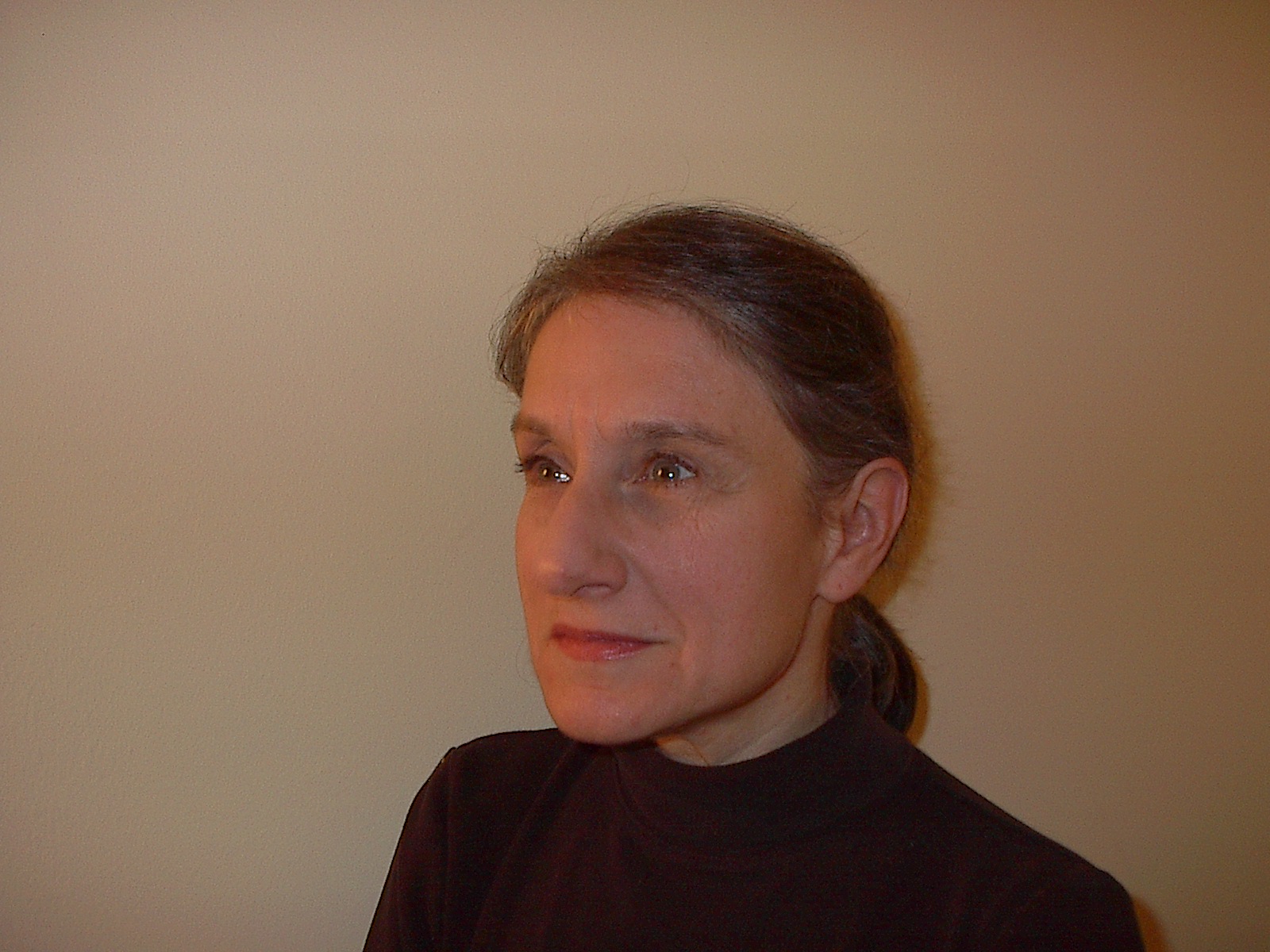
Maryann Corbett earned a doctorate in English from the University of Minnesota
in 1981 and expected to be teaching Beowulf and Chaucer and the history of the
English language. Instead, she spent almost thirty-five years working for the
Office of the Revisor of Statutes of the Minnesota Legislature, helping
attorneys to write in plain English and coordinating the creating of finding
aids for the law. She returned to writing poetry after thirty years away from
the craft in 2005 and is now the author of two chapbooks and five full-length
collections.
Her books are Breath Control (David Robert Books, 2012); Credo for
the Checkout Line in Winter, a finalist for the Able Muse Prize (Able Muse,
2013); Mid Evil, winner of the Richard Wilbur Award (University of
Evansville Press, 2015); Street View, finalist for the Able Muse Prize
and runner-up for the Hollis Summers Prize (Able Muse, 2017); and In Code
(Able Muse, 2020), which highlights poems about her years with the Revisor’s
Office.
Her work has won the Willis Barnstone Translation Prize and has appeared in many
journals on both sides of the Atlantic, including Able Muse, Barrow Street,
Christianity and Literature, The Dark Horse, Ecotone, Rattle, River Styx,
Southwest Review, and Subtropics. It has been featured on Poetry
Daily, Verse Daily, American Life in Poetry and the Poetry Foundation website
and is included in anthologies like Measure for Measure: An Anthology of
Poetic Meters and The Best American Poetry 2018.
Apophatic
O absent Mind, blank where I fire this prayer,
tongue-tangled Word my neurons flash into flesh
because they must, might you be this: a brash-
ness of Terrible Two whose wild career
of sheer will muddles all my mother-care?
whose not-a-care heaves flood and avalanche?
lets blocky Towers tippy-topple and crash?
giggles delight while crackhead comets steer
headlong at little worlds? Might you be this:
all pink-cheeked lovable but not yet master
at seeing your lovely patterns as disaster?
so rapt up in unwinding fiddle-ferns
you think death changes nothing?
No. This is
all error. But it helps me come to terms.
First published in Rattle
An Elevation
in Boston, on the Red
Line
Because the river blocks its way,
our train’s dark tunnel tilts to sky,
a breaking out that interrupts
dark riding-dreams and raptures us
to things above. The underground’s
infernal shudders, clanks, and groans
lift into beatifics here:
A rosy sky. The water, mirror-
sleek and glitter-gold, like tiles
on Byzantine cathedral walls.
Over the brilliance, floating beings,
each on a single wind-luffed wing,
slip as if barely earthbound. So
a glimpse of heaven, yes? I know,
I know. ‘Wings’ are a stretch for sails,
and ‘heaven’ overhypes the Charles—
but humor me. This time, this light
are all the paradise we get
before the plunge to lower stations’
less celestial destinations.
First published in Barrow Street
Small Losses
1/29
Tiny-voiced reproach:
the world’s unfed mouths, crying
with my cell phone’s tongue.
3/9
At the gutterline,
winter’s snaggled
dragon-teeth
loosen in hard light.
5/20
The cut peonies
shattered overnight, dreams spilled
as white confetti.
9/7
Through the morning dark,
crickets geiger-count half-lives.
Summer ticks away.
11/11
Silk chrysanthemums
in deserted halls. No one
sees them turning gray.
First published in Southwest Review
Tattoo and Piercing Parlour
and your own soul a sword shall pierce...
Trance and techno thudding against my eardrums,
out of breath from climbing, I get my bearings
slowly here: a second-floor retail walk-up,
not in my safe zone.
Look: the reddened arm of a skinhead sales clerk,
wreathed with bloody thorns of a fresh tattooing.
Shrine-like dimness. There in the jewelry cases,
what am I seeing?
Body parts in effigy. They confound me,
suede-skinned, grey-black models of navels, eyebrows,
nipples. Vulvas. Penises. Now I see it:
These are the places
piercings go, those wounds that demand attention.
Glass-encased, Sebastian-like, multi-studded,
jewel-encrusted: icons of modern martyrs'
vulnings in secret.
Dancing on the point of a thorny question,
(daughter smiling, skinheaded sales clerk smiling,
all things consummated) I grope for answers,
stumbling toward daylight:
All this piercing. Who is the god who asks it?
Whose young purgatorio might be shortened,
lightened by these penances? Can one buy here
something redeeming?
Development
This is your deed. Its words
impose restrictions.
You leave behind unruly nether worlds
of noisy rental neighborhoods,
landlords, evictions,
leave the wheezings of pipes, the fluorescent hummings,
the homeless houseplants on the fire escape,
the boots on stairs, the goings at all hours
(and, through thin walls, the comings).
You leave the crime-scene tape
for greater safety. Here the Association
will help you set the tone we all depend on
for distancing the stranger.
Let us design your plantings: rhododendron,
white iris, blue hydrangea.
Clotheslines? No. Dismiss the metaphor
of linen angel-visions buoyed with air,
first light gilding their raiment.
Keep to this earth (set forth hereinbefore),
this mortgage payment.
Why such resistance?
Peace has a certain cost. What we demand
does not pass understanding; understand
perspective that maintains a middle distance.
Seize what you can
of Order, its exterior colors pale,
historically correct, Augustan, cool.
See how it sets its face
implacably against the threatening weather.
Its covenants are righteous altogether.
Sign here. And keep your name inside the space.
Cold Case
They're less than clear,
the clues you look through,
but bode no good.
The bent needles.
The crystal glass.
Crackhead glyphs —
obscure, a script
in a screwball scrawl —
craze the surfaces,
streaking symbols
in drugged frenzy,
all dendrites firing.
Blinking's no good.
What blurs your vision
has deeper roots:
The years of damage.
The sheer pain
you're staring past,
stumped. But take
a stab at its name.
Rereading Book IV
Sting of a memory, roused from its coils in the roots of the Latin:
raising my voice to my teacher, right there in the hallway. I lost it—
my grip on the weave of the grammar, the veiled indirectness of footnotes.
Red-faced, incensed at her hint that not all of the weeping was Dido's.
Calling Aeneas a jerk and a rat, almost shouting that duty,
piety, vows to the gods were all lies.
And her face.
And her eyebrows
(bristly and white and just visible under the edge of a wimple)
knitting. Then both of us suddenly silent. The bell. And then moving
stone-faced toward chemistry class, while across on the opposite stairwell,
slouching, a certain young perfidus carefully stared at his loafers.
First published in The Dark Horse
Northeast Digs Out from Record Snowfall
All up and down the coast, where Saturday
a generous snow came down, an ancient magic
appears this morning: Every hack reporter
in every local rag now lifts the lyre
in lieu of pad and pencil. In New York,
it is a milk-white morning; snow transforms
the straw-drab landscapes into winter postcards.
Southward the mood is darker: like a cloak
of madness falls the snow, like one of those
quiet obsessions you read about in stories.
Figure and trope and image sift, drift over
the dailiness of the papers. Even where
the gods are feebler, on the weather page,
the lyric muse now takes the words by storm:
fierce winds and dazzling whiteness, thigh-deep drifts,
adjectives blowing thick and piling fast,
and under everything the sonorous meter
of radios intoning cancellations.
Those few lost souls with no poetic spark
wander the parks and murmur, staring upward,
so quiet and so lovely, and their awe
is duly reported, being perhaps the news
most worth reporting. Beauty changes us,
calling up wonder from our deepest selves
to its right place: page one, above the fold.
From Gardening in a Time of War
Prophesying to the Breath
I'm tired of it, this labored breathing. Tired
of phlegm and coughing and the fight for air,
bent double on the landing of a stair,
in wheezing gasps where nothing is inspired.
Tired of the silence next to me in bed
when measured snoring suddenly goes still;
of counting a nervous one, two, three until
it starts itself again. Tired of my dread.
I want it back: the confidence in air—
ruah, pneuma, spiritus—the breath
that stirs the vocal folds of nuns in choir.
The breath that Is. The sound of something there
guiding this gusty round of birth and death.
The rush of driving wind. The tongues of fire.
First published in First Things
Speak, Memory. Or Not.
This cute café, these college kids at a table,
this brunch I'm sharing with my children's crowd.
I tick off novelties amid the babble—
tattoos and piercings, earphones up too loud—
but jeans are changeless, and the young men's hair
is long, as achingly long as it was back then.
(I clamp my mouth shut tightly. Fair is fair;
this is their time; these are my daughters' men.)
And talk rehashes topics I'd have heard,
subject for subject, several decades gone:
the war, the sexes (almost word for word),
politics, jobs, the same mad rattling on—
I will decline to comment. They don't need
my sage advice, nor do they need to know
this priceless and expensive life they lead
was lived already. Or how long ago.
First published in Measure
Light, Motif
June night. Light hangs late for us, porch-swing lazy.
Truck goes by with the windows open, spilling
blue notes, tenor saxophone lines unwinding
into the twilight.
Corner. Turning. Gone.
But the world is altered
now, because those measures of hopeless longing
tumbled on us under this sky whose blue notes
lean into nighttime.
(Lolling summer, you with your long vacations,
lawns and pools and languorous blue-note evenings,
hear it? Here: your end, in a dying line of
saxophone solo.)
First published in Alabama Literary Review
Chiller
Seven a.m. The hunter's moon
a scarface falling down the sky
in knife-edge dark. A siren sounds
its bad suspense film leitmotif.
In porch light on the paving stones,
trench-coated for my working life,
I pull the doorknob (opening scene,
take twenty thousand), turn the key.
The dead hand of a pin-oak leaf
crabwalks across the alleyway.
First published in The Lyric
The HyperTexts